
Sustainable Practices in Pakistani Bridal Fashion: A New Era of Conscious Couture
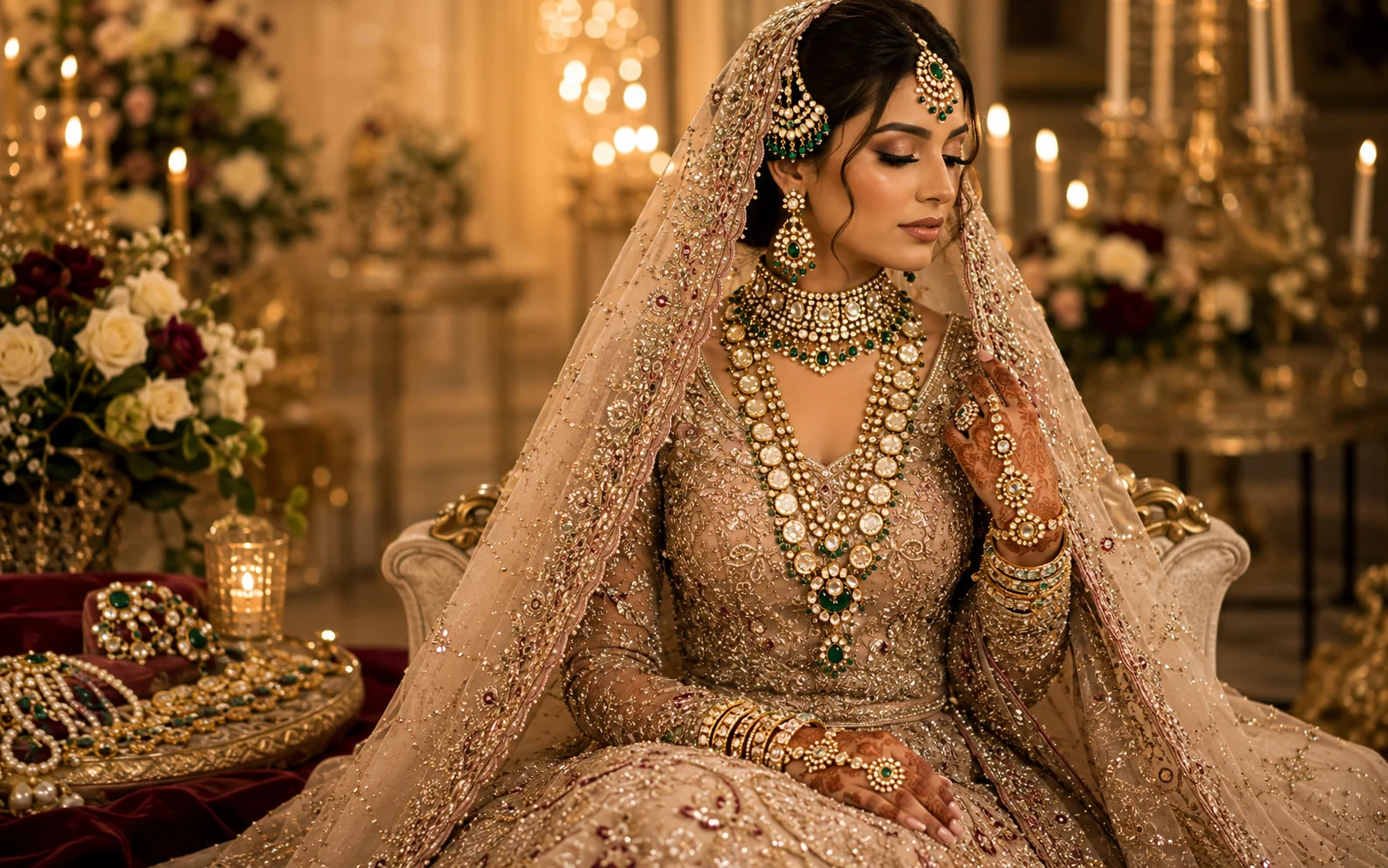
Sustainable bridal fashion in the South Asian tradition prioritises ethical embroidery techniques, eco-conscious fabrics, and slow fashion principles without compromising on grandeur. At Jabeenz Manchester, every garment is handcrafted in-house, reducing waste and ensuring each bride receives a responsibly made, one-of-a-kind creation.
Pakistani bridal fashion is more of a traditional, luxurious and artisanal craftsmanship industry. Fashion experts often praise Pakistani bridal wear for its richness. Also delicacy in materials down to the least details of zardozi, the most extravagant fabrics like jamawar to silk. But to take into account the environmental awareness of our world, the fashion industry also has to shift to the sustainable notion, and bridal fashion is not the exception. Luckily, a new generation of designers and customers is bringing us toward the era when sustainability is becoming synonymous with style.
Reinventing Bride Wear: Contingent on Beyond the D-Day
Conventionally, Pakistani bridal dresses are donned only once and never seen again after several years, without exaggerating it to decades. Such one-time attitudes add to the problem of wasted fashion and make artisanal clothes less valuable. Most of the young women brides today prefer their bridal outfits to be versatile and be worn in the future as well as during the holidays. The other trend is that the designers are also producing dressing accessories that can easily remove after the wedding, such as capes, dupattas, or jacket overlays. And make the bridal attire something anyone can wear.
Resurrecting Heritage Textiles and Processes
Sustainable bridal fashion is also about respecting traditional techniques which are environmentally friendly by nature. The designers in Pakistan are also reviving the old handloom fabrics like khadi, organza and pure cotton, which are biodegradable and have a lesser carbon footprint than the synthetic fabric. Designers are reviving older techniques such as such as hand embroidery, block printing and using natural dyes. It is not only an attempt at keeping tradition alive, designers are also using it to minimise dependence on industrial processes filled with eco-unfriendly chemicals.
Upcycles and Heirloom Revivals
The heirloom fashion is on the increase since the brides are opting to wear or use the wedding gown of their mothers or grandmothers. This emotional and environmentally friendly habit minimises wastage of textiles and glorifies family ties. Other designers will also provide upcycling services to bring old bridal wear to the modern one. But still keep the emotional worth of the original outfit.
Environmentally friendly materials
As people have grown more conscious of the environmental waste that the production of fabrics is responsible to a lot of designers have begun to switch to organic and non-cruel materials. Slowly but gradually, organic cotton, peace silk, which farmers harvest without destroying silkworms and plant-based dyes are finding their way into the bridal collections. These materials cost more and are more difficult to get, but when it comes to environmental impact, they are a much wiser investment for the environmentally conscious bride.
Fair Wage and Local Craftsmanship
Ethical labour seems to be one of the pillars of sustainable fashion. By promoting local artisans, a number of positive effects are achieved: not only could cultural craftsmanship be saved, but fair pay and safe working conditions are guaranteed. A number of Pakistani wedding brands have lately decided to focus on small artisan populations, leveraging them by paying them and giving them skills. This moral stance will bring an extra meaning around every bridal attire; hence, this will be an analysis of beauty and the product of human dignity.
Conclusion: The responsibility is the foundation of the future.
Sustainability in Pakistani bridal fashion is no longer at the trend stage, but it has become a need. There is a rising sense of climate awareness which is making women drop a more traditional yet non-eco-friendly option, completely letting it go without replacing it with beauty but simply making a choice that resonates with them. Establishing a bridal fashion, the Pakistani market is not only producing clothes with its sustainability employment but also a future that will not only recognise the people but the planet as well.
Whether by choosing eco-conscious fabrics, restoring heirloom processes, or using ethical production, sustainable bridal wear is changing our definition of beautiful on your wedding day (and after, too).
Visit Jabeenz in Manchester , Our boutique at 934 Stockport Road, Levenshulme, Manchester M19 3AB is open daily from 11am to 7pm. Book a free bridal consultation or browse our collections online. Call us on 07361 805655 or WhatsApp us for personalised styling advice.
What Sustainable Dye Techniques Are Used in Pakistani Bridal Fashion?
The conversation around sustainable bridal fashion often focuses on fabric, but dyeing is where some of the most meaningful progress is happening. Traditional Pakistani dyeing relied on plant-based sources: pomegranate rind for gold tones, indigo for blues, madder root for reds, and turmeric for warm yellows. These natural dyes produce colours with a depth and warmth that synthetic alternatives struggle to match. Several artisan workshops have returned to these methods, using low-water immersion techniques that reduce waste while producing colours that age beautifully rather than fading harshly. At Jabeenz, we have been exploring natural dye options for clients who want their bridal wear to align with their values without compromising on richness of colour.
Why Is Heirloom Craftsmanship the Most Sustainable Choice?
The most sustainable garment is the one that lasts. This is not a new idea, but it carries particular weight in bridal fashion. A hand-embroidered Pakistani bridal dress, constructed with proper fabric, reinforced seams, and quality thread, can be worn, stored, and passed to the next generation. We regularly see mothers bringing in their own wedding outfits from the 1980s and 1990s for alteration or inspiration when their daughters are getting married. The zardozi work from thirty years ago still holds its lustre because real gold and silver wrapped threads do not tarnish the way metallic synthetics do. Investing in genuine craftsmanship means your lehengha is not a single-use garment. It becomes part of your family story, worn and reworn across generations. That is what sustainability looks like when it is built into the making rather than marketed as an afterthought.
In our 50 years of dressing brides at our Manchester atelier, we have seen trends come and go, but the demand for genuine craftsmanship has only grown. Every piece at Jabeenz is designed and manufactured under our own roof, a commitment to quality that no amount of outsourcing can match.
Frequently Asked Questions
What makes Pakistani bridal wear sustainable?
Handcrafted production, natural fabrics, and made-to-order processes reduce waste significantly compared to mass production. At Jabeenz, every garment is made individually, ensuring minimal fabric waste and ethical labour practices. Learn about our craftsmanship.
Can I choose eco-friendly fabrics for my bridal outfit?
Yes, we offer organic silk, sustainable cotton blends, and recycled textile options that maintain the luxury look and feel expected of bridal couture. Discuss your preferences at your consultation. Explore our bespoke fabric options.
Is handcrafted embroidery more sustainable than machine embroidery?
Handcrafted embroidery uses less energy and supports skilled artisan communities, making it inherently more sustainable. It also produces unique, unrepeatable detailing that machines cannot match. Book your consultation today.
Frequently Asked Questions
What is zardozi embroidery and why is it used on bridal dresses?
Zardozi is a centuries-old metallic embroidery technique using gold and silver threads to create raised, textured motifs on fabric. It is prized for bridal wear because of its regal appearance and intricate detailing. At Jabeenz, our artisans specialise in hand-worked zardozi on bespoke bridal pieces.
Which fabric is best for a Pakistani bridal dress?
The best fabric depends on the season and silhouette. Organza and chiffon are ideal for summer weddings, velvet and brocade suit winter celebrations, and raw silk works beautifully year-round. At Jabeenz Manchester, we source premium fabrics and guide brides through the best options.
What is the difference between dabka and zardozi embroidery?
Dabka uses coiled wire stitched flat onto fabric for a textured, slightly matte finish. Zardozi uses metal threads for a smoother, more lustrous look. Both are hand-embroidery techniques used on luxury bridal wear. Jabeenz craftsmen are skilled in both techniques.
Related Reading
Ready to Find Your Dream Outfit?
Book a free consultation at our Manchester boutique or browse our latest collections online.
You Might Also Like
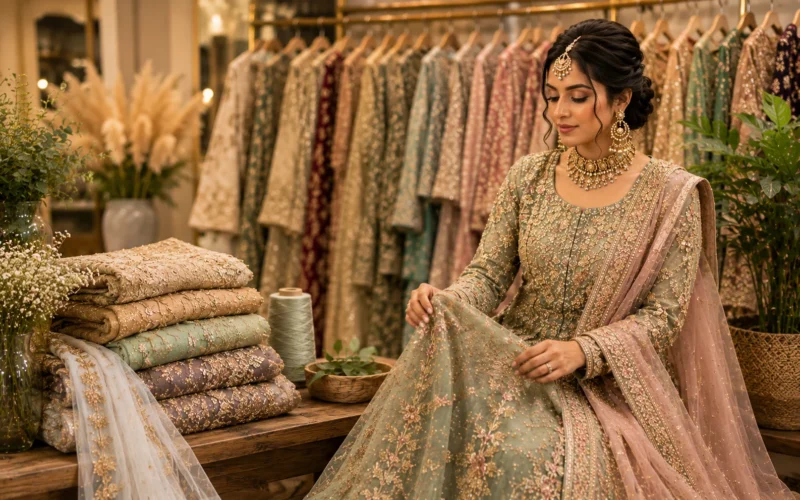
Sustainable Bridal Fashion: Ethical Embroidery, Eco Fabrics Slow Fashion in Pakistani Bridal Wear
Sustainable bridal fashion embraces ethical embroidery and eco-conscious fabrics. Jabeenz Manchester handcrafts every garment in-house, championing slow fashion in Pakistani bridal wear.
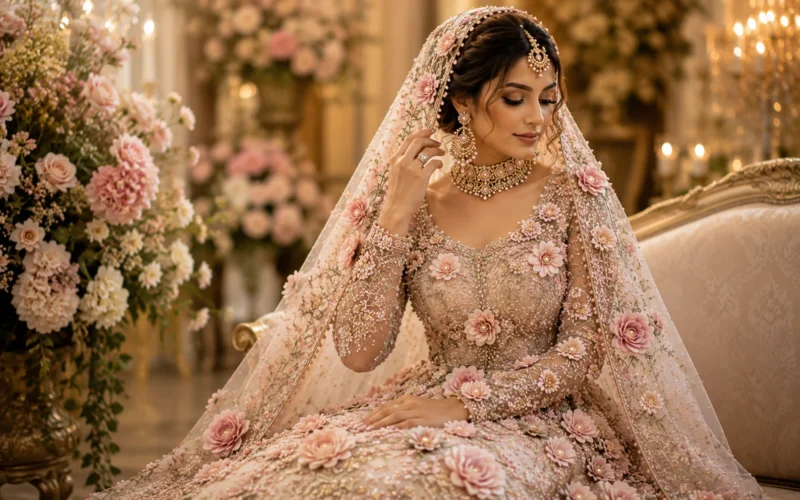
3D Floral Embellishments Botanical Embroidery: Romantic Trends in Pakistani Bridal Wear
3D floral embellishments and botanical embroidery create romantic Pakistani bridal wear that photographs beautifully. Handcrafted at Jabeenz Manchester with fifty years of...
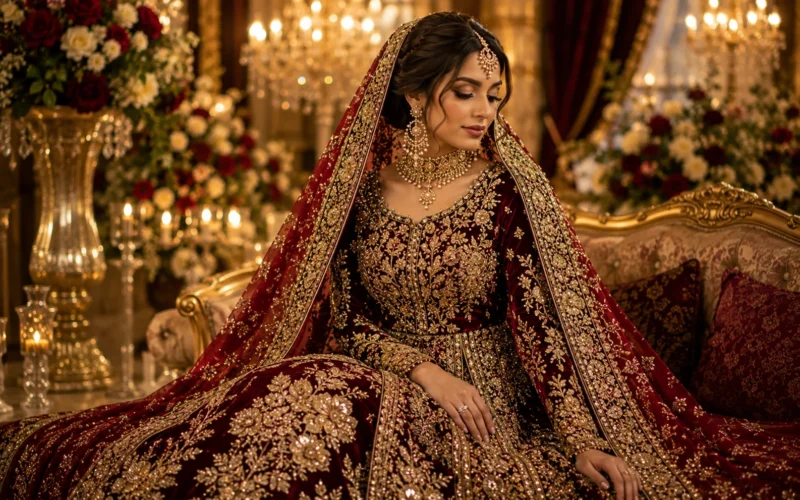
Bold and Regal Fabrics: Velvet, Brocade Metallics for Winter Weddings in the UK
Velvet, brocade, and metallic fabrics bring warmth and regal presence to winter wedding outfits. Jabeenz Manchester pairs premium textiles with hand-embroidered gold...
