
3D Floral Embellishments Botanical Embroidery: Romantic Trends in Pakistani Bridal Wear
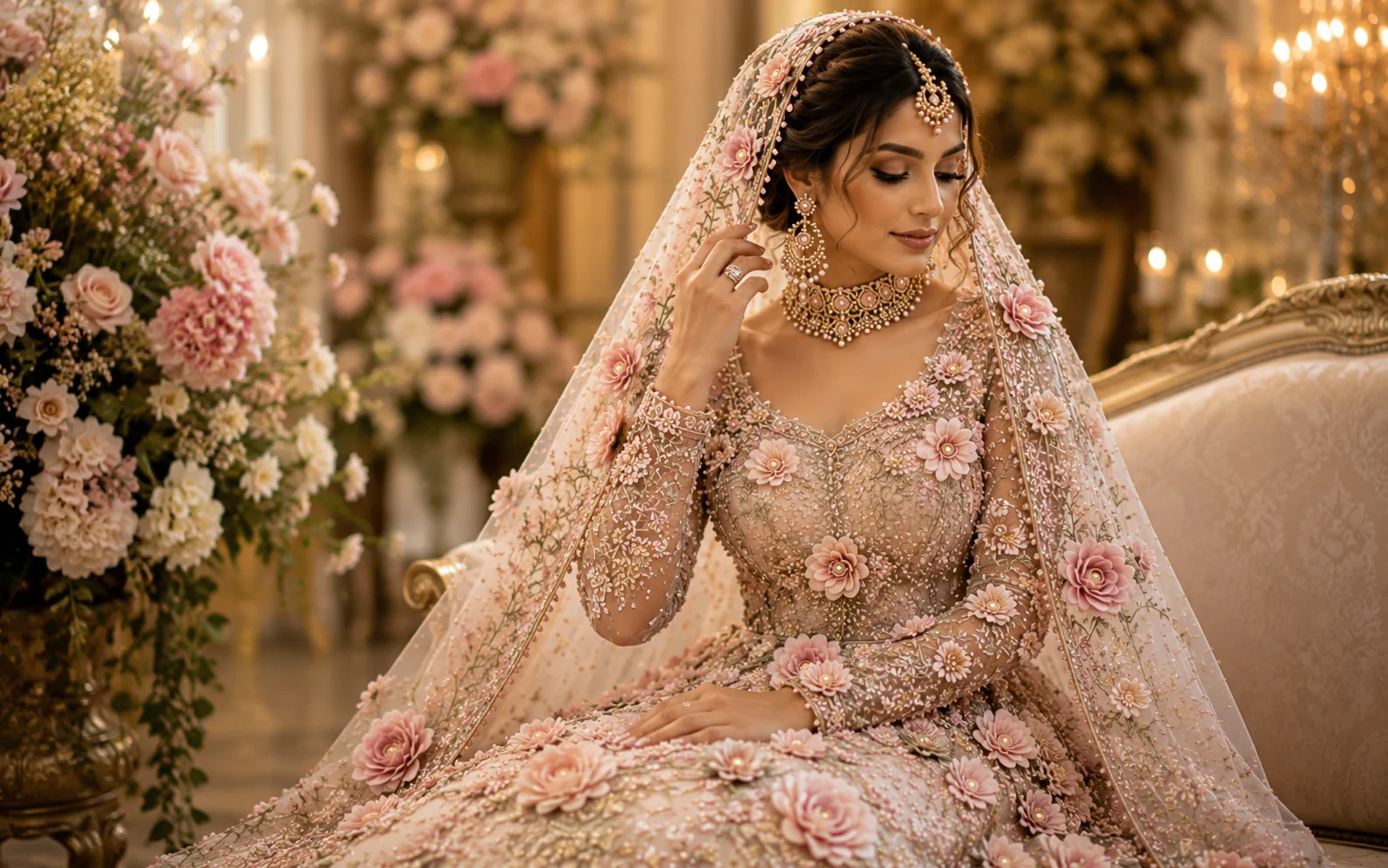
3D floral embellishments and botanical embroidery bring a romantic, garden-inspired dimension to Pakistani bridal wear that photographs beautifully. Jabeenz Manchester handcrafts these raised floral motifs using silk thread, organza petals, and pearl centres, a technique our artisans have refined across fifty years of bridal couture.
Whenever it comes to the world of Pakistani bridal fashion, there is always romance behind all of the creations. However, in recent years, one specific trend is sprouting, literally. Designers are incorporating magic in their fashion with 3D flowered decorations. Elaborate botanical embroidery to add new layers of tenderness, femininity and narrative to bridal clothes. The nature-inspired details have stormed the fashion industry. Turning the conventional bridal gowns into wearable works of art, alive, organic, and full of emotions.
Blossoming Romance Rejuvenation.
The Pakistani bridal outfits have never been dull, or quiet. However, with the current trend where modern brides are finding uniqueness and emotional attachment in their dresses, floral art has been adopted as the speech of romance. The essence of nature, its delicacy, chaos, and rhythm, is being captured by the designers through blooming roses in silk threads. Cascading vines of sequins and beads and is being transferred into bridal couture.
This has been transformed into 3D floral appliques, meticulously designed petals which have been stacked together to provide texture and volume. These touchable flowers, whether strewn over a net dupatta growing out of the bodice of a maxi, add a touch of whim and movement. As though the bride were strolling in a garden of flowers herself.
The Botanical Embroidery: Nature Woven in Thread.
Although the floral pattern has been a classic symbol of Eastern wedding dresses. The modern botanical embroidery develops the idea. Rather than plain flower decorations, we now can find whole ecosystems in threadwork. Leafy vines wrapped round sleeves, and delicate tendrils climbing along the hemlines.
Another trend that designers are trying is multi-dimensional embroidery, which involves resham, zari, and dabka mixed with pearls, sequins, and cut-dana in order to recreate the natural effect of light and shadow. It is green, delicate, and dreamy. This suits brides who want to have their outfit explain to them about the growing up, the love, and the new beginning.
The palette too has evolved. Although classic gold and crimson are part of the iconic, the runways in bridal dresses are dominated by colours with shades of blush pink, ivory, sage green, and soft lilac. Such tones go hand in hand with botanical motifs, so the embroidery is simply gleaming with elegance and not overpowering.
Down the Runway and to the Wedding Stage.
The trend is not limited to the shows in the couture arena. It has easily found its way to real-life weddings. Contemporary Pakistani brides are all about wearing flower-centred dresses to all events. A floral mehndi ensemble with appliqued flowers, an ivory nikkah dress with thread vines or a light pastel walima gown with flowery trails.
Even such classic outfits as lehengas and peshwas are rethought. Designers are overlaying petals of organza, lace flowers, and bead flowers to create dramatic effects of thickness. The effect is an impressive, though delicate, look. It is ideal for brides who would love to appear both royal and romantic.
Bridal dupattas are undergoing an equivalent botanical makeover also. Bordered with flowered lace trims and sprinkled with embroidered vines. They border the head in a halo of gentle touch and loveliness. These, augmented with light-reflecting adornments such as crystals or mirror work, will reveal candlelight and camera flashes with enchanting beauty.
Craftsmanship at Its Finest
Every 3D masterpiece of floral creation has several hours of hand embroidery, which is also an indication of the Pakistani couture. The ability of the artisans to combine threadwork, placing of beads and layering techniques gives an impression of actual flowers blooming on the fabric.
Not only does this level of craftsmanship make the visual appearance of the garment that much more aesthetic, but it also pays tribute to the history of Pakistani bridal art. In which every stitch is filled with love and passion. Designers are also keeping alive the spirit of handcrafted fashion by utilising botanical embellishments. Choosing to appeal to the modern bride and her wish to have something new and romantic.
A Fresh Start to the Story of Bridal.
Pakistani brides are not only fashionable people but also narrators of stories today. Their dresses reflect their characters, feelings, and fantasies. 3D flowers and botanical embroidery provide an elegant means of conveying love, women, and the eternal allure of nature.
These love statements transform cloth into fantasy, with the traditional nostalgia combined with the ingenuity of contemporary design. It is a vine creeping over the bodice or a bunch of flowers on a dupatta that all speak softly of devotion and art.
We are about to enter another age of bridal fashion, but it is definite that romance is at hand, and the Pakistani bridal attire has never been as romantic.
Visit Jabeenz in Manchester , Our boutique at 934 Stockport Road, Levenshulme, Manchester M19 3AB is open daily from 11am to 7pm. Book a free bridal consultation or browse our collections online. Call us on 07361 805655 or WhatsApp us for personalised styling advice.
How Are 3D Floral Embellishments Actually Created?
Creating three-dimensional floral embellishments is one of the most demanding skills in bridal embroidery. Each petal is worked separately on a stiffened base, using layers of organza, net, or silk that are shaped with fine wire and then hand-stitched into position on the garment. The artisan builds each flower from the centre outward, layering petals at different angles to create depth and natural movement. Stamens are formed from tiny beads or knotted thread, and leaves are embroidered with satin stitch before being attached at a slight angle so they stand away from the fabric surface.
The process is painstaking. A single floral cluster can take an entire day to complete, and a heavily embellished bodice might require two to three weeks of dedicated work. At Jabeenz, our artisans use traditional hand-shaping techniques rather than pre-formed moulds, which means every flower has subtle natural variation. This is what gives hand-crafted 3D work its organic, lifelike quality, something that factory-stamped appliques simply cannot replicate.
Frequently Asked Questions
Are 3D floral embellishments durable enough for a full wedding day?
Yes, when properly secured with reinforced stitching and fabric backing, 3D floral motifs withstand a full day of celebrations. Our artisans use techniques refined over decades to ensure lasting quality. See our floral bridal designs.
Can botanical embroidery be added to any bridal outfit style?
Botanical embroidery adapts beautifully to lehengas, shararas, gowns, and even formal shalwar kameez. The motif scale and density can be adjusted to suit any silhouette. Design your botanical bespoke piece.
What fabrics best showcase 3D floral work?
Organza, tulle, and net are ideal base fabrics because their transparency allows the 3D elements to stand out with depth and dimension. Heavier fabrics work for subtler raised effects. Discuss fabric options at your consultation.
Frequently Asked Questions
What is zardozi embroidery and why is it used on bridal dresses?
Zardozi is a centuries-old metallic embroidery technique using gold and silver threads to create raised, textured motifs on fabric. It is prized for bridal wear because of its regal appearance and intricate detailing. At Jabeenz, our artisans specialise in hand-worked zardozi on bespoke bridal pieces.
Which fabric is best for a Pakistani bridal dress?
The best fabric depends on the season and silhouette. Organza and chiffon are ideal for summer weddings, velvet and brocade suit winter celebrations, and raw silk works beautifully year-round. At Jabeenz Manchester, we source premium fabrics and guide brides through the best options.
What is the difference between dabka and zardozi embroidery?
Dabka uses coiled wire stitched flat onto fabric for a textured, slightly matte finish. Zardozi uses metal threads for a smoother, more lustrous look. Both are hand-embroidery techniques used on luxury bridal wear. Jabeenz craftsmen are skilled in both techniques.
Related Reading
Ready to Find Your Dream Outfit?
Book a free consultation at our Manchester boutique or browse our latest collections online.
You Might Also Like
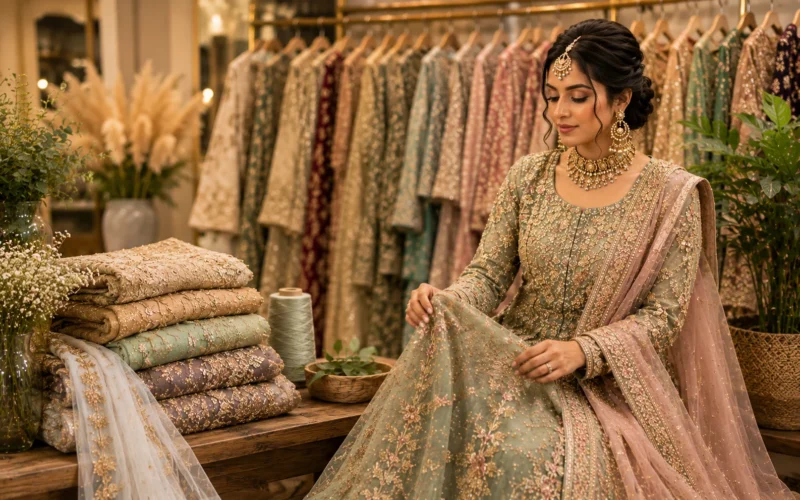
Sustainable Bridal Fashion: Ethical Embroidery, Eco Fabrics Slow Fashion in Pakistani Bridal Wear
Sustainable bridal fashion embraces ethical embroidery and eco-conscious fabrics. Jabeenz Manchester handcrafts every garment in-house, championing slow fashion in Pakistani bridal wear.
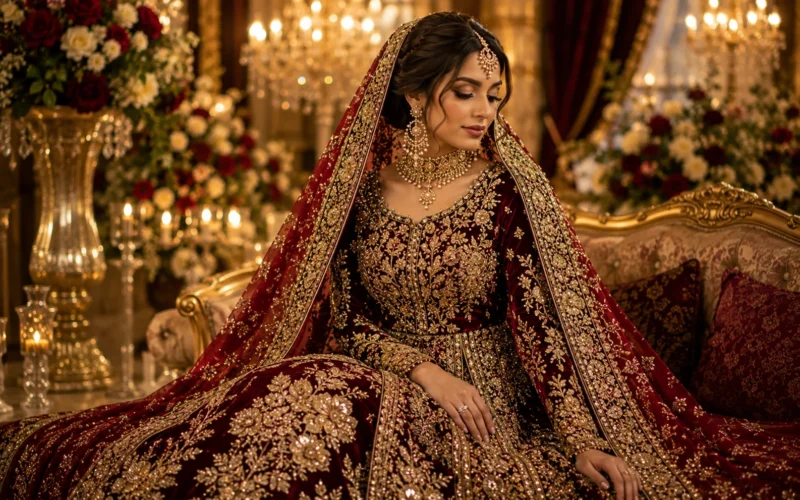
Bold and Regal Fabrics: Velvet, Brocade Metallics for Winter Weddings in the UK
Velvet, brocade, and metallic fabrics bring warmth and regal presence to winter wedding outfits. Jabeenz Manchester pairs premium textiles with hand-embroidered gold...
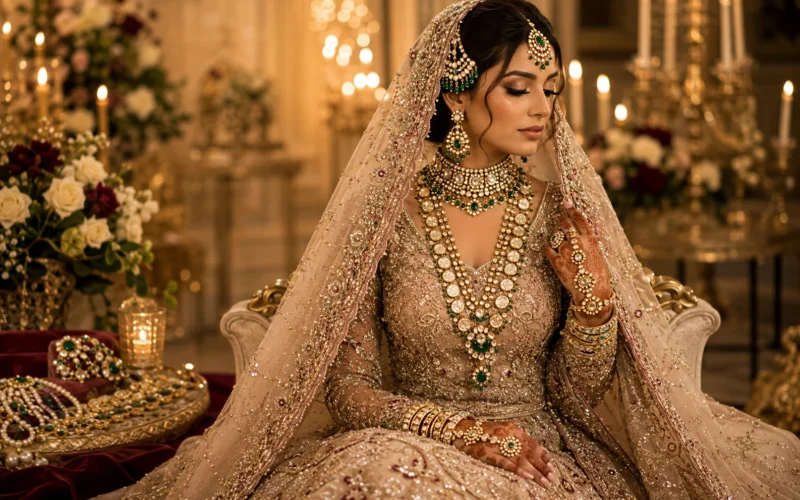
Sustainable Practices in Pakistani Bridal Fashion: A New Era of Conscious Couture
Sustainable bridal fashion embraces ethical embroidery and eco-conscious fabrics. Jabeenz Manchester handcrafts every garment in-house, championing slow fashion in Pakistani bridal wear.
