
Sustainable Bridal Fashion: Ethical Embroidery, Eco Fabrics Slow Fashion in Pakistani Bridal Wear
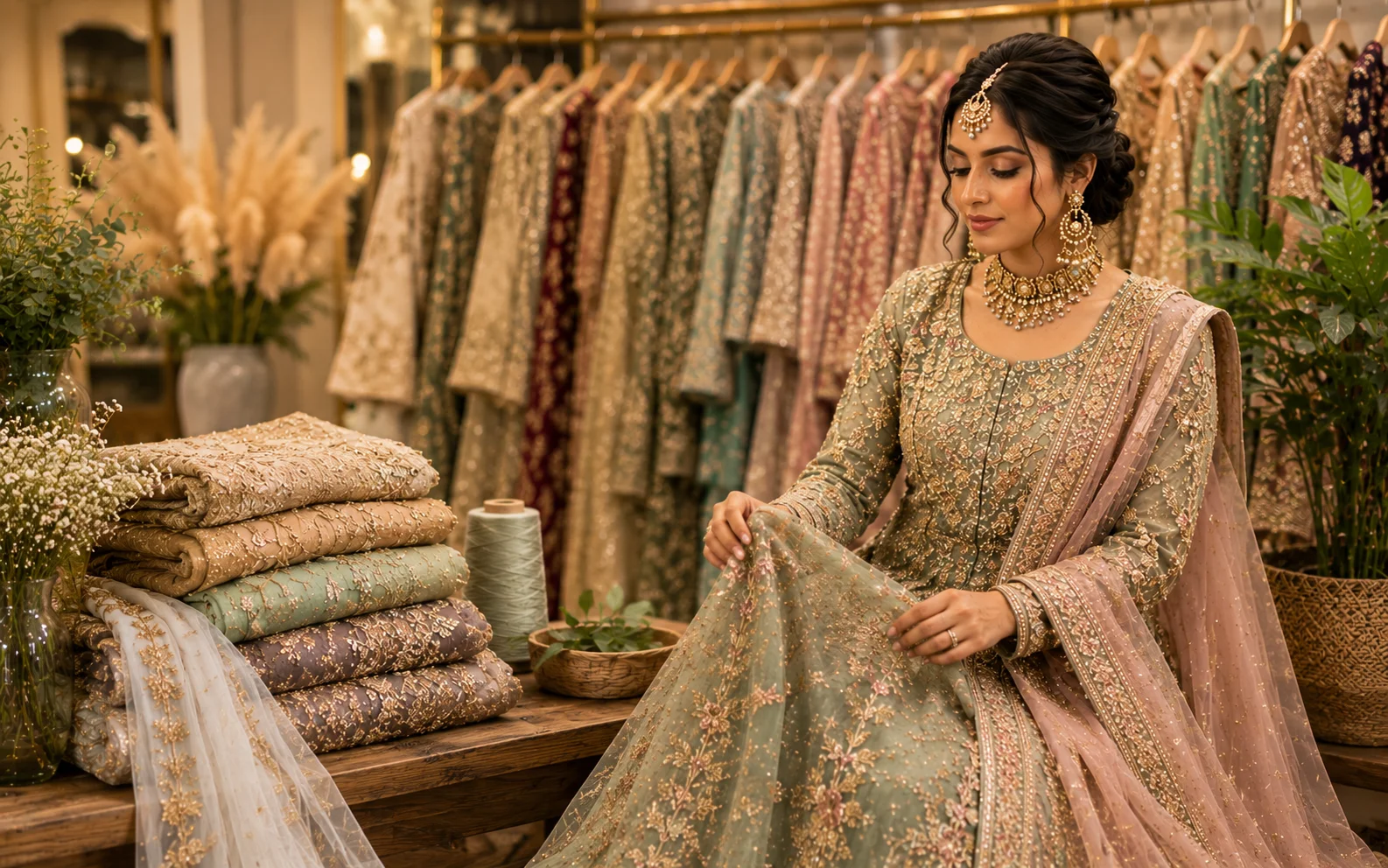
Sustainable bridal fashion in the South Asian tradition prioritises ethical embroidery techniques, eco-conscious fabrics, and slow fashion principles without compromising on grandeur. At Jabeenz Manchester, every garment is handcrafted in-house, reducing waste and ensuring each bride receives a responsibly made, one-of-a-kind creation.
Pakistan bridal fashion is a luxury world that features all glossy sequins, fancy handwork and royal classiness. This makes a wedding day a memory. But with the increasing globalisation and awareness of fashion, the new-age bride is beginning to ask another question. Can beauty be the guilty party as well?
The evolving trend of Pakistani dresses has found a place in sustainability. It is no longer a Western fad of fashion. It has been an emotional response to environmental and ethical concerns our business is grappling with. Sustainable bridal fashion is contributing to the redefining of the word ‘luxury’. Since it is not about excess but a statement of beauty through mindfulness, tradition, and consideration of people and the environment.
The Direction of Rethinking Wedding Dresses.
Traditionally, in South Asia, bridal fashion is composed of heirlooms. Products which are created with much care and which are expected to span the generations. The sense of meaning was lost temporarily when mass production and the advent of fast fashion took place. The designers and brides are reviving that spirit nowadays. Slow fashion is now adopting craftsmanship, longevity and ethical practices.
A Resurgence of Slowness in Weddings.
Slow fashion is more about quality than quantity. A wedding dress is not just meant for the spur of the moment but to be remembered and to be aesthetically preserved in the years. It will presuppose a greater focus on the eternal forms, handwork, and natural materials, which become improved over time.
Ethical Embroidery: Saving Traditions, Saving Hands.
The bridal fashion of the Pakistanis is embroidery. Either the rich zardozi embroidery of Lahore or the delicate embroidery of mirrors. Gotas that is of Sindh and Balochistan. Behind the glitter, however, is the story of unrecognised artisans, miserable work conditions and fakes.
Fashion bridal presents a chance of applying sustainable embroideries. It has to do with the fact that those who handle the needle need to have a sense of dignity, appropriate remunerations and safe working environments. The ethical brands are now going back to working with the local craftspeople in person. Each thread can now serve a purpose not only in a beautiful item but also in a better life.
Eco Fabrics: Organic Silks to Regenerative Cotton.
The textile material is essential in sustainability. The bridal gown that is generally used is made of synthetic materials like a mixture of polyester or chemically dyed materials that have a massive carbon footprint. Environmentally friendly designers are transforming this narrative with the application of organic and natural materials. Such as pure silk, cotton, and linen that are biodegradable and not as harmful to the environment.
Others are even considering regenerative fabrics which are manufactured using organically grown fibres. Which restore the health and biodiversity to the soil. Another group that is also investing in plant-based dyes. The one that not only produces beautiful natural shades but is also going to eliminate toxic waste that is produced in the process of synthetic dyeing.
Rewear, Repurpose, Reimagine: The New Bridal Tradition.
In bridal fashion of sustainability, the idea to wear it once and pack it away is no longer significant. Many brides are already interested in designs that can be remodelled or remade , a bridal dupatta that can be used as a part of another party dress, or a lehenga that can be remodelled into a glamorous skirt later.
Such modification would blend well into the culture of South Asians who have the tendency of passing wedding dresses to daughters. The new version of this tradition is emotional and eco-friendly, i.e., clothes with intergenerational stories and a reduction of fashion waste.
The Future of Pakistani Bridal Wear Is Green.
The sustainability of bridal fashion does not imply that something has to lose beauty and luxury. It is preoccupied with giving luxury a meaning. As its eco-friendly materials and embroidery can only be useful to the artisan community, the Pakistani wedding dresses are gradually turning into both a socially conscious and yet custom-conscious trend.
Bridal fashion that is sustainable is the golden mean because every fibre of it is dense with the respect of nature, culture, and crafts, which, in turn, will help a bride to make the big day not only about a love affair but also about values in general.
Visit Jabeenz in Manchester , Our boutique at 934 Stockport Road, Levenshulme, Manchester M19 3AB is open daily from 11am to 7pm. Book a free bridal consultation or browse our collections online. Call us on 07361 805655 or WhatsApp us for personalised styling advice.
What Does Ethical Manufacturing Look Like in Bridal Fashion?
Ethical manufacturing in bridal fashion means more than sourcing better fabric. It means paying artisans fairly for skilled work that takes years to master, maintaining safe and well-lit workshop conditions, and building long-term relationships with the people who create your garments. In the Pakistani bridal industry, the best embroidery comes from artisans who have trained for a decade or more, learning stitch techniques that have been refined over centuries. When these craftspeople are paid properly and work in good conditions, the quality of their output reflects it. Rushed, underpaid work produces inconsistent stitching, uneven tension, and shortcuts that become visible within months.
At Jabeenz, we have operated our own production facilities since 1975, which gives us direct oversight of working conditions and fair compensation. We know the artisans who embroider our bridal pieces by name. This direct relationship, without layers of subcontractors, means we can guarantee both the ethical standards of production and the quality of the finished garment. For brides who care about the story behind their outfit, knowing that their lehengha was made by skilled, fairly treated craftspeople adds a layer of meaning that no amount of embellishment can match.
Frequently Asked Questions
What makes Pakistani bridal wear sustainable?
Handcrafted production, natural fabrics, and made-to-order processes reduce waste significantly compared to mass production. At Jabeenz, every garment is made individually, ensuring minimal fabric waste and ethical labour practices. Learn about our craftsmanship.
Can I choose eco-friendly fabrics for my bridal outfit?
Yes, we offer organic silk, sustainable cotton blends, and recycled textile options that maintain the luxury look and feel expected of bridal couture. Discuss your preferences at your consultation. Explore our bespoke fabric options.
Is handcrafted embroidery more sustainable than machine embroidery?
Handcrafted embroidery uses less energy and supports skilled artisan communities, making it inherently more sustainable. It also produces unique, unrepeatable detailing that machines cannot match. Book your consultation today.
Frequently Asked Questions
What is zardozi embroidery and why is it used on bridal dresses?
Zardozi is a centuries-old metallic embroidery technique using gold and silver threads to create raised, textured motifs on fabric. It is prized for bridal wear because of its regal appearance and intricate detailing. At Jabeenz, our artisans specialise in hand-worked zardozi on bespoke bridal pieces.
Which fabric is best for a Pakistani bridal dress?
The best fabric depends on the season and silhouette. Organza and chiffon are ideal for summer weddings, velvet and brocade suit winter celebrations, and raw silk works beautifully year-round. At Jabeenz Manchester, we source premium fabrics and guide brides through the best options.
What is the difference between dabka and zardozi embroidery?
Dabka uses coiled wire stitched flat onto fabric for a textured, slightly matte finish. Zardozi uses metal threads for a smoother, more lustrous look. Both are hand-embroidery techniques used on luxury bridal wear. Jabeenz craftsmen are skilled in both techniques.
Related Reading
Ready to Find Your Dream Outfit?
Book a free consultation at our Manchester boutique or browse our latest collections online.
You Might Also Like
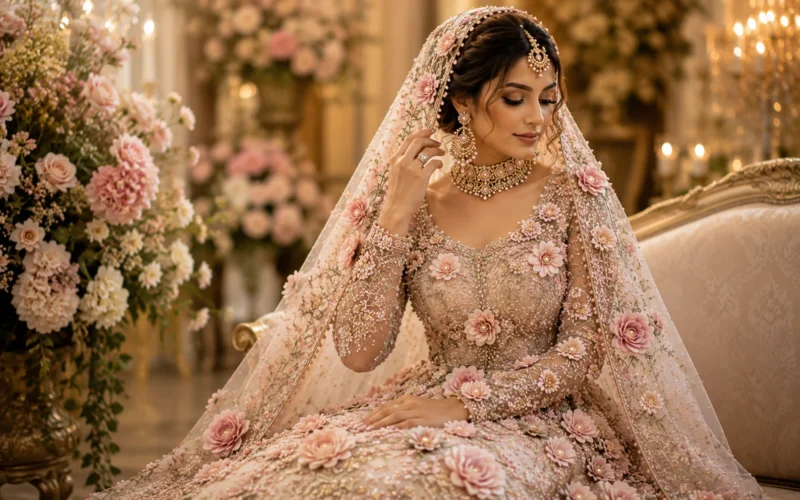
3D Floral Embellishments Botanical Embroidery: Romantic Trends in Pakistani Bridal Wear
3D floral embellishments and botanical embroidery create romantic Pakistani bridal wear that photographs beautifully. Handcrafted at Jabeenz Manchester with fifty years of...
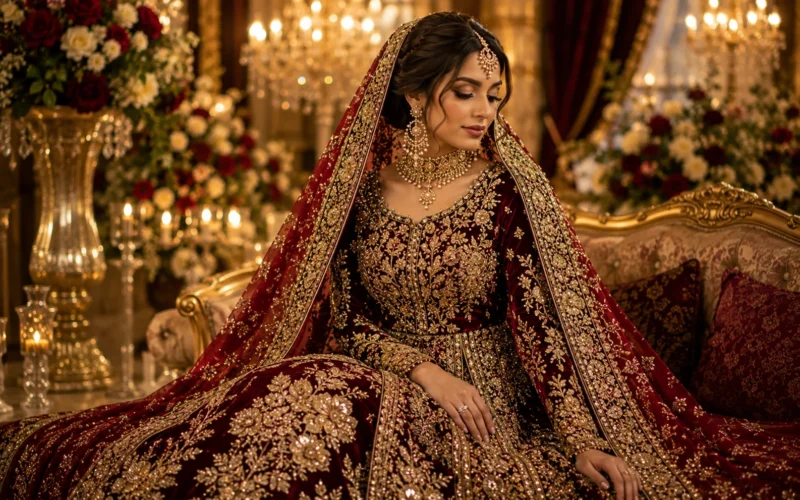
Bold and Regal Fabrics: Velvet, Brocade Metallics for Winter Weddings in the UK
Velvet, brocade, and metallic fabrics bring warmth and regal presence to winter wedding outfits. Jabeenz Manchester pairs premium textiles with hand-embroidered gold...
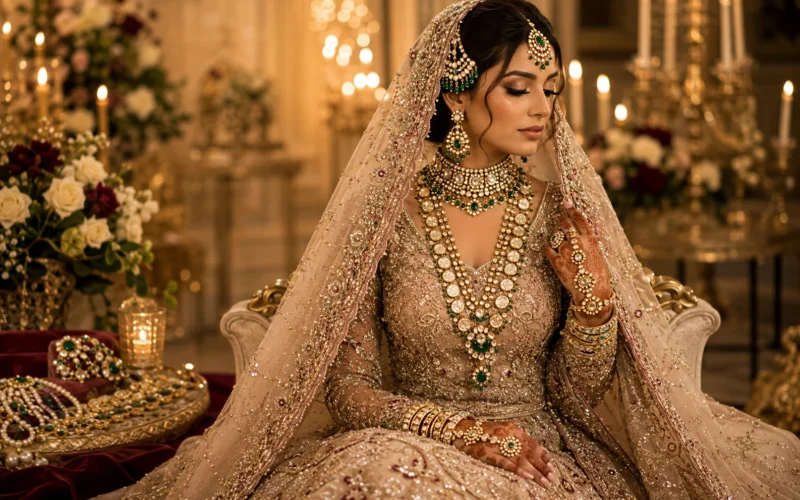
Sustainable Practices in Pakistani Bridal Fashion: A New Era of Conscious Couture
Sustainable bridal fashion embraces ethical embroidery and eco-conscious fabrics. Jabeenz Manchester handcrafts every garment in-house, championing slow fashion in Pakistani bridal wear.
