
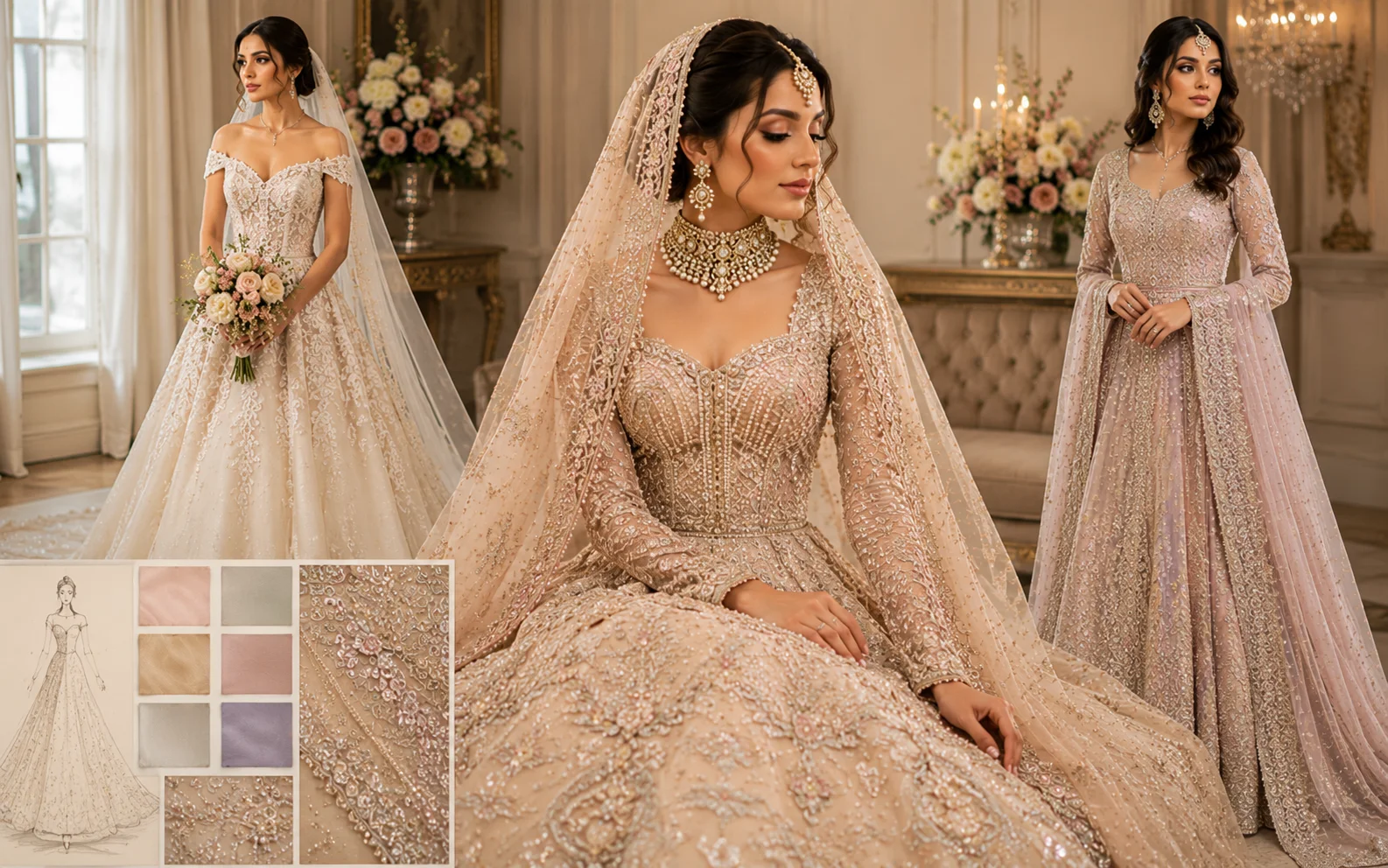
Western fashion has profoundly shaped modern Pakistani bridal wear, introducing trail gowns, structured corsetry, and minimalist aesthetics into traditional silhouettes. At Jabeenz Manchester, our designers fuse these influences with South Asian embroidery heritage, creating bridal garments that feel both globally current and culturally rooted.
Pakistani bridal fashion has evolved into a beautiful blend of tradition and modernity over the years. Among the most apparent ones, We must highlight the impact of Western fashion on bridal dressing. Although Pakistani bride ceremonies are all about traditions and strong cultures. The brides are now getting more exposed to international fashions -a touch of ancient cultures and modern glamour.
A Change of Shapes
Traditionally, Pakistani bridal was based on classic bridal dresses like lehengas, ghararas, and shararas combined with very heavily embroidered dupattas. Nevertheless, in the last few years, Ample gowns inspired by Western fashion, fishtail designs, A-line dresses and long tails have been introduced into bridal lines nationwide. The modern and elegant bridal appearance appeals to completely fitted bodices, tailored skirts, and fancy veils, inspired by Western bridal designs.
This change is not the move towards something new, excluding tradition but it is a change. Designers blend Pakistani embroidery techniques like dabka, zari, and resham with Western tailoring to create unique bridal pieces that feel both timeless and modern.
Minimalism on the Rise
Minimalism is another Western trend that is transforming the bridal clothes in Pakistan. Although the bright red, excessive decoration and rich layering are elements that are mostly common with traditional bridal dress. The move towards lighter-toned colours and light colouration like pastels, ivory, champagne and blush pink, some of which were common with Western brides, has become the new trend among modern women brides. People now favour subtlety over extravagance, shifting the focus toward simpler bridal aesthetics.
Designers (Elan, Sania Maskatiya, and Misha Lakhani) have been at the forefront in providing minimalist designs at their bridal collections that are minimalist but really brilliant. Neat seams, understated embroidery, and up-to-date shapes will work with a bride who wants more understated glamour than elaborate decoration.
Impact of the Western Wedding Culture
Western fashion influences not only the garments but also the entire wedding style. Pakistan is adopting pre-wedding shoots, bridal showers, and destination weddings. And in this scope comes a need for functional bridal wear. Brides now choose multiple outfits to wear for different wedding events. Such as the modern dresses to wear during receptions or valima parties.
Moreover, other modern accessories such as tiaras, white heels. Light tulle veils are gradually used replacing traditional accessories like the matha patti and jhoomar with modern alternatives. By using Western accessories, brides are crafting unique identities that reflect both their personal style and cultural heritage.
Pakistan Diaspora/Fashion Fusion in the Whole World
The Pakistani diaspora around the world has also influenced this cultural exchange. The Pakistani brides living in foreign countries usually prefer the combination of the clothing that simultaneously shows the traditions of the Pakistani nation and the life the bride lives in other countries. Designers reacting to this will provide a mixed design between the decadence of South Asian bridal couture. And how Western designers have streamlined their styles for a cleaner, minimalist look.
Conclusion
With the impact of Western fashion on the Pakistani bridal dress, it has created a thrilling period of creativity. Although the traditionality of Pakistani bridal wear has been sticking to its roots. Inclination to global fashion resulted in less conventional, freer, and more personalised bridal styles. A Pakistani bride today is not only a heritage, she is a cultural mix. She is a representation of evolving fashion and a tribute to the fashion of fusion.
Visit Jabeenz in Manchester , Our boutique at 934 Stockport Road, Levenshulme, Manchester M19 3AB is open daily from 11am to 7pm. Book a free bridal consultation or browse our collections online. Call us on 07361 805655 or WhatsApp us for personalised styling advice.
Which Western Design Elements Work Best in Pakistani Bridal Wear?
Not every Western silhouette translates well into Pakistani bridal fashion, and that is exactly why the fusion process requires careful thought. Corset bodices, for example, have been adapted brilliantly. The structured boning of a Western corset provides a flattering, sculpted fit under heavy dupatta draping, giving brides the support they need without adding bulk. When paired with a traditional lehenga skirt and finished with zardozi or tilla embroidery, the result feels both contemporary and rooted in South Asian tradition.
Off the shoulder necklines are another Western import that has found a natural home in Pakistani bridal design. They work particularly well for walima and reception outfits, where the dress code allows for a slightly more relaxed aesthetic compared to the main baraat ceremony. Brides in the UK often choose an off the shoulder blouse with a sharara or gharara set, which gives a modern edge while maintaining the volume and movement that Pakistani bridal wear is known for.
How Are UK Pakistani Brides Blending Eastern and Western Traditions?
UK brides occupy a unique position. They have grown up with both cultural frameworks, and their bridal choices reflect that duality. A bride might choose a traditional red bridal lehenga for the baraat, complete with heavy gold embroidery and a dupatta draped in the classic style, then change into a champagne toned gown with a fishtail silhouette and pearl detailing for the evening reception. This two look approach has become standard practice at UK Pakistani weddings, and it requires a designer who understands both traditions at a technical level.
At Jabeenz in Manchester, many brides bring reference images from both Western bridal magazines and Pakistani fashion weeks. The design consultation involves identifying which elements from each world will work together harmoniously. Sometimes that means integrating a cathedral length veil with a traditional jhoomar headpiece. Other times it means constructing a ball gown silhouette but executing the entire surface in traditional dabka and resham work. The technical challenge is significant, but the results reflect a bride who honours both sides of her heritage.
What to Avoid When Mixing Western and Pakistani Bridal Styles
Fusion works best when it is intentional rather than accidental. One common misstep is choosing a Western cut that fights against the weight of traditional embroidery. A strapless A line gown, for instance, may not support the 3 to 5 kilograms of handwork that a fully embroidered Pakistani bridal piece carries. The construction needs to account for that weight distribution, which is why bespoke manufacturing matters more in fusion bridal wear than almost any other category. Similarly, mixing too many statement elements, such as a dramatic train, heavy jewellery, and an oversized headpiece, can overwhelm the overall look. The most successful fusion outfits tend to let one element take centre stage while everything else plays a supporting role.
In our 50 years of dressing brides at our Manchester atelier, we have seen trends come and go, but the demand for genuine craftsmanship has only grown. Every piece at Jabeenz is designed and manufactured under our own roof, a commitment to quality that no amount of outsourcing can match.
Frequently Asked Questions
How has Western fashion influenced modern Pakistani bridal dresses?
Western fashion has introduced trail gowns, off-shoulder necklines, structured corsetry, and minimalist aesthetics into South Asian bridal design, creating exciting cross-cultural silhouettes. View our Western-influenced bridal designs.
Can I have a Western-style bridal gown with Pakistani embroidery?
Absolutely. This is one of the most popular requests we receive. Our designers create gowns with Western structure and South Asian hand embroidery for a truly unique bridal look. Design your fusion gown.
Is it appropriate to wear a white gown for a Pakistani wedding?
While traditionally white was avoided, many modern Pakistani brides are embracing ivory, off-white, and pearl-toned gowns, especially for nikkah ceremonies and destination weddings. Explore our nikkah collection.
Frequently Asked Questions
What are the biggest Pakistani bridal trends for 2026?
The biggest Pakistani bridal trends for 2026 include pastel colour palettes, 3D floral embellishments, fusion silhouettes combining Eastern craftsmanship with Western cuts, sustainable fabrics, and statement sleeves. At Jabeenz in Manchester, we design bespoke pieces incorporating these trends while honouring traditional craftsmanship.
Where can I find the latest Asian wedding dress trends in the UK?
Jabeenz in Manchester is one of the UK's leading Asian bridal boutiques, offering the latest Pakistani and South Asian wedding dress trends. Visit our showroom at 934 Stockport Road, Levenshulme, or browse our collections online at jabeenz.co.uk.
How are Pakistani bridal colours changing in 2026?
Pakistani bridal fashion is moving beyond traditional reds. Pastels like blush pink, sage green, champagne, and ivory are increasingly popular for 2026. Brides are also choosing deep jewel tones like emerald, sapphire, and burgundy for winter weddings.
Related Reading
Ready to Find Your Dream Outfit?
Book a free consultation at our Manchester boutique or browse our latest collections online.
You Might Also Like
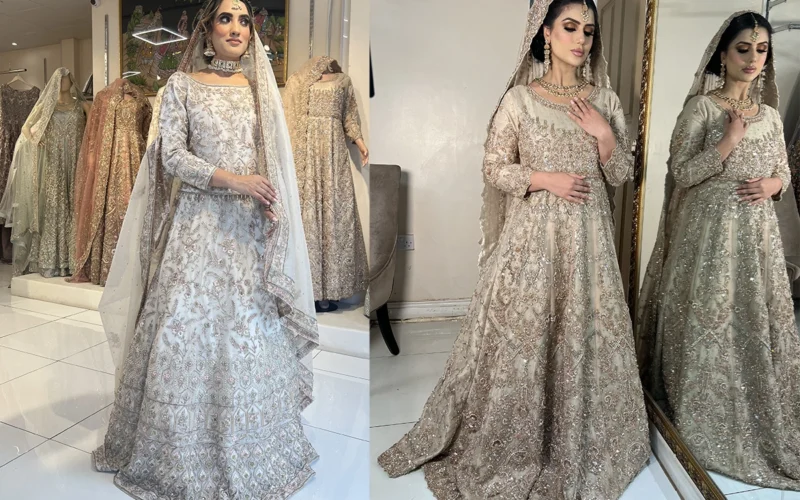
Fusion Bridal Wear: East Meets West Silhouettes That UK Brides Love
Discover fusion bridal wear that blends South Asian embroidery with Western silhouettes. Jabeenz Manchester handcrafts unique garments for multicultural UK brides.
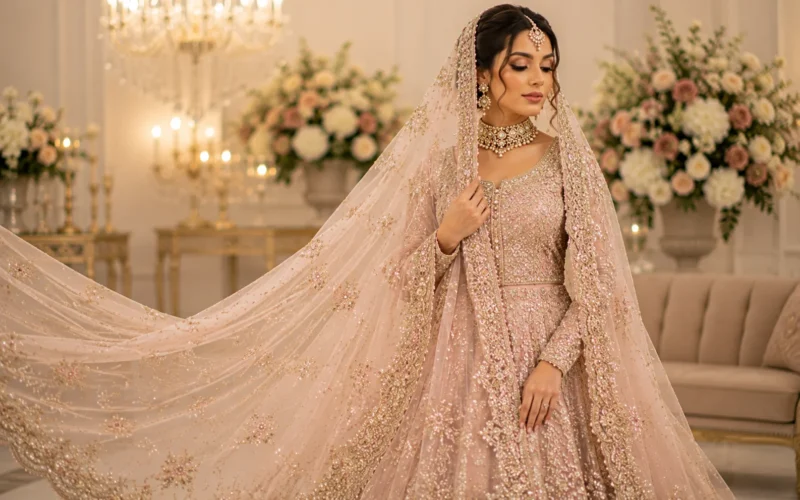
Pastel Champagne Bridal Dresses: The Soft Hues UK Brides are Picking in 2026
Pastel and champagne bridal dresses offer understated elegance for modern UK brides. Jabeenz Manchester handcrafts soft-hued lehengas with delicate pearl and sequin...
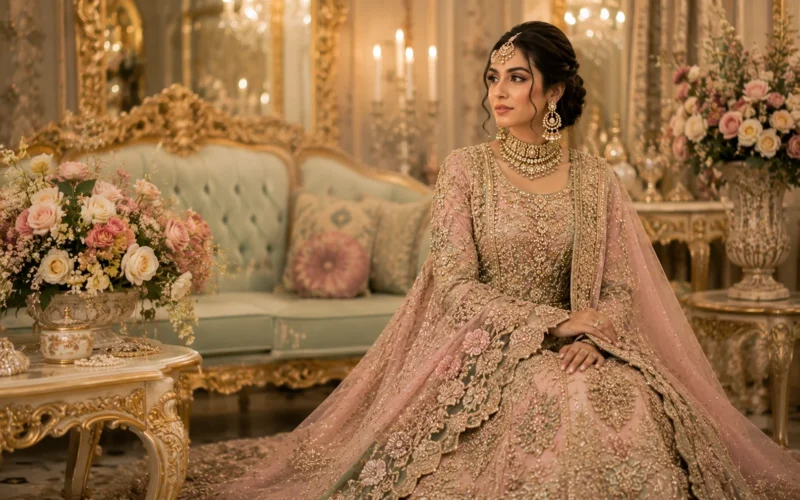
Vintage Rococo-Inspired Bridal Looks: Because Maximalism is Making a Comeback
Vintage rococo-inspired bridal looks celebrate maximalist embroidery and opulent textures. Jabeenz Manchester draws on heritage craftsmanship to revive these regal aesthetics.
