
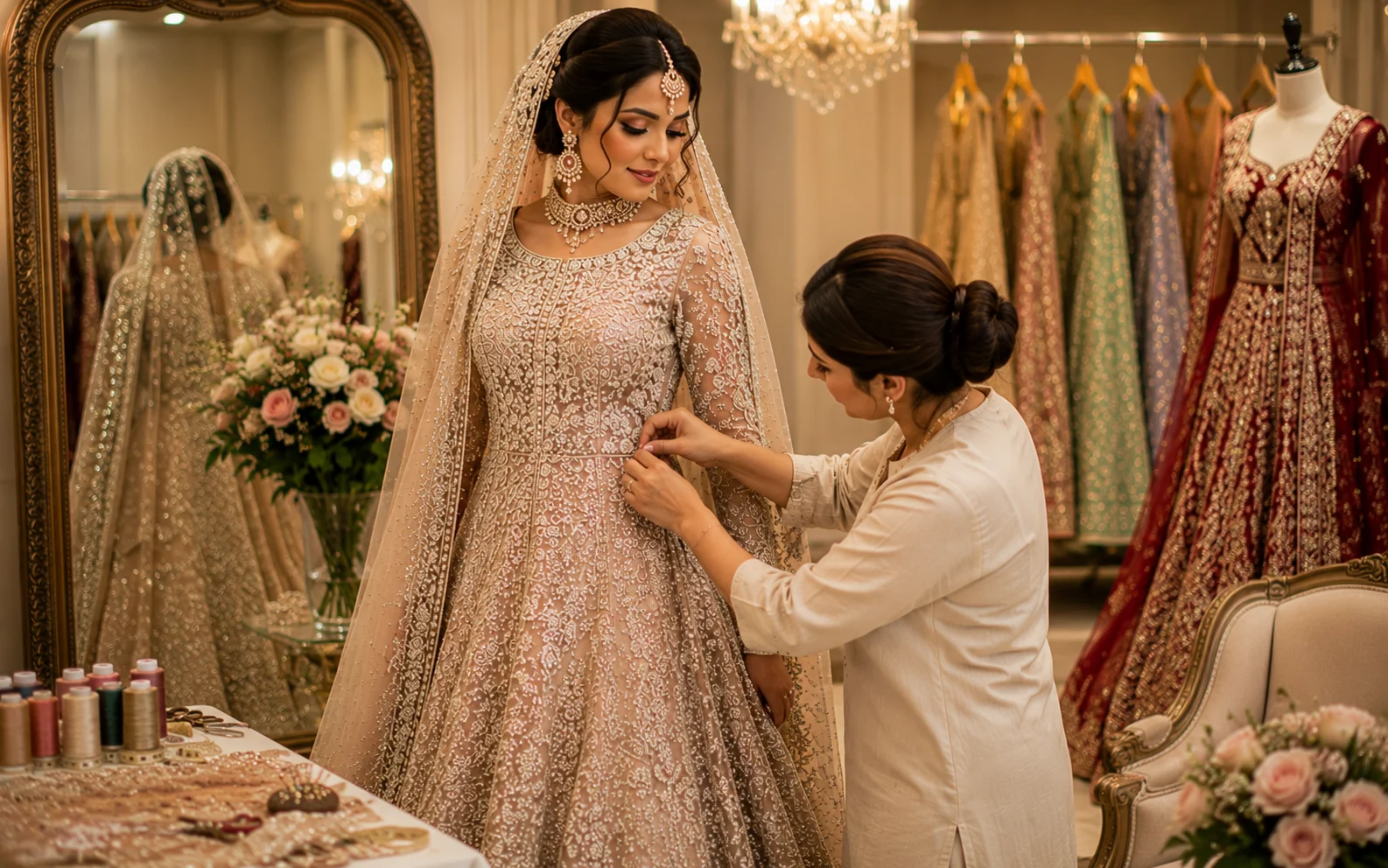
Bridal dress alterations transform a beautiful gown into one that fits your body perfectly, ensuring comfort and confidence on your wedding day. At Jabeenz in Manchester, with over 50 years of tailoring expertise, alterations are handled by the same artisans who constructed the garment, guaranteeing seamless adjustments that preserve the original design integrity of every embellished bridal piece.
On your wedding day, every little detail counts, but your bridal gown and bridal dress alterations are the most important. Even if you’ve found your ideal dress, it most likely won’t be a perfect fit when you first wear it. At this point, bridal dress alterations can make a significant difference. A dress that fits you well both looks great and makes you feel your top level of confidence. In fact, belief in herself is the most precious and attractive thing any bride might have.
Why Alterations Are Essential
As a rule, bridal gowns are standardised and fail to match a woman’s body size. It’s possible that you could fit your chest with a certain dress but the waist is not snug, or the length looks right with heels, yet the shoulders don’t fit properly. Alterations make sure the gown matches your shape, making it comfortable and beautiful at the same time.
Altering clothes doesn’t only fix the fit; it can also give you a look that’s completely unique to you. Raising the hem, reshaping a bodice, or including supportive cups are just some of the ways tailors make your dress look good on you and help you feel confident during your celebration or you can book a consultation of a designer.
The Timeline: When to Begin Alterations
Timing is everything. The best time to schedule your first fitting is between 8 and 10 weeks before the wedding. It means you can make changes at your own pace, even if the deadline is still far away. If the dress is not simple and many alterations are needed, the bride will likely have to go for a few fittings.
Don’t delay, since popular seamstresses often get booked well in advance, especially for wedding periods. Making your appointment in advance will let you receive the consideration your dress needs.
Common Bridal Alterations
Here are the most popular changes brides usually suggest:
- Altering the bodice to fit snugly around your body
- Running your garment over an area used for sewing so you can let out the hem
- Using a bustle, so you won’t trip over your dress during the reception
- Adjust the length of straps and sleeves for a good fit
- Decorating the dress with pieces of lace or simple sleeves
Giving your dress a neckline that matches your preferences or your body
They add to both the beauty of your wedding dress and your happiness on the big day.
Choosing the Right Alterations Specialist
A bridal dress is made from lovely fabrics, has plenty of detail, and features many separate layers. Because of this, you need to find an experienced seamstress who is skilled with wedding clothes. View their photos from past weddings and go through testimonials written by past brides.
Make sure you are able to express the things you want to your partner. Excellent tailors hear your concerns, describe how things might be done, and assist in selecting the most suitable options and bridal dress alterations
Final Thoughts
The dress you wear for your wedding should represent you as well as look lovely. If alterations are done right, your chosen gown will be perfect for you, look as you wish, and feel good on your body.
Don’t settle for “almost right”. Every detail really matters on the most special dresses, and tailoring can make them come alive.
Related Reading
- How to Find the Perfect Pakistani Bridal Outfit for Every Body Type
- The Art of Elegance: Pakistani Wedding Dresses with Intricate Embroidery
- Classic Pakistani Bridal Gown Dresses for a Timeless Wedding
Visit Jabeenz in Manchester , Our boutique at 934 Stockport Road, Levenshulme, Manchester M19 3AB is open daily from 11am to 7pm. Book a free bridal consultation or browse our collections online. Call us on 07361 805655 or WhatsApp us for personalised styling advice.
Common Alteration Types and What They Involve
Understanding the types of alterations available helps you plan both your timeline and your budget. The most straightforward adjustments include hemline shortening or lengthening, taking in or letting out side seams, and adjusting sleeve width. These are considered standard alterations and typically take one to two weeks to complete. More complex work includes restructuring a bodice, changing a neckline shape, adding or removing sleeves, and adjusting the waist seam position. These require more time and expertise, so plan accordingly.
Embellished garments present unique alteration challenges. When you take in the side seams of a heavily embroidered outfit, the embroidery pattern may need to be carefully reworked to maintain continuity. Similarly, shortening a hemline with an intricate border requires the border to be removed, the fabric shortened, and the border reattached. These are skilled, time-consuming tasks that not every tailor can handle well. This is why working with a boutique that has in-house tailoring expertise, like Jabeenz in Manchester, gives you a significant advantage. The same artisans who created the embroidery can adjust it seamlessly.
How Much Do Bridal Dress Alterations Typically Cost?
Alteration costs vary widely depending on the complexity of the work and the type of garment. Simple adjustments like hemming or taking in seams on an unembellished outfit might cost between 30 and 80 pounds. Moderate alterations such as bodice restructuring, sleeve changes, or waistline adjustments typically range from 80 to 200 pounds. Complex work on heavily embellished bridal wear, including reworking embroidery around altered areas, can range from 200 to 500 pounds or more. When budgeting for your bridal outfit, always set aside 10 to 15 percent of the garment cost for potential alterations.
When Should You Schedule Your Alteration Fittings?
Timing is critical for bridal alterations, and getting it wrong can cause unnecessary stress. Schedule your first fitting four to six weeks before the wedding. This initial appointment identifies all the adjustments needed and gives the tailor ample time to complete the work. Your second fitting should happen two to three weeks before the wedding, allowing you to try the altered outfit and flag any remaining issues. If possible, book a final check one week before the event. This last appointment is particularly important if you have been dieting, exercising, or experiencing stress-related weight changes in the run-up to the wedding.
Avoid scheduling alterations during peak wedding season (April to August) without extra lead time. Tailors and boutiques are at their busiest during these months, and turnaround times may be longer than usual. If your wedding falls in peak season, add two extra weeks to every stage of the timeline for safety.
What Can and Cannot Be Altered on a Bridal Outfit?
Almost anything can be adjusted, but some changes are significantly easier and more successful than others. Taking a garment in by one or two sizes is generally achievable with good results. Letting a garment out, however, depends entirely on the seam allowances left during construction. Many ready-made outfits have minimal seam allowance, leaving little room for expansion. Bespoke garments from quality manufacturers typically include generous seam allowances precisely because they anticipate the need for adjustments.
Neckline changes are possible but can be complex, especially if the original neckline is heavily embroidered. Adding sleeves to a sleeveless outfit is straightforward if you have matching or complementary fabric. Changing the overall silhouette, such as converting an A-line lehenga to a mermaid shape, is technically possible but often costs as much as creating a new garment and may not yield the best results. Be realistic about what alterations can achieve, and discuss the feasibility of significant changes with your tailor before committing.
Emergency Alterations: What to Do When Time Is Short
Sometimes circumstances change unexpectedly. Perhaps your outfit arrived late, or you have had a sudden change in weight, or you simply left things too close to the deadline. In emergency situations, prioritise the alterations that will have the most visible impact. Bodice fit is the most critical because it frames your face and is visible in every photograph. Hemline length is next, as tripping over excess fabric is both uncomfortable and risky. Sleeve fit, while important, is lower priority in a time crunch.
Keep a small sewing kit with your bridal outfit on the day itself. Include safety pins, a needle and thread in matching colours, fashion tape, and a small pair of scissors. These can handle minor issues like a loose hook, a slipping pallu, or a hem that catches underfoot. If you have a trusted family member who is handy with a needle, brief them on the outfit before the wedding day so they know where the closures and hooks are. Preparation turns potential disasters into minor inconveniences.
Trusting the Alterations Process
Many brides feel anxious about alterations, worrying that changes might compromise the original design. A skilled tailor understands how each fabric behaves and how each seam contributes to the overall silhouette. Good alterations are invisible. When done properly, the outfit looks as though it was always made for you. At Jabeenz, alterations are handled by the same team that constructed the garment, which means they understand every stitch and can adjust with precision. Trust the process, communicate openly, and allow yourself to enjoy the transformation.
Frequently Asked Questions About Bridal Dress Alterations
When should I schedule my first bridal dress fitting?
Schedule your first fitting 4 to 6 weeks before the wedding, with a second fitting 2 to 3 weeks before, and a final check one week prior. This timeline allows for adjustments without last-minute stress. Book a fitting appointment at Jabeenz Manchester to begin the process.
How much do bridal dress alterations cost in the UK?
Simple alterations like hemming cost 30 to 80 pounds, moderate work like bodice restructuring ranges from 80 to 200 pounds, and complex alterations on heavily embellished bridal wear can reach 200 to 500 pounds. Budget 10 to 15 percent of your garment cost for alterations. Explore our bridal collection where alterations are included in the bespoke process.
Can heavily embroidered Pakistani bridal dresses be altered?
Yes, but embellished garments require specialist expertise. Embroidery patterns may need reworking to maintain continuity after seam adjustments. At Jabeenz, the same artisans who created the embroidery handle alterations, ensuring seamless results. Visit our bespoke page to learn about our integrated tailoring approach.
Ready to Find Your Dream Outfit?
Book a free consultation at our Manchester boutique or browse our latest collections online.
You Might Also Like
Top Pakistani Wedding Designers for Custom Bridal Wear in the UK
Discover the top Pakistani wedding designers for custom bridal wear in the UK. Jabeenz Manchester offers bespoke bridal couture with 50 years...
Classic Pakistani Bridal Gown Dresses for a Timeless Wedding
Explore classic Pakistani bridal gown dresses for a timeless wedding featuring Mughal-inspired embroidery and premium fabrics. Jabeenz Manchester crafts heirloom-quality gowns with...
Best Pakistani Bridal Gowns for a Grand Wedding
Discover the best Pakistani bridal gowns for a grand wedding with dramatic trains, rich embellishments, and statement silhouettes. Jabeenz Manchester manufactures show-stopping...
