
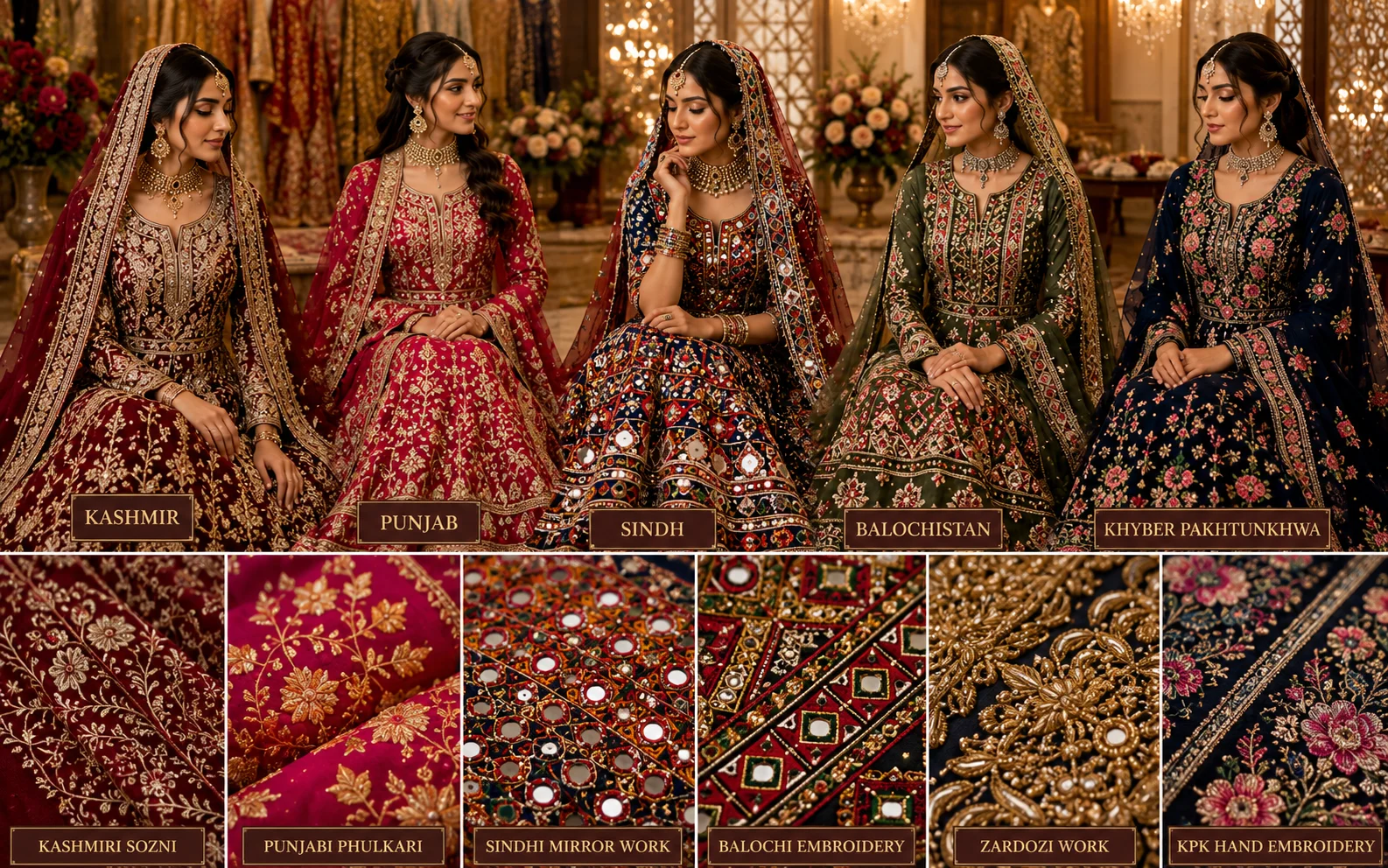
Pakistani bridal dresses vary dramatically by region, from the heavily embroidered Punjabi lehengas to the delicate Lucknawi-inspired Sindhi ensembles. Jabeenz, Manchester’s heritage bridal boutique established in 1975, celebrates this rich diversity by handcrafting garments that honour each region’s distinct textile traditions, embroidery techniques, and cultural aesthetics.
The Diversity of Pakistani Bridal Dresses by Region surrounding Pakistani bridal dresses have become well-known and appreciated across the borders as the Pakistani community in the UK continues to grow. These bridal dresses are more than just clothes; they are colourful representations of cultural roots, with unique regional designs. Combining these beautiful items into wedding ceremonies is a lovely way for women in the UK to adopt modernity while showing respect to their culture. Let’s explore the variety of Pakistani wedding dresses and the bridal lehengas designs that express the essence of Pakistani culture.
Kashmir: Symbol of Beauty
Kashmir, which is famous for its beauty, makes Pakistani wedding dresses more beautiful. Kashmiri brides frequently choose lehengas made of beautiful pashmina and embroidered with intricate designs.
With over 50 years of expertise manufacturing bridal wear in Manchester, Jabeenz brings unmatched craftsmanship and heritage knowledge to every garment we create.
Why is Kashmiri wedding dress so unique?
The use of rich colours like deep red and green, together with beautiful floral designs, combine to produce a classic style that appeals to brides in the UK. These may be used in multicultural weddings, where modern style combines with the beauty of Kashmir.
Punjab: Joyful Celebration
People know Punjab for its colourful celebrations, and you can see this joyful energy in its bridal dresses. Designers embellish these dresses with bright colours that express happiness and celebration, as well as beautiful zardozi embroidery.
How can Punjabi styles affect UK weddings?When combined with lehengas and dupattas, the bright colours like deep reds, pinks, and oranges can brighten up any wedding celebration. Many brides in the UK find inspiration in Punjabi culture to create memorable events that combine cultural history with modern beauty.
Sindh: Ajrak Art and Mirror work
Sindh’s specific bridal dress that includes Ajrak, a traditional block-printed cloth, shows the state’s rich cultural past. Bright colours, mirror work and embroidery are characteristics of Sindhi wedding lehengas.
The patterns and colours of Ajrak not only show the history of Sindh but also offer a unique option for brides in the UK looking to include cultural elements into their celebrations. Because these dresses are so adaptable, they may be creatively combined with modern decoratives.
Balochi Beauty: The Essence of Simplicity
Balochistan has a special effect on bridal fashion, showing simplicity and beauty. Balochi bridal dresses include hand embroidery and bold colours, creating a fresh visual appearance.
Many brides in the UK appreciate the beauty of Balochi dress, as it allows their natural charm to appear. The cultural chadar adds grace that suits modern tastes.
Khyber Pakhtunkhwa
Bridal dresses from Khyber Pakhtunkhwa (KPK) are known for their bold colours and unique designs. Inspired by the area’s scenery, KPK dresses have detailed patterns and bright decorations.
How can KPK styles be adapted for UK weddings?
The deep connection between nature and bridal fashion in Khyber Pakhtunkhwa (KPK) can inspire creative themes for weddings in the UK, where brides can use floral designs, creating a beautiful combination of cultural and modern fashion.
Something to End : Diversity of Pakistani Bridal Dresses
The diversity of Pakistani bridal dresses shows a beautiful picture of the cultural history found across Pakistan. As brides in the UK choose these outfits, they celebrate their identity while creating a unique combination of cultural and modern materials. In a world where cultural exchange is increasingly valued, these dresses connect generations and celebrate the beauty of diversity.
Visit Jabeenz in Manchester , Our boutique at 934 Stockport Road, Levenshulme, Manchester M19 3AB is open daily from 11am to 7pm. Book a free bridal consultation or browse our collections online. Call us on 07361 805655 or WhatsApp us for personalised styling advice.
What Makes Regional Embroidery Techniques So Distinctive?
Pakistan is home to embroidery traditions that are as varied as its geography, and each technique tells you something about the community that developed it. Sindhi mirror work, known as sheesha or abhla bharat, involves securing small pieces of reflective glass or mica onto fabric using tight buttonhole stitches. The result is a garment that catches light from every angle. Sindhi artisans traditionally use geometric and floral motifs, and the mirrors are arranged in deliberate patterns that have been passed down through families for generations. In bridal wear, this technique adds a celebratory sparkle that no amount of sequin work can handcrafted piecete, because the light is reflected rather than merely scattered.
Punjabi phulkari is an entirely different art form. The name translates to “flower work,” and the technique involves long, darning-like stitches worked from the wrong side of the fabric so that the pattern emerges on the front in bold, saturated colour. Traditional phulkari uses untwisted silk floss called pat, and the finest examples, known as bagh (garden), cover the base fabric so completely that the ground cloth becomes invisible. Modern bridal phulkari often incorporates metallic threads alongside the traditional silk, creating pieces that bridge heritage and contemporary design. At Jabeenz, our artisans have been working with these techniques since we established our production facilities in 1975, and we still source pat thread from traditional spinning communities.
How Does Kashmiri Sozni Embroidery Differ from Other Pakistani Styles?
Sozni embroidery from Kashmir is perhaps the most labour-intensive of all Pakistani needlework traditions. It uses a fine, hooked needle to create chain stitches so small and precise that the finished work resembles printed fabric rather than hand embroidery. A single sozni shawl or panel can take months to complete, with master artisans working in natural light to maintain stitch consistency. The motifs are almost always naturalistic: chinar leaves, almond blossoms, irises, and paisley forms that trace their origins back to Mughal garden design. For bridal wear, sozni work appears on pashmina dupattas, shawl panels, and jacket borders, adding a refinement that heavier embroidery cannot achieve.
Balochi needlework brings yet another dimension to the regional picture. Balochi embroidery tends to favour dense, geometric patterns worked in satin stitch and chain stitch, often using a limited palette of red, green, black, and gold. The patterns are architectural in their precision, and the best examples have a graphic quality that feels surprisingly modern. Bridal garments from Balochistan often feature heavily embroidered yokes and cuffs, with the embroidery acting as both decoration and structural reinforcement.
How Do Regional Traditions Shape Modern Bridal Design?
The most exciting development in Pakistani bridal fashion is the blending of regional techniques into single garments. A lehengha might feature a Punjabi phulkari border, a Kashmiri sozni dupatta, and Sindhi mirror work on the bodice. This kind of fusion requires deep knowledge of each technique, because the thread weights, stitch tensions, and fabric requirements differ substantially. Getting it wrong means a garment that looks disjointed rather than harmonious. Getting it right means a bridal outfit that carries the richness of multiple traditions while feeling cohesive and intentional. This is the kind of work our craftspeople at Jabeenz specialise in, drawing on decades of experience across all these regional styles to create pieces that honour heritage while feeling thoroughly contemporary.
Frequently Asked Questions
What is zardozi embroidery and why is it used on bridal dresses?
Zardozi is a centuries-old metallic embroidery technique using gold and silver threads to create raised, textured motifs on fabric. It is prized for bridal wear because of its regal appearance and intricate detailing. At Jabeenz, our artisans specialise in hand-worked zardozi on bespoke bridal pieces.
Which fabric is best for a Pakistani bridal dress?
The best fabric depends on the season and silhouette. Organza and chiffon are ideal for summer weddings, velvet and brocade suit winter celebrations, and raw silk works beautifully year-round. At Jabeenz Manchester, we source premium fabrics and guide brides through the best options.
What is the difference between dabka and zardozi embroidery?
Dabka uses coiled wire stitched flat onto fabric for a textured, slightly matte finish. Zardozi uses metal threads for a smoother, more lustrous look. Both are hand-embroidery techniques used on luxury bridal wear. Jabeenz craftsmen are skilled in both techniques.
Related Reading
Ready to Find Your Dream Outfit?
Book a free consultation at our Manchester boutique or browse our latest collections online.
You Might Also Like
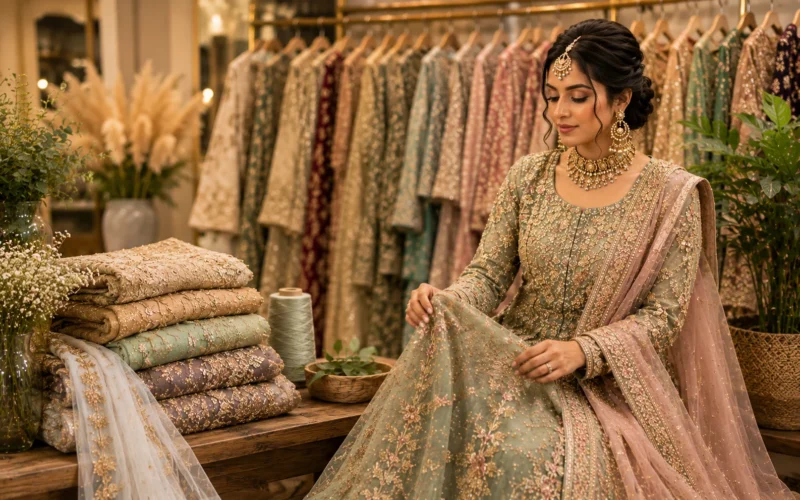
Sustainable Bridal Fashion: Ethical Embroidery, Eco Fabrics Slow Fashion in Pakistani Bridal Wear
Sustainable bridal fashion embraces ethical embroidery and eco-conscious fabrics. Jabeenz Manchester handcrafts every garment in-house, championing slow fashion in Pakistani bridal wear.
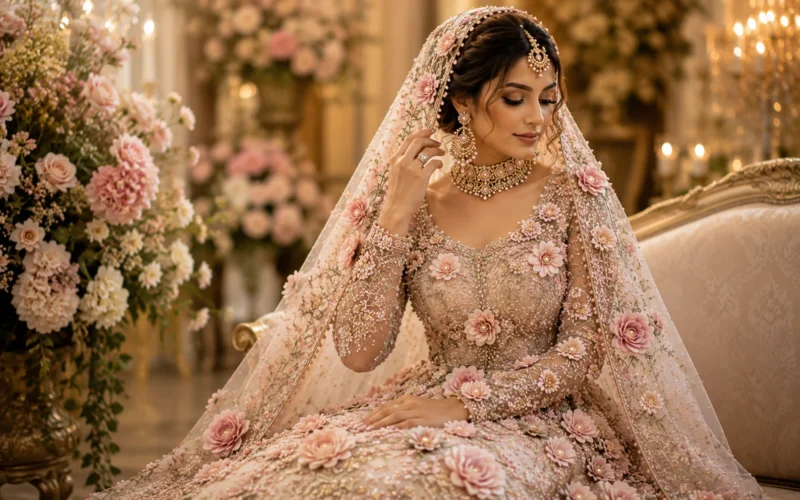
3D Floral Embellishments Botanical Embroidery: Romantic Trends in Pakistani Bridal Wear
3D floral embellishments and botanical embroidery create romantic Pakistani bridal wear that photographs beautifully. Handcrafted at Jabeenz Manchester with fifty years of...
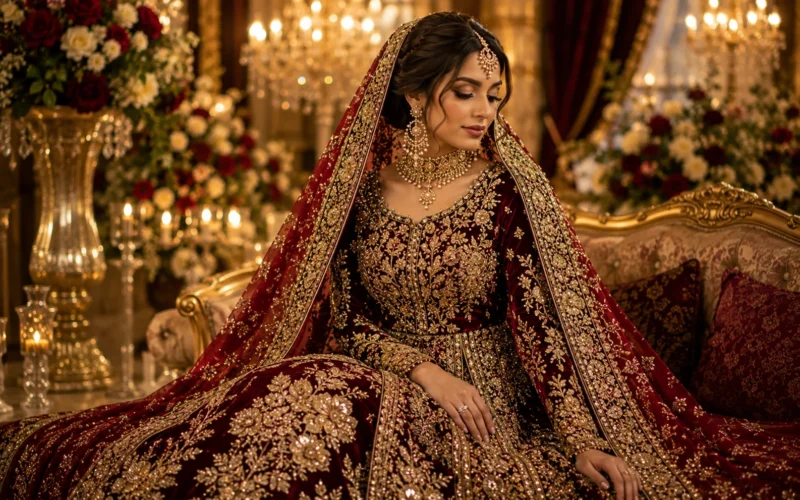
Bold and Regal Fabrics: Velvet, Brocade Metallics for Winter Weddings in the UK
Velvet, brocade, and metallic fabrics bring warmth and regal presence to winter wedding outfits. Jabeenz Manchester pairs premium textiles with hand-embroidered gold...
