
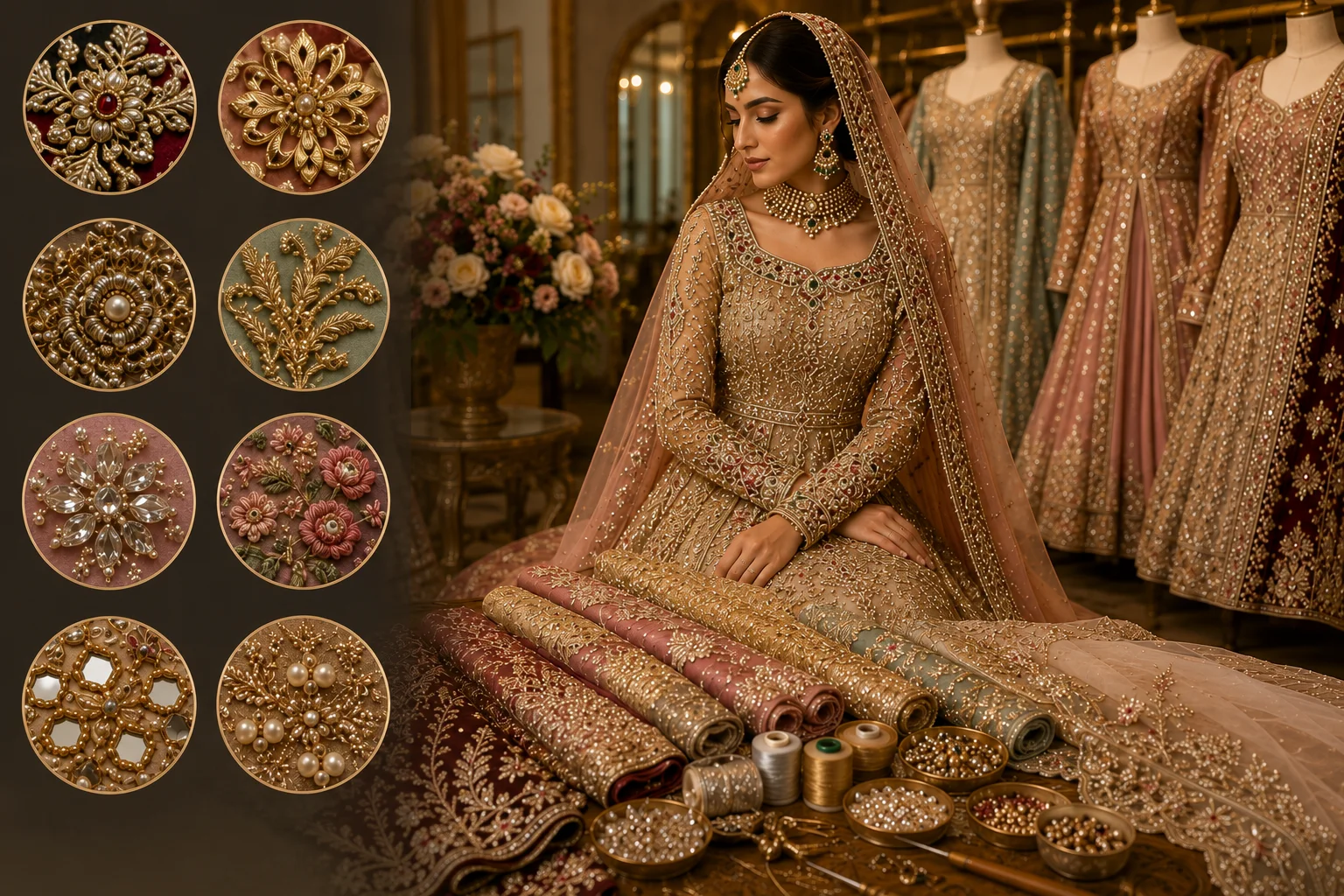
Key embellishment techniques in Pakistani bridal fashion include zardozi, gota patti, dabka, tilla, and Swarovski crystal work, each adding distinct character to bridal garments. At Jabeenz in Manchester, our artisans have perfected these handcrafted techniques over five decades of bridal dress manufacturing.
Pakistani bridal designs are renowned across the globe due to their affluence, complexity and classic beauty. Embellishment is an art, and through this, the art of South Asian culture is at the centre of this piece of glamour. Besides adding beauty to the bridal wear, the embellishment techniques used support narration of heritage, technique and changing fashions. The rich detailing in the Pakistani bridal fashion, whether traditional hand embroidery or contemporary fusion of the materials, is what makes them shine. Here is a sample of the best-selling embellishing styles that have become and are still becoming characteristic of Pakistani bridal couture.
1. Zardozi: The Royal Design
One of the most archaic and royal types of decorations in Pakistan is the Zardozi, which can be traced back to the times of the Mughals. Gold and silver strands that are usually mixed with pearls, crystals, and semi-precious stones are used to make lavish patterns. Brides who choose zardozi also emanate royal beauty because the thick embroidery gives the bride added grandeur and wealth. Regardless of its heaviness, it still has been used by the designers in the conventional lehengas. As well as modern-day bridal dresses to provide the enormous grandeur to the brides.
2. Gota Work: A Leaping of Custom
Gota work originally originated in Rajasthan and has stunningly fitted in with Pakistani bridal fashion. It consists in using gold or silver ribbon appliqued on cloth in the creation of delicate designs. This ornament is mostly used in Mehndi and Mayun wear. Because it is introduced in the outfit with its festive sense and glaring sparkling image. Gota is commonly used by modern designers in combination with thread work and sequins. Bases it on versatility to be applied to an extremely embroidered bridal dress, as well as a lighter pre-wedding outfit.
3. Resham Embroidery The Fine Lines of Elegance
Resham, or silk thread embroidery, brings in some soft, gentle beauty to bridal dresses. Whereas zardozi is grand in its technique. Resham concentrates on floral, paisley and geometric designs made with finer silk thread. The method is usually combined with sequins, beads or mirror work to make it glitter. Resham embroidery suits a bride who likes subtle, elegant beauty that does not put traditions at risk.
4. Mirror Work: The Reflective Trend
Another decoration includes the mirror ornamentation. Also referred to as the shisha embellishment, that has gained popularity in Pakistani bridal dresses. Fabric-like small mirrors are manually embroidered into pieces and shine, which looks so pretty in the light. Such a method is very common in wedding attire and is particularly popular in an event such as mehndi and sangeet. The contemporary interpretations employ coloured threads, crystals and mirrors in order to produce outfits with a bohemian but glamorous effect.
5. Sequins and Beadwork: Glamour Contemporaine
Beadwork and sequins have taken up an important role in modern bridal dressing. They contain sparkles to glow and make wedding gown attires glamorous in the natural and artificial light. Designers capitalise on just a few in order to have a subtle glitter or a tonne of them to have a brash statement. Beadwork with pearls and Swarovski crystals is also designed in a modern bridal style with luxury and a balance of modern and traditional.
6. Appliqué and Patchwork: Artistic embellishment
Appliqué and patchwork are another approach to how to embellish the bridal attire by seaming contrasting designs or motifs on the garment. This decoration and left technique enable the decorators to explore the texture, layering and even colour contrasts. Appliqué and embroidery, among others, are used together with appliqués in bridal wear in Pakistan. This style tends to be found amongst brides that desire a dramatic, artistic and distinctive look.
7. Mukesh Work: Timeless Sparkle
Mukesh is also called badla work. The thin metallic wires are twisted together to make fine patterns that shine whenever moved. The technique has been used in Pakistani bridal couture for centuries and is still a popular one, especially on dupattas and veils. Mukesh is subtle brilliance on the fabric, not excessive in the least. Ideal for brides to have a natural elegance on their person with a light touch of brilliance.
Contemporary fusion of ornamentation
Whereas traditional methods are still part of the furniture, contemporary Pakistani bridal style welcomes fusion. Multi-dimensional Design One can expect to find designers mixing zardozi and beadwork, resham embroidery and crystals and sequins. Such an intermingling is not only attractive to the modern bride but also enables such a bride to enjoy her cultural adornment. Yet still be able to be open to international trends of dress.
Conclusion
The art of embellishment penned on plain textile materials makes Pakistani bridal fashion the soul of Pakistani bridal fashion. As the art transforms plain pieces of cloth into art and traditional pieces of bridal fashion. Every stitch, every bead and every mirror has a story to tell about the craft tradition that has been handed down through generations. It can be the majesty of zardozi or the merriness of gota or even the discreet prettiness of resham; such practices all form the Pakistani bride. With the current fashion developments in the world, embellishment has also been evolving and guaranteeing continued perfection in terms of tradition, luxury, and modern creativity in bridal wear.
Visit Jabeenz in Manchester , Our boutique at 934 Stockport Road, Levenshulme, Manchester M19 3AB is open daily from 11am to 7pm. Book a free bridal consultation or browse our collections online. Call us on 07361 805655 or WhatsApp us for personalised styling advice.
Expert Tip: Matching Embellishment to Fabric
When selecting embellishment techniques, always consider the base fabric first. Heavy zardozi and dabka work best on structured fabrics like raw silk, velvet, and heavy organza that can support the weight without puckering. Lighter techniques, such as aari chain stitch and sequin scattering, suit flowing fabrics like chiffon and georgette. Mismatching weight creates garments that hang poorly and wear unevenly.
Frequently Asked Questions
What is zardozi embroidery and why is it used on bridal dresses?
Zardozi is a centuries-old metallic embroidery technique using gold and silver threads to create raised, textured motifs on fabric. It is prized for bridal wear because of its regal appearance and intricate detailing. At Jabeenz, our artisans specialise in hand-worked zardozi on bespoke bridal pieces.
Which fabric is best for a Pakistani bridal dress?
The best fabric depends on the season and silhouette. Organza and chiffon are ideal for summer weddings, velvet and brocade suit winter celebrations, and raw silk works beautifully year-round. At Jabeenz Manchester, we source premium fabrics and guide brides through the best options.
What is the difference between dabka and zardozi embroidery?
Dabka uses coiled wire stitched flat onto fabric for a textured, slightly matte finish. Zardozi uses metal threads for a smoother, more lustrous look. Both are hand-embroidery techniques used on luxury bridal wear. Jabeenz craftsmen are skilled in both techniques.
Related Reading
Ready to Find Your Dream Outfit?
Book a free consultation at our Manchester boutique or browse our latest collections online.
You Might Also Like
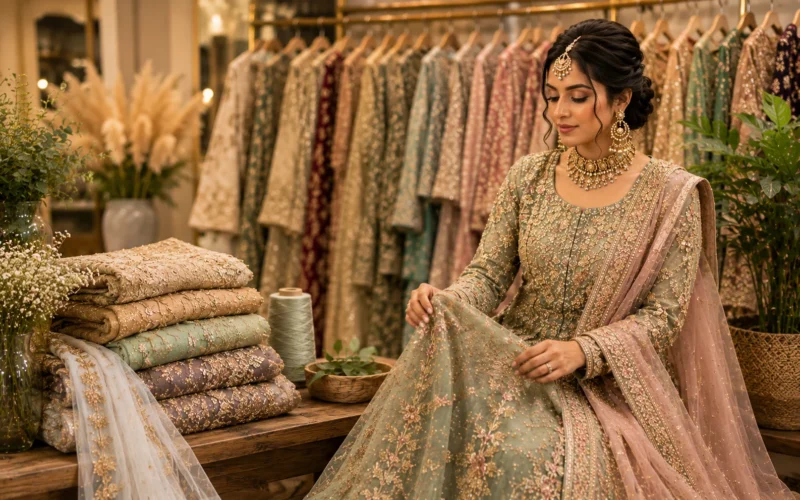
Sustainable Bridal Fashion: Ethical Embroidery, Eco Fabrics Slow Fashion in Pakistani Bridal Wear
Sustainable bridal fashion embraces ethical embroidery and eco-conscious fabrics. Jabeenz Manchester handcrafts every garment in-house, championing slow fashion in Pakistani bridal wear.
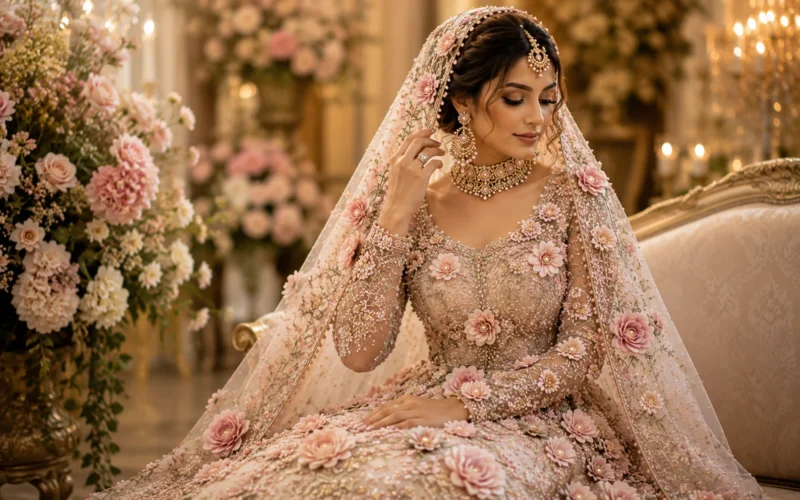
3D Floral Embellishments Botanical Embroidery: Romantic Trends in Pakistani Bridal Wear
3D floral embellishments and botanical embroidery create romantic Pakistani bridal wear that photographs beautifully. Handcrafted at Jabeenz Manchester with fifty years of...
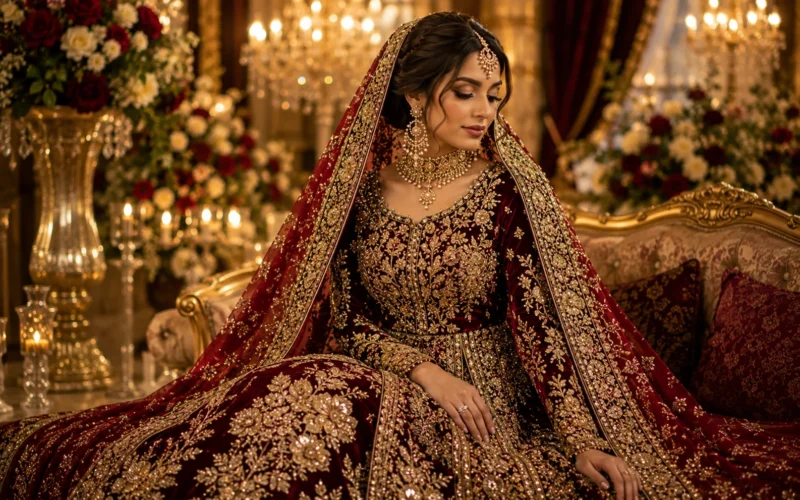
Bold and Regal Fabrics: Velvet, Brocade Metallics for Winter Weddings in the UK
Velvet, brocade, and metallic fabrics bring warmth and regal presence to winter wedding outfits. Jabeenz Manchester pairs premium textiles with hand-embroidered gold...
