
A beautifully draped dupatta transforms a bridal outfit from elegant to extraordinary, adding movement, colour, and cultural significance. At Jabeenz in Manchester, our designers have spent five decades perfecting dupatta styling that enhances every bridal ensemble. Discover classic and contemporary draping techniques that elevate your look for every wedding function.
Elevate your bridal look with dupatta styles. When it comes to Pakistani bridal dresses, everything have an importance. From bridal lehengas to cholis, the main focus is dupatta. In this blog, we will guide you by wedding dresses and how the bridal dupatta can change your look. It enhances the overall bridal look.
Traditional-style
The traditional style is the evergreen style in bridal fashion, creating a look that never goes out of fashion.The dupatta covers the bride’s head, flowing down her back and shoulders with her hair hidden beneath it.
With over 50 years of expertise manufacturing bridal wear in Manchester, Jabeenz brings unmatched craftsmanship and heritage knowledge to every garment we create.
Side-dupatta style
The side dupatta style is new in fashion. One places the bridal dupatta over one shoulder and across the waist with the other end. It gives the bride a stylish look.
Hooded-style
Brides who wish to have a royal look don the hooded style. They wear the dupatta over their heads, with a portion of it flowing over their foreheads.The rest of the dupatta flows over the shoulders.
Double-Dupatta Style
The double dupatta style is for the brides who want to have a royal look. In this style, two dupattas are used, one placed over the head and shoulders and the other over the arms or across the waist. They vary in fabric or embroidery.
Scarf-Style
In this style, the dupatta is worn loosely around the neck or shoulders like a scarf. This look is especially for brides who wish to get a simple look.
Visit Jabeenz in Manchester , Our boutique at 934 Stockport Road, Levenshulme, Manchester M19 3AB is open daily from 11am to 7pm. Book a free bridal consultation or browse our collections online. Call us on 07361 805655 or WhatsApp us for personalised styling advice.
Choosing the Right Dupatta Fabric for Your Wedding Season
The fabric of your dupatta plays a far bigger role than most brides realise. A heavy velvet dupatta in July will leave you overheated before the rukhsati even begins, while a sheer organza piece in December can look stunning but offer no warmth during an outdoor nikah. Thinking about your wedding season early on will save you from last minute fabric regrets. If you are getting married during the British summer months, lightweight fabrics such as net, organza, and chiffon will keep you comfortable while still offering that flowing, cinematic drape. For autumn and winter weddings, consider raw silk, tissue, or velvet, all of which hold their shape beautifully and photograph with a rich, luxurious depth.
How Do You Pin a Dupatta So It Stays in Place All Day?
This is one of the most common concerns brides raise during styling consultations at our Manchester studio. The truth is, pinning technique matters just as much as fabric choice. Start with a strong base by having your hair stylist create anchor points, usually a low bun or braided updo that can hold pins securely. Use long, T-shaped hijab pins rather than small bobby pins, as they grip the fabric without slipping. For heavier dupattas, place two pins on each side of the head and one at the back for a three point hold. If your dupatta has heavy borders or embellished edges, add a discreet bulldog clip underneath where it meets the shoulder. This distributes the weight and prevents that frustrating sideways slide that happens midway through the baraat.
Should Your Dupatta Match Your Outfit Exactly?
Gone are the days when your dupatta had to be an identical colour match to your lehenga or sharara. Modern Pakistani bridal styling has embraced contrast dupattas as a way to add visual interest without overcomplicating the outfit. A deep maroon bridal lehenga paired with a burnt orange or antique gold dupatta creates dimension that photographs beautifully. Similarly, pastel brides are choosing dupattas in a slightly deeper shade of their base colour, think powder pink with a rose dupatta, to frame the face with definition. At Jabeenz, we often advise brides to bring their outfit fabric swatch to the styling consultation so we can drape different dupatta options side by side and find the pairing that lights up their complexion.
Dupatta Styling Tips for Different Face Shapes
How you drape your dupatta can genuinely change the proportions of your face in photographs. Brides with round face shapes benefit from a dupatta draped loosely over the head with soft volume at the crown, as this creates the illusion of length. If you have a longer face shape, try a dupatta pulled slightly forward on the forehead with the fabric pooling at the shoulders to add width and softness. Heart shaped faces suit a dupatta draped from the centre parting and pinned behind the ears, allowing the jawline to show. These are small adjustments, but they make a real difference when you are standing under studio lighting or bright outdoor sun for your wedding portraits.
Layering Two Dupattas for Maximum Impact
Double dupatta styling has become one of the most requested looks for Pakistani brides in the UK, and for good reason. The first dupatta, usually a lighter net or organza piece, sits on the head and frames the face. The second, often a heavier embroidered or embellished piece, drapes across the arms or over one shoulder for a regal silhouette. The key to making this work without looking bulky is choosing contrasting weights. If both dupattas are equally heavy, the overall look becomes stiff. One should always be significantly lighter than the other. This approach is particularly effective if you want to know how to style a Pakistani outfit that transitions from ceremony to reception, because removing the head dupatta instantly gives you a fresh look for the evening.
Frequently Asked Questions
What are the most popular dupatta draping styles for brides?
Classic styles include the over-the-head drape, the one-shoulder cascade, and the pleated front drape. Each creates a different silhouette and mood. At Jabeenz, our styling consultants demonstrate various draping techniques during fittings to find the look that best complements your bridal outfit.
How do I choose the right dupatta fabric?
Lighter fabrics like net and organza drape softly and create a flowing effect, while silk and velvet dupattas add structure and luxury. Your dupatta should complement your lehenga’s fabric and weight. Explore coordinated sets in our collections or request a custom dupatta through our bespoke service.
Can I add a dupatta to a dress that does not include one?
Absolutely. A beautifully embellished dupatta can transform any outfit. Jabeenz offers bespoke dupattas crafted from premium fabrics with hand-applied embroidery that coordinates with your existing ensemble, whether from our party wear or bridal range.
What dupatta styles work for mehndi and walima functions?
Lighter, more playful dupatta styles suit mehndi celebrations, while elegant, subtly embellished dupattas complement walima outfits. Browse our mehndi dresses and walima dresses to see coordinated dupatta options styled for each occasion.
Related Reading
Ready to Find Your Dream Outfit?
Book a free consultation at our Manchester boutique or browse our latest collections online.
You Might Also Like
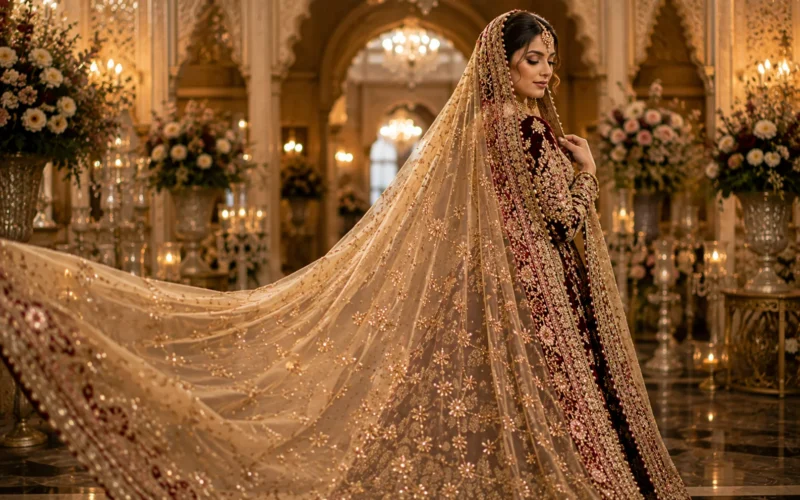
Statement Dupattas Veils: How Big-Drama Drapes are Bringing Royalty to Bridal Looks
Statement dupattas and bridal veils bring drama and royalty to any wedding look. Explore hand-embroidered options from Jabeenz Manchester, crafted with fifty...
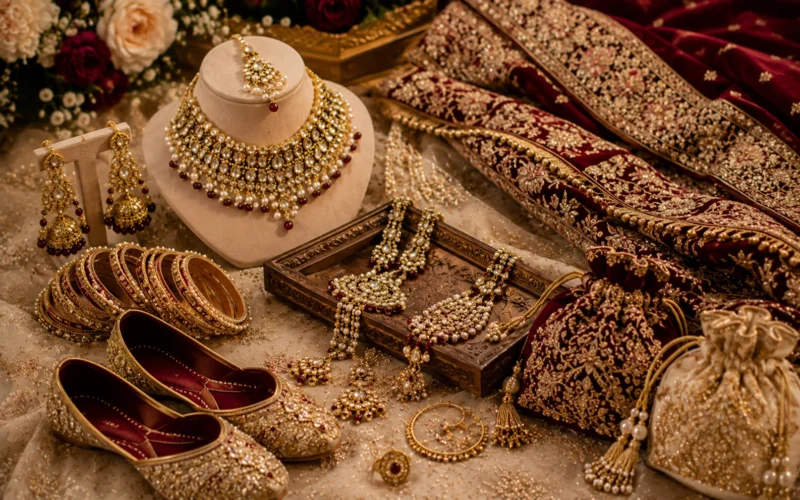
Bridal Accessories that Elevate the Look: Jewellery, Khussas, Matha Patti, Shahs etc.
Trending bridal jewellery styles for winter weddings pair warm gold tones and kundan sets with heavy fabrics. Jabeenz Manchester offers expert styling...
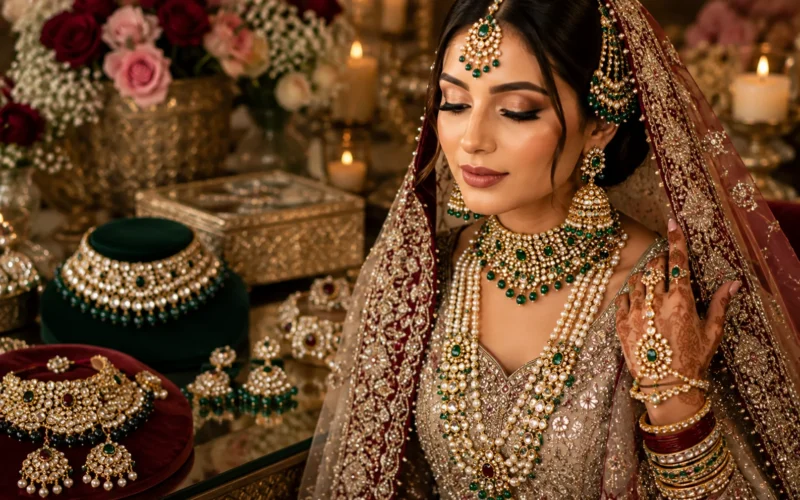
Trending Bridal Jewellery Styles for Winter Weddings 2025
Trending bridal jewellery styles for winter weddings 2025, from kundan sets to emerald chokers. Jabeenz Manchester coordinates garments with the latest jewellery...
