
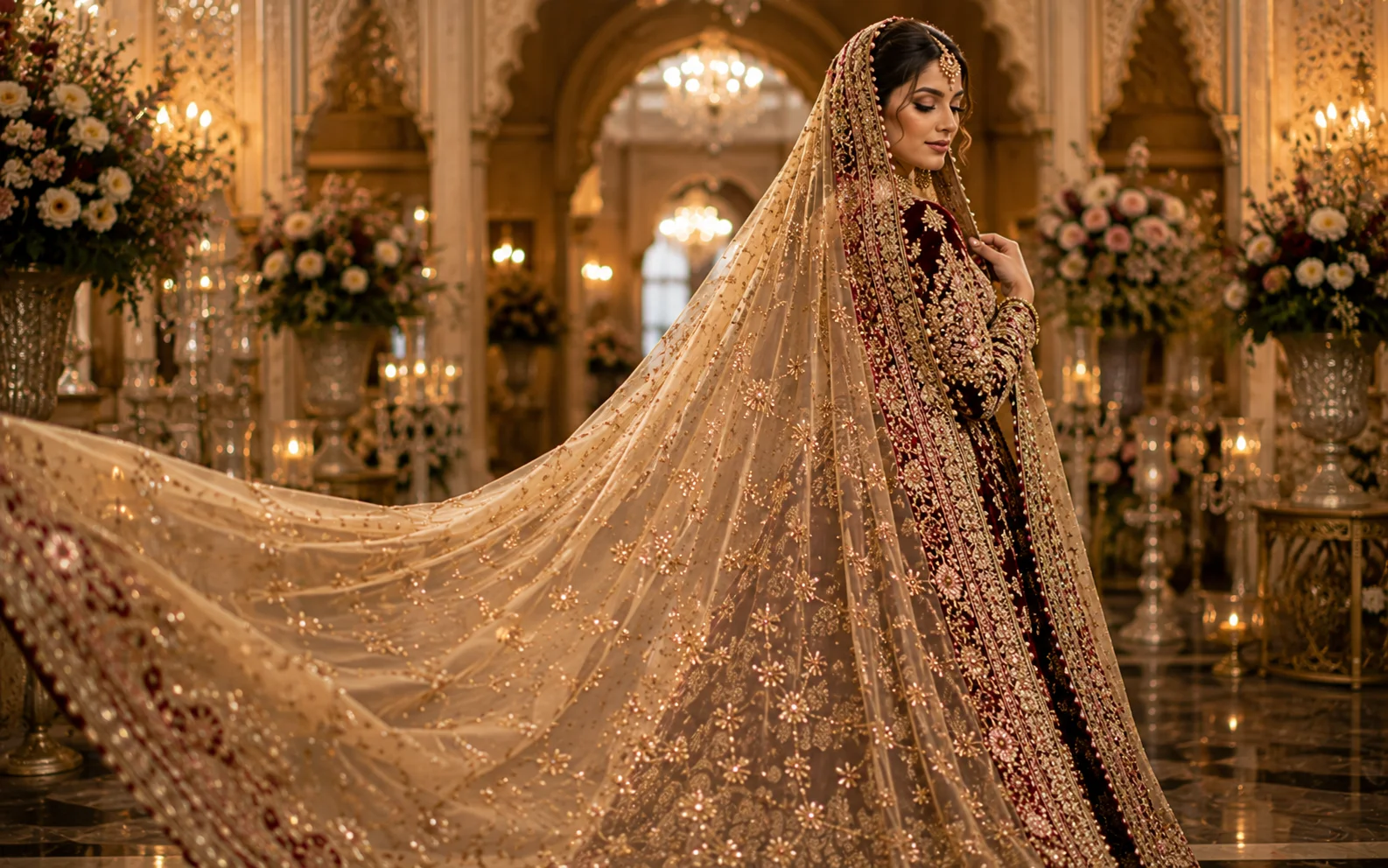
Statement dupattas and bridal veils have re-emerged as the centrepiece of South Asian bridal styling, transforming even the simplest outfit into a regal ensemble. At Jabeenz Manchester, our master embroiderers create dupattas with hand-applied zardozi and gota work that frame the bride with unmistakable grandeur.
Just something perennial about a bride in a veil or dupatta that trails at a royally splendid pace. It is something symbolically elegant, traditional, and enigmatic. The bridal fashion industry of 2025 will be characterised by the fact that statement dupattas and veils are no longer accessories. They are the main focus ranging in scale, though equally integrated into the celebrations of both South Asian and fusion weddings. These dramatic drapes are sweeping away bridal luxury in terms of embroidery and delicate additions on head wraps.
We will see how these statement items are changing the current bridal trends and why every bride-to-be needs to think about the splendour of a royal drape.
Power of the Drape: Tradition and the Modern Drama.
The dupatta is a part of bridal wear in South Asian culture, and it has always been the staple of this culture , it represents modesty, respect and grace. But now, contemporary designers are redesigning it into an artistic style, blending cultural importance with the elegance of high fashion.
Imagine flowing lines of organza or tissue or net, heavily worked with zari, dabka, resham, sequins, and pearls. These clothes reflect the light with each movement, making a walk along the aisle a movie scene. Brides no longer wear dupattas to complete their outfits; they wear them to take them away.
The Final Statement of Royalty: Double Dupattas.
There is no better royalty statement than the double dupatta trend. One over the head is a customary covering, and the other one is thrown across the shoulders or arms to showcase a lot of embroidery and craftwork.
This casing style does not only create volume and texture, but it also gives a chance of matching two opposite fabrics or colours , think about the champagne net dupatta with zari work combined with a velvet border wrap in emerald or maroon. It creates an unbelievable effect of tenderness and framework , an ideal wedding dress that brides seek when they desire delicacy but also want drama to define their appearance.
Veils That Speak Volumes
Dupattas are a source of desi drama, but veils are more international, and this is the trend that numerous brides are adopting. The contemporary veil has changed from the simple tulle to the exquisite canvas of handwork, Swarovski, and lace edges. Worn long as a cathedral or short as a fingertip, Veils have become a story-telling adjunct, as designers now monogram them with initials, wedding dates, or lines of verse.
Sabyasachi, Elan, and Maria B designers are at the forefront with heavy veils that work around the face, resembling a crown. These couture items do not supplement an outfit, but they make it complete. They provide a transcendental beauty that neither follows the trend norgoes directly to the fantasy of any bride dreaming of a royal moment.
The Art of Draping: It is Not Just a Piece of Fabric.
A dupatta or veil completely changes the appearance of a bride depending on how she wears it. A front dress is more modest and vintage, whereas a shoulder-trailing style is more evidence of the workmanship of the dress and the dupatta. The girls who want to have something more modern can also try belted drapes , tightening at the waist and preserving the traditional feel.
Hairstylists and make-up artists are also in close contact with designers to make sure that the veil or dupatta matches the overall appearance of the bride. An oversized bun adorned with jasmine and a carefully pinned dupatta will create a photograph of eternal beauty.
Colour Stories: The Subtle to Spectacular.
This season statement dupattas are leaving the foreseeable reds and golds. Brides are also trying pastel veils in such colours as mint, lilac, and powder blue and contrasting them with shimmering silver threadwork. Others are being adventurous with the use of metallics, dark plums and midnight blues, providing contrast and drama to the lighter-toned lehengas or maxis.
The contrasting dupatta (in colour) is not only a depth to the outfit but also a photographer’s dream outfit, so every wedding portrait will look and feel like a royal and fine wedding.
Closing Statement: The Reign of the Statement Drape.
The statement dupatta, or veil, has become the ultimate power manner in the world of bridal fashion, in which every detail speaks volumes. It is not just a piece of clothing; it is a celebration of heritage, craftsmanship and uniqueness. You can be inspired by the Mughal-era splendour or by modern minimalism; whatever you choose, your drape could be your crown of grace.
Visit Jabeenz in Manchester , Our boutique at 934 Stockport Road, Levenshulme, Manchester M19 3AB is open daily from 11am to 7pm. Book a free bridal consultation or browse our collections online. Call us on 07361 805655 or WhatsApp us for personalised styling advice.
Veil and Statement Dupatta Trends to Watch in 2026
The veil and statement dupatta landscape is shifting towards even more personalisation in 2026. Cathedral length veils with delicate hand embroidered borders are having a major moment, offering drama without the weight of a fully embellished piece. Ombre dupattas that transition from one colour to another across their length are also gaining popularity, creating a watercolour effect that photographs stunningly in natural light. Another emerging trend is the sheer cape dupatta, essentially a structured cape with flowing dupatta panels that drapes over the shoulders like a royal mantle. For brides who love drama but want practical dupatta styling tips they can actually use on the day, detachable trail extensions are a smart solution. These clip onto the back of your dupatta for the ceremony and photographs, then remove in seconds when you want to move freely on the dance floor.
How Long Should a Statement Dupatta Be?
Length depends entirely on the look you want and the venue you are working with. A standard bridal dupatta is around 2.5 metres, which is comfortable for most draping styles. Statement dupattas that trail behind you typically range from 3.5 to 5 metres. Anything beyond 5 metres creates spectacular photographs but requires a dedicated helper to manage during the event. Consider your venue space carefully. A grand hall with wide aisles supports a long trail beautifully, while a more intimate setting suits a shorter, more controlled drape. If you are visiting Jabeenz in Manchester for a styling consultation, bring your venue photographs so we can recommend the ideal dupatta length for your specific space.
In our 50 years of dressing brides at our Manchester atelier, we have seen trends come and go, but the demand for genuine craftsmanship has only grown. Every piece at Jabeenz is designed and manufactured under our own roof, a commitment to quality that no amount of outsourcing can match.
Frequently Asked Questions
How do I choose the right dupatta weight for my bridal outfit?
The dupatta weight should complement your outfit’s fabric. Heavier lehengas pair well with organza or net dupattas, while lighter outfits can carry tissue or silk. Our stylists guide you through this at your fitting. Book a styling consultation.
Can a statement dupatta be customised to match my bridal dress?
Absolutely. Every Jabeenz dupatta is handcrafted to coordinate with your bridal ensemble, matching embroidery patterns, colour, and embellishment density for a cohesive look. Explore our bespoke service.
What dupatta draping styles are popular for UK brides in 2026?
The over-the-head traditional drape remains a favourite, but double-dupatta styling and cape-style drapes are trending strongly among UK brides who want drama without restriction. Browse our bridal collection.
Frequently Asked Questions
How do I style a dupatta with my bridal outfit?
There are several dupatta draping styles including the classic over-the-head look, the modern one-shoulder drape, and the regal Mughal-inspired pleated style. Your choice depends on your outfit silhouette and the level of drama you want. Our stylists at Jabeenz can demonstrate different styles during your consultation.
What jewellery goes best with a Pakistani bridal outfit?
Traditional Pakistani bridal jewellery includes a jhoomar (head piece), matha patti (forehead chain), choker necklace, rani haar (long necklace), and bangles. Match gold jewellery with warm-toned outfits and silver or kundan with pastels and cooler tones.
How do I choose the right bridal dress colour for my skin tone?
Warm skin tones suit golds, corals, peaches, and warm reds. Cool skin tones look best in silvers, icy pinks, blues, and emerald greens. At Jabeenz Manchester, our stylists can help you find the perfect shade during a free consultation.
Related Reading
Ready to Find Your Dream Outfit?
Book a free consultation at our Manchester boutique or browse our latest collections online.
You Might Also Like
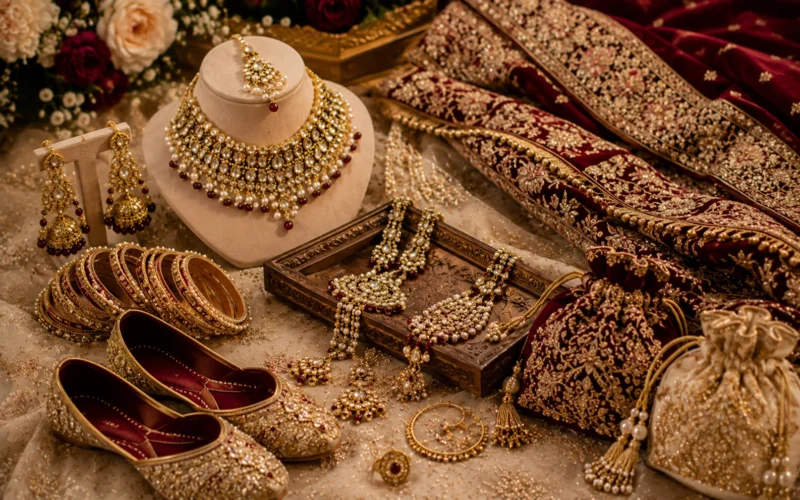
Bridal Accessories that Elevate the Look: Jewellery, Khussas, Matha Patti, Shahs etc.
Trending bridal jewellery styles for winter weddings pair warm gold tones and kundan sets with heavy fabrics. Jabeenz Manchester offers expert styling...
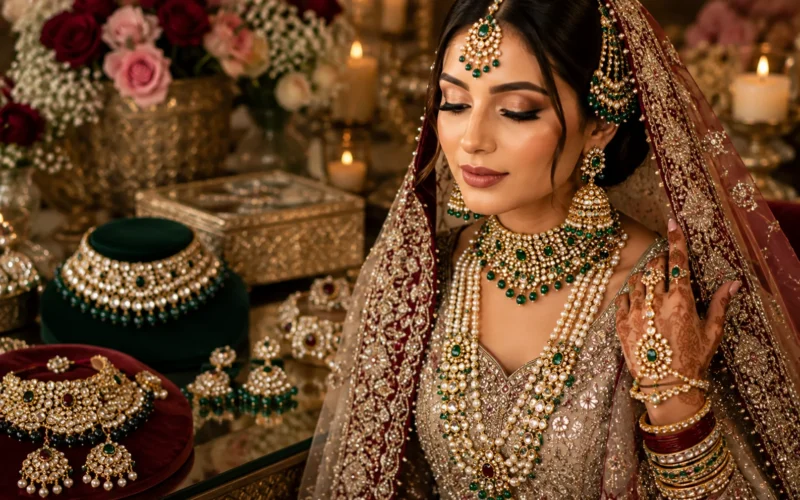
Trending Bridal Jewellery Styles for Winter Weddings 2025
Trending bridal jewellery styles for winter weddings 2025, from kundan sets to emerald chokers. Jabeenz Manchester coordinates garments with the latest jewellery...
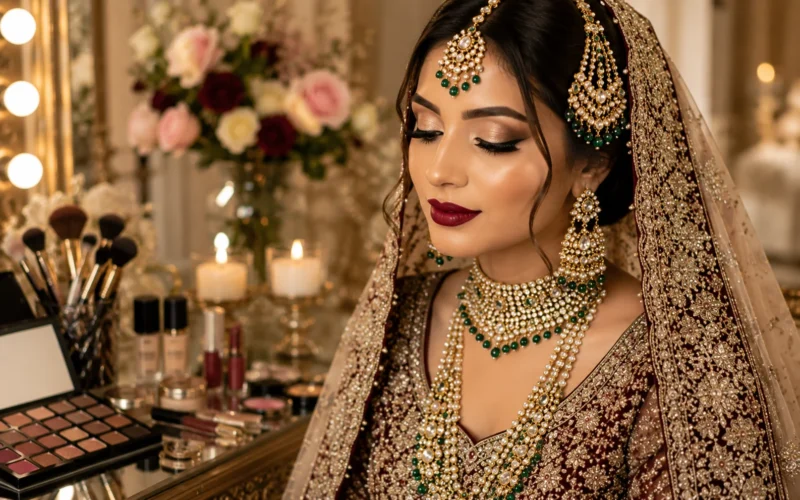
2025 Makeup Trends for Pakistani Brides Getting Married in the UK
2025 makeup trends for Pakistani brides in the UK, from soft glam to bold lips. Jabeenz Manchester coordinates dress colours with trending...
