
South Asian bridal jewellery completes every wedding look, from kundan sets and polki chokers to jhoomar headpieces and hand-chain haath phool. At Jabeenz in Manchester, our stylists help brides select the perfect jewellery pairings for barat, nikkah, walima, and mehndi outfits, drawing on over 50 years of bridal expertise.
Introduction
To begin with, traditional wedding celebrations in Pakistan feature colourful elements, grand displays, and traditional customs, practices and Asian Pakistani wedding dresses. As a result, every Pakistani bride must select her wedding dress with great attention. Everyone participating in the wedding ceremony, along with their close family members also invest effort in choosing appropriate outfits for the special day.
Those who want Asian Pakistani wedding dresses that carry tradition can reference this guide for deciding their style choices based on fabrics and present trends.
Traditional Pakistani Bridal Dresses
Now let’s explore the different types of traditional Pakistani bridal dresses that continue to influence wedding fashion across generations.
-
Lehenga Choli
The Asian Pakistani costume called lehenga choli consists of three items: the flared skirt (lehenga) plus fitted blouse (choli) together with the scarfed dupatta. The lehenga choli is the top choice for brides’ wedding attire. In particular, the following elements define a classic lehenga choli ensemble:
- Fabrics: Silk, velvet, organza, and net
- Embellishments: Zari work, embroidery, sequins, and pearls
- Colors: Red, maroon, gold, pink, and green
The Pakistani bride wears weighty jewellery including jhumkas for her ears and a maang tikka as a headpiece along with bangles to finish her ensemble.
-
Sharara and Gharara
Similarly, the traditional dress types of Sharara and Gharara have existed in Pakistan since ancient times. The dress consists of wide-legged pants plus a short or long kameez shirt combined with a dupatta.
- Difference:
The fabric flow of Sharara remains uninterrupted in the same manner as a skirt.
While wearing a Gharara provides a fitted structure with a wide flare extending from the knee.
- Popular Colours: Gold, pastel shades, and deep reds
- Best for: Nikkah and Mehndi events
-
Maxi Dress or Gown
In contrast to purely traditional styles, a Western wedding maxi dress or gown is given a Pakistani touch by local designers incorporating traditional elements. For Walima reception events there exists ideal dress options within these choices.
The dress design includes a slim upper area that develops into a cape-like hem.
- Fabrics: Net, chiffon, and georgette
Brides typically select silver together with peach, white and lavender as their preferred colour choices.
-
Anarkali Dress
Anarkali dress consists of long frock clothes, which create a royal and elegant appearance. So, the Mughal-inspired design continues to inspire modern brides who fall in love with it.
- Best for: Engagement and Nikkah
- Fabrics: Silk, chiffon, and georgette
- Embellishments: Heavy embroidery and handwork
Modern Trends in Pakistani Wedding Dresses
Modern Pakistani wedding fashion introduces fresh design elements and shades which enhance the popularity of traditional attires.
-
Pastel Colors
Modern brides choose brighter bridal colours, including peach, baby pink, mint green, and lavender, instead of deep reds and maroons.
-
Minimalist Designs
Wedding brides these days tend to select easy flowing designs instead of traditional embroidered details. Light fabric embroidery stands out as a current fashion choice.
-
Fusion Styles
A lot of newlyweds blend various styles between traditional Eastern ceremonies and Western celebratory customs. A Pakistani bride wears her maxi dress with veil while the groom selects his suit which includes traditional scarf during the wedding day. Grooms often wear sherwanis with matching turbans or shawls that coordinate with the bride’s attire, maintaining a harmonious wedding aesthetic.
-
Floral Embroidery
The trendy use of floral patterns in wedding dresses provides dresses with a romantic and new aesthetic.
Regional Influence
Each region throughout Pakistan adopts distinct wedding fashion traditions which stem from their respective cultural roots and handiwork techniques as well as local traditions.
Sindh
In Sindh the traditional bridal dresses show Ajrak prints while incorporating mirror work and distinctive colour combinations of deep reds, oranges and blues. Female marriage parties sometimes choose a hand-sewn chundri dupatta to wear on their special day.
Punjab
Pakistani Punjaban brides aim to wear bold-floral and geometric designs of Phulkari embroidery during wedding festivities. In Indian bridal fashion ladies commonly choose thick gota work (golden lace) for their lehengas and shararas.
Balochistan
The bridal costumes of Balochistan display their renown through heavy embroidered threads combined with reflective designs and decorative bead detailing. Standards indicate that wedding dresses tend to be lengthy and draping designs while featuring an ensemble of red along with maroon and mustard tones.
Khyber Pakhtunkhwa
People in Khyber Pakhtunkhwa (KP) prefer elegant wedding dresses made from silk and velvet fabrics along with elaborate designs featuring gold embroidery. Brides select lengthy formal dresses with complete sleeve coverage that they enhance with authentic head ornaments.
Choosing the Perfect Wedding Dress
These instructions help you identify your perfect wedding dress:
- Each wedding function requires its own separate outfit, starting from Mehndi through Nikkah, then Barat and finishing with Walima.
- Light fabrics such as chiffon or silk work great for summer months, yet velvet stands out best in the winter season.
- Select outfits with pleasant designs because feelings of comfort should stay at the top when deciding what to wear.
- Your outfit achieves complete cohesion through matching your jewellery together with your shoes and dupatta.
Conclusion
The outfits worn by Pakistani brides showcase appealing beauty through exquisite design choices. Achieving success on your wedding day depends primarily on your selection of lehenga styles with modern gowns along with fusion dress choices. Bride and groom pairs will find their wedding apparel among the available extensive selection that captures who they are while staying true to their cultural traditions.
The cultural heritage of Pakistani wedding dresses aligns with elegance to make any wedding celebration exceptional.
Visit Jabeenz in Manchester , Our boutique at 934 Stockport Road, Levenshulme, Manchester M19 3AB is open daily from 11am to 7pm. Book a free bridal consultation or browse our collections online. Call us on 07361 805655 or WhatsApp us for personalised styling advice.
How Diaspora Brides Balance Cultural Expectations with Personal Style
For British Pakistani brides, wedding dress shopping often involves navigating two sets of expectations. There are the cultural traditions upheld by family, particularly parents and grandparents who may have specific ideas about appropriate bridal wear. And there is your own personal style, shaped by growing up in the UK and influenced by both South Asian and Western fashion. Finding the balance between these can feel daunting, but it is entirely achievable, and many brides discover that the intersection of these influences is where the most beautiful and meaningful outfits emerge.
The key is open communication, starting with your family and continuing with your designer. Share your ideas with your parents early in the process. You may find they are more flexible than you expect. Many families care primarily about modesty, colour appropriateness, and a certain level of formality, and within those parameters, there is enormous creative freedom. If you want a non-traditional colour, explain your reasoning. If you prefer a modern silhouette, show your family how it still honours the occasion. When families feel included in the decision rather than overruled, compromise happens naturally.
Fusion design offers practical solutions for brides who want the best of both worlds. A traditional lehenga silhouette with a contemporary neckline. A classic red outfit with modern, minimalist embroidery rather than heavy traditional work. A bespoke gown that incorporates traditional Pakistani embroidery techniques on a Western-inspired silhouette. At Jabeenz, we work with diaspora brides regularly and understand these conversations intimately. Our design process creates space for both family input and personal expression, resulting in outfits that make everyone happy, most importantly the bride herself.
Frequently Asked Questions
How far in advance should I order my Pakistani wedding dress?
We recommend ordering your Pakistani bridal dress at least 4 to 6 months before your wedding date. Bespoke designs may take 8 to 12 weeks for creation. Book a consultation at Jabeenz Manchester to start the process early.
What should I bring to my bridal dress consultation?
Bring inspiration images, your colour palette, venue details, and any jewellery you plan to wear. It also helps to have a budget range in mind. At Jabeenz, our consultations are free and our stylists will guide you through every detail.
How much does a Pakistani bridal dress cost in the UK?
Pakistani bridal dresses in the UK typically range from 500 to 5,000 pounds depending on fabric, embroidery complexity, and whether it is bespoke. At Jabeenz, we offer options across all budgets with our own manufacturing ensuring fair pricing without designer markups.
Related Reading
Ready to Find Your Dream Outfit?
Book a free consultation at our Manchester boutique or browse our latest collections online.
You Might Also Like
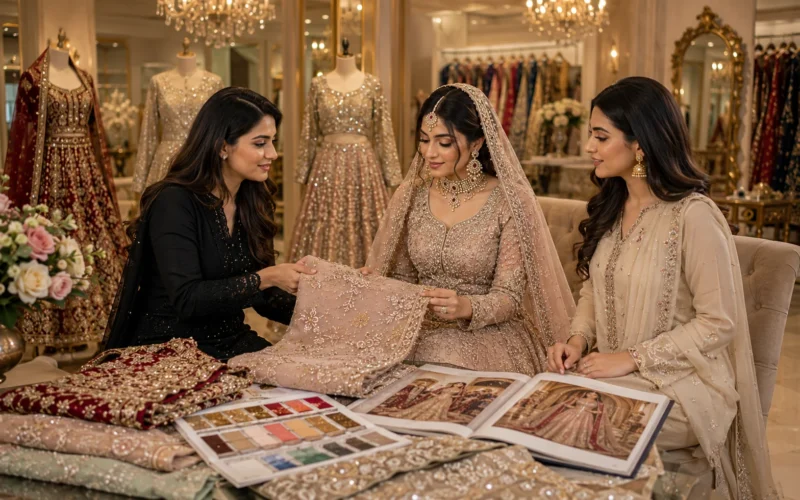
Top Pakistani Wedding Designers for Custom Bridal Wear in the UK
Discover the top Pakistani wedding designers for custom bridal wear in the UK. Jabeenz Manchester offers bespoke bridal couture with 50 years...
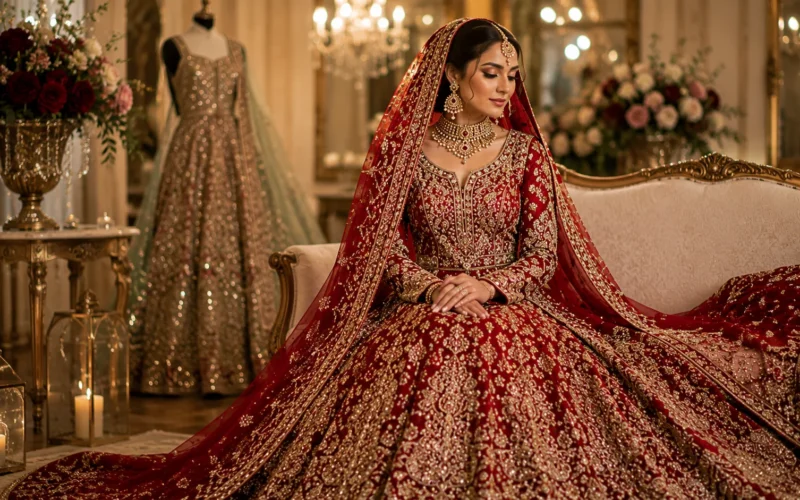
Classic Pakistani Bridal Gown Dresses for a Timeless Wedding
Explore classic Pakistani bridal gown dresses for a timeless wedding featuring Mughal-inspired embroidery and premium fabrics. Jabeenz Manchester crafts heirloom-quality gowns with...
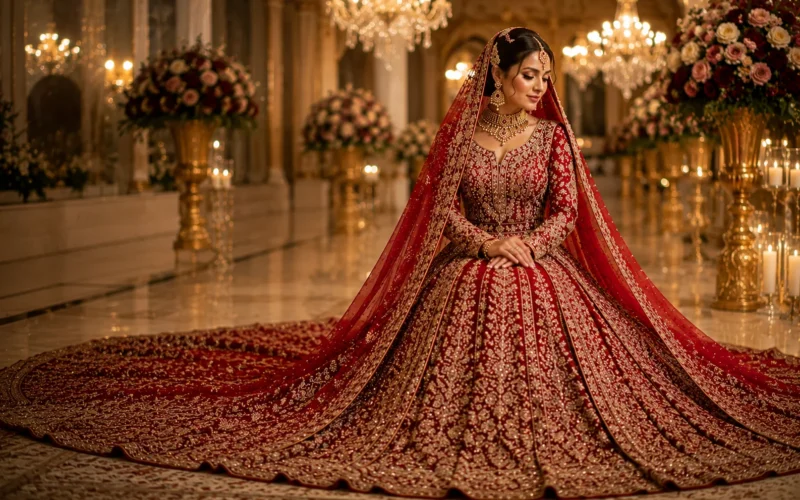
Best Pakistani Bridal Gowns for a Grand Wedding
Discover the best Pakistani bridal gowns for a grand wedding with dramatic trains, rich embellishments, and statement silhouettes. Jabeenz Manchester manufactures show-stopping...
