
Designing a bespoke bridal gown involves collaborative sessions with expert designers, from initial mood-boarding and fabric selection through pattern drafting, embroidery mapping, and final fitting. Jabeenz in Manchester has offered a full bespoke bridal service for over 50 years, manufacturing every gown in-house to deliver truly original creations that no other bride will wear.
Those looking for Pakistani bridal dresses or Pakistani wedding dresses, it’s not just about picking a gorgeous dressᅳit’s about finding the ultimate wedding gown fit guide that makes you feel beautiful, comfortable and confident.
The fit of your bridal dress can truly change the way you look and feel. A well-fitted dress will not only highlight your features but also allow you to enjoy your day.
Make sure your wedding day is perfect as you’ve always dreamed.
Should wedding dress be tight or loose?
It is important to remember that the dress should feel a little tight. Wedding dresses are usually altered to hug the body, so don’t panic.
Here, we’ll discuss everything you should know. From understanding different styles to knowing your measurements and the ultimate wedding gown fit guide.
Know your bridal dress style
Here’s a simple summary of the styles:
Lehenga Choli: This includes a long, lehenga with a choli. It’s beautifully decorated with embroidery and beads, giving it a rich look.
Anarkali: This style containsa long, frock that’s fitted at the top and flares out at the bottom.
Frock with Sharara: A long frock with sharara,. It’s comfortable and stylish, perfect for brides who want a different look.
Pishwas: A long dress with beautiful embroidery and a lehenga. It is best for brides who love detailed work.
Maxi Dress: For brides who prefer simplicity, a maxi dress offers comfort and style.
Right Bridal Dress Fit
The fit of your bridal dress is one of the most important things to get right. . Here are some simple tips for your wedding dress:
Measurements: Before shopping for your dress, make sure to get your body measurements taken properly.
Know Your Size: Check the size guide of the designer or store you’re buying from to make sure you’re picking the right size.
Alterations: Most brides need some alterations for their dress.
Fabric: Different fabrics stretch and move in different ways. Make sure to choose a fabric that complements your body shape.
Comfort: When trying on the dress, sit, walk and move around to make sure you’re comfortable.
Final Fitting
The final fitting is a very important step to make sure your bridal dress is just right. At this point, make sure the dress fits perfectly and is comfortable enough for you to enjoy your big day.
Cleaning
If your dress has any stains from the fittings, make sure it is cleaned and pressed.
Emergency Kit:
Keep a kit on hand, including needles, thread, safety pins and stain remover for quick fix.
Conclusion
It’s important to understand your body type, get your measurements and some alterations of dress for the perfect look. When your dress fits well and feels comfortable, you’ll feel beautiful, making your wedding day more memorable.
Visit Jabeenz in Manchester , Our boutique at 934 Stockport Road, Levenshulme, Manchester M19 3AB is open daily from 11am to 7pm. Book a free bridal consultation or browse our collections online. Call us on 07361 805655 or WhatsApp us for personalised styling advice.
How to Take Accurate Body Measurements for Your Bridal Gown
Getting precise body measurements is the foundation of a perfectly fitting bridal gown. Even if your boutique will take professional measurements during your consultation, understanding the basics helps you communicate about fit more confidently. The key measurements for South Asian bridal wear include bust, underbust, waist, hips, shoulder width, arm circumference, wrist, and overall length from shoulder to floor. Always measure over lightweight clothing and use a fabric tape measure rather than a rigid one.
Stand naturally when being measured. Do not hold your breath or pull in your stomach, as this creates a false reading that will result in a gown that is too tight in all the wrong places. Measure at the fullest points of your bust and hips, and at the narrowest point of your natural waist (typically just above the navel). If you are between sizes, always work with the larger measurement. It is far easier to take fabric in than to let it out, and your comfort on the wedding day should never be compromised for a smaller number on the tape.
What Are the Most Common Fit Issues with Bridal Gowns?
Certain fit problems come up again and again in bridal wear, and knowing about them in advance can save you stress. Gaping at the neckline is one of the most common issues, particularly with sweetheart and V-neck designs. This usually happens when the bodice is too large or the cups are not properly structured. The fix is straightforward, involving either taking in the side seams or adding boning for support, but it needs to be addressed before the final fitting.
Another frequent issue is bunching around the waist, which occurs when the bodice and skirt do not sit correctly at the natural waistline. This can make even the most expensive outfit look poorly made. A skilled tailor will adjust the waist seam placement to match your body proportions. Sleeve tightness is also worth watching, especially if your arms are toned or fuller. Sleeves should allow you to raise your arms comfortably for your jhoomar to be placed, for photos, and for dancing.
Alterations Timeline: When Should You Schedule Fittings?
Plan for at least two fitting appointments, ideally three if your outfit is heavily embellished or has complex construction. Your first fitting should happen around four to six weeks before the wedding. This appointment identifies any major adjustments needed, from hemline length to bodice fit. The second fitting, two to three weeks later, confirms that the adjustments are correct and catches any remaining issues. A final fitting one week before the wedding gives you peace of mind and allows for any last-minute tweaks due to weight fluctuation or changes in footwear choice.
Bring the shoes, undergarments, and any padding you plan to wear on the day to every fitting. Your gown’s hemline depends on your heel height, and the way the bodice sits depends on what you are wearing underneath. At Jabeenz, our in-house tailoring team handles all alterations, which means faster turnaround times and direct communication with the people who constructed your outfit. This is a significant advantage over boutiques that outsource alterations to third parties.
How Does Fabric Stretch Affect the Fit of My Bridal Outfit?
Different fabrics behave differently over the course of a long wedding day, and understanding this can prevent unpleasant surprises. Silk and chiffon have minimal stretch but may relax slightly with body heat. Velvet has no give at all, so measurements must be exact. Jersey and stretch net offer flexibility, which can be forgiving but also means the outfit may loosen after several hours of wear. Your designer should account for fabric behaviour when constructing your gown, building in the right amount of ease for comfort without compromising the silhouette.
Heavy embroidery and beadwork add weight, which can cause fabrics to drop slightly over time. If your lehenga or gown has extensive embellishment, a structured petticoat or cancan layer underneath will maintain the shape throughout the day. Discuss fabric properties with your designer during the consultation. Understanding how your chosen materials will behave in warm venues versus outdoor settings will help you make informed decisions about lining, structure, and ease of movement.
Why Professional Fitting Makes All the Difference
A professionally fitted bridal gown transforms the way you carry yourself on your wedding day. Every detail matters, from the way the bodice contours to your waist to the precise point where the hemline meets your shoes. At Jabeenz, our tailoring team works with each bride individually, taking over a dozen measurements to ensure every seam sits exactly where it should. The confidence that comes from wearing something perfectly fitted is something no amount of accessories can match. Invest in the fit, and everything else falls into place.
Frequently Asked Questions
How far in advance should I order my Pakistani wedding dress?
We recommend ordering your Pakistani bridal dress at least 4 to 6 months before your wedding date. Bespoke designs may take 8 to 12 weeks for creation. Book a consultation at Jabeenz Manchester to start the process early.
What should I bring to my bridal dress consultation?
Bring inspiration images, your colour palette, venue details, and any jewellery you plan to wear. It also helps to have a budget range in mind. At Jabeenz, our consultations are free and our stylists will guide you through every detail.
How much does a Pakistani bridal dress cost in the UK?
Pakistani bridal dresses in the UK typically range from 500 to 5,000 pounds depending on fabric, embroidery complexity, and whether it is bespoke. At Jabeenz, we offer options across all budgets with our own manufacturing ensuring fair pricing without designer markups.
Related Reading
Ready to Find Your Dream Outfit?
Book a free consultation at our Manchester boutique or browse our latest collections online.
You Might Also Like
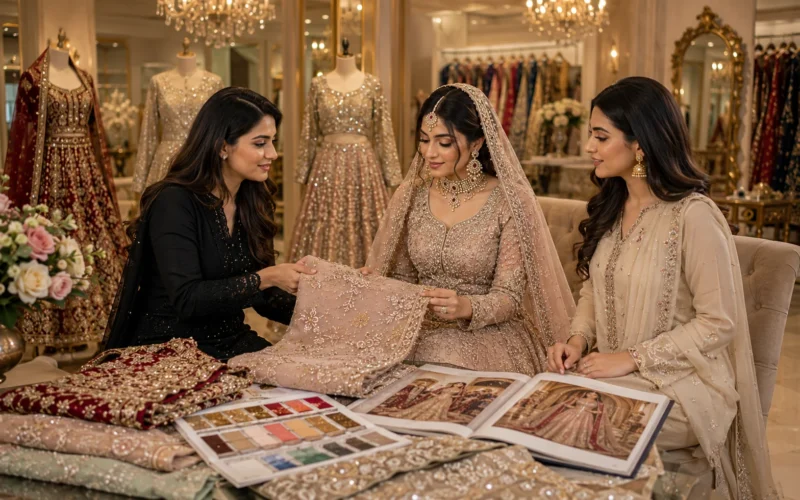
Top Pakistani Wedding Designers for Custom Bridal Wear in the UK
Discover the top Pakistani wedding designers for custom bridal wear in the UK. Jabeenz Manchester offers bespoke bridal couture with 50 years...
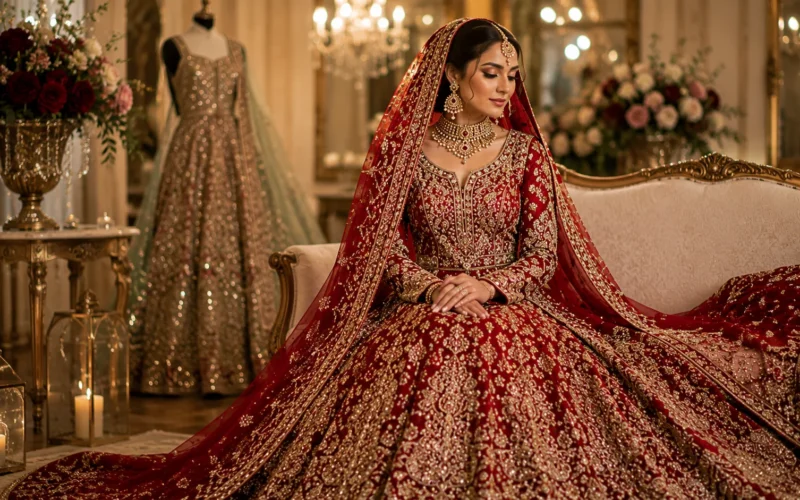
Classic Pakistani Bridal Gown Dresses for a Timeless Wedding
Explore classic Pakistani bridal gown dresses for a timeless wedding featuring Mughal-inspired embroidery and premium fabrics. Jabeenz Manchester crafts heirloom-quality gowns with...
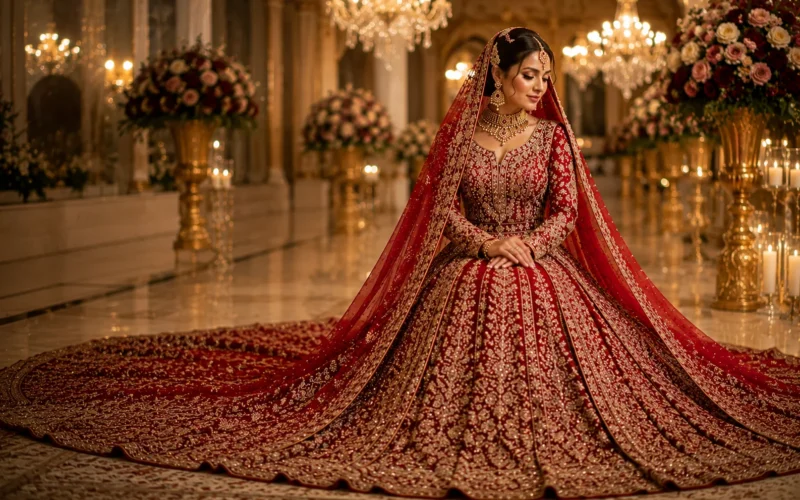
Best Pakistani Bridal Gowns for a Grand Wedding
Discover the best Pakistani bridal gowns for a grand wedding with dramatic trains, rich embellishments, and statement silhouettes. Jabeenz Manchester manufactures show-stopping...
