
Walima reception dresses should strike the perfect balance between celebration and sophistication, with lighter embellishments and contemporary silhouettes distinguishing them from barat-day bridal wear. Jabeenz in Manchester manufactures walima outfits that reflect this distinction, offering elegant gowns, sarees, and lehnga cholis designed for joyful post-wedding celebrations.
Wedding time is so special to celebrate love, family and tradition. One of the most important things of these celebrations is the bride’s dress. Among the many beautiful wedding dresses, Pakistani bridal sarees are a unique choice. These sarees are a beautiful mix of culture and modern style.
We’ll take a closer look at the timeless beauty of Pakistani bridal sarees in this blog, why they’re so special, and how today’s brides are adding their own style.
In our 50 years of dressing brides at Jabeenz, we have seen trends come and go, but the commitment to quality craftsmanship and personalised service remains at the heart of everything we create in our Manchester atelier.
The Beauty of Pakistani Bridal Dresses
A wedding occurs usually once in a lifetime and the bridal dress has to be as special. Pakistani bridal dresses are famous for their craftsmanship, beautiful embroidery and fabrics. While lehengas and frocks are popular, bridal sarees are becoming famous in bridal fashion.
What makes Pakistani bridal sarees so beautifully all rounded?
Whether you prefer red, gold, or a soft pastel, there’s a colour of saree to suit every bride. Brides can also look for different fabrics like silk, chiffon or georgette, each adding its own unique shine to make the bride glow on her special day.
How do I know what saree suits me?
It is important to determine your skin tone before choosing a saree color. For warm skin tones, earthy tones like red, orange, and warm pinks work well, while for cool skin tones, colours like blue, pink, and purple are more suitable.
Why Choose a Pakistani Bridal Saree?
Pakistani bridal sarees have a unique place. The way the saree is combined with beautiful decorations makes it more special. A bridal saree shows not just the culture but also the bride’s style.
-
Cultural TouchThese sarees are deeply connected to the culture of Pakistan. By choosing it, brides show their cultural roots while also adding a modern touch.
-
Beautiful Embroidery and Details
Pakistani bridal sarees have beautiful embroidery. Brides can go for bold designs or choose simple embroidery, depending on their style.
-
Timeless EleganceThe beauty of a bridal saree is that it never goes out of style. It ensures that a saree is not just for one special day, passed down through generations, carrying memories and stories of love and tradition.
Stunning Designs to Inspire Your Bridal Look
There are so many beautiful options to choose from. Here are some of the styles that are popular in sarees:
1. Red Sarees
One of the most evergreen choices is the red saree. Red has always been a favourite colour for Pakistani brides. A red saree with gold embroidery, creates a beautiful bridal look that never goes out of fashion.
2. Pastel Sarees
Soft pastel colours have become increasingly popular for bridal sarees. These shades give a fresh look on bridal wear.
3. Gold and Silver Sarees
For brides who want to feel like royalty, gold and silver sarees are the best choice. These metallic colours paired with heavy embroidery and mirror work create a beautiful look.
Conclusion
Pakistani bridal sarees are a mix of culture and modern style. Whether you look for a red saree or the pastels, a bridal saree offers timeless beauty. These sarees are evergreen and make any bride feel special on her big day.
Visit Jabeenz in Manchester , Our boutique at 934 Stockport Road, Levenshulme, Manchester M19 3AB is open daily from 11am to 7pm. Book a free bridal consultation or browse our collections online. Call us on 07361 805655 or WhatsApp us for personalised styling advice.
Saree Draping Styles Every Pakistani Bride Should Know
The way you drape your bridal saree defines your entire look, and there are more options than most brides realise. The classic Nivi drape, originating from Andhra Pradesh, is the most widely recognised style and works beautifully for bridal sarees because it allows the pallu to flow elegantly over the shoulder. For a more structured look, the Gujarati drape brings the pallu across the front and over the right shoulder, creating a symmetrical appearance that photographs well from every angle.
The Mumtaz drape, inspired by Bollywood glamour, wraps the saree more tightly around the body and fans the pallu in neat pleats, creating a sleek, modern silhouette. For Pakistani brides who want something regal, the seedha pallu (straight pallu) style drapes the fabric from the right shoulder, which many consider more traditional for Muslim wedding ceremonies. Practise your chosen draping style at least twice before the wedding day, and consider having your makeup artist or a family member who is confident with sarees on standby during the event.
Saree or Lehenga: How Do You Decide?
This is one of the most common questions brides bring to their consultations, and the honest answer is that both are equally valid choices. A saree suits brides who want a fluid, graceful silhouette that moves beautifully when walking. It is lighter than most lehengas, which makes it practical for long ceremonies and warm venues. Sarees also offer versatility. The same saree can look completely different depending on how it is draped, which blouse is paired with it, and how the pallu is styled.
A lehenga, on the other hand, provides more structure and a fuller silhouette that many brides associate with the grandeur of a baraat entrance. Lehengas are generally easier to wear without assistance, and they stay in place more reliably during a busy event. At Jabeenz, we find that many brides choose a lehenga for their baraat and a saree for their walima, giving them the best of both worlds. If you are torn between the two, a lehenga saree (a pre-stitched option that combines elements of both) can be a practical compromise that looks stunning.
Bridal Saree Blouse Design Trends
The blouse is the unsung hero of a bridal saree look. It frames your face, shoulders, and arms, and it is the element that guests see most clearly during conversations and close-up photographs. Current trends favour statement sleeves, whether that is a structured puff sleeve, a delicate bell sleeve, or a dramatic cape sleeve that extends into the pallu. Backless and deep-back blouses remain popular for reception events, while more conservative high-neck designs suit nikkah ceremonies perfectly.
Embroidered blouses should complement your saree without competing with it. If your saree has heavy border work, keep the blouse relatively simple with matching threadwork on the sleeves and hemline. If your saree is minimally embellished, the blouse becomes your canvas for statement embroidery, beadwork, or mirror detailing. Consider having your blouse made with boning or internal structure, especially if you are wearing a heavy saree. This provides support and prevents the blouse from riding up throughout the day.
Which Saree Fabrics Work Best for Each Season?
Choosing the right saree fabric for your wedding season can make the difference between comfort and misery on one of the most important days of your life. For summer weddings (May to August), lightweight fabrics like georgette, chiffon, and organza allow airflow and drape beautifully without clinging. These fabrics also dry quickly if you perspire, which is a practical consideration for a long day in a warm venue.
For autumn and winter weddings, richer fabrics like velvet, raw silk, and brocade provide warmth and a luxurious weight that suits the season. Tissue fabric, with its metallic sheen, works well for winter events because it catches candlelight and warm indoor lighting. Spring weddings offer the most flexibility. Net, organza, and silk blends work well as temperatures are moderate. Whichever fabric you choose, ask about lining options. A well-lined saree sits better, feels more comfortable against the skin, and prevents transparency under bright lighting or camera flash.
Frequently Asked Questions
How far in advance should I order my Pakistani wedding dress?
We recommend ordering your Pakistani bridal dress at least 4 to 6 months before your wedding date. Bespoke designs may take 8 to 12 weeks for creation. Book a consultation at Jabeenz Manchester to start the process early.
What should I bring to my bridal dress consultation?
Bring inspiration images, your colour palette, venue details, and any jewellery you plan to wear. It also helps to have a budget range in mind. At Jabeenz, our consultations are free and our stylists will guide you through every detail.
How much does a Pakistani bridal dress cost in the UK?
Pakistani bridal dresses in the UK typically range from 500 to 5,000 pounds depending on fabric, embroidery complexity, and whether it is bespoke. At Jabeenz, we offer options across all budgets with our own manufacturing ensuring fair pricing without designer markups.
Related Reading
Ready to Find Your Dream Outfit?
Book a free consultation at our Manchester boutique or browse our latest collections online.
You Might Also Like
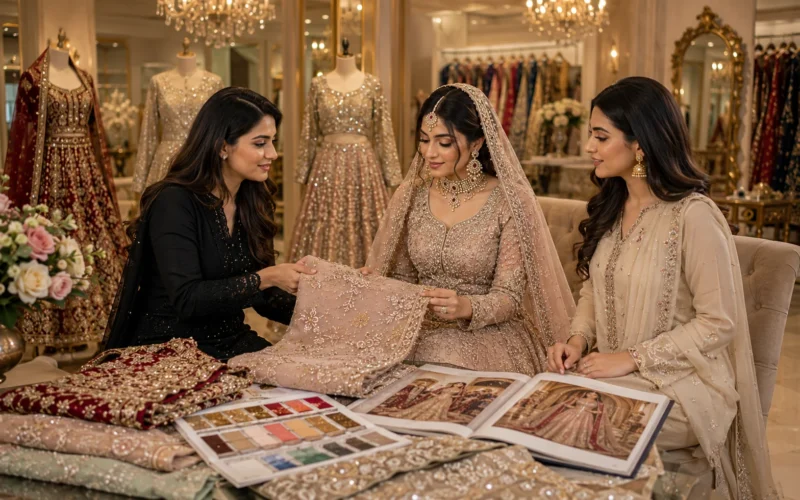
Top Pakistani Wedding Designers for Custom Bridal Wear in the UK
Discover the top Pakistani wedding designers for custom bridal wear in the UK. Jabeenz Manchester offers bespoke bridal couture with 50 years...
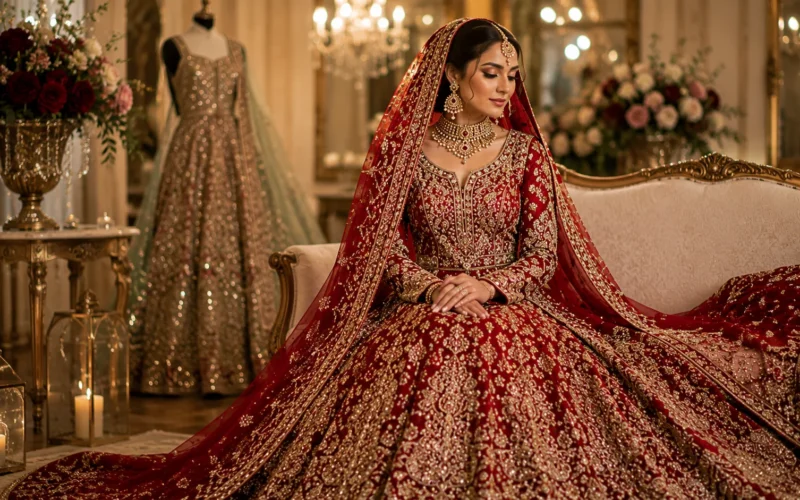
Classic Pakistani Bridal Gown Dresses for a Timeless Wedding
Explore classic Pakistani bridal gown dresses for a timeless wedding featuring Mughal-inspired embroidery and premium fabrics. Jabeenz Manchester crafts heirloom-quality gowns with...
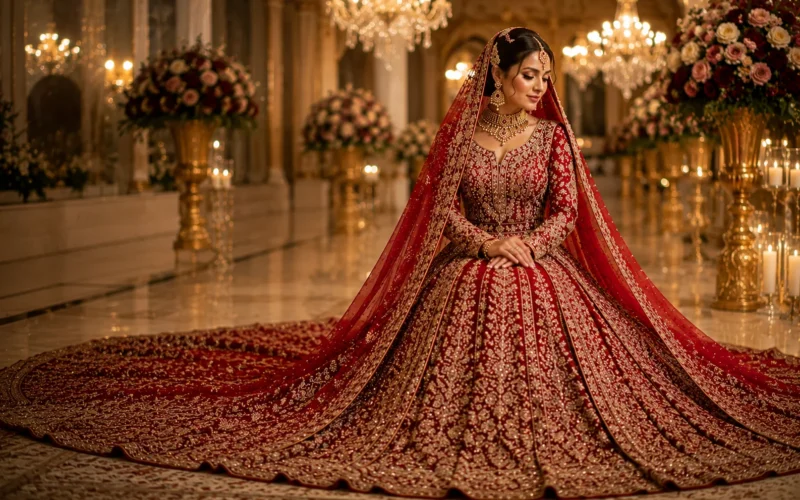
Best Pakistani Bridal Gowns for a Grand Wedding
Discover the best Pakistani bridal gowns for a grand wedding with dramatic trains, rich embellishments, and statement silhouettes. Jabeenz Manchester manufactures show-stopping...
