Complete Guide to Pakistani Bridal Dresses
A Pakistani bridal dress is far more than a garment — it is the centrepiece of a celebration that has been refined over centuries of tradition. Pakistani weddings are multi-day affairs, with each ceremony demanding its own style, silhouette, and level of grandeur. The bridal outfit for the barat is the most significant purchase a bride will make, carrying the weight of cultural heritage, family expectation, and personal expression in every stitch and embellishment.
At Jabeenz, we have been manufacturing Pakistani bridal dresses in Manchester since 1975. Nearly five decades of craftsmanship have taught us that every bride is unique, and every bridal dress should reflect that individuality. Our in-house atelier produces bespoke bridal wear from raw fabric to finished garment, giving brides complete control over colour, embroidery, silhouette, and sizing. We are not a retailer stocking pre-made pieces from overseas factories — we are a manufacturer, and that distinction defines the quality of every bridal piece that leaves our workshop.
Pakistani wedding celebrations typically span three core events: the nikkah (the religious marriage ceremony), the barat (the grand wedding ceremony where the bride departs with the groom), and the walima (the reception hosted by the groom's family). Many families also include a mehndi ceremony and additional celebrations. Each event calls for a distinct bridal outfit, and understanding what works for each occasion is the first step toward building the perfect bridal wardrobe.
Red Bridal Lehenga — The Timeless Choice
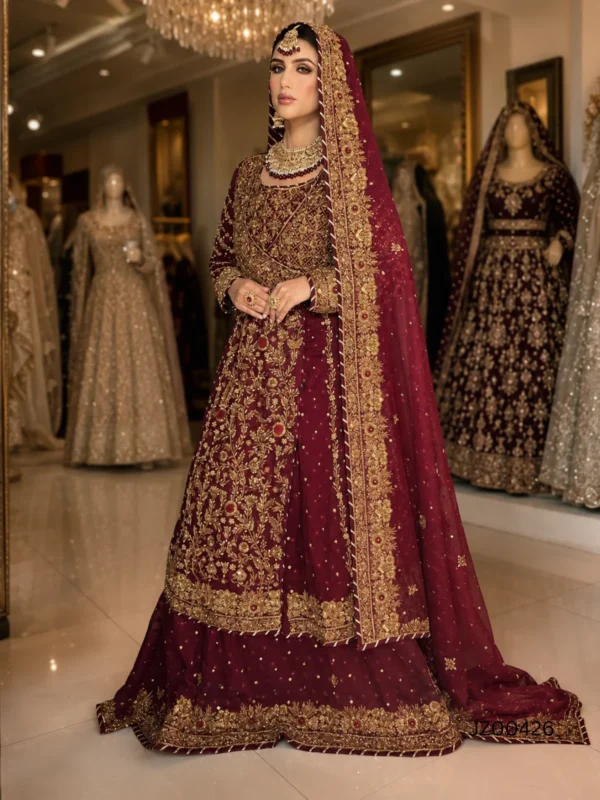
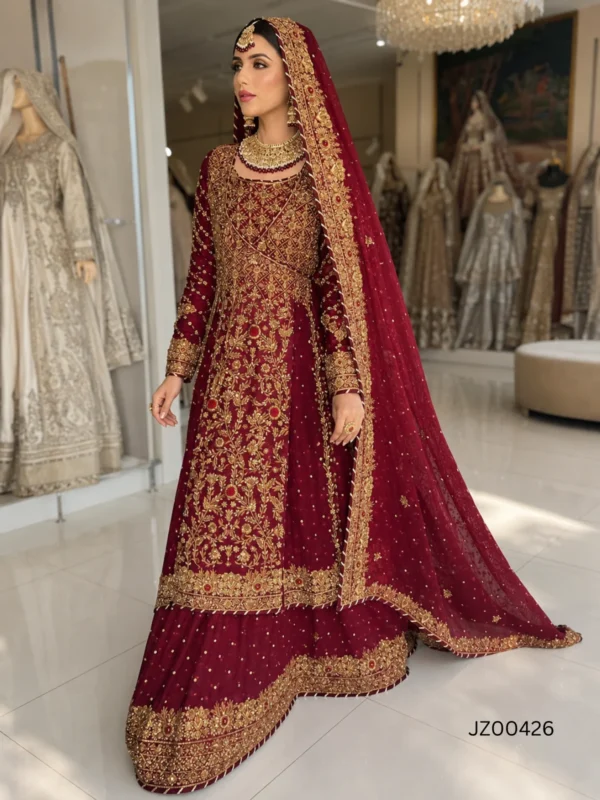
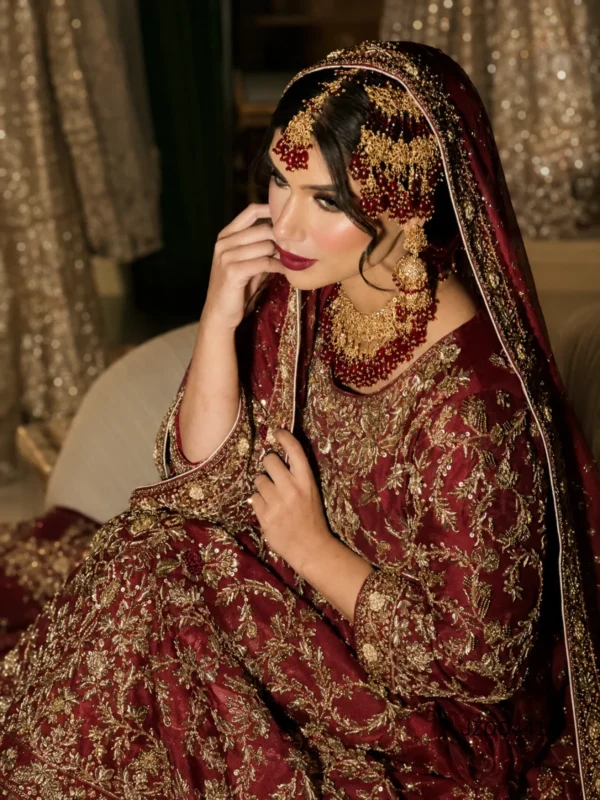
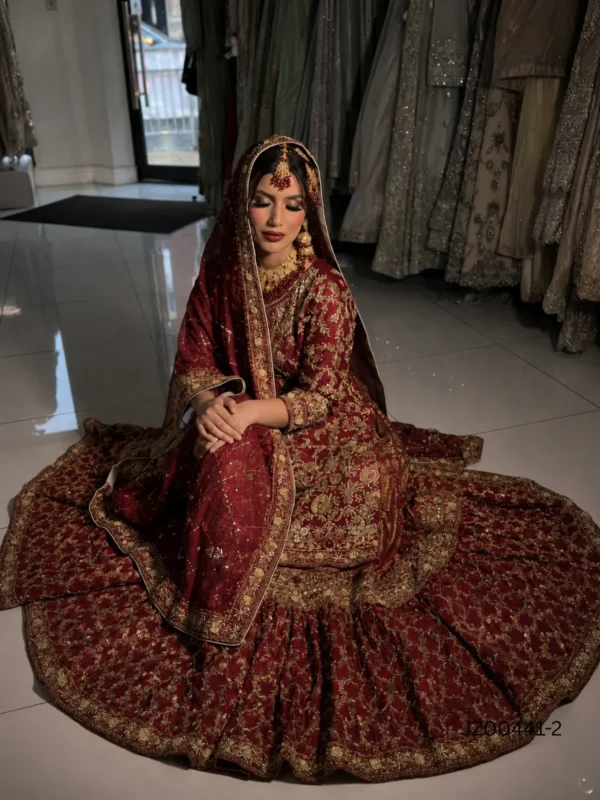
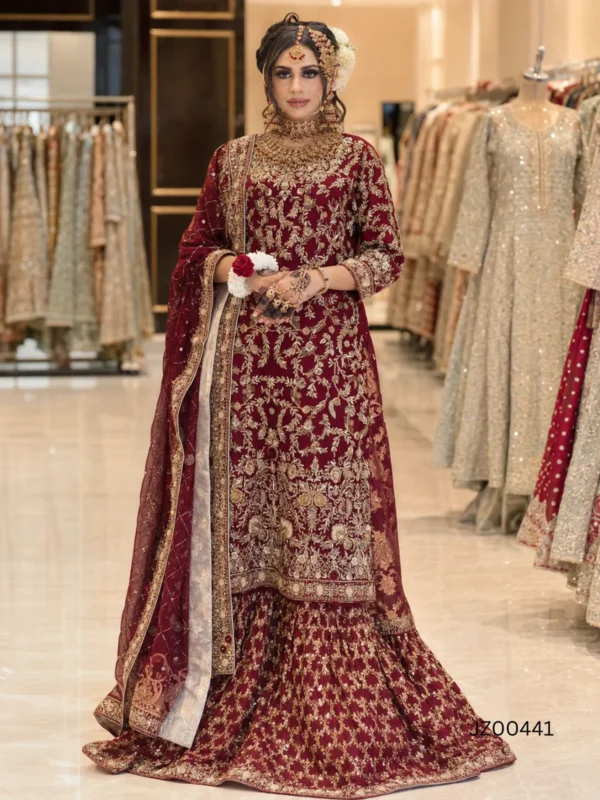
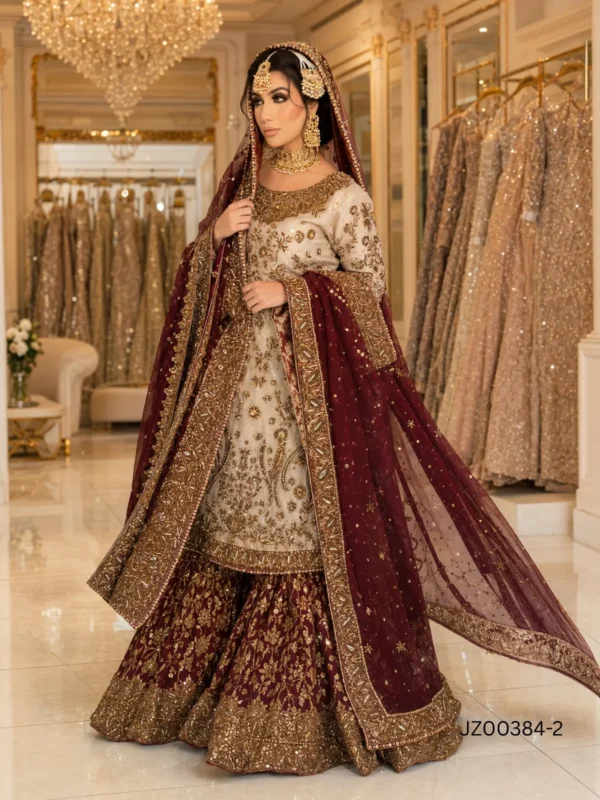
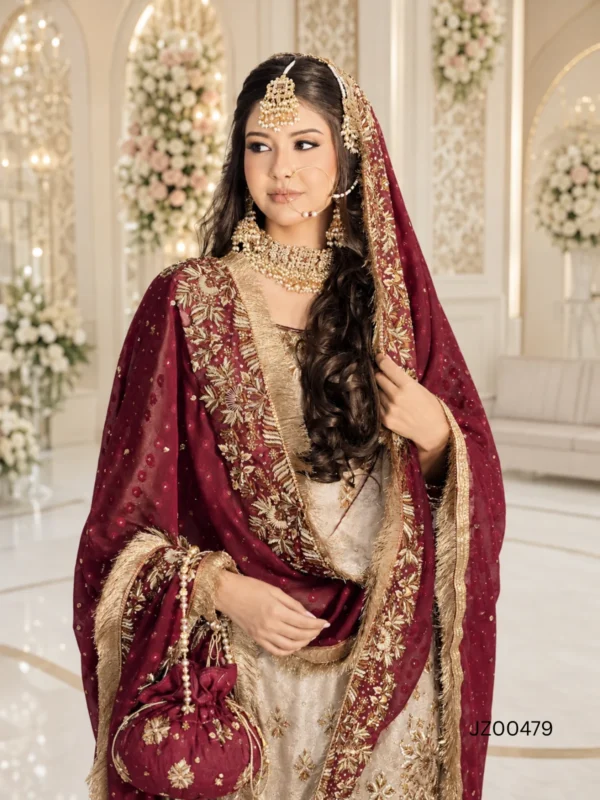
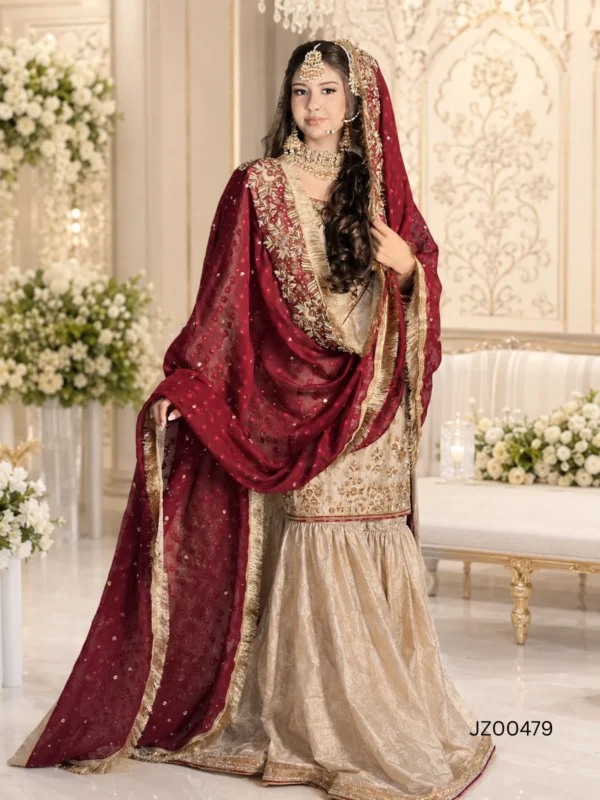
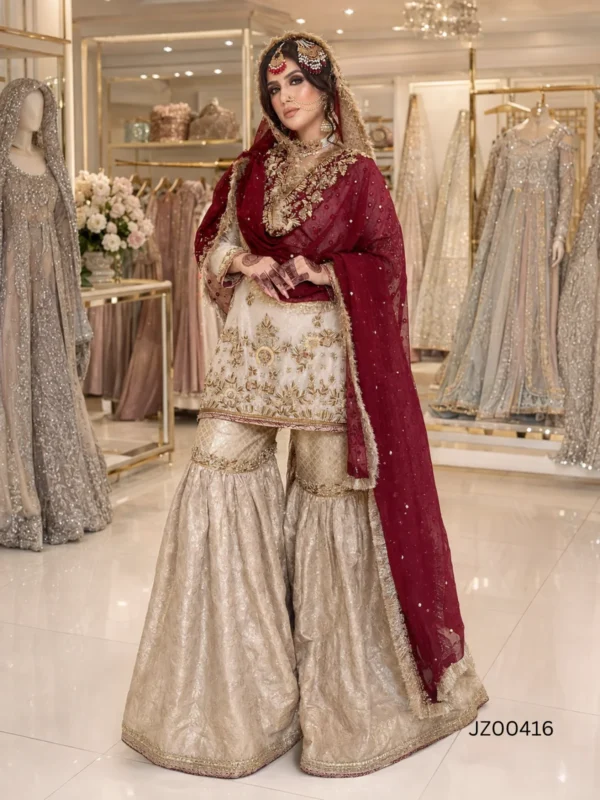
Red has been the definitive colour of Pakistani bridal fashion for centuries. Symbolising love, prosperity, and good fortune, a red bridal lehenga remains the most popular choice for barat ceremonies across the Pakistani community in the United Kingdom and worldwide. The depth of red varies — from deep crimson and rich maroon to vibrant scarlet and burgundy — and each shade carries its own character and suits different skin tones.
A traditional red bridal lehenga is a masterpiece of construction. The lehenga skirt is typically crafted from multiple panels of fabric, each cut and joined to create the ideal flare and weight. The choli (blouse) is fitted precisely to the bride's measurements, with neckline, sleeve length, and back design customised to her preference. The dupatta — often the most heavily embroidered element — is weighted and balanced so it drapes correctly throughout hours of ceremony and celebration.
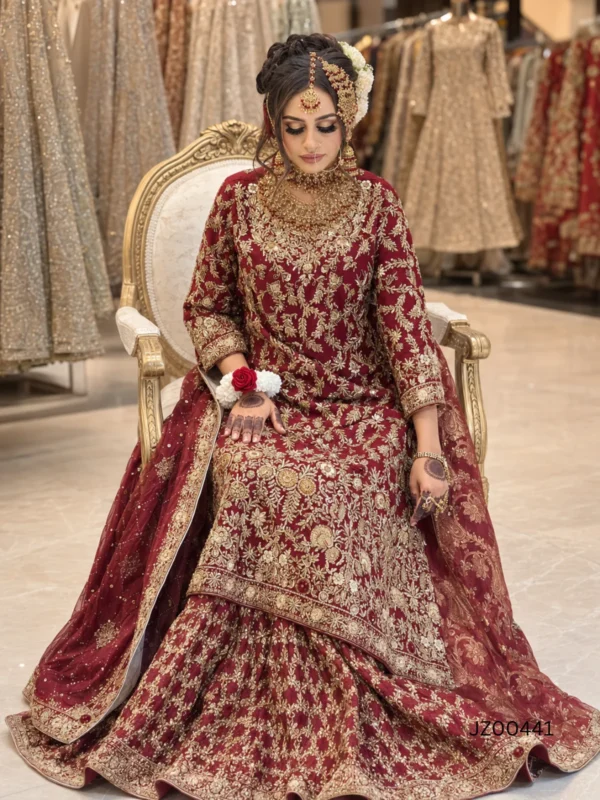
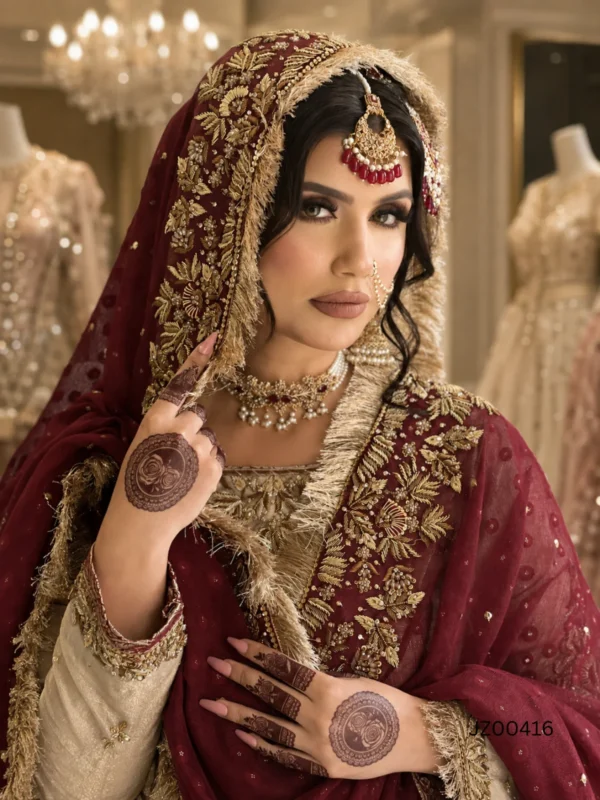
The embroidery on a red bridal lehenga is where craftsmanship truly shines. Zardozi work, using gold and silver metallic threads, creates raised, textured patterns that catch light from every angle. Dabka embroidery, made with coiled wire, adds dimensional detail that photographs beautifully. Tilla work, kora embroidery, and hand-applied sequins and pearls build layers of texture that machine embroidery simply cannot replicate. At Jabeenz, our embroidery artisans specialise in these traditional techniques, ensuring that every red bridal lehenga we produce meets the standard that brides and their families expect.
Non-Traditional Bridal Colours
While red remains the classic choice, modern Pakistani brides are increasingly exploring alternative colour palettes. This shift reflects broader trends in South Asian bridal fashion, where personal expression and individual style are celebrated alongside cultural tradition.
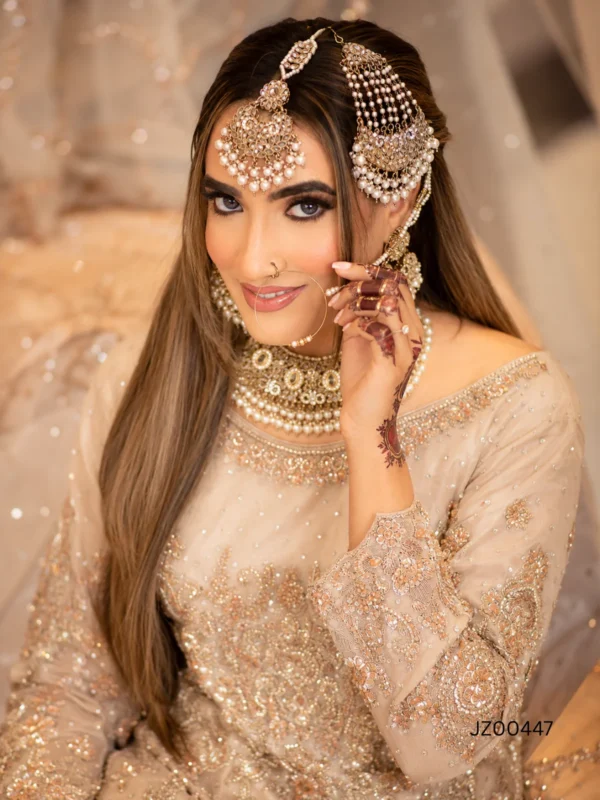
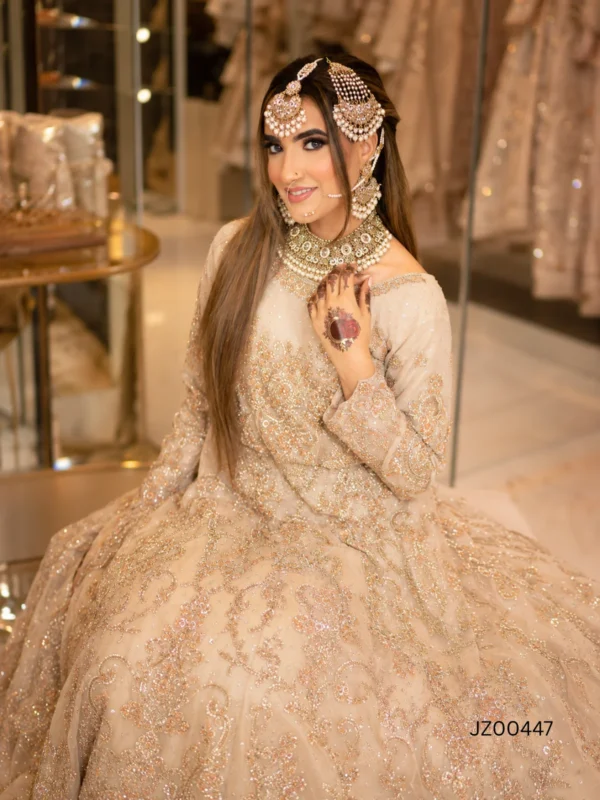
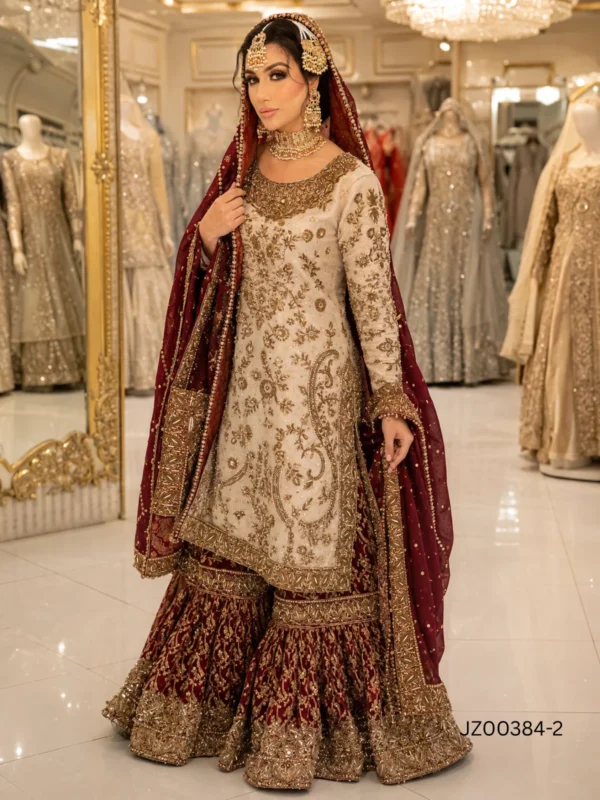
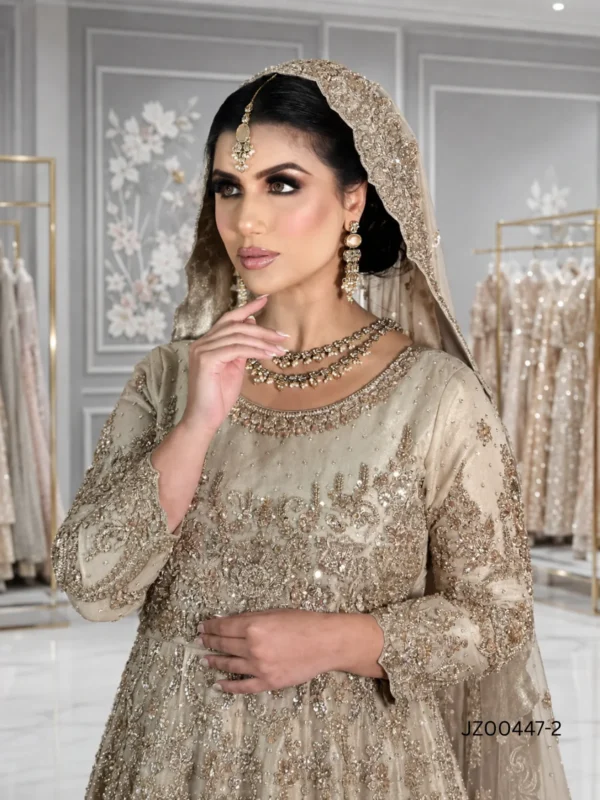
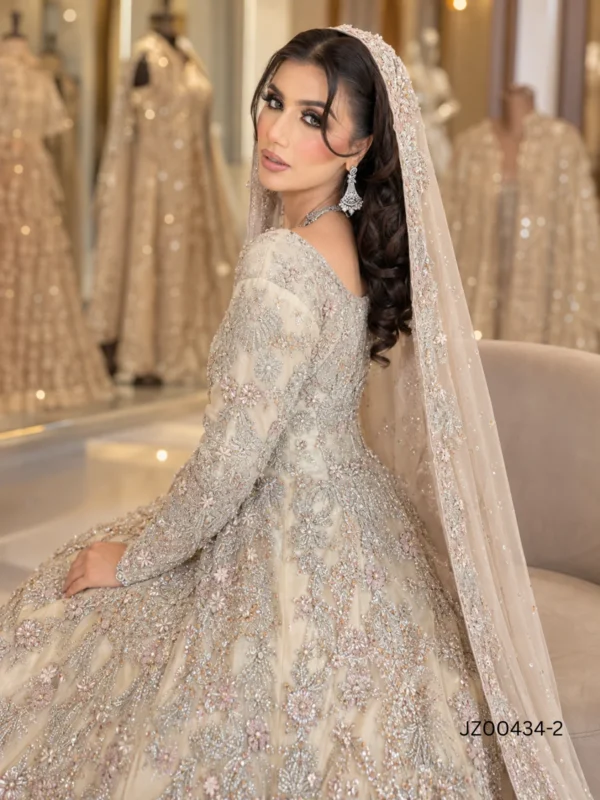
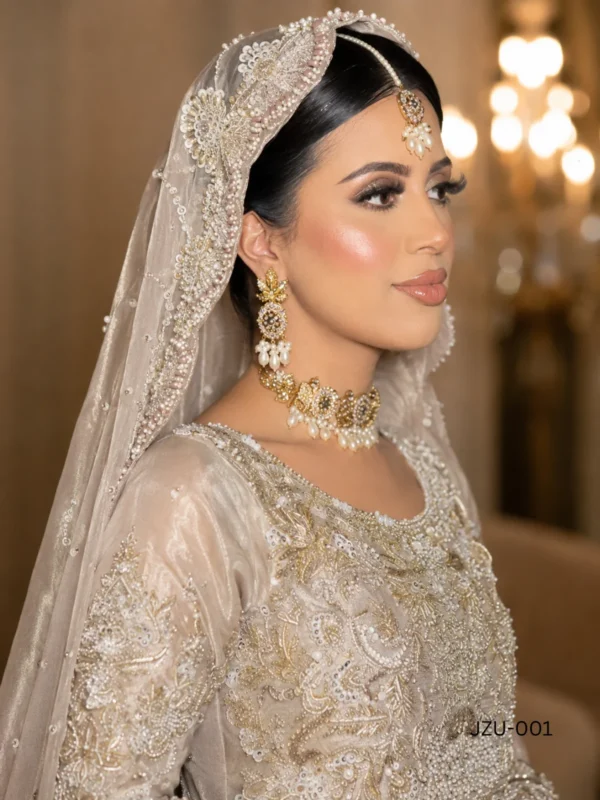
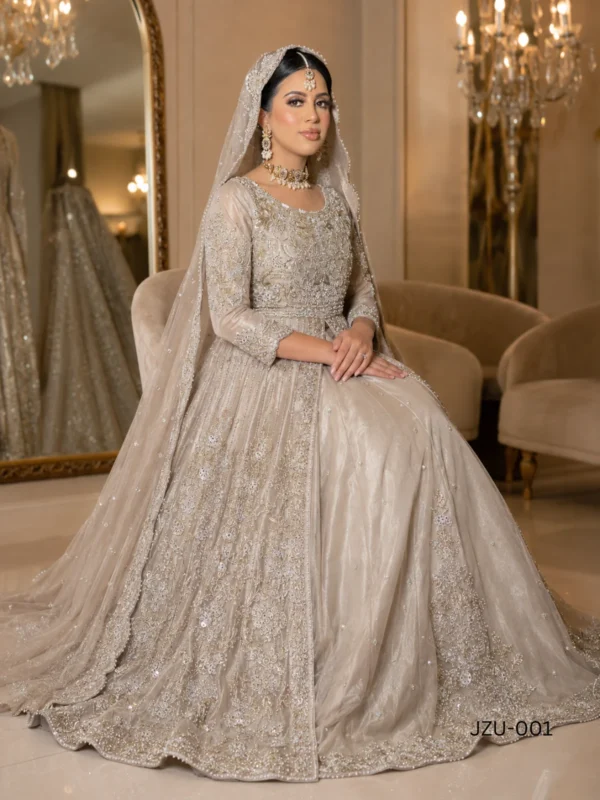
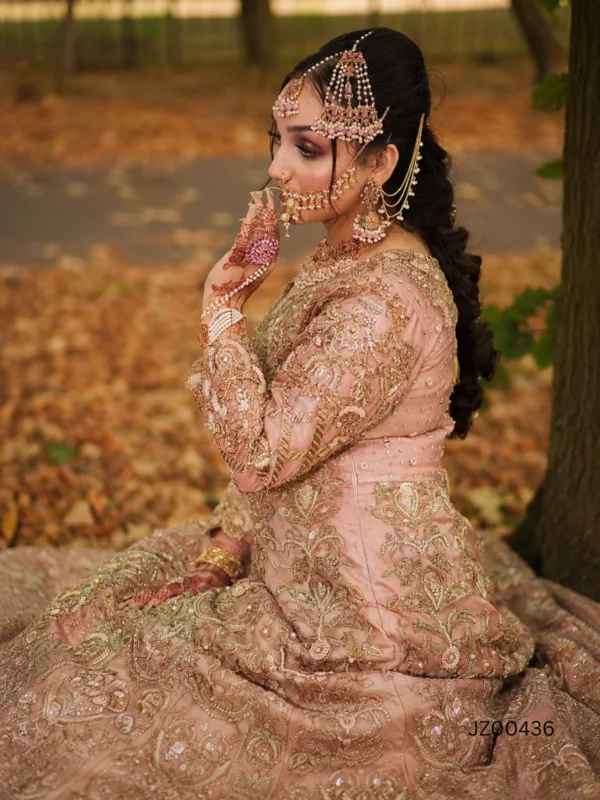
Pastel bridal dresses have surged in popularity — soft blush pink, champagne gold, ivory, and powder blue create an ethereal, romantic aesthetic that photographs beautifully in both natural and studio lighting. These lighter tones work exceptionally well for nikkah ceremonies, where the atmosphere is often more intimate and refined than the grandeur of the barat.
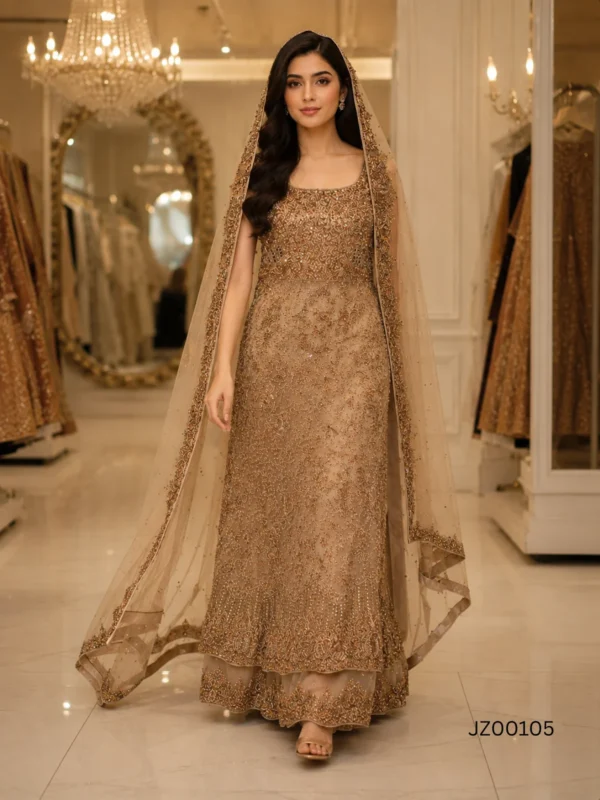
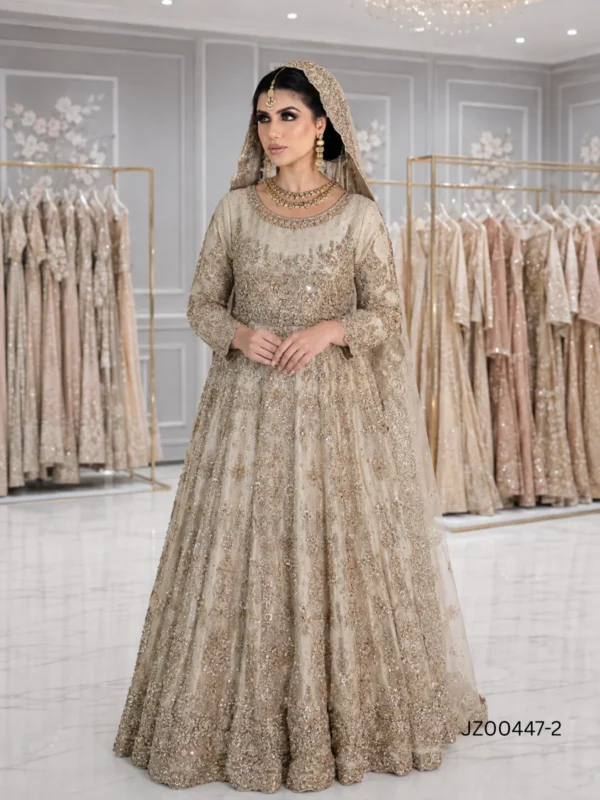
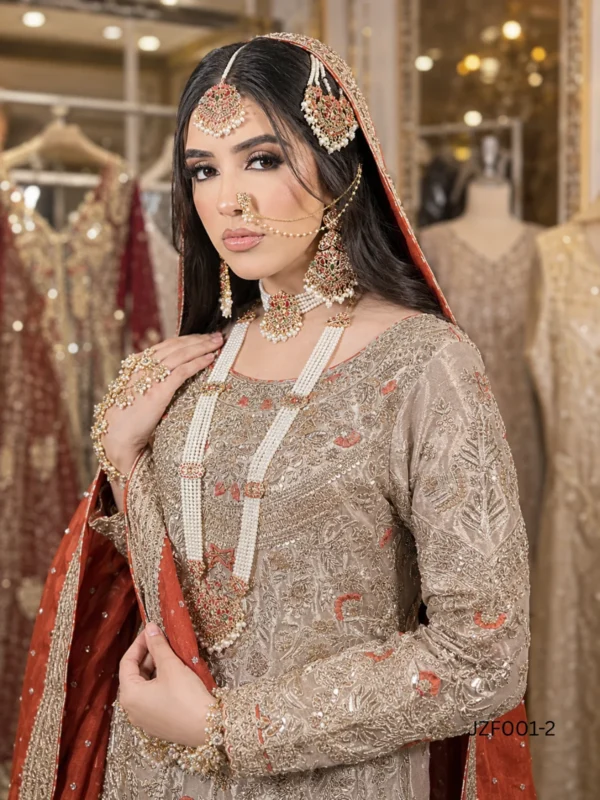
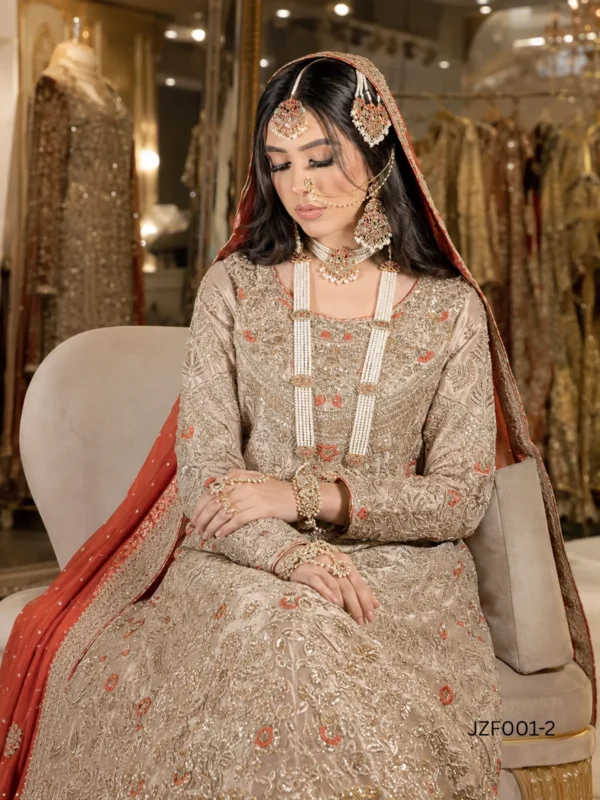
Gold and champagne bridal dresses offer a luxurious middle ground between traditional and contemporary. These warm metallic tones pair naturally with both gold and silver embroidery, giving brides flexibility in their jewellery choices. Deep jewel tones — emerald green, royal purple, midnight blue — are also gaining ground for brides who want impact without defaulting to red. At Jabeenz, we encourage brides to explore our complete fabric library during consultation, trying different colours against their skin tone in natural light before making a decision.
Barat Bridal Dresses
The barat is the pinnacle of a Pakistani wedding — the ceremony where the bride makes her grand entrance and departs with the groom. The barat bridal dress must match this occasion in every way: opulent, grand, and unforgettable. This is the outfit that will be photographed from every angle, remembered by every guest, and treasured for a lifetime.
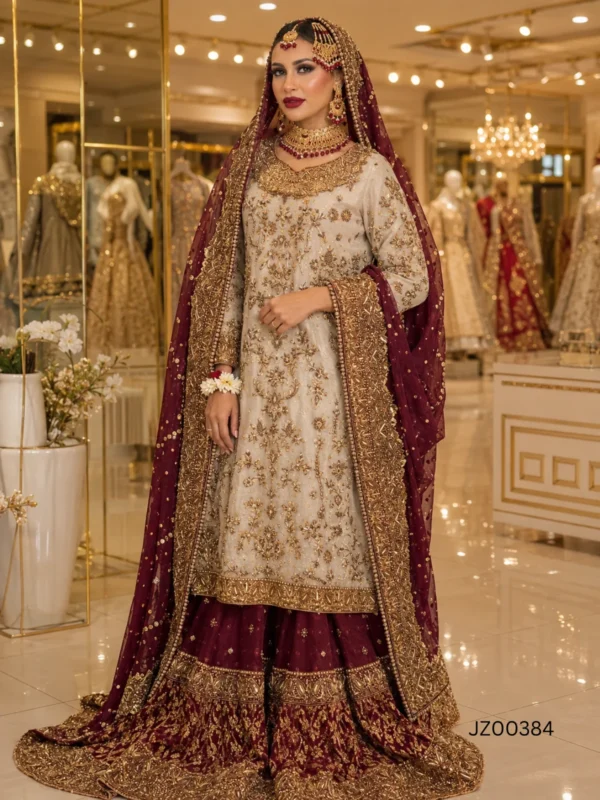
Heavy embroidery is the hallmark of a barat bridal dress. Full-coverage zardozi, dabka, and tilla work across the lehenga, choli, and dupatta create the weight and richness that the occasion demands. The embroidery is not merely decorative — it contributes to the drape and movement of the fabric, giving the outfit a presence that lighter pieces cannot achieve. Every motif is placed with intention, from the large central medallions on the lehenga panels to the delicate border patterns that frame the hemline.
Fabric choice for barat bridal wear is critical. Raw silk provides the ideal foundation for heavy embroidery — its natural lustre enhances metallic thread work, and its structured weight holds embroidered panels without sagging or distortion. Velvet is another exceptional barat fabric, particularly for winter weddings, where its rich depth of colour and luxurious texture create a regal appearance. Silk organza overlays add dimension when layered over the base fabric, creating depth that catches light as the bride moves.
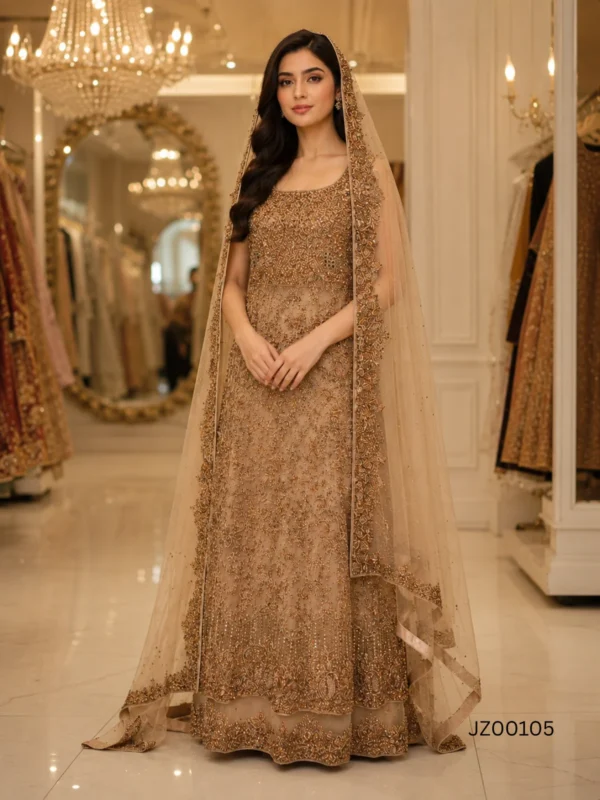
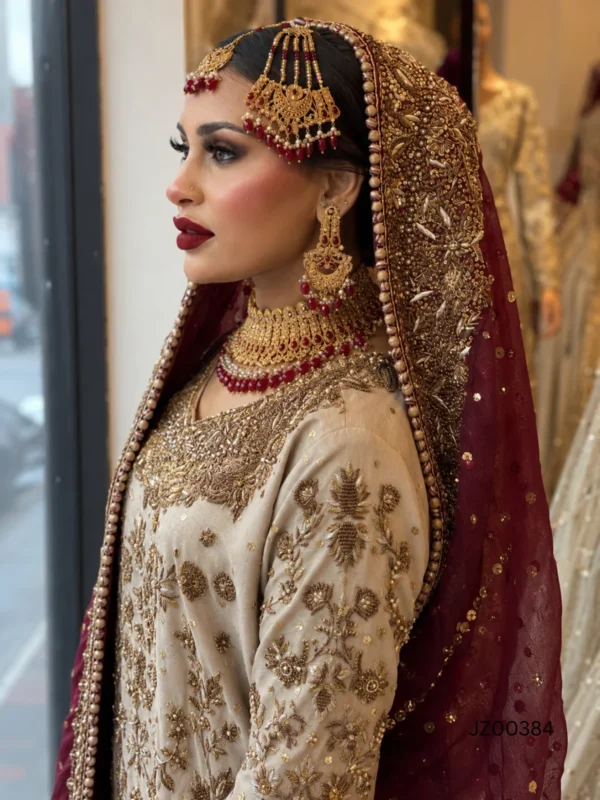
The dupatta for a barat bridal outfit deserves particular attention. It is typically the largest and most visible element when the bride is seated or walking. A well-crafted bridal dupatta is embroidered across its full surface with coordinating border work, weighted at the edges to prevent shifting, and long enough to drape gracefully over the head and cascade down the back. Our design team at Jabeenz works carefully on dupatta construction, because a poorly balanced dupatta can undermine even the most exquisite lehenga.
Walima Bridal Outfits
The walima is the post-wedding reception, and the bridal outfit shifts from grand opulence to refined elegance. Walima bridal outfits are typically lighter in both colour and embroidery compared to barat wear, creating a softer, more romantic impression that suits the celebratory atmosphere of the reception.
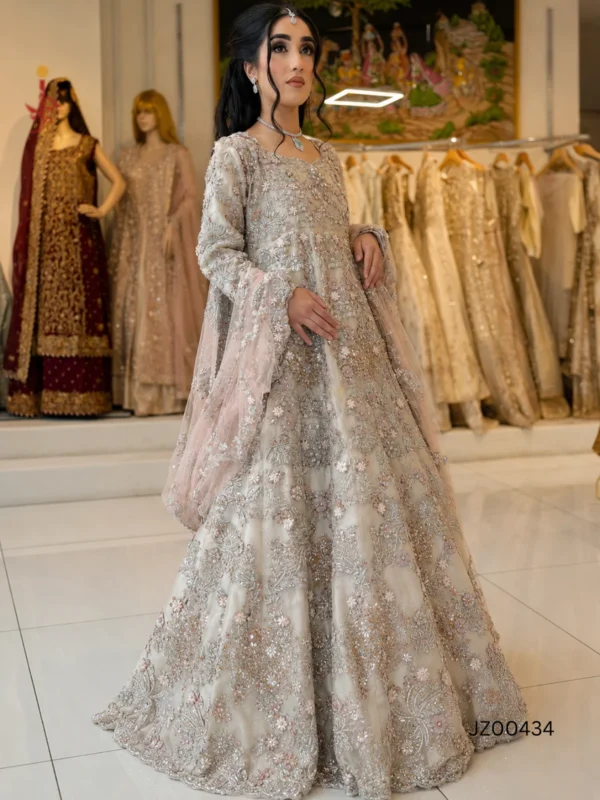
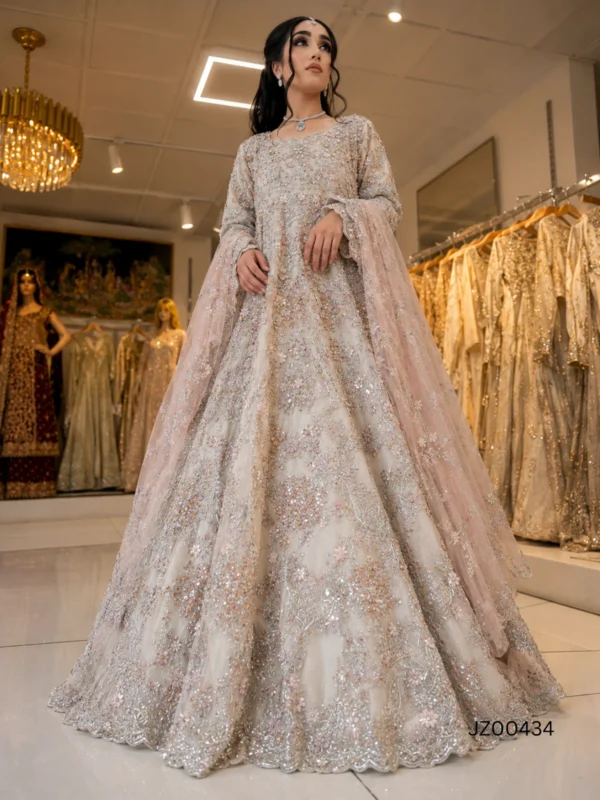
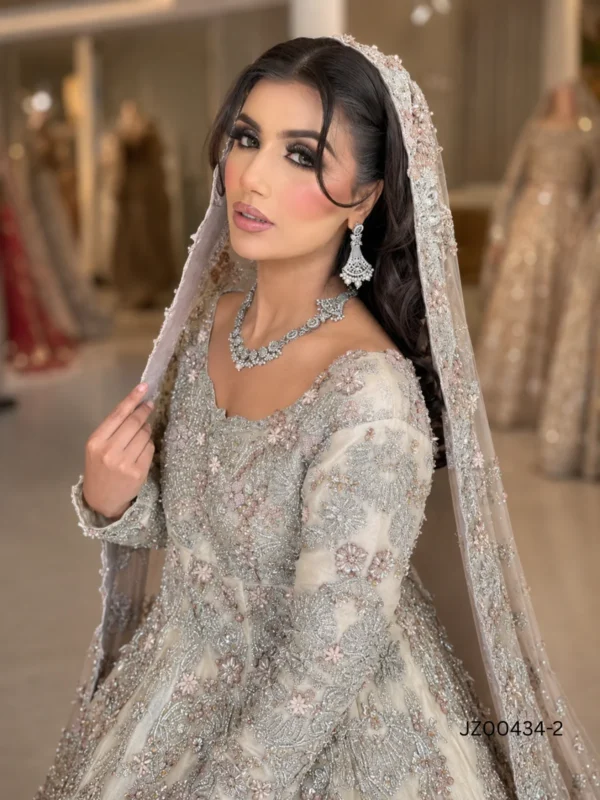
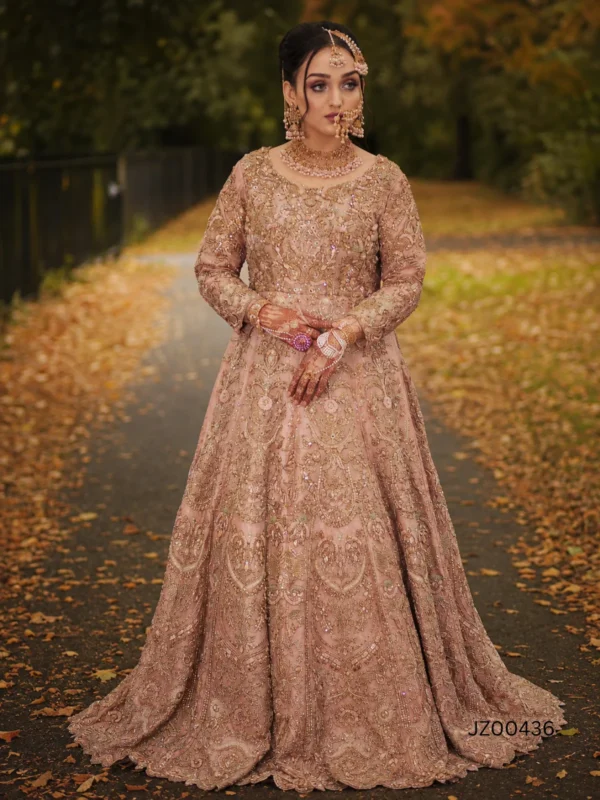
Pastel and lighter colour palettes dominate walima bridal fashion. Dusty rose, champagne, mint green, powder blue, peach, and lilac create an ethereal quality that contrasts beautifully with the richness of the barat outfit. Some brides choose to echo their barat colour in a lighter shade — a deep red barat lehenga might be complemented by a blush pink walima pishwas, maintaining a colour story across the celebrations.
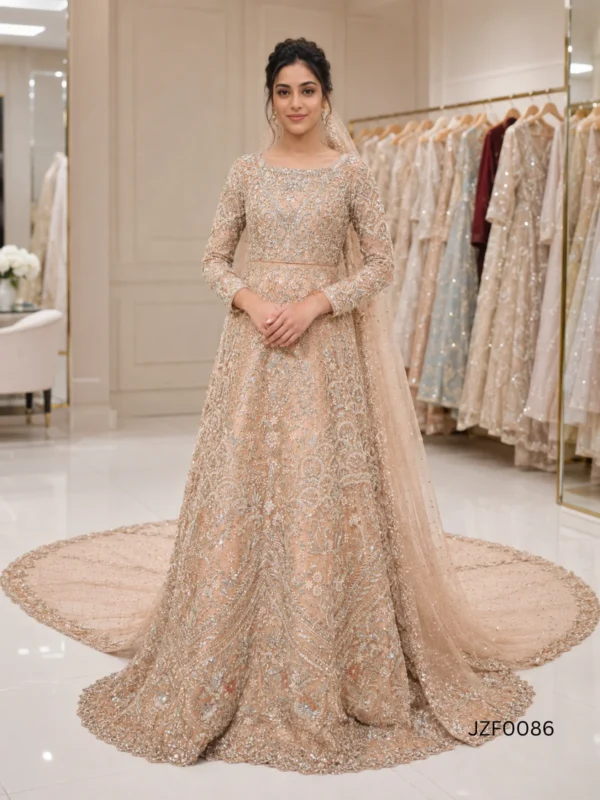
The pishwas — a flowing, gown-like silhouette — is one of the most popular choices for walima brides. Its graceful, feminine lines create an elegant impression without the weight of a heavily structured lehenga. Lighter embroidery techniques suit the walima mood: delicate thread work, scattered pearl appliqué, subtle sequin detailing, and fine zardozi borders rather than full-coverage metallic work. The effect is refined rather than dramatic, allowing the bride's natural beauty to take centre stage.
Lighter fabric choices complement the walima aesthetic. Chiffon, net, and lightweight organza create movement and flow that heavier barat fabrics cannot achieve. These fabrics also suit the dancing and socialising that characterise walima celebrations, allowing the bride to move comfortably throughout the evening.
Bespoke Bridal — The Jabeenz Difference
Choosing a bridal dress is one of the most significant decisions in wedding planning, and the bespoke process at Jabeenz is designed to make that decision feel personal, considered, and completely yours. Unlike retailers who stock pre-made designs for you to choose from, our bespoke service starts with a blank canvas and builds your bridal outfit from the ground up.
The process begins with a consultation at our Manchester showroom. Our bridal design team sits with you — and your family, if you wish — to discuss your vision, the ceremonies you are planning, your colour preferences, embroidery styles you admire, and any reference images you have collected. This is a conversation, not a sales pitch. We listen, advise, and collaborate until the design direction feels right.
Next comes fabric selection. Our fabric library includes raw silks, velvets, organzas, nets, chiffons, jamawar, and speciality fabrics sourced from the finest mills. You can see and feel each option, drape it against your skin, and compare colours in different lighting conditions. This tactile experience is impossible to replicate through a screen, and it is one of the key advantages of working with a physical atelier.
Custom sizing is fundamental to our bespoke bridal service. Every measurement is taken in detail — not just standard bust, waist, and hip measurements, but shoulder slope, arm circumference, torso length, preferred neckline depth, and more. There are no standard sizes at Jabeenz, and there are absolutely no surcharges for any size. Whether you are a size 6 or a size 26, your bridal dress receives the same quality of fabric, embroidery, and construction. This inclusive approach has been central to our ethos since 1975.
Because we are a manufacturer — not a retailer or a middleman — every stage of production happens under our roof. Our cutters, embroiderers, stitchers, and finishers work together in our Manchester workshop, communicating directly to ensure your vision is executed precisely. There is no overseas factory, no third-party contractor, and no communication gap between design and production. This control over the entire process is what allows us to deliver consistent quality and to make adjustments quickly if needed during fittings.
Bridal Fabrics & Embroidery Guide
Understanding fabrics and embroidery techniques helps brides make informed decisions during the design process. Each material and technique contributes differently to the final appearance, weight, and movement of a bridal dress.
Raw Silk: The premier choice for barat bridal wear. Raw silk has a natural, subtle lustre that enhances metallic embroidery. It holds heavy embroidery work without distortion and maintains its shape throughout long ceremonies. Its structured drape creates clean, defined silhouettes.
Velvet: Luxurious, warm, and deeply rich in colour. Velvet is ideal for winter barat celebrations, where its texture adds depth and regality. Embroidery on velvet creates a contrast between the raised stitching and the plush pile that is visually stunning.
Organza: Available in different weights, organza ranges from structured and crisp to soft and flowing. Heavier organza works well as a barat fabric with embroidery, while lightweight organza is perfect for walima overlays and dupattas. Its natural sheen photographs beautifully.
Net: Lightweight and transparent, net is used for layering, sleeves, and dupatta construction. Embroidered net creates a delicate, lace-like effect that adds femininity without weight. It is particularly popular for walima and nikkah bridal wear.
Jamawar: A woven fabric with intricate patterns built into the weave itself. Jamawar adds richness to panels, borders, and dupattas without additional embroidery. Its historic association with royalty makes it appropriate for the most formal bridal pieces.
Zardozi Embroidery: Gold and silver metallic thread work creating raised, three-dimensional patterns. Zardozi is the most prestigious embroidery technique for Pakistani bridal wear and is typically used for barat pieces where maximum impact is desired.
Dabka Embroidery: Coiled metallic wire stitched into intricate patterns. Dabka creates dimensional detail with a distinctive texture that catches light differently from flat embroidery. It is often combined with zardozi for depth.
Tilla Work: Fine metallic thread embroidery, less raised than zardozi but equally elegant. Tilla work is versatile enough for both heavy barat pieces and lighter walima outfits.
Kora Work: Embroidery using untwisted thread, creating a matte, textured surface. Kora work is often combined with dabka to create contrast between matte and metallic finishes.
Sequin and Pearl Work: Hand-applied sequins and pearls add sparkle and texture. When applied by hand rather than machine, each element is individually secured and precisely placed. Pearl work, in particular, has become increasingly popular for walima bridal wear, creating a soft, romantic effect.
Asian Bridal Dresses in Manchester
Manchester has one of the largest South Asian communities in the United Kingdom, and the city has been a centre for Asian bridal fashion for decades. For brides seeking Pakistani bridal dresses, Indian bridal wear, or South Asian bridal outfits of any tradition, Manchester offers a depth of expertise and choice that few other UK cities can match.
The advantage of shopping for Asian bridal dresses in Manchester — rather than ordering online or travelling to London — is the concentration of specialist knowledge in a compact, accessible area. Brides from across the North West, Yorkshire, the Midlands, and beyond travel to Manchester specifically for bridal shopping because the city's established ateliers offer a level of craftsmanship and personal service that newer, online-only businesses struggle to replicate.
Jabeenz sits at the heart of Manchester's bridal fashion heritage. Having served the community since 1975, we have dressed generations of brides — grandmothers, mothers, and daughters from the same families returning because they trust the quality and the experience. Our physical showroom allows brides to see fabrics in person, try on sample silhouettes, and work face-to-face with our design team. For an outfit as important as a bridal dress, this personal, tactile experience makes all the difference.
We serve brides from across the United Kingdom, not just Manchester and the North West. Customers from London, Birmingham, Leeds, Bradford, Glasgow, Edinburgh, and throughout the country visit our showroom for bridal consultations. For those who cannot travel to Manchester, we offer remote consultations via video call, with fabric samples sent by post and measurements guided by our team remotely. The quality of the finished garment is identical regardless of how the consultation is conducted.
Visit Our Bridal Showroom
Choosing your bridal dress should be one of the most enjoyable parts of wedding planning. At Jabeenz, we have designed the entire experience to be personal, unhurried, and focused entirely on you.
When you book a bridal consultation, you will be welcomed into our showroom by our dedicated bridal design team. The consultation typically lasts one to two hours, during which we discuss your vision, explore fabric options, review embroidery samples, and take detailed measurements. You are welcome to bring family members or friends — bridal shopping is a shared experience, and we have space for your entire party.
The measurement process is thorough and precise. We take over fifteen individual measurements to ensure your bespoke bridal dress fits perfectly. This attention to detail is particularly important for bridal wear, where every element — from the choli fit to the dupatta weight to the lehenga flare — must work together seamlessly.
Our standard bridal timeline is six to twelve weeks from consultation to completion, depending on the complexity of the embroidery and design. For heavily embroidered barat pieces with full-coverage zardozi and dabka work, we recommend allowing ten to twelve weeks. Simpler designs, walima outfits, and nikkah bridal dresses can often be completed in six to eight weeks. We always recommend booking your consultation as early as possible to ensure a comfortable timeline with room for fittings and any adjustments.
For brides outside Manchester, remote consultations are available via video call. We can send fabric swatches by post, guide you through our measurement process remotely, and share design sketches digitally. Many of our UK-wide brides travel to Manchester once for a fitting before final completion — and we are happy to coordinate the process around your schedule.
Whether you are envisioning a traditional red bridal lehenga with full zardozi embroidery or a contemporary pastel pishwas with delicate pearl work, the Jabeenz team has the expertise, the fabrics, and the manufacturing capability to bring your vision to life. Contact us to begin your bridal journey, or browse our bridal collection for inspiration. We also create coordinated outfits for the groom, bridesmaids, and family members — explore our party wear and wedding guest collections for the full wedding wardrobe.