
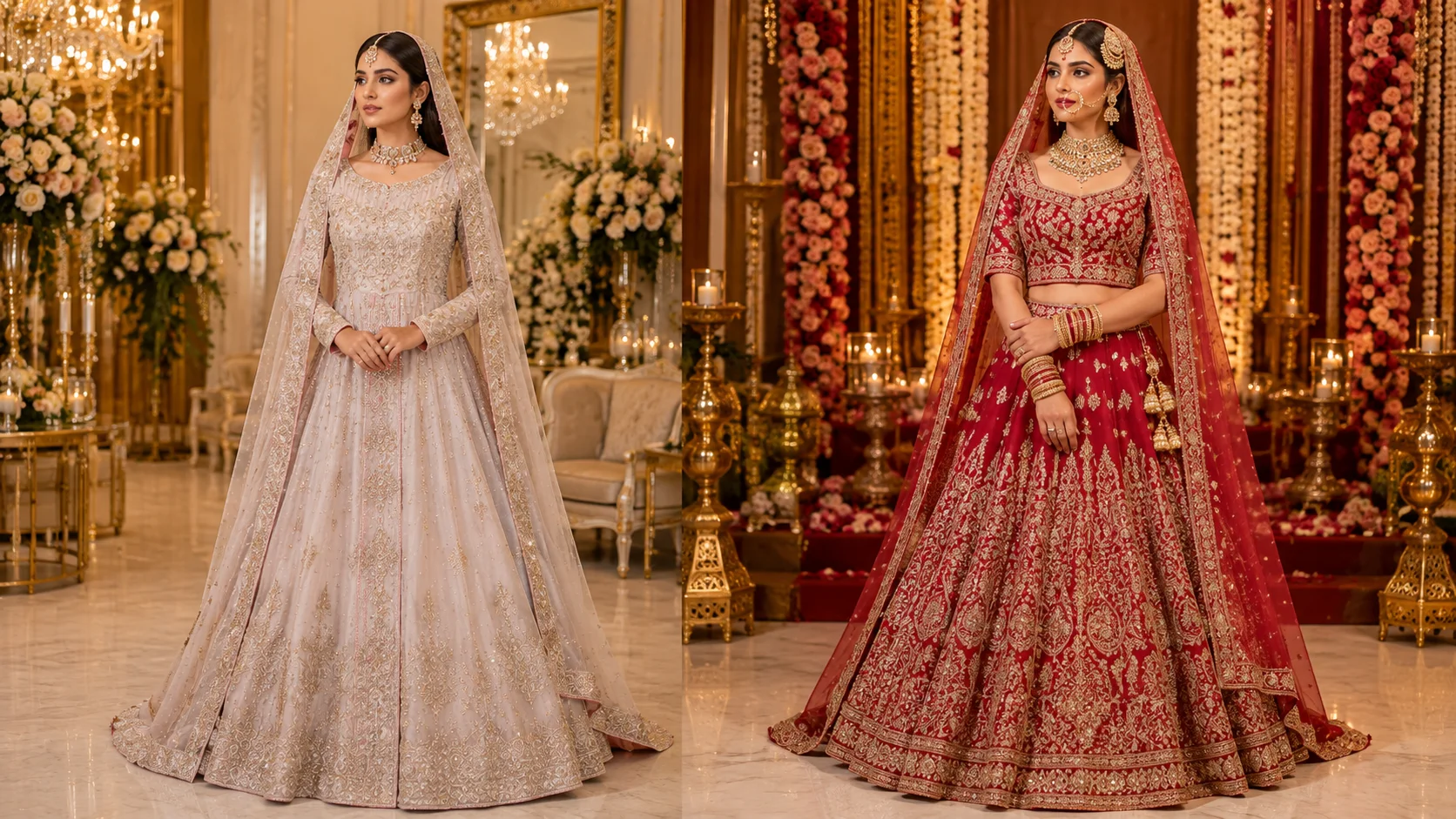
Pakistani and Indian wedding dresses share common roots but have evolved distinct characteristics. If you’re choosing between styles, or wondering which tradition suits your wedding, this guide explains the real differences.
At Jabeenz, we specialise in Pakistani bridal wear but understand both traditions well. In our 50 years of making bridal dresses, we’ve worked with brides from both backgrounds. Here’s an honest comparison.
What Are the Main Differences?
| Feature | Pakistani Bridal | Indian Bridal |
|---|---|---|
| Dominant silhouette | Lehenga, sharara, gharara | Lehenga choli, saree |
| Embroidery style | Zardozi, dabka, gota, tilla | Kundan, zari, sequin, mirror work |
| Colour palette | Red, maroon, deep jewel tones, growing pastel trend | Red, pink, gold, multicolour |
| Dupatta styling | Often draped over head for ceremony | Varies by region and ceremony |
| Overall aesthetic | Structured, regal, detailed embroidery | Vibrant, layered, bold colours |
| Modesty level | Generally more coverage | Varies widely by region |
Notably, these are general trends, not strict rules. Both traditions have enormous regional diversity. A Punjabi Pakistani bride and a Punjabi Indian bride may have more in common with each other than with brides from other regions within their own countries.
How Does the Embroidery Differ?
Embroidery is where the biggest differences appear. Furthermore, embroidery technique is often the primary indicator of whether a bridal dress comes from the Pakistani or Indian tradition.
Pakistani Embroidery Traditions
- Zardozi: Gold and silver metallic thread on velvet or silk. Rich, three-dimensional effect.
- Dabka: Coiled wire embroidery that creates textured patterns. A Pakistani speciality.
- Gota work: Gold ribbon applique, especially popular for mehndi and lighter outfits.
- Tilla work: Metallic thread embroidery creating intricate geometric and floral patterns.
Our master tailors at Jabeenz work extensively with all four of these techniques. Each one requires years of training to execute properly. Specifically, zardozi and dabka work together particularly well, creating the layered, textured look that defines high-end Pakistani bridal wear.
Indian Embroidery Traditions
- Kundan: Glass stones set in gold foil. Creates a jewelled effect.
- Zari: Gold or silver thread woven into the fabric itself.
- Mirror work (Shisha): Small mirrors stitched into embroidery. Common in Gujarati and Rajasthani styles.
- Chikankari: Delicate white-on-white threadwork from Lucknow.
In contrast, Indian embroidery tends to focus on surface embellishment and reflection. The overall effect is often brighter and more reflective, while Pakistani embroidery creates depth and texture.
How Do the Silhouettes Compare?
Silhouette is another area where the two traditions diverge:
Pakistani bridal wear favours structured, tailored pieces. The sharara and gharara are distinctly Pakistani silhouettes. Both feature wide-legged trousers, but the gharara has a distinctive flare at the knee. Similarly, Pakistani bridal lehengas tend to be more structured and heavily embroidered than their Indian counterparts.
Indian bridal wear, meanwhile, places greater emphasis on the saree as a bridal garment. The saree is less common in Pakistani bridal wear, where separates (top and bottom pieces) dominate. Additionally, Indian lehenga cholis often feature a shorter blouse, while Pakistani bridal tops tend to offer more coverage.
Which Style Should You Choose?
The right choice depends on several factors:
- Your family tradition: If your family is Pakistani, a Pakistani bridal style honours that heritage. Same for Indian families.
- Personal preference: Some brides love the structured elegance of Pakistani designs. Others prefer the vibrant boldness of Indian styles.
- Your wedding events: Pakistani weddings typically feature mehndi, nikkah, baraat, and walima. Indian weddings have their own sequence. Your outfit should match your events.
- Mixing is fine: Many modern brides combine elements from both traditions. A Pakistani lehenga with Indian-style jewellery, for example.
Moreover, there’s no rule that says you must stick to one tradition. In fact, many of our brides at Jabeenz come from mixed Pakistani-Indian families and want their outfit to honour both sides. Bespoke makes this easy because we can blend techniques and aesthetics seamlessly.
Can Jabeenz Make Both Styles?
We specialise in Pakistani bridal wear, which is our expertise built over 50 years. We can incorporate elements from Indian design if that’s what you want. Our bespoke service means your dress is made to your vision, whatever that looks like.
For example, if you love the structured silhouette of a Pakistani bridal lehenga but want to incorporate mirror work (a traditionally Indian technique), we can absolutely do that. The result is a dress that’s uniquely yours.
Browse our bridal collection for Pakistani styles, or book a consultation to discuss your specific ideas. Also, our lookbook showcases real bespoke pieces that demonstrate the range of styles we create.
Frequently Asked Questions
Can I wear a Pakistani bridal dress at an Indian wedding?
Yes. The styles are closely related and a Pakistani lehenga or sharara would be appreciated at most Indian weddings. The reverse is also true. Consequently, don’t feel limited by the label on the style. Wear what makes you feel beautiful.
Is one style more expensive than the other?
Not inherently. Cost depends on fabric, embroidery detail, and where you shop. Heavy zardozi Pakistani work and heavy kundan Indian work are both labour-intensive and priced accordingly. However, bespoke Pakistani bridal wear from Jabeenz (from £600) tends to offer better value than comparable Indian designer retail pieces.
What if I’m from a mixed Pakistani-Indian family?
Bespoke is your best option. You can blend elements from both traditions into a dress that represents both sides of your heritage. Discuss this during your consultation at Jabeenz. Additionally, having different outfits for different events lets you honour each tradition. For instance, a Pakistani baraat dress and an Indian-inspired outfit for another event.
Next step: Book a free consultation with Jabeenz to discuss your requirements, or explore the Dream Dress Studio to start from an inspiration image.
Shop This Look
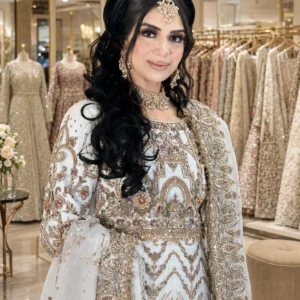
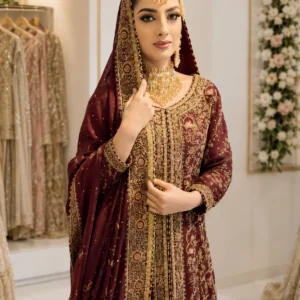
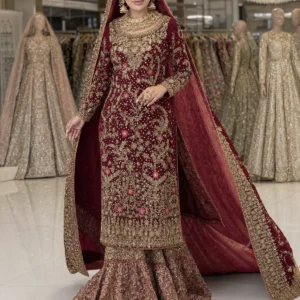
Ready to Find Your Dream Outfit?
Book a free consultation at our Manchester boutique or browse our latest collections online.
You Might Also Like
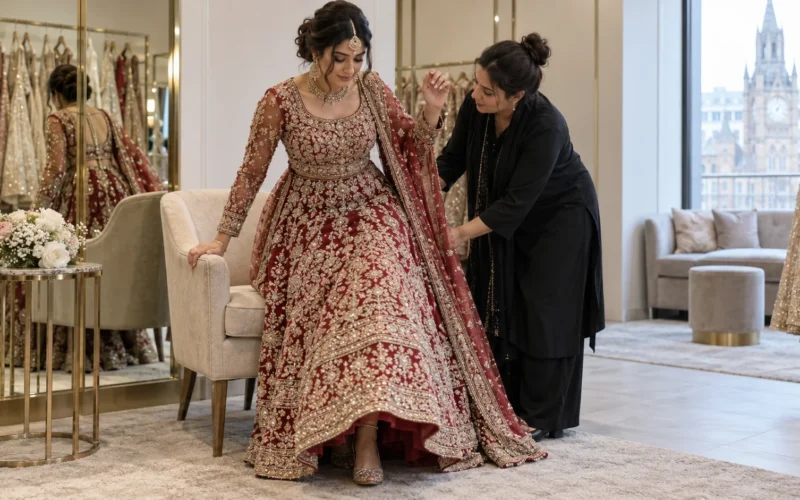
Asian Wedding Dresses: Comfort Checks Brides Forget to Do
Plan bridal comfort checks with practical advice on seating, stairs, fit and movement. Use these UK wedding checks before approving the final...
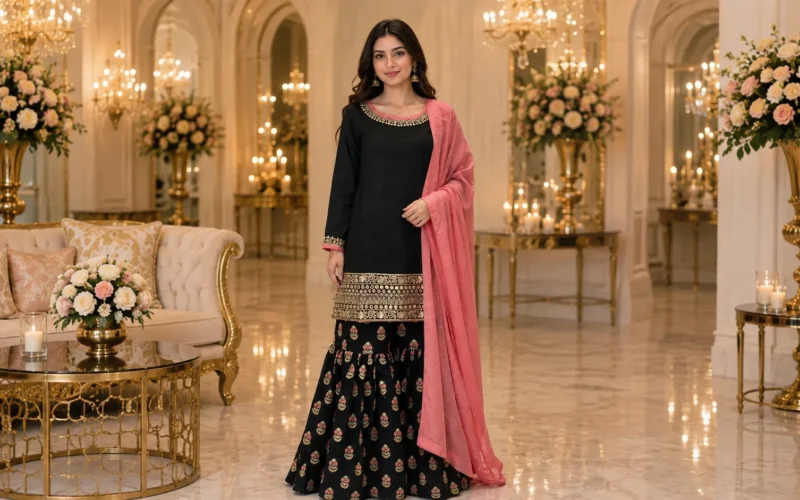
What Is a Gharara? Traditional Style Meets Modern Fashion
What is a gharara? Learn about this traditional Pakistani outfit, its history, how it differs from a sharara, and modern styles. Bespoke...
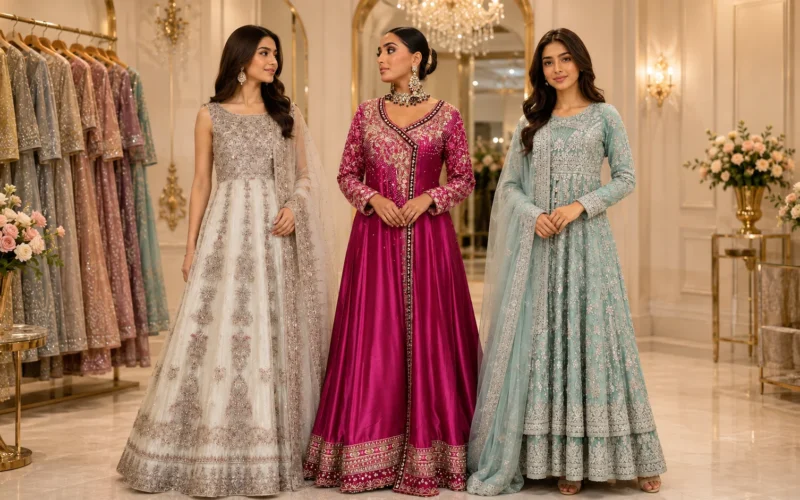
Anarkali Dress Styles for Weddings and Parties
Anarkali dress styles for weddings and parties. What is an anarkali, when to wear it, and bespoke options from £200. Visit Jabeenz...
