
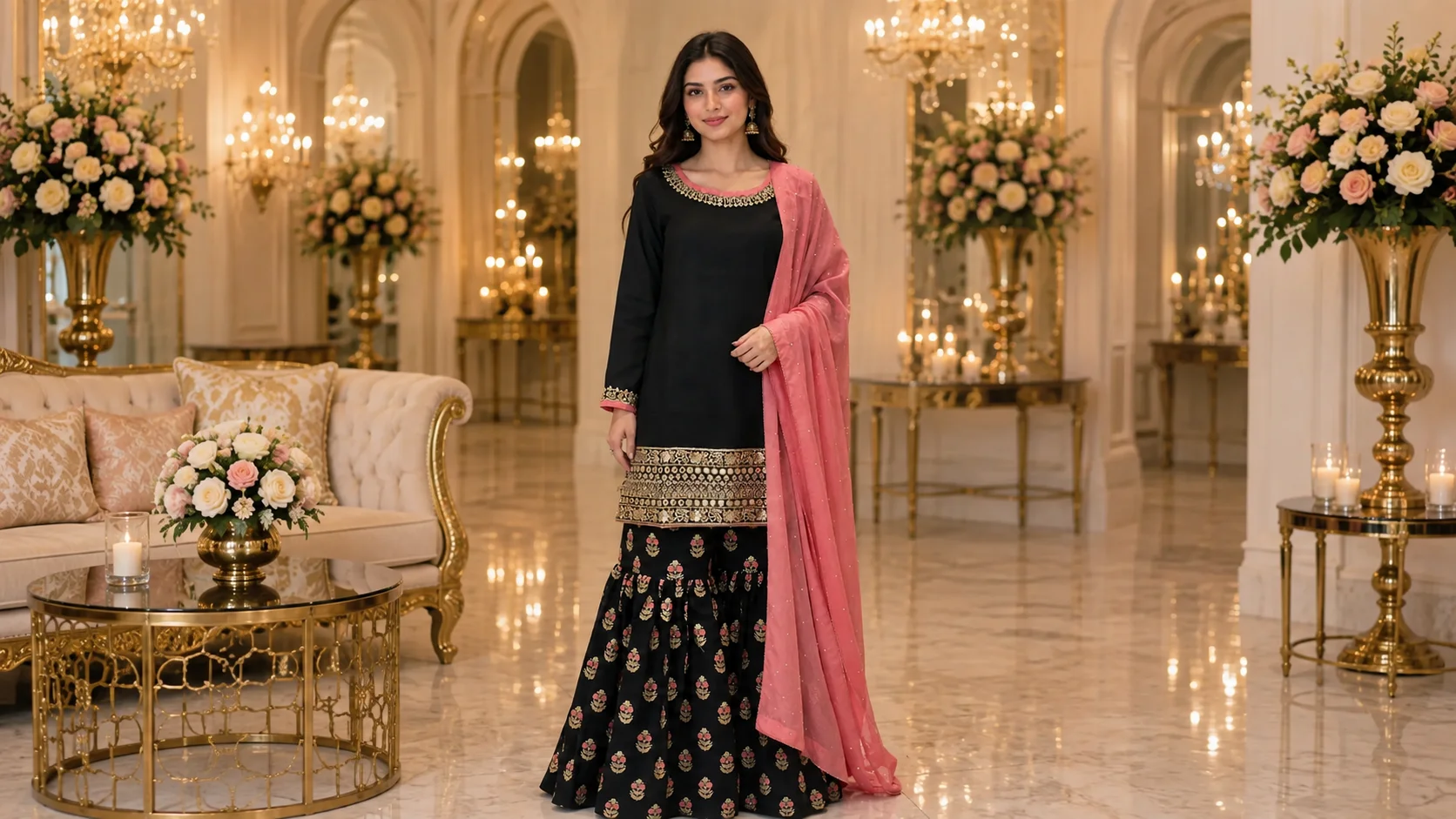
The gharara is one of the most distinctive outfits in Pakistani fashion. With its signature gathered flare at the knee, it’s instantly recognisable and carries centuries of cultural heritage. If you’ve been confused about the difference between a gharara and a sharara, or want to know if this style is right for you, this guide has the answers.
At Jabeenz, we’ve been making bespoke ghararas for over 50 years. Our artisans understand the specific construction techniques that make a gharara look and move the way it should.
What Exactly Is a Gharara?
A gharara is a pair of trousers that are fitted from the waist to the knee, then flare out dramatically with gathered, ruched fabric from the knee to the floor. This creates a distinctive silhouette that’s different from any other South Asian outfit.
A complete gharara outfit includes:
- Gharara trousers: The signature piece, with the fitted-to-knee, flared-from-knee construction
- Kurta or kameez: A short to mid-length top, often with matching or complementary embroidery
- Dupatta: A scarf draped over the head, shoulders, or both
Furthermore, the gathering at the knee is what makes the gharara truly special. It creates a dramatic swish when you walk, drawing the eye and creating beautiful movement. This detail requires skilled construction to get right.
How Is a Gharara Different from a Sharara?
This is the most common question about ghararas. The difference is straightforward once you know what to look for:
| Feature | Gharara | Sharara |
|---|---|---|
| Fit above the knee | Fitted, close to the leg | Wide and flowing from the waist |
| Flare point | At the knee | From the waist |
| Distinctive feature | Gathered ruffle at the knee | Continuous wide leg |
| Volume | Concentrated below the knee | Distributed throughout the leg |
| Movement | Dramatic flare when walking | Flowing, graceful movement |
Both are beautiful, but the gharara has a more structured, traditional look while the sharara is more flowing and relaxed. View gharara styles to see the difference in practice.
Where Does the Gharara Come From?
The gharara originated in the Mughal era, particularly in the Awadh region (modern-day Lucknow, India). It was the signature garment of Mughal noblewomen and became deeply associated with the cultural traditions of the Muslim communities of the Indian subcontinent.
In Pakistan, the gharara holds special significance. It’s considered one of the most traditional outfit choices, particularly for:
- Bridal wear (especially for nikkah ceremonies). Browse nikkah outfits.
- Eid celebrations
- Traditional family gatherings
- Cultural events and festivals
Moreover, the gharara has become a symbol of cultural identity. Many families have a tradition of wearing ghararas for special occasions, passing the style from generation to generation.
Modern Gharara Styles
While the basic construction remains the same, modern styling has updated the gharara in several exciting ways:
- Contemporary tops: Shorter, more fitted tops instead of traditional long kurtas
- Lighter fabrics: Chiffon and georgette instead of heavy silk, making them more comfortable for all-day wear
- Modern embroidery: Minimalist thread work or sequin accents instead of heavy traditional embroidery
- Colour experimentation: Pastels, neons, and unusual colour combinations alongside traditional rich tones
Consequently, the gharara works for both traditional and contemporary settings. A heavily embroidered gharara in deep red is perfect for a formal bridal event. Meanwhile, a pastel chiffon gharara with light embroidery is ideal for a summer garden party.
Who Suits a Gharara?
The gharara flatters a wide range of body types. Here’s how it works for different figures:
- Hourglass figures: The fitted upper section and flared lower section complement natural curves beautifully
- Pear shapes: The dramatic flare below the knee balances wider hips and creates proportion
- Tall women: Can carry the volume beautifully and the length looks elegant
- Petite women: The knee-level flare creates the illusion of longer legs (pair with heels)
In particular, the fitted section from waist to knee gives the gharara a slimming effect that many brides appreciate. It’s more structured than a sharara, which some women prefer.
How to Wear a Gharara
- Put on the gharara: Step in and fasten at the waist. The fitted section should sit smoothly against your legs without pulling.
- Adjust the flare: The gathered section below the knee should fall evenly all around.
- Add the top: Your kurta or kameez goes over the gharara waistband.
- Drape the dupatta: Pin at one shoulder and drape across, or arrange over the head for formal events.
Additionally, practice sitting down and standing up before your event. The gharara’s fitted upper section can feel different from a sharara when you sit. You want to feel completely confident with the movement.
Bespoke Gharara at Jabeenz
We make bespoke ghararas with the traditional gathered construction and modern styling. Every piece is made to your measurements, so the fitted section actually fits and the flare falls correctly. Here’s what we offer:
- Party wear ghararas from £200
- Bridal ghararas from £600
- Over 200 fabric and embroidery combinations
- Hand embroidery by skilled artisans
- Designed in Manchester, handcrafted in Pakistan
Visit us at 934 Stockport Road, Levenshulme, Manchester M19 3AB. Book a free consultation. Also, check our lookbook for real examples of our gharara designs.
Frequently Asked Questions
Is a gharara harder to walk in than a sharara?
Not when it fits properly. The fitted upper section actually gives you more control than a sharara. The flare below the knee moves freely but doesn’t restrict your stride. However, bespoke fit is key here. A gharara that’s too tight above the knee will limit your movement.
Can I sit comfortably in a gharara?
Yes. The gathered fabric below the knee accommodates sitting naturally. It’s one of the more comfortable traditional outfits for events where you’ll be sitting for periods (like a ceremony). Furthermore, the ruched fabric actually looks beautiful when you’re seated, as it fans out around you.
Is the gharara still fashionable in 2026?
Very much so. The gharara has been experiencing a strong fashion revival, with modern updates making it relevant for contemporary weddings and events while maintaining its traditional charm. Specifically, we’ve seen a 40% increase in gharara orders over the past two years. Brides love the combination of heritage and elegance.
Next step: Book a free consultation with Jabeenz to discuss your requirements, or explore the Dream Dress Studio to start from an inspiration image.
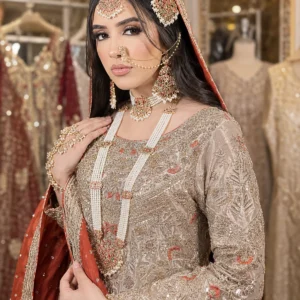
Shop This Look
Ready to Find Your Dream Outfit?
Book a free consultation at our Manchester boutique or browse our latest collections online.
You Might Also Like
Asian Wedding Dresses: Comfort Checks Brides Forget to Do
Plan bridal comfort checks with practical advice on seating, stairs, fit and movement. Use these UK wedding checks before approving the final...
Pakistani vs Indian Wedding Dresses: Key Differences Explained
Pakistani vs Indian wedding dresses: what's the difference? Compare styles, embroidery, colours, fabrics, and silhouettes. Expert guide from Jabeenz, est. 1975.
Anarkali Dress Styles for Weddings and Parties
Anarkali dress styles for weddings and parties. What is an anarkali, when to wear it, and bespoke options from £200. Visit Jabeenz...
