
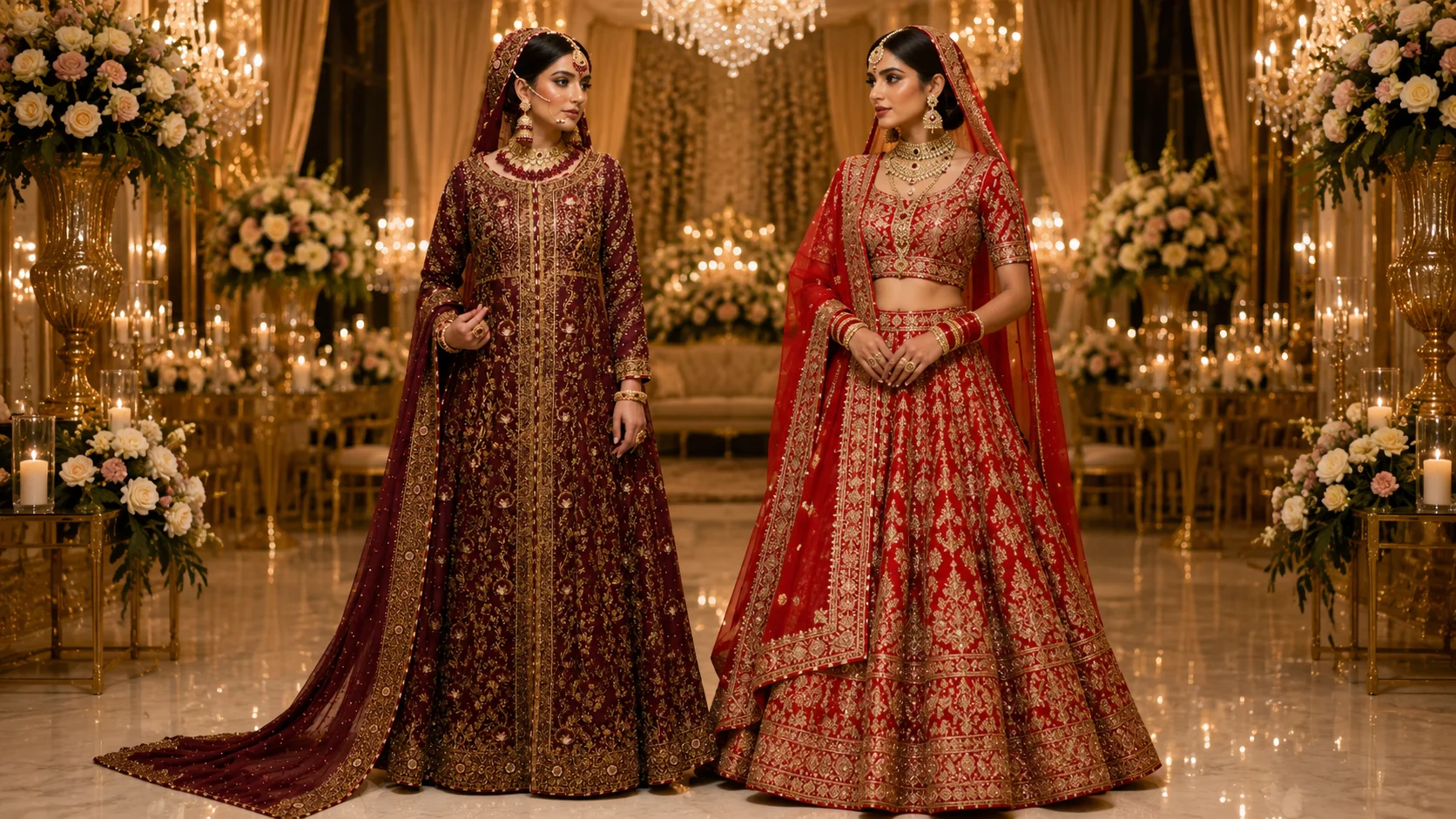
Pakistani bridal dresses tend to favour a more modern. Streamlined shape with muted colour palettes and fine threadwork. Meanwhile Indian bridal wear often features bolder colours, heavier stone. Mirror work. More structured construction. Both traditions share common roots in South Asian textile roots. they have developed distinct look that reflect their respective local identities.
Colour Palette
The most visible difference between Pakistani and Indian bridal fashion is the colour palette. Indian bridal wear often centres on deep red. Often described as the colour of prosperity. Fertility in Hindu wedding traditions. While red remains popular. Indian brides also wear maroon. Gold and bright pink.
Pakistani bridal fashion uses a broader range of colours. Red is still a popular choice for the barat event. Pakistani brides frequently choose pastels. Metallics. Ivory and even black for different events. A common approach is deep red or emerald for the barat. Vibrant green or yellow for the mehndi. And soft pastels or silver for the walima. This variety across events gives Pakistani brides more freedom to express personal style.
stitching and decoration
Pakistani stitching emphasises threadwork methods like zardozi (gold. Silver metallic thread). Dabka (coiled wire), tilla (flat metallic ribbon) and resham (silk thread). The overall effect is textural. Subtle. With fine patterns that create depth through stitchwork rather than surface decoration.
Here is what we found.
Indian bridal stitching tends to add more mirror work (shisha). Heavy stone settings. Sequins. Kundan (glass stone setting). Indian bridal garments often feature denser surface coverage with a more grand. Maximalist look. The stitching style varies much by region, with Rajasthani, Gujarati. South Indian bridal traditions each having distinctive methods.
shape and Construction
Pakistani bridal shapes often include the lehenga choli. Sharara. Gharara and long-kameez styles. Pakistani designs often feature longer blouses (kameez-length rather than cropped cholis). This creates a more covered, graceful look. The dupatta in According to the British Bridal Suppliers Association. Pakistani bridal Pakistani bridal wear is usually larger. Worn more prominently as a head covering.
Indian bridal wear centres on the lehenga choli with a shorter. Fitted blouse (choli) that shows the midriff. The saree is another distinctly Indian bridal option. Mainly in South Indian. Bengali. Maharashtrian wedding traditions. Indian garments often have more structured shapes with built-in boning, underskirt. Heavier linings to support the weight of decorations.
local Context
These differences are rooted in distinct local and religious traditions. Pakistani weddings often follow Islamic customs. Involve events like the nikkah (religious event). Mehndi (henna event), barat (groom’s procession) and walima (reception). Indian weddings vary enormously by region. Religion but commonly include events like the sangeet, haldi, pheras and vidaai.
Understanding these local contexts helps brides choose the right look for their event. Many modern brides blend elements from both traditions. And a skilled designer can add specific methods or details from either tradition into a cohesive bridal look.
Which Tradition Offers More Modest Options?
Modesty is an important consideration for many brides, and both traditions offer modest choices. However, Pakistani bridal fashion generally provides more covered options as a standard. Longer kameez tops, full sleeves, and higher necklines are common features in Pakistani bridal designs.
Additionally, Pakistani bridal styling naturally includes a larger dupatta that can be used as a head covering. This makes it a practical choice for brides who want modesty during the nikkah ceremony. You can explore our modest bridal collection for covered options that don’t compromise on elegance.
Furthermore, Indian bridal wear offers modest options too, particularly in certain regional traditions. Anarkali suits, for instance, provide full coverage while maintaining a traditional look. At Jabeenz, we can adapt any silhouette to your preferred modesty level through our bespoke service.
How Do Price Points Compare?
Many brides wonder whether one tradition is more expensive than the other. In reality, the cost depends far more on the complexity of the embroidery, the quality of the fabric, and whether the piece is ready-made or bespoke.
Specifically, at Jabeenz, our bespoke pieces start from £200 for party wear and £600 for bridal, regardless of which tradition inspires your design. Our master artisans are skilled in both Pakistani and Indian embroidery techniques. Consequently, the price reflects the hours of work involved, not the cultural origin of the style.
Moreover, brides who order multiple pieces for different wedding events often find that bundling saves money. You might choose a Pakistani-style baraat outfit and an Indian-inspired walima dress, getting the best of both worlds within one order. Browse our lookbook for examples of both traditions in our recent work.
Notably, what matters most is how the outfit makes you feel on your wedding day. In our 50 years of experience, we’ve found that the happiest brides are the ones who choose styles that genuinely resonate with their personal identity, regardless of which cultural tradition they come from. Book a free consultation at Jabeenz to discuss your perfect bridal style and explore options from both traditions.
Can I combine Pakistani and Indian bridal styles?
truly. Many modern brides blend elements from both traditions. Like, you might choose a Pakistani colour palette with Indian mirror work. an Indian lehenga shape with Pakistani zardozi stitching. A bespoke designer can help you create a fusion look that reflects your personal roots.
Which tradition is more expensive?
Cost depends more on stitching density and fabric quality than the tradition itself. Both Pakistani and Indian bridal dresses span a wide price range. At Jabeenz. Bespoke pieces start from £200 regardless of the style or tradition you choose.
Do I have to wear red for a Pakistani wedding?
No. While red remains a popular choice for the barat event. Many Pakistani brides now choose alternative colours including pastels, metallics, emerald green. Ivory. The colour is a personal choice. There is no strict local requirement for red in a Pakistani wedding.
Sources
Next step: Book a free consultation with Jabeenz to discuss your requirements, or explore the Dream Dress Studio to start from an inspiration image.
Frequently Asked Questions
What is the main difference between Pakistani and Indian bridal dresses?
Pakistani bridal dresses typically feature heavier hand embroidery with a focus on structured silhouettes like lehengas and shararas. Indian bridal wear often uses lighter fabrics with more varied draping styles and a wider range of regional garment types.
Can I wear an Indian-style dress at a Pakistani wedding?
Many elements overlap between Pakistani and Indian bridalwear. A saree or Indian-style lehenga can work at a Pakistani wedding, though traditional Pakistani brides usually prefer a dupatta-based look over a pallu drape.
Which embroidery styles are unique to Pakistani bridal dresses?
Pakistani bridal dresses are known for zardozi, dabka, and tilla work. These hand-embroidery techniques create raised, textured patterns that are distinctive to Pakistani craftsmanship and differ from Indian techniques like chikankari or gota patti.
Do Pakistani brides always wear red?
Red remains the most popular colour for Pakistani brides, especially for the baraat ceremony. However, many modern brides now choose pastels, golds, or even white for the nikkah. The colour choice often varies by event and personal preference.
Where can I see both Pakistani and Indian style bridal dresses in the UK?
Jabeenz in Manchester offers Pakistani bridal dresses alongside a range of Asian occasion wear. You can explore styles in the collections or book a consultation to discuss your vision with a stylist.
Shop This Look
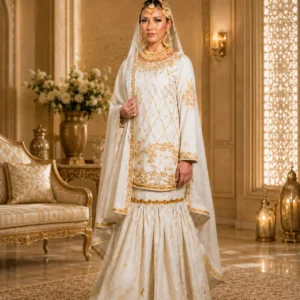
Ready to Find Your Dream Outfit?
Book a free consultation at our Manchester boutique or browse our latest collections online.
You Might Also Like
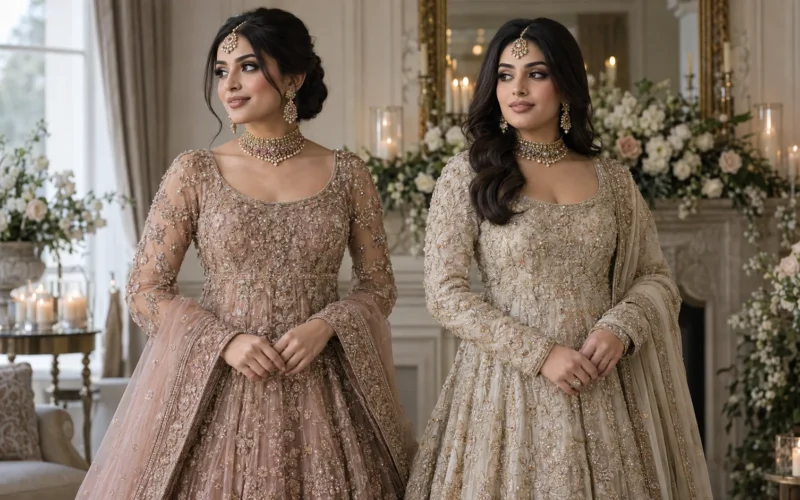
Asian Wedding Dresses: Sheer Sleeves vs Lined Sleeves for UK Weddings
Learn how bridal sleeve lining choices affect lining, photos and comfort, with practical UK wedding advice and fitting checks for a more...
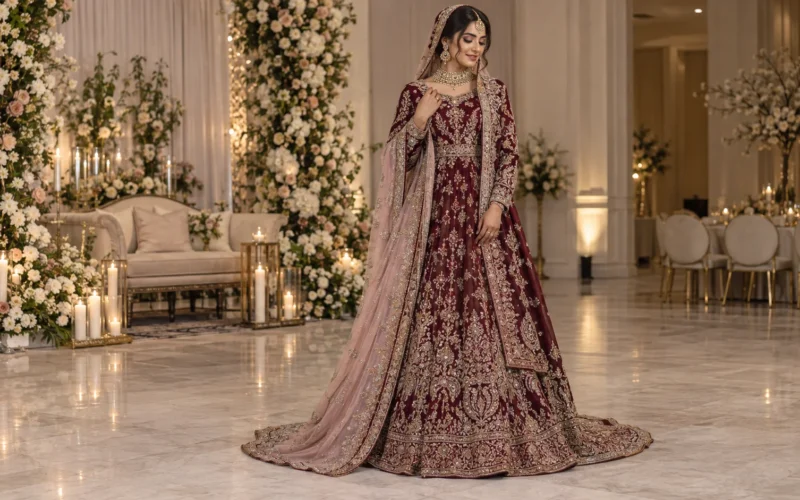
Pakistani Wedding Dresses UK: Using Pastel as an Accent Instead of the Main Colour
Learn how pastel bridal accents choices affect lining, white and comfort, with practical UK wedding advice and fitting checks for a more...
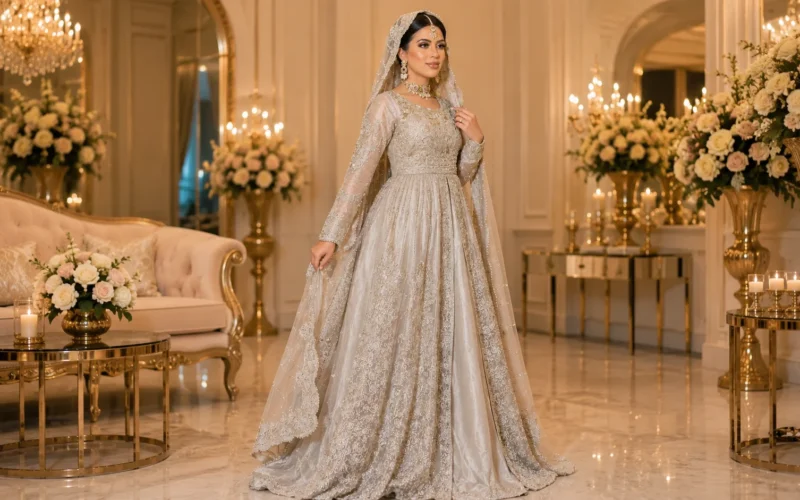
Pastel Bridal Lehengas: The 2026 Trend Taking Over
Pastel bridal lehengas are the biggest trend of 2026. Blush, mint, lavender, and champagne options. Bespoke colour matching at Jabeenz Manchester.
