
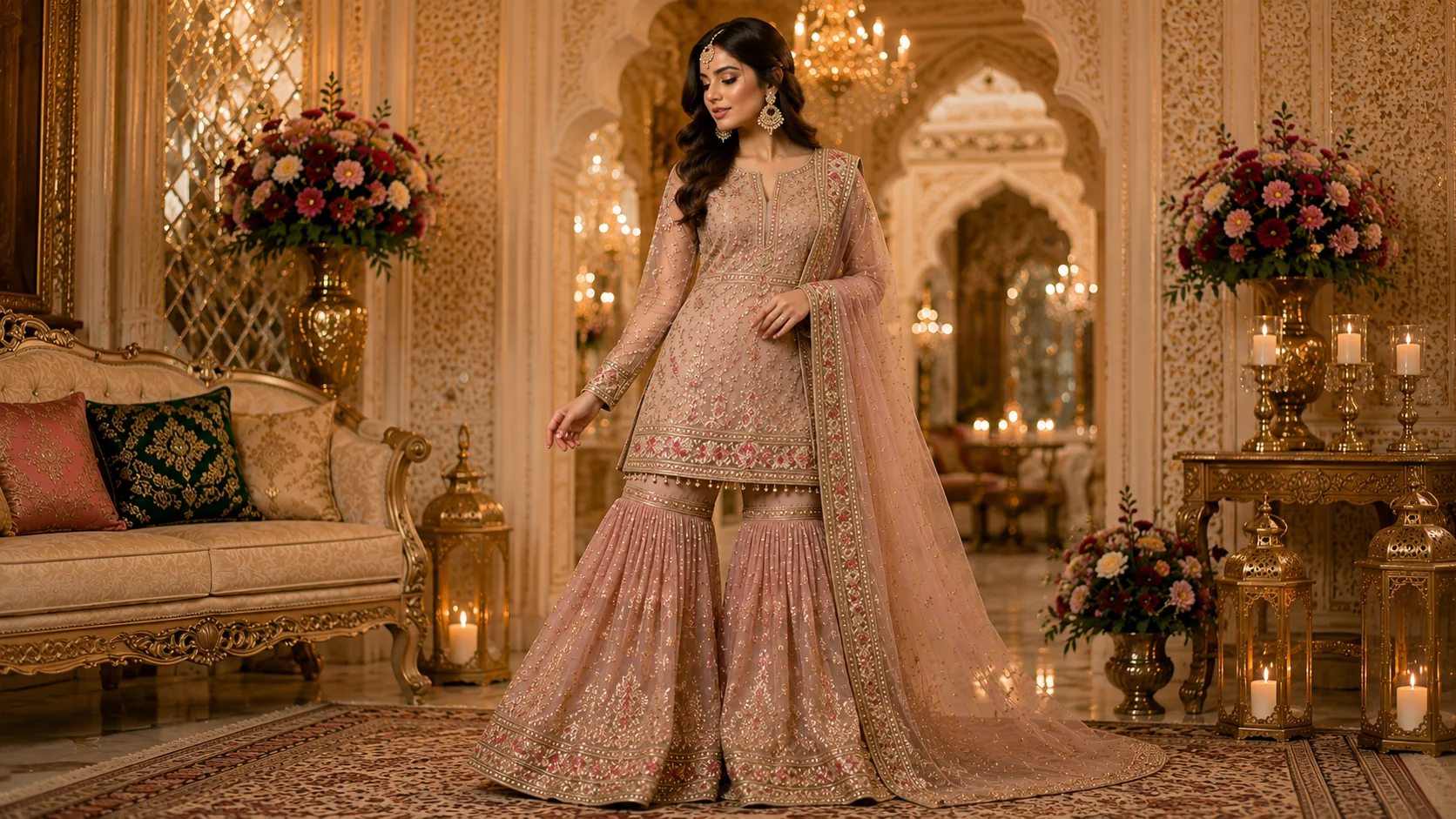
Few garments capture the grandeur of According to the British Asian Trust, South Asian South Asian bridal fashion quite like Sharara suits. With their distinctive wide-legged silhouette, shararas have graced royal courts, bridal celebrations and festive gatherings for centuries. Whether you are a bride searching for a statement outfit or a guest looking for something elegant yet comfortable. The sharara remains one of the most versatile choices in Pakistani and Indian fashion. At Jabeenz in Manchester, we have been handcrafting bespoke sharara suits since 1975, helping generations of women find their perfect look.
The Mughal Origins of Sharara Suits
The sharara traces its roots to the courts of the Mughal Empire, where it was worn by noblewomen as a symbol of elegance and status. The garment was originally designed as a pair of wide-legged trousers that flared dramatically from the knee. This creates a graceful, flowing effect with every step. Paired with a fitted kurta and a delicate dupatta, the sharara ensemble became a hallmark of refined taste in the subcontinent.
During the Lucknowi and Hyderabadi nawabi era, the sharara evolved further. Artisans introduced intricate zardozi embroidery, gota patti work and fine chikankari detailing. This transforms the garment into a wearable work of art. The Awadhi influence, in particular, brought a sense of poetic grace to sharara designs, with layers of fabric and subtle pleating that moved like water.
Today, modern designers continue to draw inspiration from these historical roots while introducing contemporary elements such as structured blouses, cape-style dupattas and unexpected colour palettes. The result is a garment that honours tradition while feeling thoroughly modern.
Understanding Different Sharara Styles
Not all shararas are created equal. The classic sharara features a dramatic flare from the knee. This creates an almost skirt-like appearance that is both flattering and comfortable. This traditional cut works beautifully for bridal wear, where the volume of the flare adds a sense of occasion and drama to the overall look.
The contemporary sharara, by contrast, offers a more streamlined silhouette. The flare begins lower, sometimes from mid-calf, and the overall volume is reduced for a sleeker finish. This style suits formal events where elegance is desired without the full bridal grandeur. It also works wonderfully for mehndi nights and engagement parties, where freedom of movement matters.
Then there is the sharara gharara fusion. This combines the wide flare of a sharara with the ruched gathering of a gharara at the knee. This hybrid style has gained popularity in recent seasons and offers the best of both worlds: the stately presence of a sharara with the textured detail of a gharara. You can explore our full range of handcrafted options in our Sharara collection.
Sharara Suits for Bridal Wear
For brides, the sharara suit offers a stunning alternative to the more commonly seen lehenga. A bridal sharara in rich fabrics such as raw silk, velvet or heavy organza makes an unforgettable impression. Deep reds. Maroons and burgundies remain the most popular colour choices, though modern brides are increasingly drawn to dusty pinks, champagne golds and even ivory shades.
The embroidery on a bridal sharara is where the real artistry lies. At Jabeenz, our master craftspeople use a combination of dabka, tilla, kora and sequin work to create designs that catch the light from every angle. Each piece is handcrafted over several weeks. This ensures that every stitch meets the highest standards of quality. This level of craftsmanship is what sets a bespoke sharara apart from mass-produced alternatives.
Bridal shararas pair beautifully with short choli-style tops for a contemporary look and with longer peplum kurtas for a more traditional feel. The dupatta can be styled in multiple ways: draped over one shoulder, wrapped around both arms and pinned as a veil for the ceremony.
Sharara Suits for Party and Occasion Wear
Beyond bridal wear, sharara suits make exceptional choices for wedding guests, Eid celebrations, and formal gatherings. Lighter fabrics such as chiffon, georgette and net work well for these occasions. We offer the drama of the silhouette without the weight of heavier bridal fabrics.
For party wear, consider a sharara in a bold jewel tone: emerald green, sapphire blue or amethyst purple. These colours photograph beautifully and stand out in a crowd. Pair with a cropped or cape-style top for a fashion-forward look and keep things classic with a straight kurta and simple embroidered border.
Pastel shararas have also become incredibly popular for daytime events such as engagement parties and baby showers. A mint green or powder blue sharara with delicate pearl work feels fresh and youthful while remaining entirely appropriate for the occasion. Browse our Sharara suits to see what suits your style.
How to Style Your Sharara Suit
Styling a sharara suit is about balance. Because the lower half of the outfit has significant volume, the top should be more fitted to create a flattering proportion. A structured, well-fitted kurta or blouse anchors the look, while the flaring sharara adds movement and drama below.
Jewellery choices should complement rather than compete with the outfit. For heavily embroidered bridal shararas, a statement jhoomar or matha patti paired with simple earrings often works better than layering multiple heavy pieces. For lighter party-wear shararas, chandelier earrings and a delicate necklace can add the perfect finishing touch.
Footwear is another important consideration. Because the sharara flare covers most of the foot, pointed khussa or embroidered heels that peek out from beneath the hemline are ideal. Avoid chunky platforms or shoes with ankle straps, as these can disrupt the clean line of the sharara.
Frequently Asked Questions
What is the difference between a sharara and a lehenga?
A sharara consists of trousers that flare from the knee. This creates two separate wide legs, while a lehenga is a single flowing skirt. When standing still, a sharara can look similar to a lehenga, but the divided construction becomes apparent when walking. We offer greater freedom of movement.
Can I wear a sharara suit to a wedding as a guest?
Absolutely. Sharara suits in lighter fabrics and softer colours are perfect for wedding guests. Choose a design with moderate decoration rather than heavy bridal embroidery. And opt for fabrics such as chiffon or organza that drape well without the weight of bridal silks.
How should I care for my sharara suit?
Most embroidered shararas should be dry cleaned rather than machine washed. Store your sharara hanging or loosely folded with tissue paper between layers to prevent the embroidery from catching. Avoid pressing directly over decorated areas. Instead, steam gently or iron on the reverse side with a pressing cloth.
How long does it take to have a bespoke sharara made?
At Jabeenz, a bespoke sharara suit typically takes four to eight weeks depending on the complexity of the design and embroidery. We recommend booking your consultation well in advance, especially for bridal orders where fittings and adjustments are part of the process.
Ready to find your perfect sharara suit? With nearly fifty years of expertise in handcrafting South Asian bridal and occasion wear. Jabeenz in Manchester is here to help you create something truly extraordinary. Book a consultation with our design team and let us bring your vision to life.
Next step: Book a free consultation with Jabeenz to discuss your requirements, or explore the Dream Dress Studio to start from an inspiration image.
Shop This Look

Ready to Find Your Dream Outfit?
Book a free consultation at our Manchester boutique or browse our latest collections online.
You Might Also Like
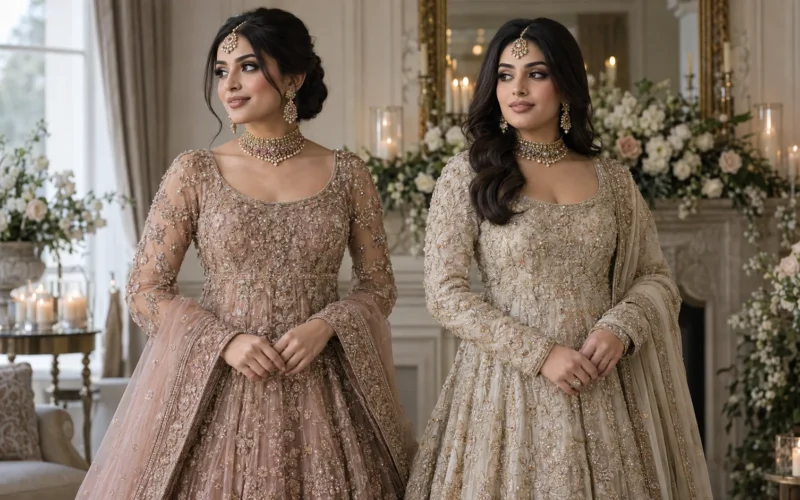
Asian Wedding Dresses: Sheer Sleeves vs Lined Sleeves for UK Weddings
Learn how bridal sleeve lining choices affect lining, photos and comfort, with practical UK wedding advice and fitting checks for a more...
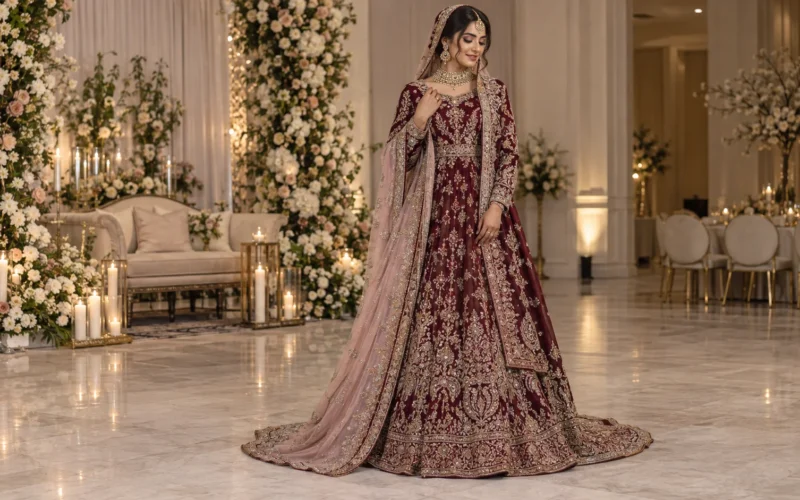
Pakistani Wedding Dresses UK: Using Pastel as an Accent Instead of the Main Colour
Learn how pastel bridal accents choices affect lining, white and comfort, with practical UK wedding advice and fitting checks for a more...
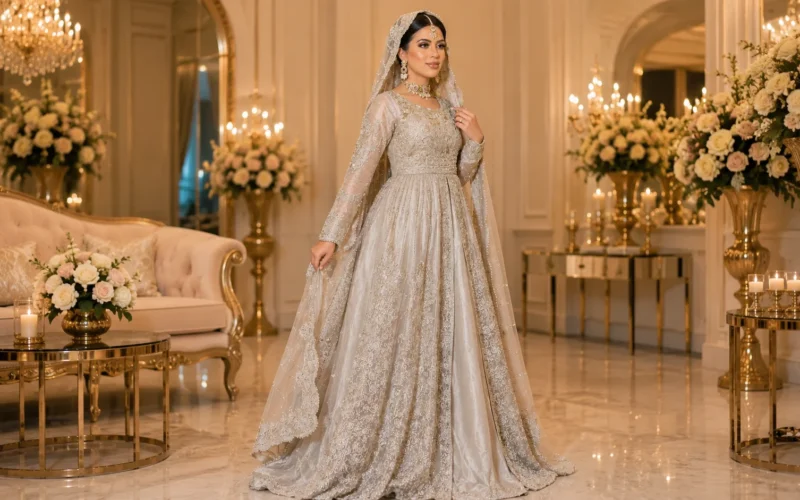
Pastel Bridal Lehengas: The 2026 Trend Taking Over
Pastel bridal lehengas are the biggest trend of 2026. Blush, mint, lavender, and champagne options. Bespoke colour matching at Jabeenz Manchester.
