
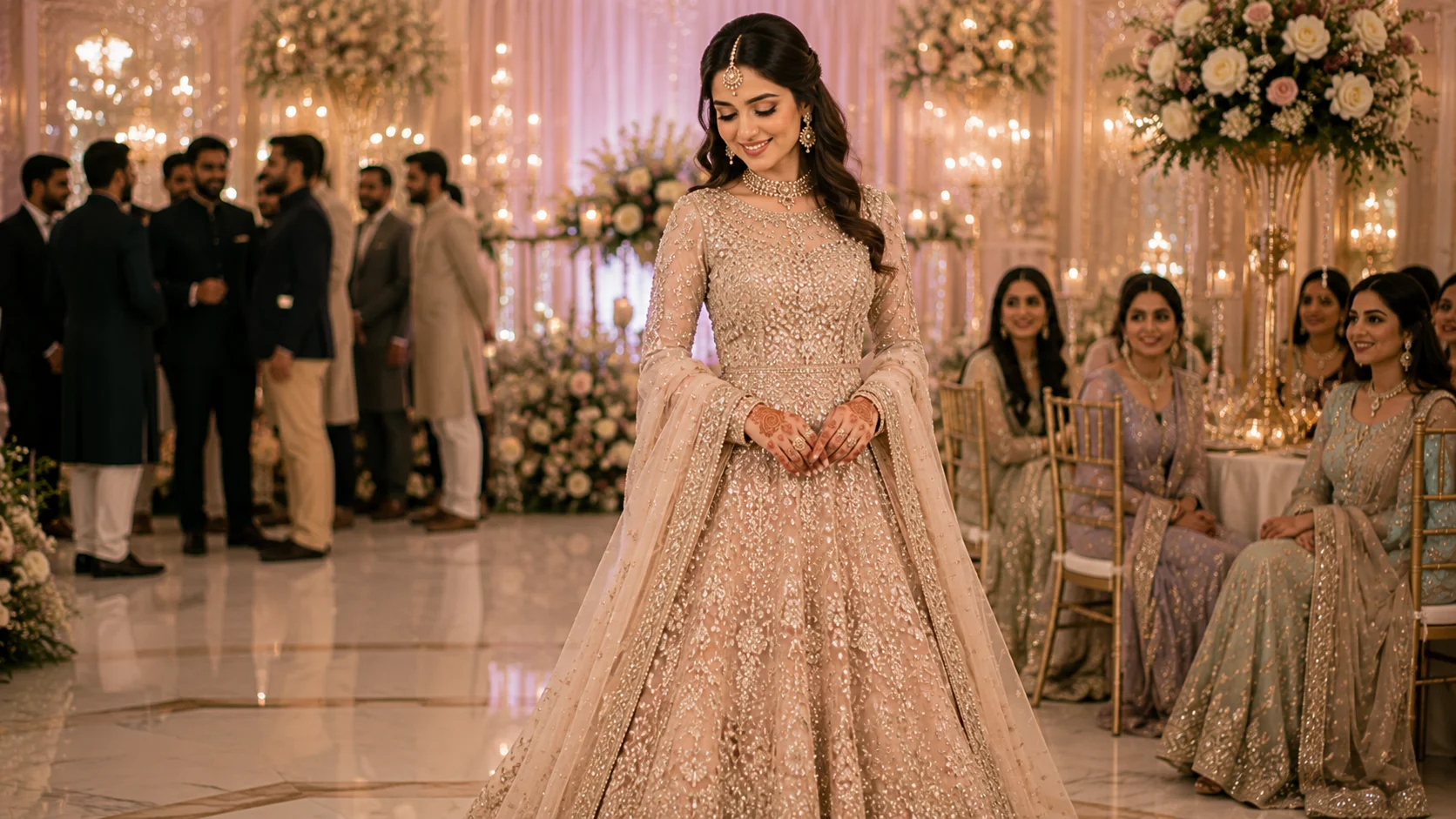
The walima is one of the most cherished events in a Muslim wedding celebration. Often hosted by the groom’s family. The walima is a wedding feast that announces the marriage to the wider community. Marks the beginning of the couple’s new life together. For the bride. Choosing the perfect walima dress is an opportunity to express a softer. More refined side of her bridal style, often in contrast to the dramatic grandeur of the baraat outfit. At Jabeenz in Manchester. We have been handcrafting bespoke walima dresses since 1975, helping brides. With the UK find that perfect balance of grace. Celebration. According to the British Bridal Suppliers Association, handmade bridal wear remains the gold standard for quality and fit.
This guide explores walima dress styles. Colour palettes, cultural significance. Practical advice for choosing an outfit that you will treasure for years to come.
The Cultural Significance of the Walima
In Islamic tradition, the walima is a Sunnah, a practice recommended by the Prophet Muhammad (peace be upon him). It is an act of gratitude and community. There the newly married couple shares their happiness with family, friends and neighbours through food and fellowship. Because of its religious significance, the walima holds a special place in the hearts of Muslim families. And the bride’s outfit should reflect both the joy and the dignity of the occasion.
Unlike the baraat. This is often known for by vibrant reds. Heavy jewellery. Dramatic decoration, the walima often calls for a softer, more elegant look. This does not mean the walima dress should be plain or understated. On the contrary. Many brides choose their most beautiful. Carefully crafted outfit for the walima, knowing that the softer colour palette allows the quality of the craftsmanship to take centre stage.
In the UK, walima celebrations range from intimate family dinners to lavish banquet hall receptions with hundreds of guests. The scale of the event should influence your dress choice: a more intimate walima allows for understated elegance. While a grand reception calls for a dress with presence and drama.
Colour Palettes for the Modern Walima Bride
Pastel shades have long been the traditional choice for walima dresses. They remain as popular as ever. Powder pink. Mint green, lilac, baby blue. Soft peach create a romantic, feminine look that contrasts beautifully. With the bold colours of the baraat. These lighter tones also photograph very well, especially in well-lit reception venues.
In recent years, metallic and neutral tones have emerged as contemporary alternatives. Champagne, rose gold, silver grey. Warm taupe offer a stylish, fashion-forward look that feels both modern and timeless. These shades work especially well with crystal and pearl decoration. This creates a luminous, ethereal effect.
For brides who want to make a statement. Deeper pastel shades like dusty mauve, sage green. Muted coral provide colour without overwhelming the softness expected at a walima. Whatever palette you choose. Ensure your dupatta or hijab coordinates harmoniously, as this accessory will feature prominently in photographs. With any ceremonial moments.
Walima Dress Silhouettes
The lengha remains the most popular walima silhouette among Pakistani and Indian brides. A walima lengha typically features a less voluminous skirt than a baraat lengha. With a streamlined A-line or gently flared shape that moves gracefully as the bride walks. Paired with a fitted choli and an embroidered dupatta, this silhouette is elegant, comfortable and endlessly flattering.
Anarkali gowns are another excellent walima option. Especially for brides who want a single-piece outfit that is easy to wear throughout a long evening. The fitted bodice and flowing skirt of an anarkali create a regal silhouette. While the continuous fabric line from neckline to hem gives a tall, graceful appearance. Explore our Walima dress collection to see our range of silhouettes and styles.
Sharara sets, with their wide-legged flared trousers, offer a retro-inspired look that has made a strong comeback in recent seasons. A sharara paired with a short. Decorated kurta creates a youthful, fashion-forward silhouette that is perfect for a contemporary walima celebration. For brides who prefer maximum coverage, a gharara with its fuller, gathered silhouette provides both modesty and movement.
Decoration and Craftsmanship
The walima dress is where fine craftsmanship truly shines. Because the colour palette is typically lighter. Softer. The quality of the embroidery becomes the focal point of the entire outfit. This is where the difference between handcrafted and machine-produced decoration is most visible.
At Jabeenz, our artisans use traditional techniques that have been handed down for generations. Zardozi work. This involves gold. Silver metallic threads couched onto the fabric surface. Creates raised, textured motifs that catch the light from every angle. Dabka embroidery, crafted from coiled wire, adds dimension. A subtle shimmer that is more refined than sequin-based decoration.
Pearl and crystal hand-beading is especially popular for walima dresses, as these materials complement pastel fabrics beautifully. Each stone and pearl is individually stitched in place. This creates patterns that flow organically across the fabric rather than sitting in rigid, mechanical rows. This level of detail takes weeks of skilled hand work. the result is a dress that feels truly special and irreplaceable.
Walima Etiquette for Brides and Guests
For brides, the walima outfit should be noticeably different from the baraat dress. If you wore red for the baraat, choose a pastel or metallic shade for the walima. If your baraat look was heavily dramatic, aim for refined elegance at the walima. This contrast tells a visual story of the wedding journey. Gives your guests two distinctly memorable bridal looks.
Jewellery at the walima tends to be lighter and more delicate than baraat jewellery. Think single-strand necklaces, subtle earrings and a simple maang tikka or matha patti. If your baraat featured heavy gold. Consider switching to platinum, white gold or rose gold tones for the walima to complement the softer colour palette.
For guests attending a walima, semi-formal to formal attire is expected. Embroidered suits, sarees and anarkalis in jewel tones or pastels are all appropriate. As with all Muslim wedding events. Modesty is appreciated, especially if the walima includes any religious elements like a short speech or prayer of blessing.
Planning Your Walima Look: A Timeline
Start planning your walima outfit at the same time as your baraat dress. Typically six to eight months before the wedding. This ensures your two outfits complement each other for style, colour and decoration level without being too similar.
Allow time for fabric selection, design consultations and at least two fittings. Because walima dresses often feature lighter fabrics. More delicate embroidery. They can be slightly quicker to produce than heavily decorated baraat outfits. But you should still allow a minimum of three to four months for a bespoke piece.
Consider your hairstyle and makeup in advance, as these should harmonise with the softer walima look. Many brides opt for a fresh. Dewy makeup look. Softer, looser hairstyling for the walima, saving the more dramatic glam for the baraat.
Frequently Asked Questions
Can I wear white for my walima?
White and ivory are increasingly popular for walima celebrations. Especially among brides who want a look inspired by Western bridal fashion while still wearing a traditional silhouette. A white or ivory lengha with gold or silver embroidery is a stunning choice that bridges both traditions beautifully.
Is the walima always hosted by the groom’s family?
Often, yes. The walima is the groom’s family’s responsibility. They host the event as a celebration. Announcement of the marriage. In modern practice, however, many couples share the planning and costs equally. Some host the walima jointly. The format and formality vary widely depending on family preference and cultural background.
How formal should a walima dress be?
A walima dress should be formal and celebratory. it does not need to be as heavy or dramatic as a baraat outfit. Think of it as “refined elegance” rather than “maximum impact.” The focus should be on quality fabric. Beautiful embroidery and a flattering fit rather than sheer weight of decoration.
Can I have my walima dress made bespoke in Manchester?
Absolutely. Jabeenz in Manchester has been creating bespoke bridal and walima dresses for over fifty years. Our design team will work with you to choose fabrics, colours and decoration styles that reflect your vision. And our skilled artisans will handcraft every detail to perfection. Each dress is unique, made exclusively for you.
Your walima dress should make you feel radiant, graceful and celebrated. It is the outfit that marks the beginning of your married life. And it deserves the same love and attention as every other element of your wedding. If you are ready to start designing your dream walima look, Book a consultation with our bridal team at Jabeenz in Manchester. There bespoke craftsmanship and personal service have been our tradition since 1975.
Next step: Book a free consultation with Jabeenz to discuss your requirements, or explore the Dream Dress Studio to start from an inspiration image.
Shop This Look
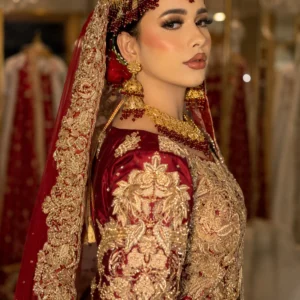
Ready to Find Your Dream Outfit?
Book a free consultation at our Manchester boutique or browse our latest collections online.
You Might Also Like
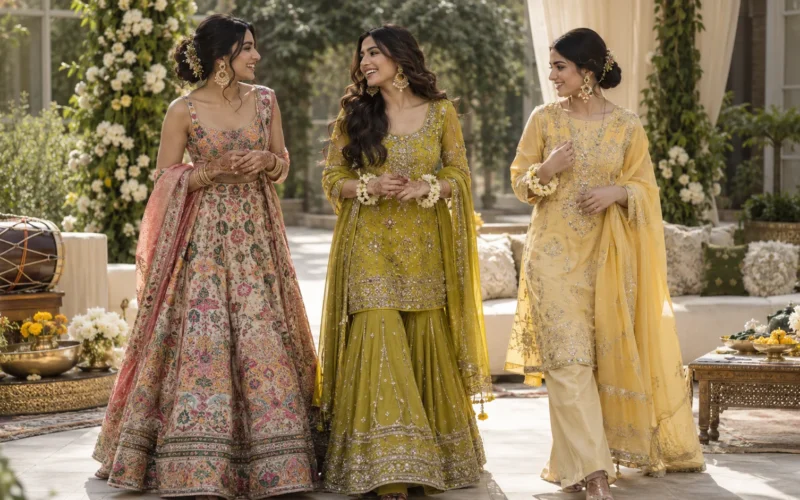
Asian Bridal Dresses for Pre-Wedding Events: How to Avoid Repeating the Same Look
Plan pre wedding bridalwear with practical advice on dupatta, embroidery, fit and movement. Use these UK wedding checks before approving the final...
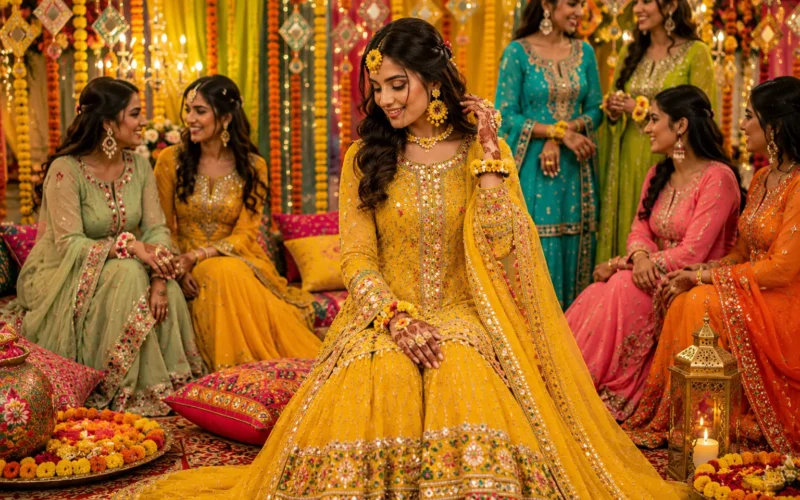
Mehndi Outfit Ideas for Brides, Guests and Bridesmaids
Explore mehndi outfit ideas for brides, guests and bridesmaids, from bright colours and dance-friendly shararas to accessories and styling tips in the...
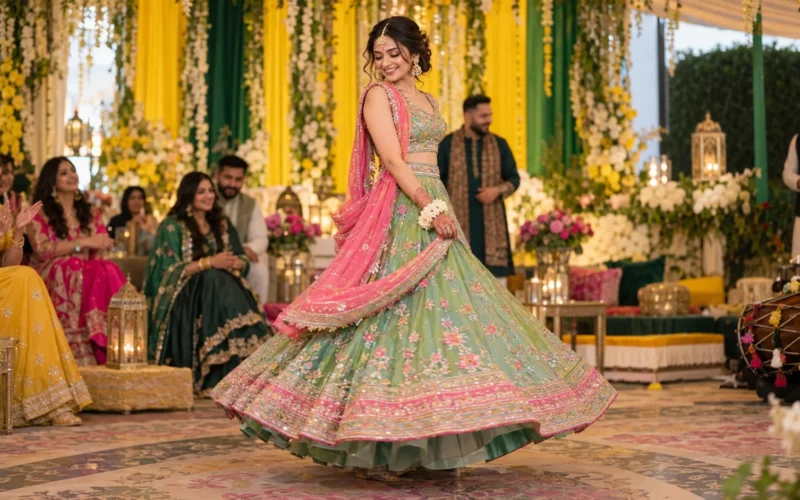
Pakistani Wedding Dress for Mehndi: How to Keep It Light Enough to Dance
Learn how mehndi dress movement choices affect bespoke, dance and comfort, with practical UK wedding advice and fitting checks for a more...
