
Pakistani Wedding Dress Colours: How to Choose a Contrast Border Without Clashing With Jewellery
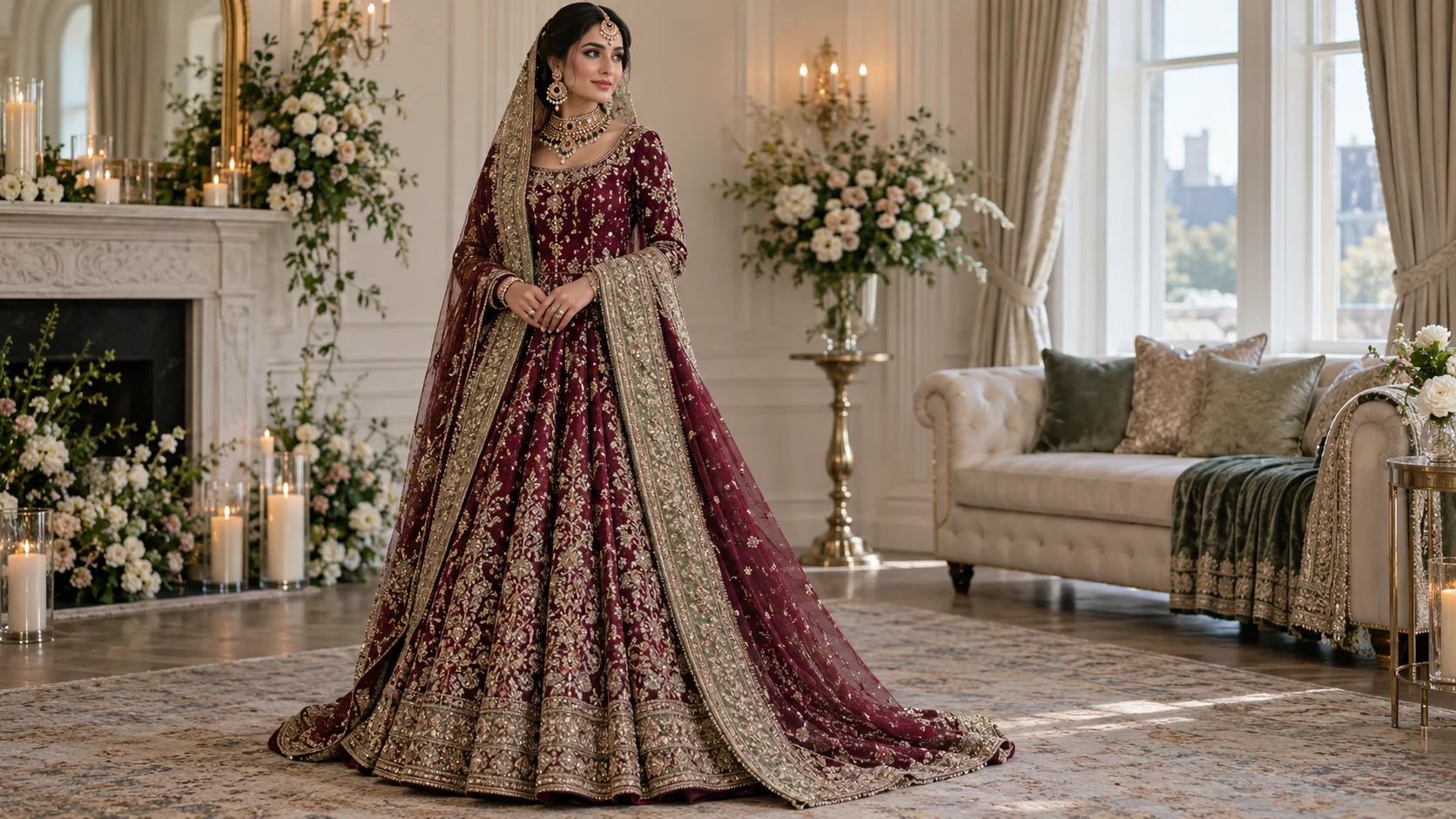
The best approach to bridal contrast border is to treat it as a practical design decision: test the relevant detail with the complete outfit, wedding shoes and planned accessories before final approval. This article focuses on the practical decision behind the search, rather than giving a one-size-fits-all fashion rule.
Quick answer: The best approach to bridal contrast border is to treat it as a practical design decision: test the relevant detail with the complete outfit, wedding shoes and planned accessories before final approval.
Turn the Inspiration Photo Into a Practical Brief
The key question is how a second colour at the hem, neckline or dupatta border can add depth to a Pakistani wedding dress. It is also useful to consider selecting contrast shades that work with gold, antique gold, silver or coloured-stone jewellery.
A useful way to narrow the choice is to write down the parts of the day that cannot change: venue layout, ceremony format, shoe height, jewellery already chosen and any coverage preference. Those fixed points give the designer clearer boundaries than a folder of unrelated inspiration images.
Separate Structural Choices From Decoration
Made-to-measure and fully bespoke are related but not identical ideas. Made-to-measure normally starts with an existing style or pattern adjusted to measurements, while a fuller bespoke process may involve more design decisions from the outset. Customers should ask exactly which elements can be changed rather than relying on the label alone. Treat this as a fitting test rather than a styling theory. Re-create the movement or situation during an appointment, take a short phone video from the front and side, and note what shifts, catches or needs help.
If the decision changes the pattern, length or load on the garment, settle it earlier than purely decorative finishing.
Treat Red as a Palette, Not One Shade
Red and maroon remain important bridal colours for many Pakistani families, but the final effect depends on undertone and surrounding colours. Stage décor, carpet, flowers, jewellery and groomwear can either frame the dress or merge with it. A swatch tested against décor samples is more reliable than choosing a shade by name. The safest decision is usually made by testing the complete combination. Fabric, lining, embellishment and jewellery affect one another, so a detail that works on an unembellished sample can behave differently once the final weight is added.
Record the approved choice with a photograph or written note so the final specification is clear at later fittings.
A Dance-Friendly Dress Still Needs Support
A dance-friendly outfit needs secure closures, a hem that clears the feet, sleeves that allow the arms to lift and embellishment that does not repeatedly catch on itself. Brides who plan choreography should test the key movements in the fitting room rather than assuming a lighter-looking dress will automatically move well. Photography is useful here, but comfort is the stronger quality check. A dress that looks balanced only while the wearer stands perfectly still can become frustrating during greetings, meals or travel.
Where family opinions differ, return to the practical brief: event, movement, coverage, venue and the wearer’s own preference.
Control Contrast at the Hem and Dupatta
A contrast border can define a silhouette and connect a dress to jewellery or a second colour, but it is one of the strongest lines in the outfit. Repeating the contrast in a small secondary area—such as the dupatta edge or cuff—usually creates more cohesion than introducing an unrelated third accent. Ask the boutique to explain what is structural and what is decorative. Structural choices are harder to change late, while some decorative details can be adjusted more easily before final finishing.
For this topic, the point is not to maximise border; it is to decide how much of it the wearer can manage comfortably and confidently.
Plan the Dupatta Before the Final Fitting
A dupatta is not only a finishing accessory; its fabric, border and method of attachment affect weight distribution. A broad embellished border can look impressive in photographs but may pull at the crown or shoulder. Testing the intended drape with pins, hairstyle or hijab in place is far more useful than judging it folded on a rail. Think in terms of trade-offs. More volume can create presence but needs more space; a heavier border can frame the outfit but may affect drape; extra coverage can be built cleanly if it is designed from the start rather than added as an afterthought.
Use that test to compare two versions of the same idea rather than comparing unrelated dresses. Small controlled changes make the effect easier to judge.
How to Put the Advice Into Practice
Keep one short fitting record for bespoke: what was agreed, what was tested and what still needs checking. Include a photo of the approved proportion and note any measurement or pinning point that matters. At the next fitting, compare against the same reference instead of starting the decision again. This is especially useful when red affects the final balance, because memory of colour, length and drape is unreliable across several weeks.
Event Context Matters
Pakistani weddings in Britain vary by family, region, venue and personal taste, so fashion advice is better treated as a set of options rather than a fixed cultural rule. The most useful design decision is the one that fits the actual event schedule, surroundings and wearer.
UK Venue and Weather Practicalities
For a UK wedding, the venue can create conditions very different from the weather outside. Hotels and halls may be strongly heated or air-conditioned, while photographs can involve lawns, gravel, rain or cold air. Plan the whole route—from car to ceremony to stage—not just the moment the outfit is first put on.
Use This Fitting Checklist
| Decision area | Best approach | Final check |
|---|---|---|
| Bespoke | Test it as part of the full outfit | Check movement, comfort and photographs before final approval |
| Red | Test it as part of the full outfit | Check movement, comfort and photographs before final approval |
| Dance | Test it as part of the full outfit | Check movement, comfort and photographs before final approval |
Questions to Ask at the Boutique
- Is this option practical for my venue route and length of event?
- What will change if I increase or reduce the bespoke?
- Can we test the final red before this decision is locked?
- Which part of this choice is difficult to alter later?
- Does the planned shoe height, jewellery or dupatta change the fit?
These questions are deliberately practical. They make it easier to compare a sample, ready-to-wear piece or bespoke proposal on the same basis and to identify which details must be agreed before production progresses.
Final Fitting Rehearsal
A useful final-approval routine has five parts: dress, move, sit, photograph and record. Start with the complete outfit, including the intended shoe height. Check the bespoke while standing, then after several minutes of normal movement. Sit on a chair, rise without assistance and climb a few safe steps if the venue includes a stage. Look at how red changes, then check whether dance creates pressure, pulling or unwanted bulk. Take one daylight photograph if possible and another under indoor lighting. Finally, write down what was approved and any alteration still due. This routine catches practical problems that a mirror pose misses. It also gives the boutique a clearer instruction than phrases such as ‘make it a little easier’ or ‘make it look fuller’. Specific observations—where fabric catches, which pin moves, how many centimetres of clearance are needed—are easier to act on.
Common Mistakes to Avoid
- Letting a trend override the wearer’s normal comfort and coverage preferences.
- Making late structural changes after embroidery or finishing has begun.
- Testing a bridal sample without sitting, turning or walking.
- Forgetting the route between car, ceremony, stage, dining area and photography location.
Where Jabeenz Fits
Jabeenz currently presents itself as a Manchester-based designer/manufacturer of women’s Pakistani bridal and occasionwear, with ready-to-wear collections and bespoke options. Its Dream Dress Studio accepts inspiration-led enquiries, while the consultation page offers a free discussion around event, fabrics, colours and outfit ideas. For this topic, the useful role of a consultation is to test the practical detail—fit, movement, weight, colour or drape—rather than simply choosing the most decorative sample.
Next step: For a custom version, use the Jabeenz Dream Dress Studio or book a free consultation to discuss how the detail can be built into the pattern and fittings.
Final Takeaway
Treat bridal contrast border as part of the garment’s engineering as well as its styling. A small choice made early can prevent repeated adjustments on the wedding day.
Frequently Asked Questions
When should I decide bridal dupatta placement?
Before the final fitting. Border weight and pinning points can affect the shoulders, neckline, hairstyle and comfort.
Can this design detail be customised?
Often, yes, in a bespoke or made-to-measure process, but the options depend on garment construction and how far production has progressed. Confirm the exact change with the boutique.
What should I bring to a fitting?
Bring the planned shoe height, suitable underlayers, important jewellery dimensions or pieces where practical, and any dupatta or coverage requirement that changes the outfit’s balance.
How can I avoid making a late design change?
Finalise structural choices first: silhouette, length, neckline, sleeves, closure, lining and major embroidery placement. Keep a written or photographed record of the approved specification.
Shop This Look
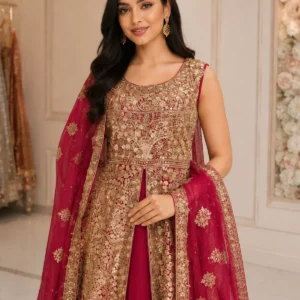
Ready to Find Your Dream Outfit?
Book a free consultation at our Manchester boutique or browse our latest collections online.
You Might Also Like
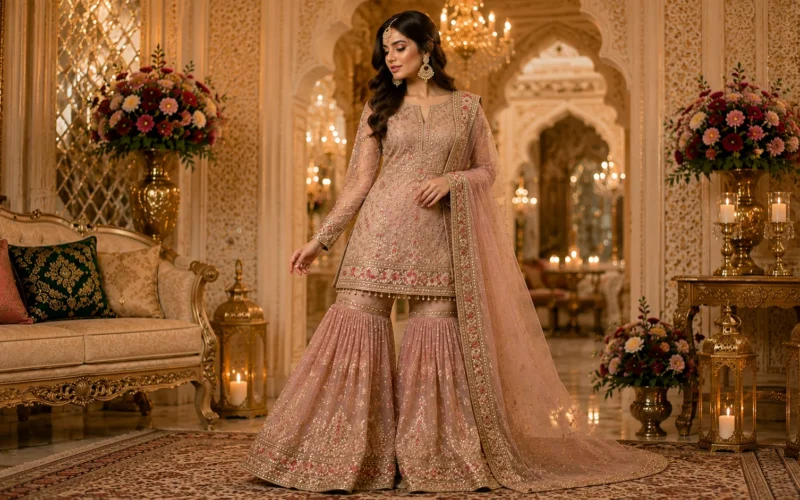
Sharara Suits: History, Styles and How to Wear Them
Discover sharara suits styles, their Mughal history and how to wear them for weddings. Jabeenz Manchester creates bespoke sharara outfits. Enquire now.
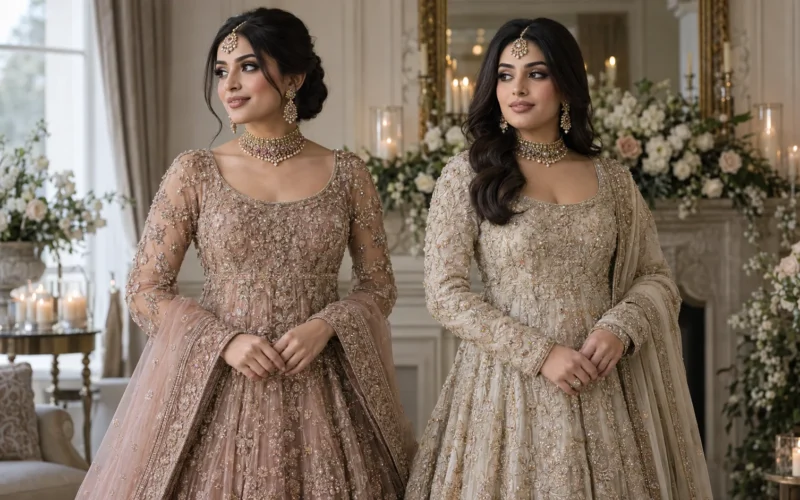
Asian Wedding Dresses: Sheer Sleeves vs Lined Sleeves for UK Weddings
Learn how bridal sleeve lining choices affect lining, photos and comfort, with practical UK wedding advice and fitting checks for a more...
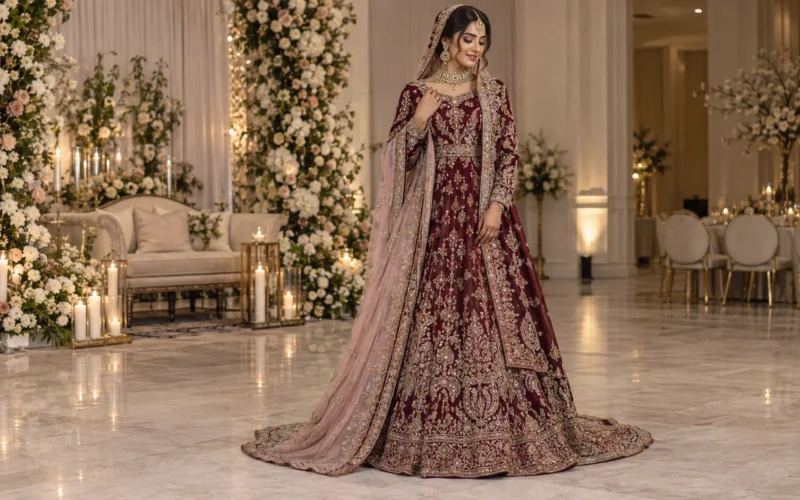
Pakistani Wedding Dresses UK: Using Pastel as an Accent Instead of the Main Colour
Learn how pastel bridal accents choices affect lining, white and comfort, with practical UK wedding advice and fitting checks for a more...
