
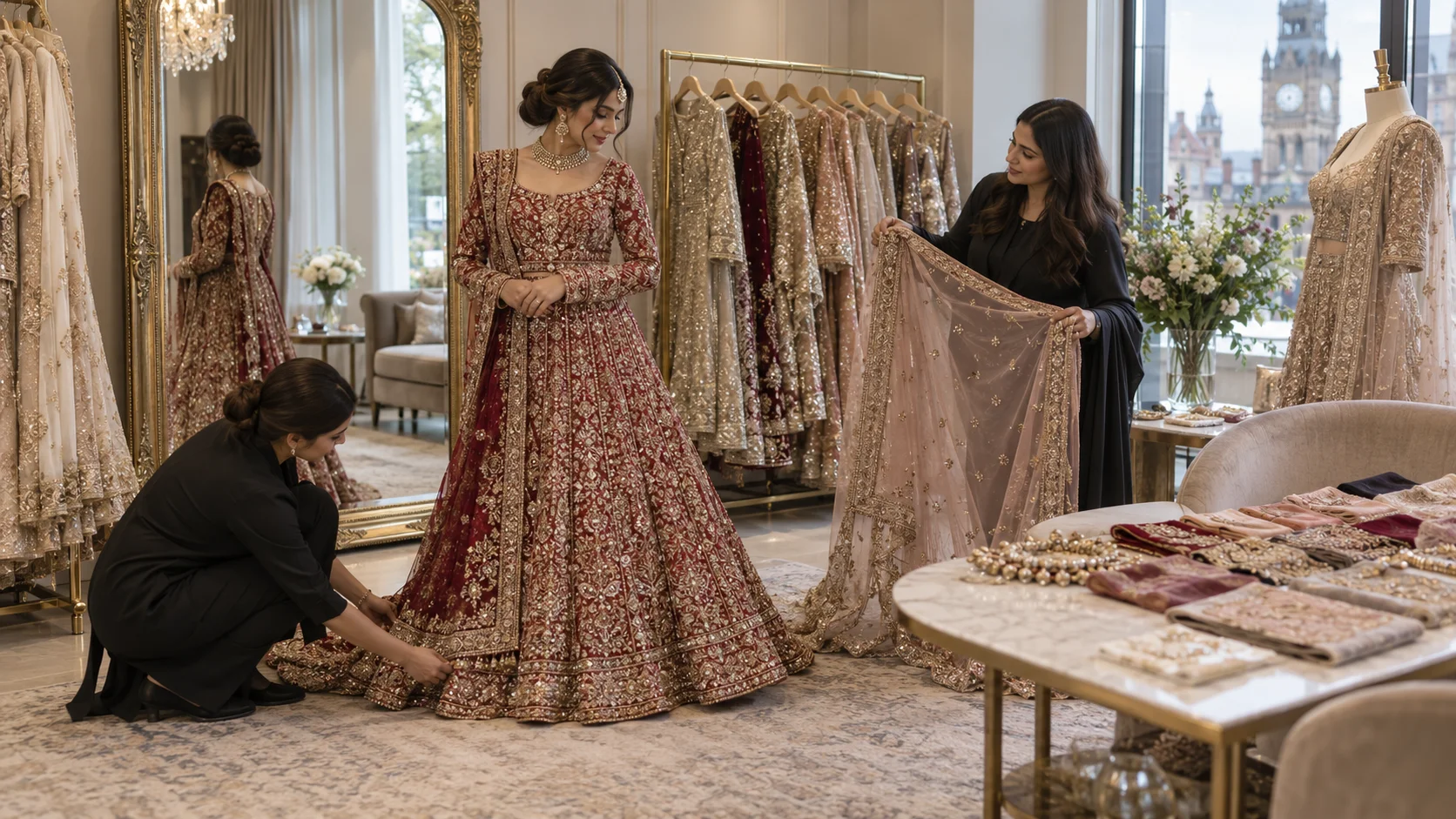
Set a total outfit budget first, then compare fabric, embroidery, construction, customisation and alteration costs on a like-for-like basis rather than judging value by sparkle. The useful test is simple: the outfit should work through the full event, not only during the first mirror check.
Quick answer: Set a total outfit budget first, then compare fabric, embroidery, construction, customisation and alteration costs on a like-for-like basis rather than judging value by sparkle.
Start With the Real Wedding-Day Problem
The practical aim is to show how to compare boutiques using consultation quality, design flexibility, craftsmanship, measurement process, fitting support and communication. The guidance should explain why the cheapest quote may not represent the same level of work or service.
A useful way to narrow the choice is to write down the parts of the day that cannot change: venue layout, ceremony format, shoe height, jewellery already chosen and any coverage preference. Those fixed points give the designer clearer boundaries than a folder of unrelated inspiration images.
Set a Budget Around Construction, Not Sparkle
Budgeting for formalwear should separate the visible garment price from the decisions that drive it: fabric, amount and type of embroidery, custom construction, alterations and accessories. A lower-priced outfit that needs substantial restyling can end up less economical than a simpler design that already fits the event and wearer. Use the venue as a design constraint. Measure or photograph any narrow aisle, low sofa, stage step or outdoor path that could affect movement, then bring that information to the fitting.
For this topic, the point is not to maximise budget; it is to decide how much of it the wearer can manage comfortably and confidently.
Embroidery Density Affects Movement
Embroidery changes more than decoration. Dense work adds weight and stiffness; border placement draws the eye; concentrated motifs can support a focal point without covering every centimetre. Good planning considers the garment as a whole so the neckline, sleeves, skirt and dupatta do not all compete for attention. Treat this as a fitting test rather than a styling theory. Re-create the movement or situation during an appointment, take a short phone video from the front and side, and note what shifts, catches or needs help.
Use that test to compare two versions of the same idea rather than comparing unrelated dresses. Small controlled changes make the effect easier to judge.
Secure the Dupatta Without Fighting the Dress
A dupatta is not only a finishing accessory; its fabric, border and method of attachment affect weight distribution. A broad embellished border can look impressive in photographs but may pull at the crown or shoulder. Testing the intended drape with pins, hairstyle or hijab in place is far more useful than judging it folded on a rail. The safest decision is usually made by testing the complete combination. Fabric, lining, embellishment and jewellery affect one another, so a detail that works on an unembellished sample can behave differently once the final weight is added.
If the decision changes the pattern, length or load on the garment, settle it earlier than purely decorative finishing.
Use the Fitting to Confirm the Decision
Before approval, ask for the outfit to be viewed in layers: base construction, lining or understructure, outer fabric, major embroidery, then accessories. That makes it easier to see which layer is causing a problem with budget. If embroidery is part of the look, test it at the same time. A practical fitting should end with a clear yes/no decision, not only a general feeling that the outfit looks good.
Keep the Ceremony and Schedule in View
Pakistani weddings in Britain vary by family, region, venue and personal taste, so fashion advice is better treated as a set of options rather than a fixed cultural rule. The most useful design decision is the one that fits the actual event schedule, surroundings and wearer.
UK and Manchester Practicalities
For Manchester shoppers, travel and fitting logistics deserve the same attention as the dress itself. Jabeenz currently lists its showroom at 934 Stockport Road, Levenshulme, Manchester M19 3AB, with daily opening hours of 11am–7pm. Its contact page says walk-ins are welcome and bridal consultations can be booked; the consultation page describes these appointments as free. Anyone travelling from outside Greater Manchester should still confirm the latest appointment and collection arrangements before setting off.
Compare the Options Side by Side
| Cost driver | Why it changes price | Question to ask |
|---|---|---|
| Fabric and lining | Material choice and quantity differ | What fabric and lining are included? |
| Embroidery density | More area and complexity can increase work | Which parts are hand-worked or machine-worked? |
| Customisation | Pattern, colour and fit changes add work | What changes are included in the quoted price? |
| Alterations | Ready-to-wear may need separate fitting work | Are alterations included or separate? |
Questions to Ask at the Boutique
- What will change if I increase or reduce the budget?
- Can we test the final embroidery before this decision is locked?
- Which part of this choice is difficult to alter later?
- Does the planned shoe height, jewellery or dupatta change the fit?
- What should I photograph or record at this fitting?
These questions are deliberately practical. They make it easier to compare a sample, ready-to-wear piece or bespoke proposal on the same basis and to identify which details must be agreed before production progresses.
Final Fitting Rehearsal
Do not treat final approval as a question of whether the dress is beautiful. Ask whether the budget works for the actual schedule. Rehearse arrival, seated ceremony, photographs, meal and a short period of faster walking. If the event includes dancing, test a few turns; if it includes a stage, test a similar step height where safe. Watch what happens to embroidery after movement rather than resetting the outfit each time. Check dupatta with the accessories in place. Small issues should be classified: fitting issue, styling issue or wedding-day management issue. A fitting issue may need alteration; a styling issue may need a different pin or drape; a management issue may simply need a bridesmaid to arrange a train before formal photographs. This classification prevents unnecessary changes to a garment that already fits well while making sure real construction problems are not dismissed as styling.
Common Mistakes to Avoid
- Approving the look only while standing still.
- Finalising hem or drape before the planned shoes and underlayers are known.
- Treating fabric, embroidery, jewellery and dupatta as separate decisions.
- Copying a reference image without checking whether the venue and event have the same practical needs.
Where Jabeenz Fits
Jabeenz is based in Manchester and positions itself as directly involved in design and manufacturing rather than as a generic multi-brand marketplace. Its current contact information lists 934 Stockport Road, Levenshulme, Manchester M19 3AB, and its consultation page offers free one-to-one appointments. For a bespoke enquiry, bring the event details, key inspiration images and the practical constraints discussed above so the appointment can focus on decisions that affect fit and construction.
Next step: Browse the relevant Jabeenz collection for visual references, then use a free consultation if you need the colour, fit or construction adjusted around your event.
Final Takeaway
Good bridalwear planning is specific: one wearer, one venue, one schedule and one set of preferences. Test the complete look and record the decisions before final finishing.
Frequently Asked Questions
What affects the price of a Pakistani wedding guest outfit?
Fabric, embroidery density, construction, lining, customisation, sizing and alteration work can all affect price. Compare specifications, not only the visible amount of embellishment.
When should I decide bridal dupatta placement?
Before the final fitting. Border weight and pinning points can affect the shoulders, neckline, hairstyle and comfort.
Can this design detail be customised?
Often, yes, in a bespoke or made-to-measure process, but the options depend on garment construction and how far production has progressed. Confirm the exact change with the boutique.
What should I bring to a fitting?
Bring the planned shoe height, suitable underlayers, important jewellery dimensions or pieces where practical, and any dupatta or coverage requirement that changes the outfit’s balance.
How can I avoid making a late design change?
Finalise structural choices first: silhouette, length, neckline, sleeves, closure, lining and major embroidery placement. Keep a written or photographed record of the approved specification.
Where is Jabeenz in Manchester?
Jabeenz currently lists its showroom at 934 Stockport Road, Levenshulme, Manchester M19 3AB. Check the contact page for the latest hours and appointment information before travelling.
Next step: Book a free consultation with Jabeenz to discuss your requirements, or explore the Dream Dress Studio to start from an inspiration image.
Ready to Find Your Dream Outfit?
Book a free consultation at our Manchester boutique or browse our latest collections online.
You Might Also Like
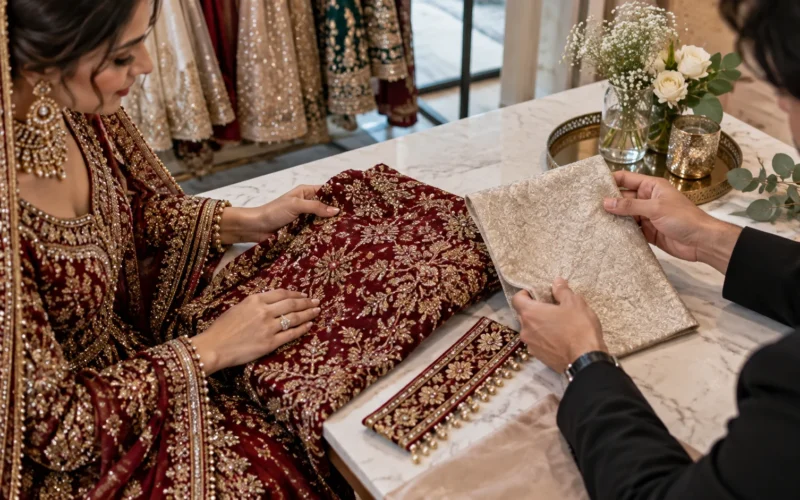
Pakistani Bridal Dresses Manchester: Using a Dress Swatch to Coordinate Groomwear and Décor
Plan bridal colour swatch with practical advice on photos, coordinate, fit and movement. Use these UK wedding checks before approving the final...
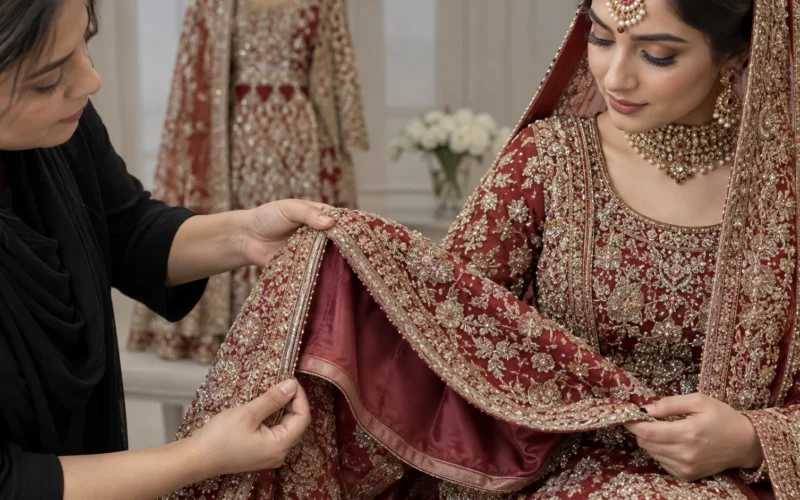
Asian Bridal Dresses: How to Judge Quality Before You Buy
Plan bridal dress quality checks with practical advice on lining, symmetry, fit and movement. Use these UK wedding checks before approving the...
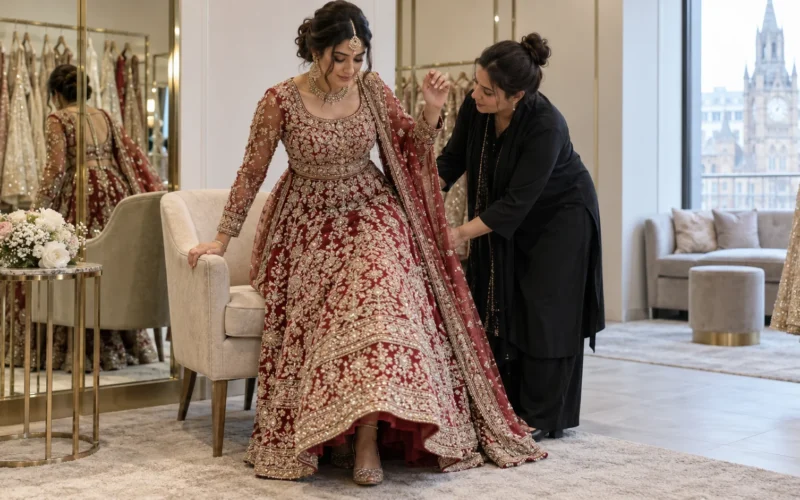
Asian Wedding Dresses: Comfort Checks Brides Forget to Do
Plan bridal comfort checks with practical advice on seating, stairs, fit and movement. Use these UK wedding checks before approving the final...
