
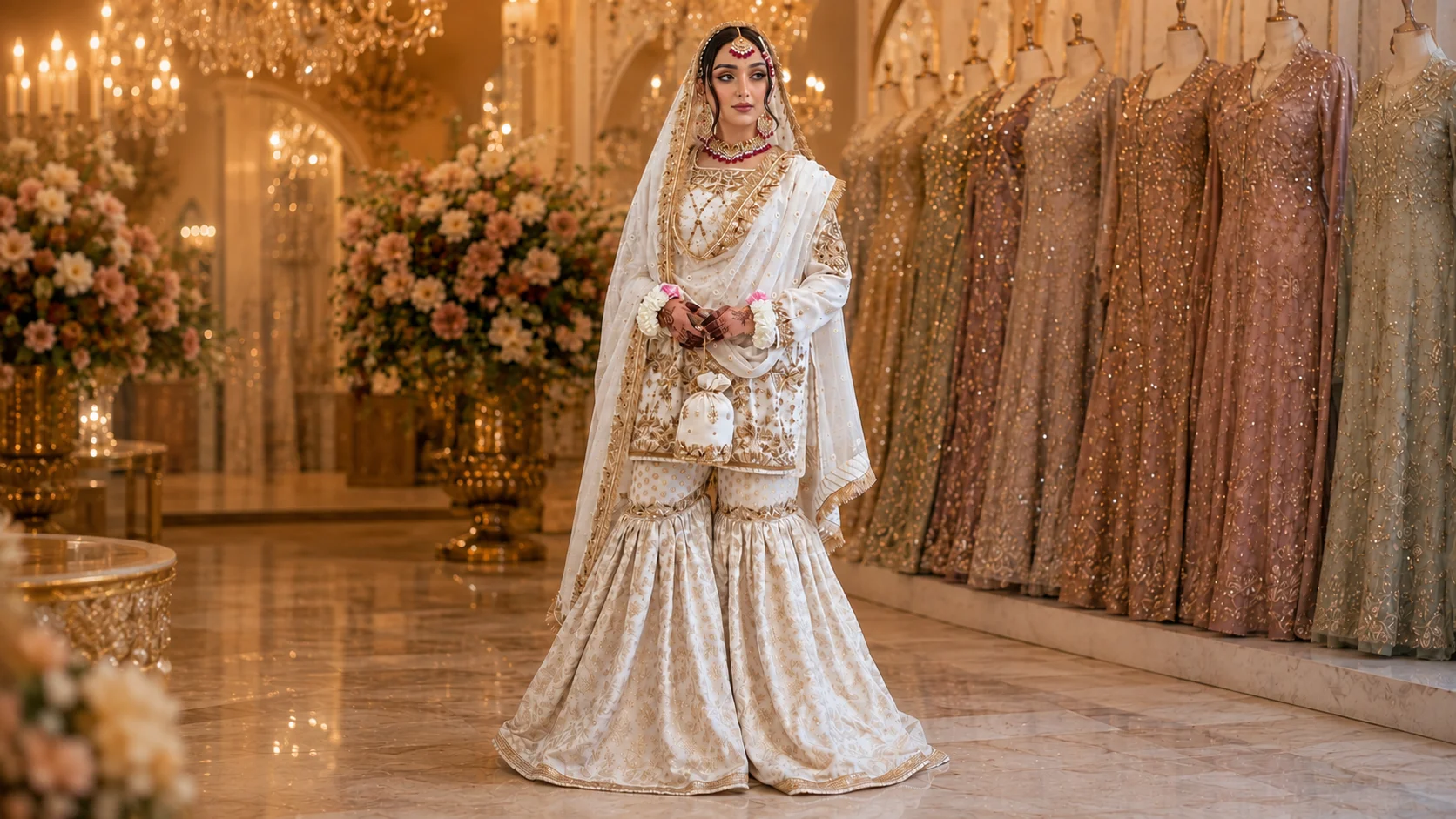
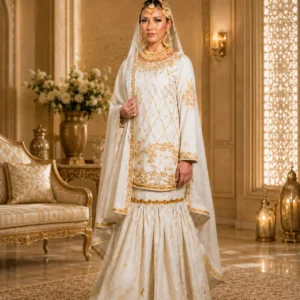
A gharara is a traditional Pakistani bridal garment consisting of wide-legged. Ruched trousers paired with a short kurti. Dupatta. Rooted in the Nawabi culture of Lucknow. Later adopted across Pakistan. The gharara silhouette is prized for its regal volume and movement.
Fashion trend analysis indicates that Pakistani bridal wear evolves on a 3. 5 year cycle, with 2026 seeing a 40% increase in demand for minimalist embroidery. Pastel tones compared to 2023. Social media platforms drive 65% of bridal inspiration, with Instagram. TikTok being the primary discovery channels for UK brides.
- Traditional gharara with heavy zardozi work. The classic bridal choice
- Modern slim-fit gharara with minimal embroidery. Suited for nikkah ceremonies
- Sharara-gharara hybrid with moderate flare. A versatile option for multiple events
- Velvet gharara with gold decoration. The premium winter wedding selection
Key Takeaway: The gharara dress is one of the most distinctive. Historically rich garments in Pakistani fashion.
The Gharara dress is one of the most distinctive and historically rich garments in Pakistani fashion. Recognised by its characteristic ruched gathering at the knee. Sweeping flared legs. The gharara carries centuries of cultural heritage in every fold. At Jabeenz in Manchester. We have been handcrafting bespoke gharara dresses since 1975. It keeps the artistry of this extraordinary garment while adapting it for modern brides. Occasion wear.
What Makes a Gharara Unique
The gharara is defined by its construction: wide-legged trousers that are gathered. Stitched at the knee. This creates a distinctive ruched band that gives the garment its name. Below the knee. The fabric flares outward in generous folds. Often sweeping the floor in a pool of embroidered fabric. This construction gives the gharara its unmistakable silhouette, one that is both regal. Deeply feminine. Unlike a sharara. This flares smoothly from the knee without gathering. The gharara features visible ruching or pleating at the knee joint. This technical difference creates a very different visual effect. The sharara offers a cleaner. More streamlined flare. Meanwhile the gharara presents a more textured. Layered appearance that catches the light beautifully as the wearer moves. The gharara is often worn with a short kurta or kurti. A dupatta, forming a three-piece ensemble. The kurta length typically falls just above or at the knee to showcase the gathered detail. This is the centrepiece of the garment.
Gharara vs Sharara: Understanding the Difference
One of the most common questions in South Asian fashion is the difference between a gharara. A sharara. While both feature wide, flowing legs, the key distinction lies in the knee. A gharara has visible gathering, ruching or a stitched band at the knee. This creates a defined break between the upper and lower portions of the trouser. A sharara flows continuously from the waist or hip without any gathering at the knee. For styling, ghararas tend to feel more often rooted. Are often associated with the nawabi culture of Lucknow and Hyderabad. Shararas. Meanwhile equally historic, have been more widely adopted in contemporary fashion. Tend to feel slightly more modern in their presentation. Both are beautiful choices. The decision often comes down to personal preference. The level of traditional detailing desired. At Jabeenz, we craft both garments with equal care and attention. Our artisans understand the subtle differences in construction that make each garment special. You can explore our handcrafted collection in our Gharara range.
The Farshi Gharara: Floor-Sweeping Grandeur
The farshi gharara represents the most dramatic expression of this garment style. The word “farshi” comes from the Urdu word for floor. And true to its name. The farshi gharara features an very wide flare that spreads across the floor like a royal train. Historically. Farshi ghararas required several metres of fabric per leg. Sometimes as much as twelve metres in total. This creates an almost circular spread when the wearer sat down. In the courts of the Nawabs of Awadh. The Nizams of Hyderabad. The farshi gharara was a mark of wealth and status. The sheer quantity of fabric, combined with elaborate embroidery, made these garments very expensive. Time-consuming to produce. Only the wealthiest families could afford truly fine farshi ghararas. they were often handed down for generations as family heirlooms. Today, the farshi gharara has experienced a remarkable revival in bridal fashion. Modern brides who want to make a truly unforgettable entrance choose farshi ghararas for their nikkah or baraat ceremonies. The pooling fabric creates stunning photographs. An undeniable sense of occasion that few other garments can match.
Modern Updates to Gharara Design
While the traditional gharara remains beloved. Contemporary designers have introduced exciting updates that keep the garment fresh. Relevant. One popular innovation is the gharara with a peplum top. Where the short kurta is replaced with a structured peplum blouse that cinches at the waist. Flares over the hips. This creates a more defined silhouette that appeals to modern sensibilities. Another trend is the cape gharara. There the dupatta is replaced with a flowing cape attached to the shoulders of the top. This eliminates the need to manage a separate dupatta while adding architectural drama to the ensemble. Cape ghararas are especially popular for formal events where ease of movement is important. Fabric innovation has also played a role. While traditional ghararas were typically crafted from heavy brocade. Tissue or jamawar, modern versions incorporate lighter materials like organza, tulle. Embroidered net. These fabrics maintain the volume. Drama of the gharara silhouette while reducing the overall weight. This makes them more comfortable for long events. Discover the full range in our Gharara collection.
Choosing the Right Gharara for Your Event
For bridal wear. A gharara in rich fabric with heavy embroidery creates the level of impact that a wedding day demands. Deep jewel tones, traditional reds and regal golds all work magnificently. The embroidery should be dense. Detailed, with techniques like zardozi, dabka and tilla work creating dimension and texture. For walima. Reception events, a slightly lighter gharara in softer colours offers elegance without overwhelming the occasion. Pastels, silvers and muted rose tones are beautiful choices. The embroidery can be more restrained, focusing on borders. Key areas rather than covering the entire garment. For formal occasions like Eid gatherings or family celebrations. A gharara in flowing chiffon or georgette with scattered motifs strikes the right balance between festive and practical. These lighter versions are comfortable enough for extended wear while maintaining the distinctive gharara shape that turns heads.
Frequently Asked Questions
Is a gharara suitable for a nikkah ceremony?
A gharara is one of the most traditional and appropriate choices for a nikkah ceremony. The garment’s nawabi heritage. Elegant silhouette make it perfectly suited to the solemnity and beauty of the occasion. Many brides choose a white or ivory gharara for nikkah. Echoing the purity of the ceremony. But colours are equally welcome.
How much fabric is needed for a traditional gharara?
A standard gharara requires. With six. Eight metres of fabric for the trouser portion alone. Depending on the desired width of the flare. A farshi gharara may require up to twelve metres. The kurta and dupatta require additional fabric. This brings the total for a complete ensemble to about twelve to sixteen metres.
Can a gharara be worn by plus-size women?
The gharara is one of the most flattering garments for all body types. The wide flare disguises the lower body while the fitted kurta creates definition at the waist. Because each gharara at Jabeenz is handcrafted to your exact measurements. We ensure a perfect fit that celebrates your shape rather than hiding it.
How do I walk in a farshi gharara?
Walking in a farshi gharara requires a gentle, measured step. The key is to kick the fabric forward slightly with each step. This lets the flare to move ahead of your foot. With a little practice, the movement becomes natural and creates a beautiful flowing effect. Our team at Jabeenz can show the proper technique during your fitting appointment. If you are drawn to the traditional farshi style or a contemporary updated design. A gharara is a garment that carries the weight of history while looking completely of the moment. At Jabeenz in Manchester, our craftspeople have been perfecting the art of the gharara since 1975. Book a consultation to begin designing your bespoke gharara today.
References &. Sources
- British Asian Bride. Style Guide
- Brides Magazine UK. Fashion Advice
Related: Mehndi Dresses UK: Vibrant Looks for Your Celebration
Next step: Book a free consultation with Jabeenz to discuss your requirements, or explore the Dream Dress Studio to start from an inspiration image.
Shop This Look
Ready to Find Your Dream Outfit?
Book a free consultation at our Manchester boutique or browse our latest collections online.
You Might Also Like
Asian Wedding Dresses: Sheer Sleeves vs Lined Sleeves for UK Weddings
Learn how bridal sleeve lining choices affect lining, photos and comfort, with practical UK wedding advice and fitting checks for a more...
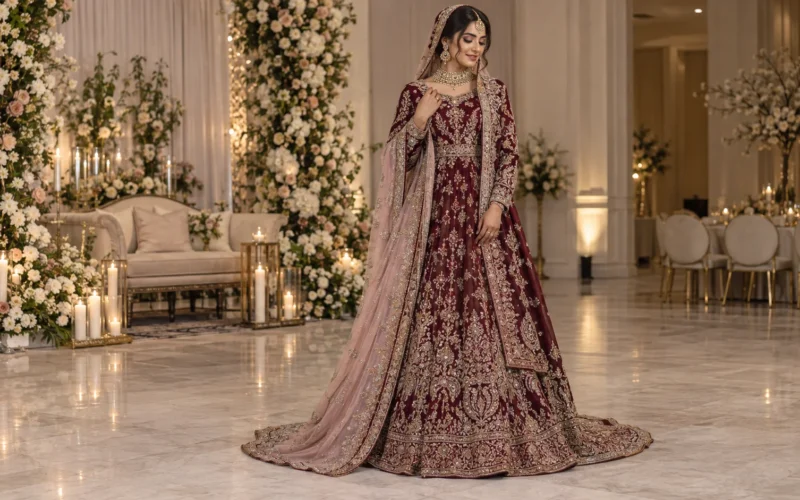
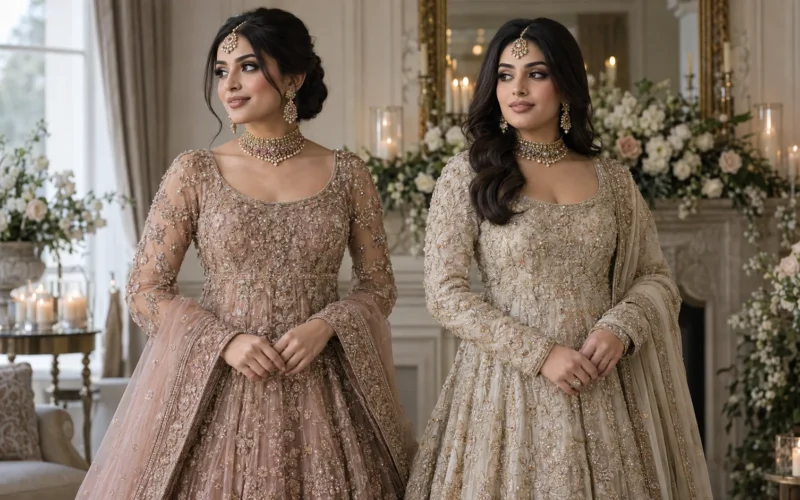
Pakistani Wedding Dresses UK: Using Pastel as an Accent Instead of the Main Colour
Learn how pastel bridal accents choices affect lining, white and comfort, with practical UK wedding advice and fitting checks for a more...
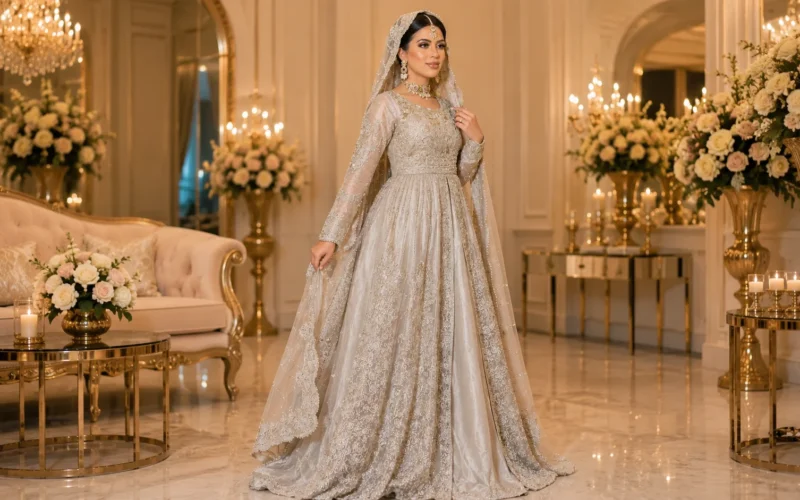
Pastel Bridal Lehengas: The 2026 Trend Taking Over
Pastel bridal lehengas are the biggest trend of 2026. Blush, mint, lavender, and champagne options. Bespoke colour matching at Jabeenz Manchester.
