
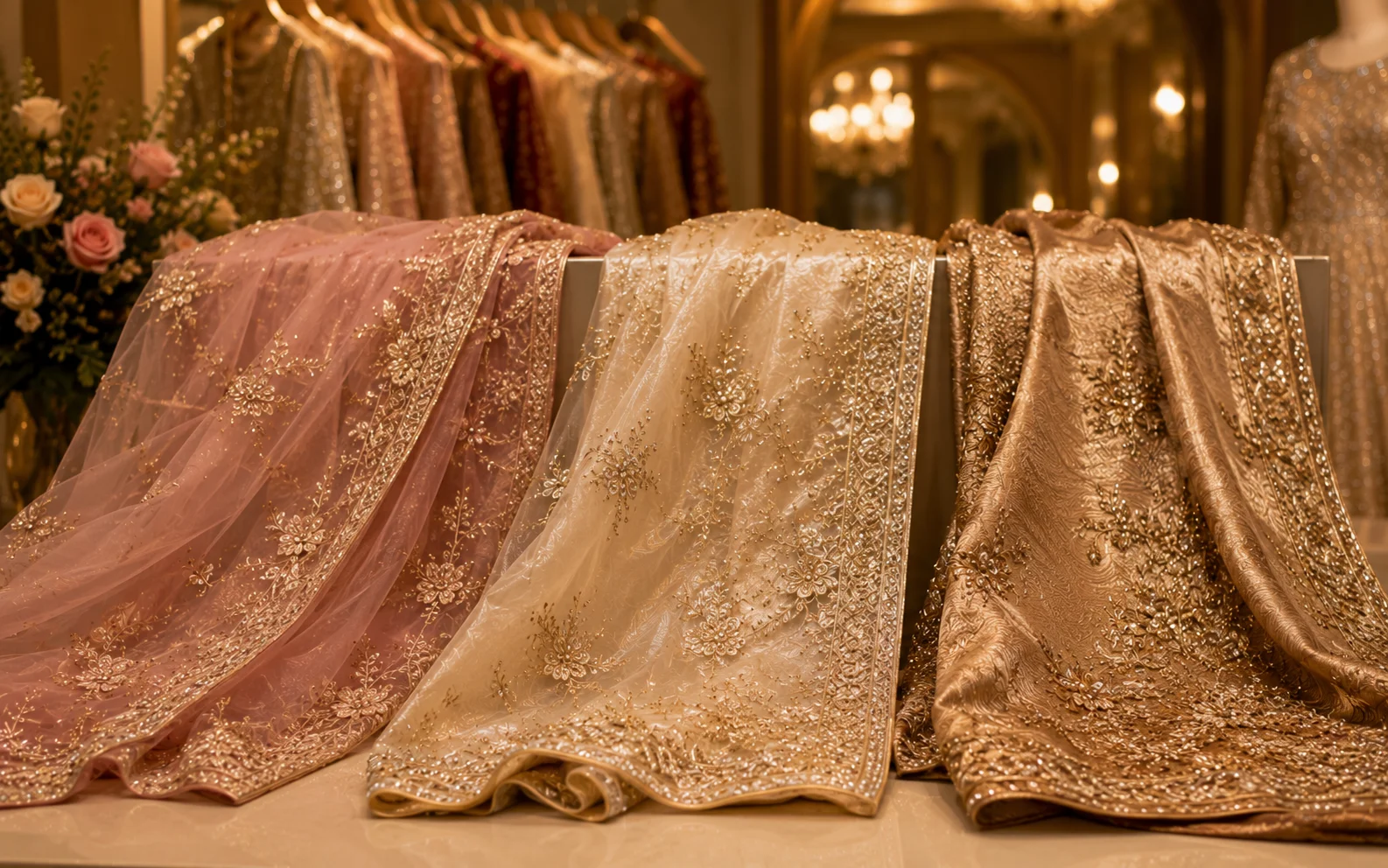
Chiffon is a lightweight, sheer fabric woven from silk, nylon and polyester that drapes elegantly and is widely used in bridal and formal wear. Understanding the differences between chiffon, organza and silk helps brides select the ideal fabric for their wedding dress based on season, silhouette, and personal preference.
- Chiffon. Lightweight and breathable, ideal for summer weddings and flowing silhouettes
- Organza. Semi-sheer with a crisp finish, perfect for structured and layered designs
- Silk. Luxurious with a natural sheen, best for all-season formal bridal wear
- Velvet. Rich and warm, the premier choice for autumn and winter ceremonies
The UK Asian bridal wear market is valued at over £500 million annually, with Pakistani bridal fashion accounting for about 35% of this sector. British Asian brides spend an average of £2,500. £5,000 on their primary bridal outfit, with bespoke pieces commanding premiums of 40. 60% above ready-to-wear.
Key Takeaway: Choosing the right fabric for your bridal dress is one of the biggest decisions you will make during the planning process.
Choosing the right fabric for your bridal dress is one of the biggest decisions you will make during the planning process. The fabric affects how the outfit drapes, how it feels on your skin, how heavy it is to wear. And how the embroidery sits on top. At Jabeenz, we work with all the major bridal fabrics and design every piece at our Manchester studio and we see first-hand how each fabric performs. This guide breaks down the most popular fabrics used in Pakistani bridal dresses and you know exactly what to ask for when you book your consultation.
Is Chiffon a Good Choice for a Bridal Lehenga?
Chiffon is one of the most popular fabrics for Pakistani bridal wear, and for good reason. It is lightweight, has a beautiful soft drape, and works well for layered outfits. If you are getting married in summer or planning a destination wedding, chiffon keeps you cool and comfortable throughout the day. Chiffon is available in pure silk and synthetic versions. Pure silk chiffon has a slightly richer look and a softer hand feel, while synthetic chiffon is more affordable and easier to care for. Both take colour dye beautifully. This is why chiffon works so well for vibrant reds, pinks, and pastels. One thing to keep in mind is that chiffon is sheer, so it is almost always used with a lining. For Bridal lehengas, chiffon dupattas are a popular choice because they are light enough to drape over the head without weighing you down. Best for: summer weddings, layered outfits, dupattas, and lighter bridal looks.
What Makes Organza Popular for Pakistani Bridal Dresses?
Organza has become very popular with brides in recent years. It is a crisp, structured fabric with a slight sheen that catches the light beautifully in photographs. Unlike chiffon, organza holds its shape. This makes it ideal for voluminous skirts, structured blouses, and ruffled details. One of the reasons organza works so well for Bridal dresses is that embroidery sits on top of it cleanly. Zardozi and dabka work look especially striking on organza because the fabric provides a smooth, firm base. The slight transparency of organza also creates a layered effect that adds depth to the outfit without adding bulk. Organza can feel stiffer than chiffon, so it is not as forgiving on the body. If you prefer a softer drape, ask your stylist about tissue organza. This is a lighter version that still has structure but feels less rigid. Best for: statement pieces, structured silhouettes, heavy embroidery, and photography-focused outfits.
Why Do Brides Choose Pure Silk for Their Wedding Outfit?
Pure silk has been used in South Asian bridal wear for centuries and it remains the gold standard for a reason. Nothing matches the natural lustre, weight, and richness of real silk. It drapes beautifully, feels luxurious against the skin, and ages well over time. Many families keep their silk bridal outfits as heirlooms. Raw silk is the most popular variety for bridal lehengas. It has a textured surface that adds character and catches embroidery thread in a way that makes the handwork stand out. Banarasi silk is another favourite, especially for Walima outfits, because of its woven patterns and rich colours. The main consideration with silk is weight. A fully embroidered silk lehenga can be quite heavy, especially for a long ceremony. If weight is a concern. Your stylist can suggest a silk blend or use silk for the main panels and lighter fabric for the lining and dupatta. Best for: traditional bridal looks, winter weddings, heirloom pieces, and outfits with heavy handwork.
Is Net a Good Fabric for a Bridal Dupatta?
Net is a sheer, open-weave fabric that is most commonly used for dupattas and overlays. It is extremely lightweight. This makes it comfortable for long events. Embroidered net dupattas are a staple of Pakistani bridal wear because they add detail without adding weight. For the main outfit, net is sometimes used as an overlay on top of a silk or satin base. This creates a textured, layered look that photographs well. Net is also a popular choice for Mehndi outfits and party wear where you want a lighter, more relaxed look. Net does snag easily, so it needs careful handling. Your Jabeenz stylist can advise on the right type of net for your outfit and how to care for it after the event. Best for: dupattas, overlays, mehndi outfits, and lighter occasion wear.
How Do I Choose Between Velvet and Jamawar for Winter Bridal Wear?
Winter brides in the UK often ask about heavier fabrics that provide warmth without sacrificing style. Velvet and jamawar are the two most popular options. Velvet has a deep, rich texture that looks stunning in jewel tones like emerald, burgundy, and midnight blue. It is warm, it photographs beautifully, and it pairs well with gold embroidery. Velvet blouses with organza or chiffon lehengas are a popular combination that balances warmth with movement. Jamawar is a woven fabric with intricate patterns built into the weave itself. It has a heritage feel that works well for traditional bridal looks. Jamawar shawls are especially popular for winter Nikkah ceremonies. Both fabrics are heavier, so they work best for outfits where you want structure and warmth. Talk to your stylist about combining heavier and lighter fabrics in a single outfit for the best of both worlds.
Can I Mix Fabrics in One Bridal Outfit?
Yes, and in fact most bridal outfits use more than one fabric. A typical bridal lehenga might have a raw silk skirt, an organza blouse, and a chiffon dupatta. Mixing fabrics lets you balance weight, drape, and structure across different parts of the outfit. At Jabeenz, our design team regularly works with fabric combinations to get the right look and feel. During your Free consultation, you can see and touch all the fabrics in person, compare them side by side. And get honest advice on what will work best for your body type, venue, and season. Every fabric we use is sourced for quality and tested in our workshop before it goes into production. Because we design everything ourselves, we have full control over how each fabric is cut, stitched, and finished.
Frequently Asked Questions
Which fabric is best for a summer wedding dress?
Chiffon is the most popular choice for summer weddings due to its lightweight, breathable nature and elegant drape. Organza is a close second. We offer a slightly stiffer structure that holds shape well in warmer temperatures. Pure silk, while luxurious, is best suited to climate-controlled venues in summer.
Can you mix different fabrics in one bridal outfit?
Yes, mixing fabrics is a popular technique in Pakistani bridal fashion. A common combination is a silk or velvet bodice for structure and richness, paired with a chiffon or organza dupatta for lightness and movement. At Jabeenz, our designers frequently blend 2 to 3 fabrics in a single bridal ensemble for optimal visual contrast.
How much fabric is needed for a bridal lehenga?
A standard bridal lehenga requires 12 to 18 metres of fabric, depending on the flare and design. The skirt alone uses 8 to 12 metres, the blouse requires 1.5 to 2 metres, and the dupatta adds another 2.5 to 3.5 metres. Heavier fabrics like velvet may require slightly less due to their natural weight and drape.
References &. Sources
- British Asian Bride. Style Guide
- Brides Magazine UK. Fashion Advice
Related: Zardozi, Dabka &. Tilla: A Guide to Pakistani Bridal Embroidery
Next step: Book a free consultation with Jabeenz to discuss your requirements, or explore the Dream Dress Studio to start from an inspiration image.
Shop This Look
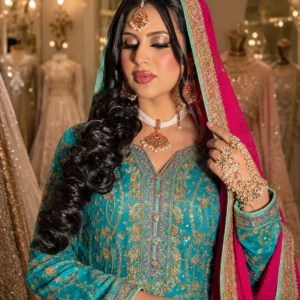
Ready to Find Your Dream Outfit?
Book a free consultation at our Manchester boutique or browse our latest collections online.
You Might Also Like
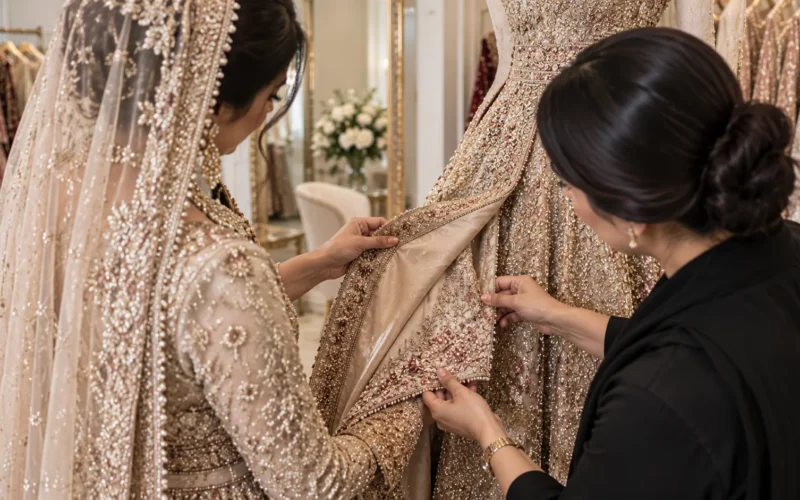
Pakistani Bridal Wear UK: What to Look for Beyond the Photos
Learn how bridal dress quality choices affect seating, lining and comfort, with practical UK wedding advice and fitting checks for a more...
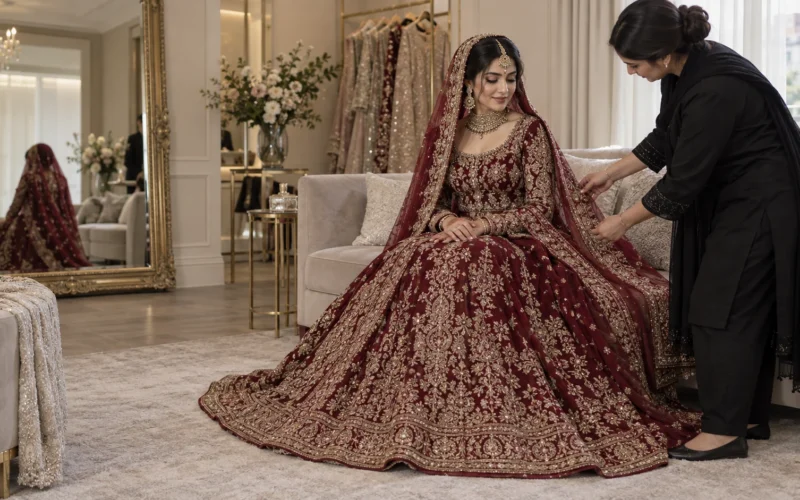
Pakistani Bridal Dress UK: How Wedding-Day Seating Should Influence Your Dress Design
Learn how bridal dress seating choices affect seating, photos and comfort, with practical UK wedding advice and fitting checks for a more...
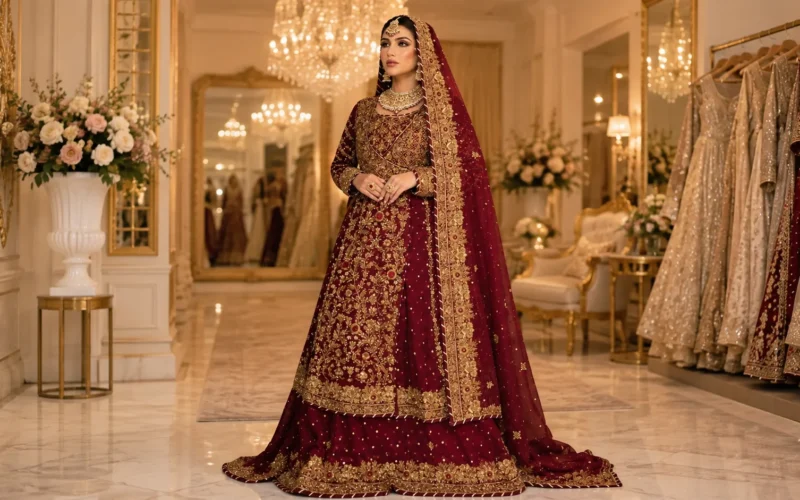
Islamic Wedding Dresses: A Complete Guide
Our Islamic wedding dresses guide covers modest bridal styles, hijab-friendly designs and fabric tips. Visit Jabeenz Manchester for bespoke gowns.
