
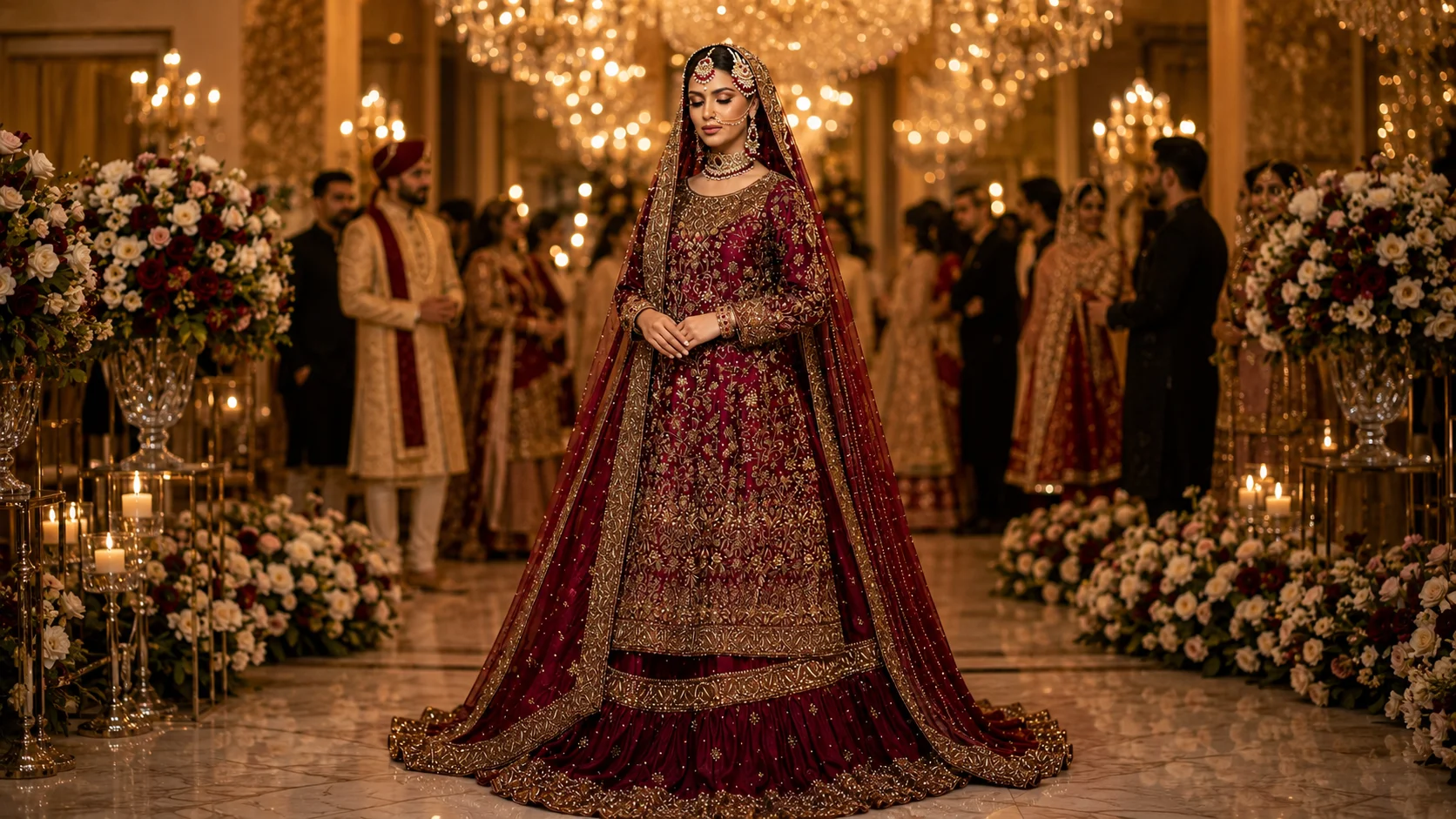
The baraat is the most dramatic and eagerly anticipated moment of a Pakistani wedding. It is the groom’s procession, arriving at the bride’s family home or venue with music, dancing and celebration. And the moment when the bride is revealed in all her bridal glory. The baraat dress is, for many brides, the most important outfit they will ever wear: a piece that must be breathtaking, memorable and deeply personal. At Jabeenz in Manchester, we have been handcrafting bespoke baraat dresses since 1975. And we know that this outfit carries a weight of emotion and expectation unlike any other. This guide covers everything you need to know about baraat dresses, from traditional colour choices and embroidery techniques to coordination with the groom and modern trends that are reshaping bridal fashion.
The Significance of Red in Baraat Tradition
Red has been the defining colour of Pakistani baraat dresses for generations. In South Asian culture, red symbolises love, prosperity, fertility and new beginnings. This makes it the most special colour for a bride to wear on her wedding day. Deep crimson, scarlet, maroon and vermillion are all traditional baraat shades, and they remain overwhelmingly popular among brides in the UK and Pakistan alike. The power of a red baraat dress lies in its visual impact. Against the backdrop of a decorated venue, surrounded by guests in their finest clothes, a bride in red commands the room. The colour flatters nearly every skin tone, photographs beautifully under all lighting conditions, and carries an emotional impact that no other shade can match. That said, modern brides are increasingly open to reinterpreting the traditional red palette. Burnt orange, deep coral, wine and burgundy offer a contemporary twist on the classic while retaining the warmth and drama that a baraat demands. Some brides choose a primarily red outfit with accents of gold, copper or blush pink to add depth and dimension. Browse our Baraat dress collection to see how we work with these rich colour palettes.
Baraat Dress Silhouettes
The bridal lehenga is the undisputed queen of baraat silhouettes. A traditional baraat lehenga features a voluminous, floor-length skirt heavily decorated with hand embroidery, paired with a fitted choli (blouse) and a large dupatta that can be draped over the head and shoulders. The combined effect is regal, grand and clearly bridal. Within the lehenga category, there are several variations. A lehenga choli with a circular skirt creates maximum volume and drama, while a fishtail or mermaid lehenga offers a more contemporary, body-conscious silhouette that flares from the knee. A-line lehengas fall between these two extremes. This gives a flattering shape that suits most body types. Explore our Bridal lehenga collection for the full range of silhouettes we offer. Some brides prefer a heavy bridal gharara for their baraat. This traditional silhouette features wide-legged trousers that are ruched and gathered at the knee. This creates a distinctive flared shape below the calf. Paired with a short, heavily embroidered kurta and a lavish dupatta, a bridal gharara has an old-world glamour that connects the modern bride to generations of tradition. For brides who want a more Western-influenced look, a bridal gown with traditional embroidery is an increasingly popular option. A ball gown silhouette in red or maroon, with a fitted bodice, full skirt and cathedral-length train decorated with zardozi and crystal work, creates a look that bridges Eastern and Western bridal look.
Embroidery and decoration: The Art of the Baraat Dress
A baraat dress is defined by its decoration. This is the outfit where craftsmanship is pushed to its highest expression, with every inch of fabric adorned with handwork that has taken weeks or even months to complete. Understanding the different embroidery techniques helps brides make informed choices about the level of detail they want. Zardozi is the most prestigious embroidery technique in South Asian bridal wear. Using gold and silver metallic threads, artisans create raised motifs, including paisleys, florals, jaal patterns (all-over mesh designs) and border patterns, that give the fabric a three-dimensional, shaped quality. A heavily zardozi-decorated lehenga can weigh several kilograms, and the weight itself is a mark of quality and craftsmanship. Dabka embroidery, worked with fine coiled wire, is often used alongside zardozi to add texture and variation. Tilla work uses flat metallic ribbon to create smooth, reflective surfaces within the embroidery design. Together, these techniques create the layered, richly textured surface that distinguishes a truly exceptional baraat dress from an ordinary one. Crystal, stone and pearl decorations are layered over the threadwork to catch the light and add sparkle. Swarovski crystals, kundan stones and seed pearls are all popular choices. And at Jabeenz, each one is hand-stitched individually to ensure durability and a natural, organic placement across the garment.
Coordinating with the Groom
A cohesive colour palette between bride and groom creates a polished, harmonious look in wedding photographs and during the ceremony itself. In Pakistani tradition, the groom’s sherwani or achkan is often designed to complement, rather than match, the bride’s outfit. If the bride wears a classic red lengha with gold embroidery, the groom might wear a gold or cream sherwani with red accents: a red pocket square, red embroidered motifs at the collar and cuffs, or a red stole draped over one shoulder. This creates visual harmony without making the couple look like they are wearing a uniform. Some modern couples choose to match more closely, with the groom wearing a sherwani in the same colour family as the bride. A maroon sherwani with gold embroidery alongside a maroon and gold bridal lengha, for example, creates a striking, coordinated look. At Jabeenz, we can create both the bridal outfit and the groom’s sherwani. This ensures perfect colour and decoration coordination from a single design team.
The Bridal Dupatta: More Than an Accessory
The dupatta is one of the most important elements of a baraat outfit, and it deserves as much attention as the lengha itself. A bridal dupatta is typically large, often measuring three metres or more in length. And is heavily decorated with embroidery that matches or complements the main outfit. How the dupatta is draped can completely change the look and feel of the bridal outfit. A dupatta draped over the head and cascading down the back creates a traditional, modest look that is deeply respectful of cultural and religious values. A dupatta draped over one shoulder, with the ends trailing behind, creates a more contemporary, fashion-forward look. The weight and fabric of the dupatta matter more than many brides realise. A heavily embroidered net dupatta holds its shape when draped but can feel heavy over a long day. A chiffon or organza dupatta is lighter and more comfortable but may need more pinning to stay in place. Discuss the options with your designer to find the right balance for your ceremony and venue.
Frequently Asked Questions
Do I have to wear red for my baraat?
There is no strict rule that requires a red baraat dress, though it is deeply traditional and remains the most popular choice. Many modern brides choose maroon, wine, coral, burnt orange or even blush pink for their baraat. The most important thing is that you feel beautiful and confident, whatever colour you choose. Your baraat dress should reflect your personal style while honouring the significance of the occasion.
How heavy should a baraat lengha be?
A heavily decorated baraat lengha typically weighs between 8 and 15 kilograms, depending on the level of embroidery and the base fabric. While weight is often seen as a mark of quality, comfort matters too. At Jabeenz, we work with brides to find the right balance, using lightweight base fabrics and strategic decoration placement to create a dress that looks lavish without being exhausting to wear.
Can I wear my baraat outfit for both the ceremony and the reception?
Many brides do wear the same outfit for the entire baraat event. This typically includes the ceremony and an immediate reception. If the baraat and walima are separate events on different days, each will have its own distinct outfit. Plan with your designer to ensure you have the right number of outfits for your specific wedding schedule.
How far in advance should I order a bespoke baraat dress?
We recommend starting the design process at least six to eight months before your wedding. This allows time for design consultations, fabric sourcing, embroidery work and multiple fittings. A heavily decorated baraat dress is one of the most complex garments our artisans create. And rushing the process can compromise the quality of the finished piece. Your baraat dress is more than a garment: it is a statement of love, tradition and the beginning of a new chapter. At Jabeenz in Manchester, we pour our heart and our fifty years of craft expertise into every bridal piece we create. If you are ready to begin designing the baraat dress of your dreams, Book a consultation with our team and experience the Jabeenz difference for yourself.
Ready to Find Your Dream Outfit?
Book a free consultation at our Manchester boutique or browse our latest collections online.
You Might Also Like
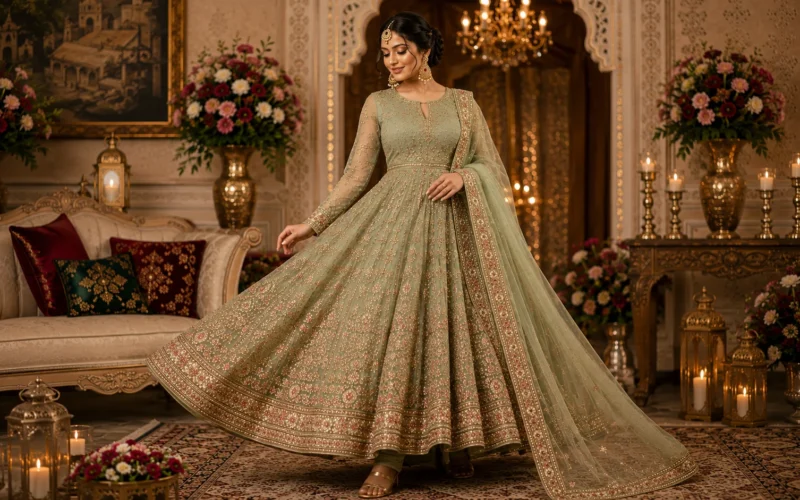
Anarkali Dresses: From Mughal Courts to Modern Weddings
An Anarkali dress is a flowing, floor-length garment inspired by Mughal-era court fashion, known for by its fitted bodice and dramatically flared...
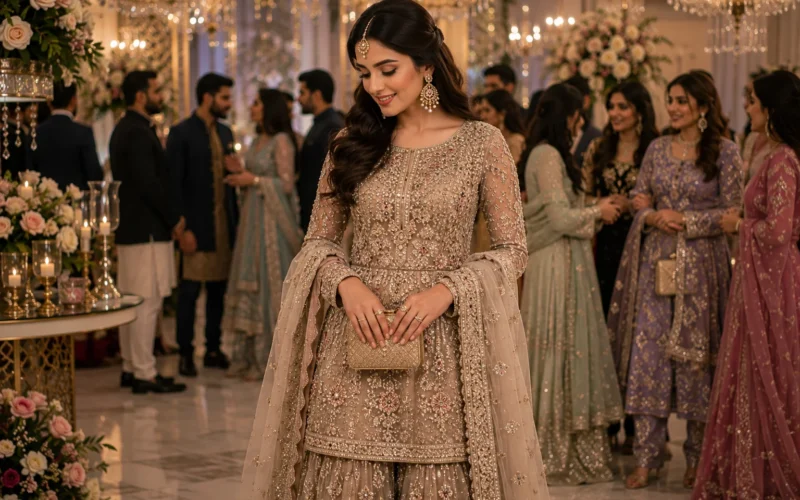
Pakistani Party Wear for Every Occasion
Pakistani party wear is a category of formal and semi-formal clothing designed for celebrations, gatherings, and festive occasions in South Asian culture....
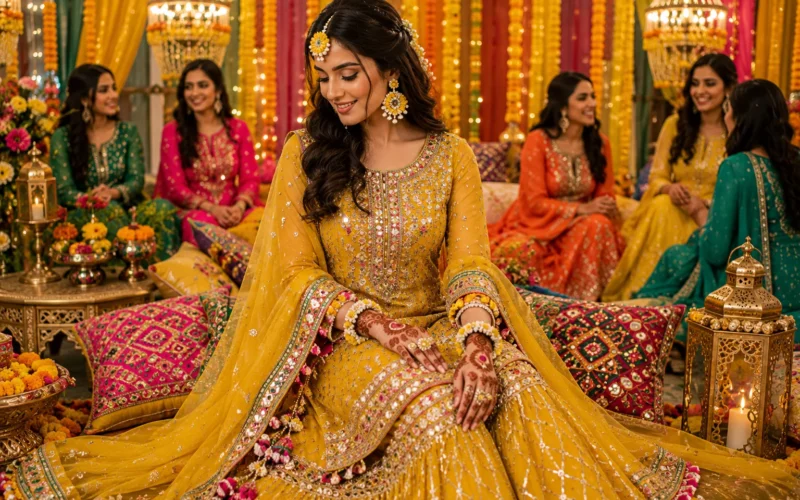
Mehndi Dresses UK: Vibrant Looks for Your Celebration
Key Takeaway: Finding the perfect mehndi dresses UK has never been easier, yet the sheer number of options can be overwhelming. Finding...
