
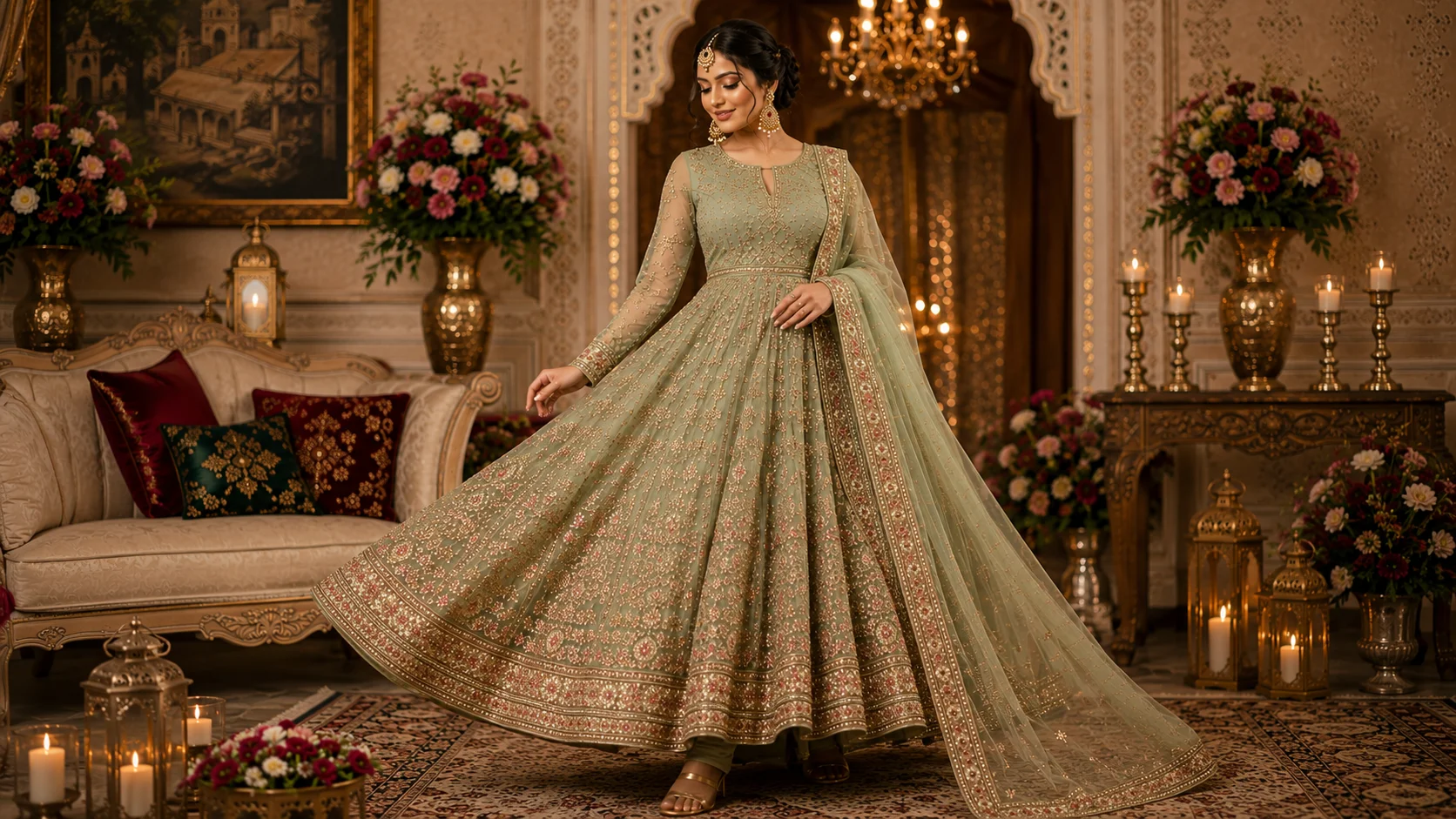
The anarkali dress is perhaps the most romantic garment in South Asian fashion. Named after the legendary dancer of Emperor Akbar’s court, the anarkali combines flowing grace with structured elegance, making it one of the most beloved silhouettes for weddings, celebrations and formal gatherings. At Jabeenz in Manchester, we have been handcrafting bespoke anarkali dresses since 1975, bringing Mughal-era grandeur to modern wardrobes with meticulous craftsmanship and attention to detail.
The Legend Behind the Anarkali
The name “Anarkali” translates to “pomegranate blossom,” and legend has it that the original Anarkali was a court dancer whose beauty captivated a Mughal prince. While historians debate the details of her story, the garment that bears her name has become synonymous with feminine grace and movement. The flowing, floor-length silhouette evokes the twirling of a dancer, with fabric that catches the air and creates mesmerising patterns of movement.
Historically, the anarkali was worn as a long, fitted bodice that flared from the waist or bust into a full, circular skirt reaching the ankles or floor. This construction allowed for maximum freedom of movement while creating a silhouette that was both modest and deeply flattering. The garment was typically paired with a churidar (fitted trouser) and a dupatta, completing a three-piece ensemble that balanced volume on top with a sleek line below.
Over the centuries, the anarkali has been adopted across the entire Indian subcontinent, from the royal courts of Delhi and Lahore to the bustling markets of Karachi and Mumbai. Each region has contributed its own embroidery traditions, fabric preferences and styling conventions, resulting in a garment that is truly pan-South Asian in its appeal.
Floor-Length vs Short Anarkali Styles
The floor-length anarkali remains the most dramatic and traditional version of this garment. With its sweeping hemline and generous flare, a floor-length anarkali creates an undeniable sense of occasion. This style works beautifully for weddings, formal dinners and major celebrations where you want to make a statement. The length also provides excellent coverage, making it a comfortable choice for those who prefer a more modest silhouette.
The short anarkali, sometimes called an anarkali kurti, falls to just below the knee or mid-calf. This contemporary version retains the fitted bodice and flared skirt of the traditional design but in a more practical length. Short anarkalis are perfect for Eid celebrations, family gatherings, mehndi nights and other events where you want elegance without the formality of a floor-length gown. They pair beautifully with palazzo trousers, cigarette pants or even jeans for a fusion look.
The mid-length anarkali offers a middle ground, falling to the ankle without touching the floor. This version is arguably the most versatile, working equally well for daytime events and evening celebrations. It provides the elegance of the floor-length version with the ease of movement of the shorter style. Explore our full range at the anarkali collection.
Choosing the Right Fabric for Your Anarkali
Fabric choice dramatically affects how an anarkali looks and feels. For bridal and heavy formal wear, fabrics such as raw silk, velvet, brocade and heavy georgette provide the structure and weight needed to support dense embroidery. These fabrics hold their shape beautifully and create the defined flare that makes the anarkali so striking. A velvet anarkali in deep jewel tones, for example, is a show-stopping choice for a winter wedding.
For lighter occasions, chiffon, georgette and net offer a more ethereal quality. These fabrics float and flutter with movement, creating a dreamlike effect that is particularly beautiful for outdoor events and summer celebrations. A chiffon anarkali in a soft pastel shade with scattered sequin work catches the sunlight beautifully and feels wonderfully light to wear.
Organza has emerged as a particularly popular fabric choice in recent years. Its slight stiffness gives the anarkali flare a sculptural quality, while its translucent nature allows for beautiful layering effects. An organza anarkali with thread embroidery in a tonal shade creates a sophisticated, textured look that photographs exceptionally well.
Anarkali Dresses for Every Occasion
The versatility of the anarkali is one of its greatest strengths. For bridal wear, a heavily embroidered anarkali in traditional colours makes a magnificent choice, particularly for brides who prefer the ease of a single flowing garment over a multi-piece lehenga set. The continuous line of the anarkali creates a lengthening effect that is universally flattering.
For wedding guests, an anarkali strikes the perfect balance between dressy and comfortable. Unlike a sari, which requires careful draping and constant management, an anarkali simply slips on and stays in place throughout the event. This makes it an excellent choice for guests who want to look polished without spending the evening adjusting their outfit.
For Eid and festive celebrations, a mid-length anarkali with moderate embellishment is ideal. It conveys the festive spirit of the occasion without being overly formal. Rich colours such as emerald, ruby and sapphire blue are traditional Eid favourites, while more adventurous dressers might opt for coral, mustard or teal. Browse options in our anarkali suits range.
Styling Tips for Anarkali Dresses
Because the anarkali is a voluminous garment, the styling around it should be carefully considered. Fitted churidars are the traditional pairing and remain the most elegant option, as they create a contrast between the flowing top and the sleek lower leg. The churidar’s gathered folds at the ankle add a textural element that complements the anarkali’s embroidery.
For a more contemporary approach, straight-cut trousers or slim cigarette pants offer a cleaner line. This modern pairing works particularly well with shorter anarkalis and creates a polished, fashion-forward look. Some brides and guests also opt for sharara-style trousers beneath a shorter anarkali, combining two classic silhouettes in one outfit.
Jewellery for an anarkali should complement the neckline. High-neck anarkalis pair well with long earrings and no necklace, allowing the embroidered neckline to serve as the focal point. Deep V-neck or sweetheart necklines benefit from a statement necklace or choker. Polki, kundan and jadau jewellery all complement the Mughal aesthetic of the anarkali beautifully.
Frequently Asked Questions
What body type does an anarkali suit best?
The anarkali is one of the most universally flattering garments in South Asian fashion. Its fitted bodice defines the waist while the flared skirt skims over the hips and thighs, making it suitable for all body types. For pear-shaped figures, the flare balances wider hips. For apple-shaped figures, the A-line cut creates a streamlined silhouette. At Jabeenz, every anarkali is handcrafted to your measurements for a perfect fit.
Can I wear an anarkali to a Western formal event?
An anarkali translates beautifully to Western formal settings. A floor-length anarkali in a solid colour with subtle embroidery reads as an elegant gown and is entirely appropriate for black-tie events, galas and formal dinners. Simply style it with Western accessories, such as a clutch bag and heels, for a seamless cross-cultural look.
How is an anarkali different from a gown?
While both are flowing, full-length garments, the anarkali has specific construction features that distinguish it. The traditional anarkali has a fitted bodice with princess-line seaming, a defined waist, and panels (kalis) that create the circular flare. It is worn over churidars or trousers and paired with a dupatta. A Western gown typically has different construction lines and is worn as a standalone garment.
What is the best anarkali for a mehndi function?
For a mehndi function, choose a shorter anarkali in a vibrant colour such as yellow, green, orange or turquoise. Lighter fabrics like georgette or chiffon allow for comfortable dancing, and moderate embellishment keeps the look festive without being overly heavy. A floral print anarkali is also a beautiful choice for the celebratory atmosphere of a mehndi.
From the grand courts of the Mughal Empire to the celebration halls of modern Manchester, the anarkali dress remains one of South Asian fashion’s most enduring and beautiful creations. At Jabeenz, we have been bringing this timeless silhouette to life since 1975, handcrafting each piece with the care and expertise it deserves. Book a consultation to discuss your perfect anarkali with our design team.
Shop This Look
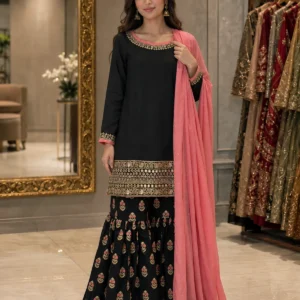
Ready to Find Your Dream Outfit?
Book a free consultation at our Manchester boutique or browse our latest collections online.
You Might Also Like
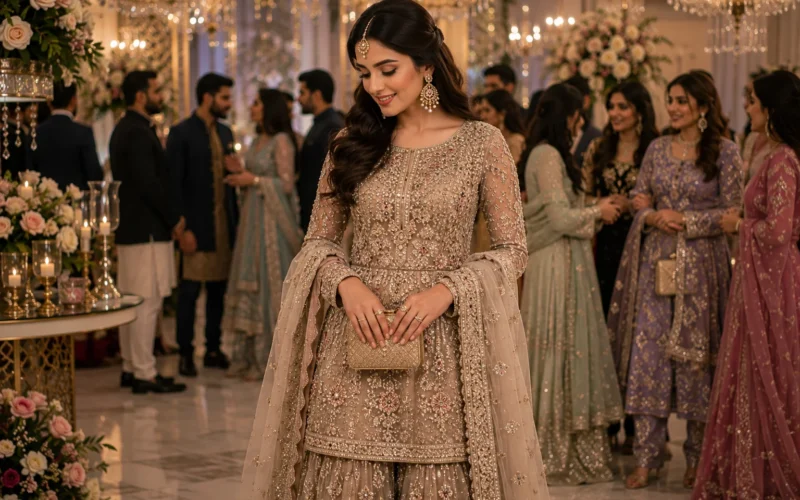
Pakistani Party Wear for Every Occasion
Pakistani party wear has evolved into one of the most exciting and diverse categories in South Asian fashion. From intimate family gatherings...
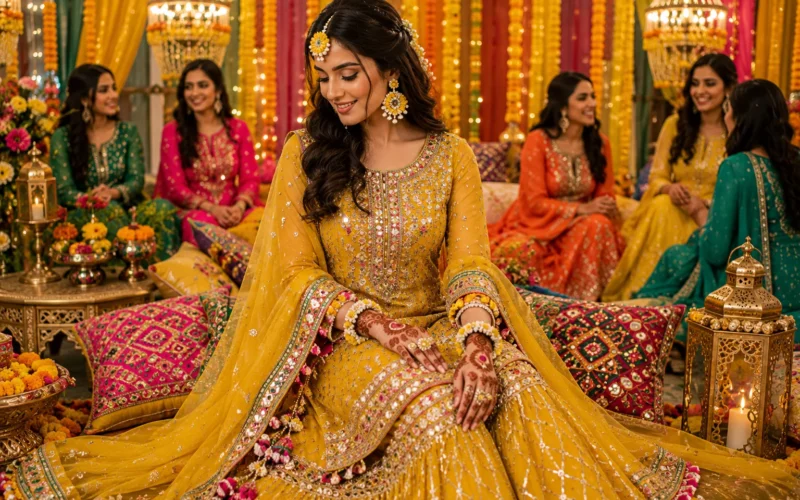
Mehndi Dresses UK: Vibrant Looks for Your Celebration
Finding the perfect mehndi dresses UK has never been easier, yet the sheer number of options can be overwhelming. Whether you are...
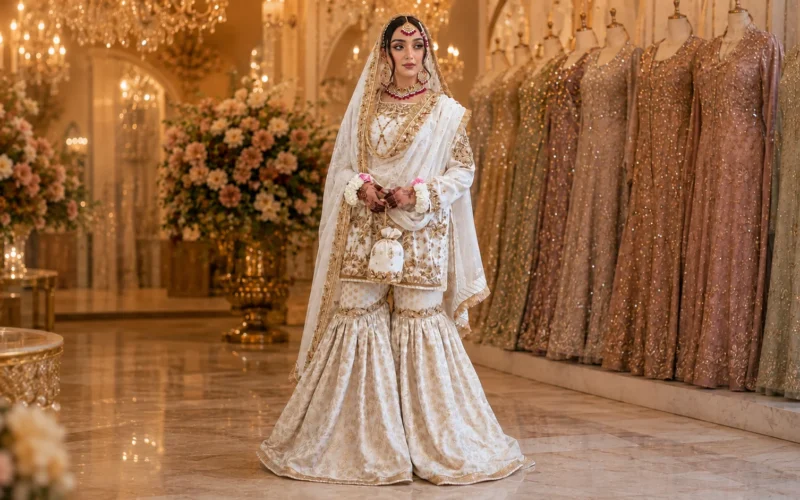
Gharara Dresses: Traditional Pakistani Elegance
The gharara dress is one of the most distinctive and historically rich garments in Pakistani fashion. Recognised by its characteristic ruched gathering...
