
Attending a Pakistani wedding for the first time can feel overwhelming when it comes to choosing what to wear. Unlike Western weddings where a single outfit covers the entire day. Pakistani weddings are multi-day celebrations. And each event has its own dress code. Colour expectations. And level of formality. According to the British Bridal Suppliers Association. Handmade bridal wear remains the gold standard for quality and fit.
This complete guide covers everything you need to know. Dressing as a guest at a Pakistani wedding in 2026. From understanding the different events to choosing the right colours, fabrics. And styles for each event.
Understanding the Pakistani Wedding Structure
A classic Pakistani wedding often includes three to four main events. Each with its own character. Dress expectations:
Mehndi (Henna event). The most colourful and informal event. Held before the wedding day. The mehndi is a event of joy. Music. And dancing. Guests are expected to wear bright, vibrant colours. Yellow is the classic mehndi colour. But greens. Oranges. Corals. And magentas are all welcome. Think of it as the festival of the wedding celebrations.
Baraat (The Main Wedding event). This is the formal event where the bride leaves her family home. It is the most grand and ceremonial event. And guests should dress accordingly. Rich jewel tones, heavy fabrics, and statement stitching are appropriate. This is the event where you bring your most impressive outfit.
Nikkah (Religious event). The Islamic marriage contract signing. This can range from intimate and modest to grand. Depending on the family. Refined, graceful pieces in subtle tones work best. Modesty is valued. Longer sleeves. Higher necklines. And a dupatta (scarf) to cover the head during prayers.
Walima (Reception). Hosted by the groom’s family after the wedding. While still formal, the walima is slightly more relaxed than the baraat. Pastels, soft tones, and lighter stitching are the norm. Think grace rather than grandeur.
Colour Guide: What to Wear (and What to Avoid)
Colour etiquette at Pakistani weddings is important. Getting it right shows local awareness and respect for the couple.
Colours to embrace:
- Mehndi: Yellow, green, orange, magenta, coral, turquoise
- Baraat: Emerald green, royal blue, maroon, burgundy, plum, teal
- Nikkah: Muted tones. Sage green, dusty blue, mauve, champagne
- Walima: Pastels. Blush pink, powder blue, lilac, mint, ivory
Colours to avoid:
- Red at baraat: Red is often reserved for the bride at the baraat event. Wearing red can be seen as competing with the bride.
- White: White is associated with mourning in South Asian cultures. Is often inappropriate at wedding celebrations.
- Black (debatable): While some families consider black unsuitable for weddings. Modern sensibilities have relaxed this rule. Black stitched outfits with gold or silver work can look stunning. When in doubt, ask the hosts or opt for a different colour.
Fabric Choices by Season
The right fabric makes an enormous difference to both comfort and appearance. Pakistan wedding season in the UK tends to peak during summer. Late spring. Winter weddings are increasingly common.
Spring and summer weddings: Chiffon, organza, lawn, cotton silk, and lightweight net. These fabrics breathe well and drape elegantly without feeling heavy during long celebrations. Organza mainly has surged in appeal. Its subtle sheen and structured fall make it flexible enough for any event.
Autumn and winter weddings: Velvet, raw silk, jamawar, and brocade. These heavier fabrics provide warmth and convey the richness appropriate for grand celebrations. Velvet is mainly popular for baraat guest outfits. There the fabric’s depth of colour complements jewel-tone palettes perfectly.
Popular Styles for Pakistani Wedding Guests
South Asian fashion offers a rich variety of shapes. U{0}your choice should balance personal comfort with the formality of the event.
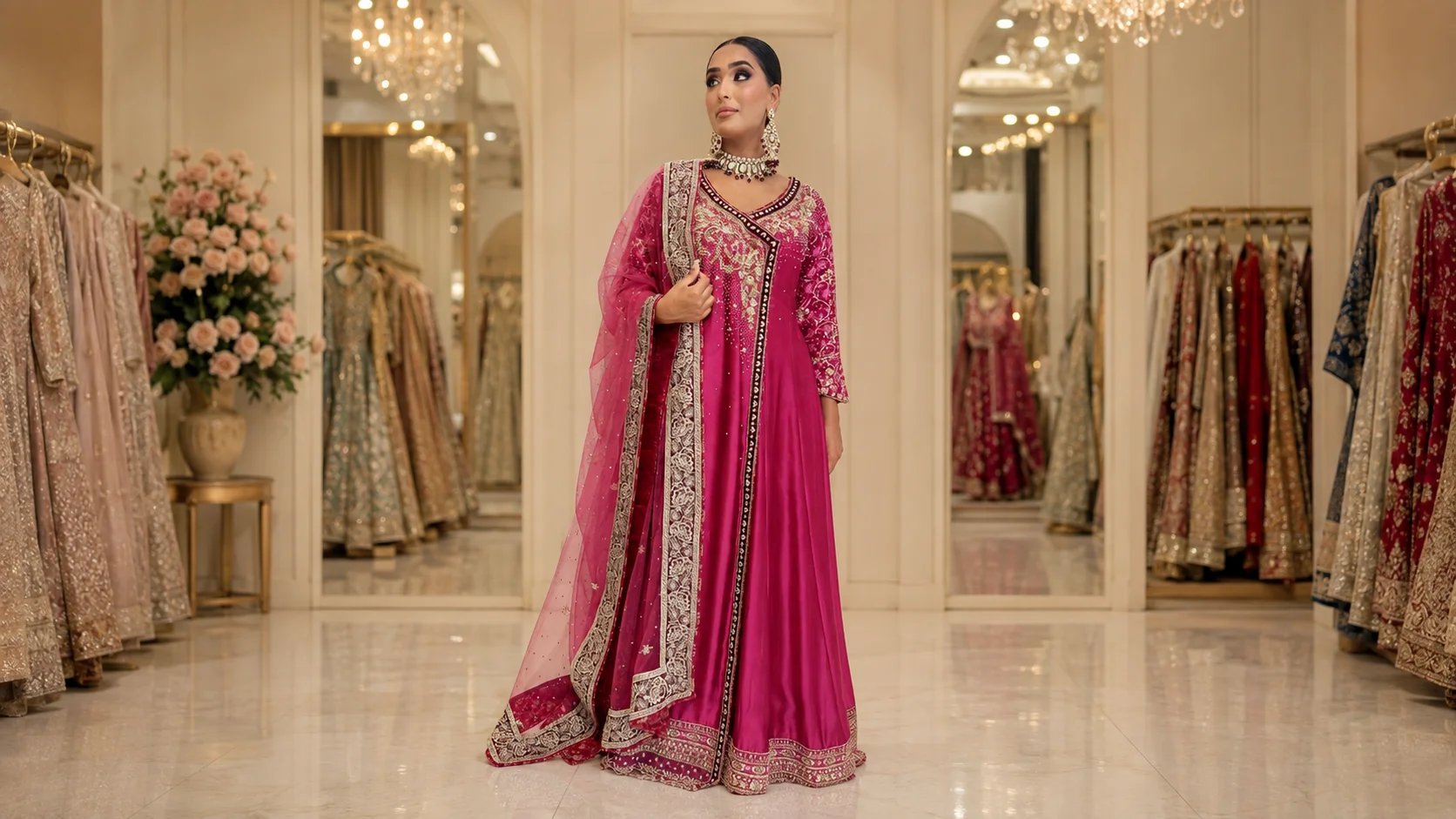
Anarkali suits: A fitted bodice flaring into a long, flowing skirt. Anarkalis are arguably the most flexible Pakistani wedding guest outfit. Appropriate for every event from mehndi to baraat. They flatter most body types and create a bold, graceful shape.
Sharara sets: Wide-legged trousers with a flared hem, paired with a short kameez. Shararas have made a major comeback and are mainly popular for mehndi and walima events. Their distinctive shape photographs beautifully.
Gharara sets: Similar to shararas but with a more gathered, ruched leg. Ghararas have a slightly more classic feel and work well for nikkah and baraat events.
Lehenga choli: A skirt-and-blouse mix that is perfect for grand baraat celebrations. Heavily stitched lehengas make a statement without crossing into bridal territory (as long as you avoid red).
Trouser suits: A long kameez with straight or cigarette trousers. This modern look is ideal for walima and nikkah. Graceful, modern, and comfortable for long events.
extras and Styling Tips
The right extras lift a Pakistani wedding guest outfit from good to top:
- Dupatta: Essential for most events, mainly nikkah. Drape it over one shoulder or across both for a classic look.
- Jewellery: Statement earrings and bangles are classic. Match metals to your stitching. Gold work pairs with gold jewellery. Silver work with platinum or white gold.
- Clutch bag: A small decorated clutch complements the outfit without being cumbersome during celebrations.
- Shoes: Khussa (classic stitched flats) or low block heels. You will likely be standing and dancing for hours, so comfort matters.
Why Bespoke Is Worth Considering
While ready-to-wear Pakistani outfits are available online. There are compelling reasons to consider a bespoke option. Mainly for significant celebrations.
With a bespoke piece. You choose the exact fabric. Colour. And stitching style. Your measurements are taken individually. This ensures a fit that flatters rather than compromises. You also avoid the risk of another guest wearing the same outfit. A genuine concern with popular online retailers.
roots manufacturers like Jabeenz in Manchester offer the full bespoke feel: in-person fabric selection. Colour matching. Design consultation. And expert fitting. Having served the South Asian community since 1975. The expertise is embedded in every piece that leaves the workshop.
Final Checklist Before the Wedding
- Confirm which events you are attending and plan an outfit for each
- Check colour expectations with the hosts if you are unsure
- Order bespoke pieces at least six to eight weeks in advance
- Have your dupatta pressed or steamed the day before
- Break in new shoes before the wedding day
- Keep a small emergency kit: safety pins. Fabric tape. And a stain pen
Pakistani weddings are joyous, colourful celebrations. With the right outfit for each event, you will feel confident, comfortable. Perfectly dressed for every moment.
Shop This Look
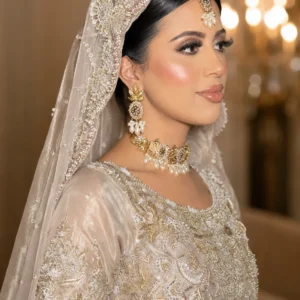
Ready to Find Your Dream Outfit?
Book a free consultation at our Manchester boutique or browse our latest collections online.
You Might Also Like
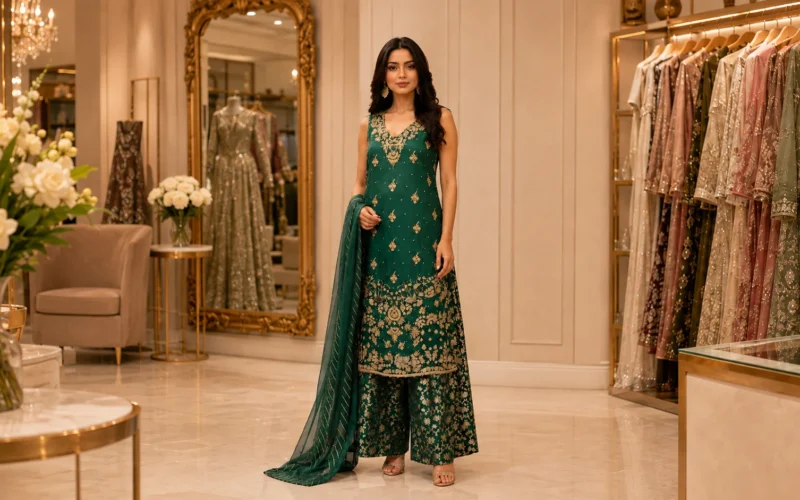
Pakistani Wedding Guest Dresses in Manchester: Why Bespoke Beats Online
When it comes to choosing a Pakistani wedding guest dress, there is a world of difference between ordering online and visiting a...
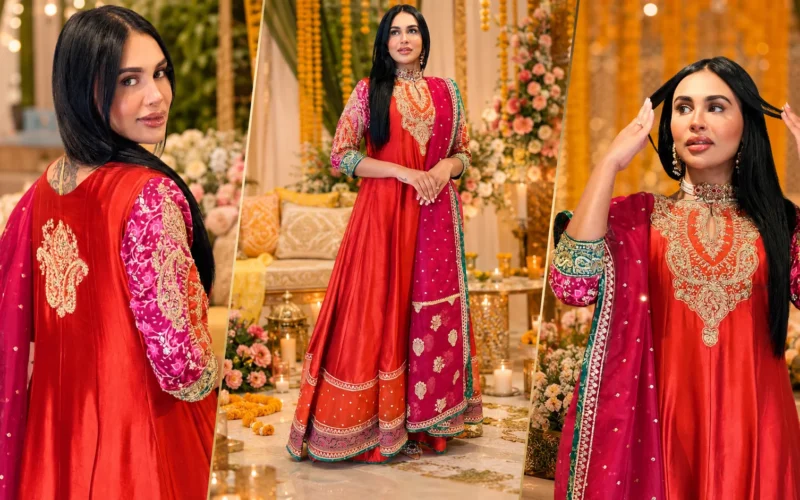
Pakistani Mehndi Guest Outfits: Colours, Styles & Etiquette
The mehndi ceremony is the most vibrant event in a Pakistani wedding calendar. Known for its music, dancing, and joyful atmosphere, the...
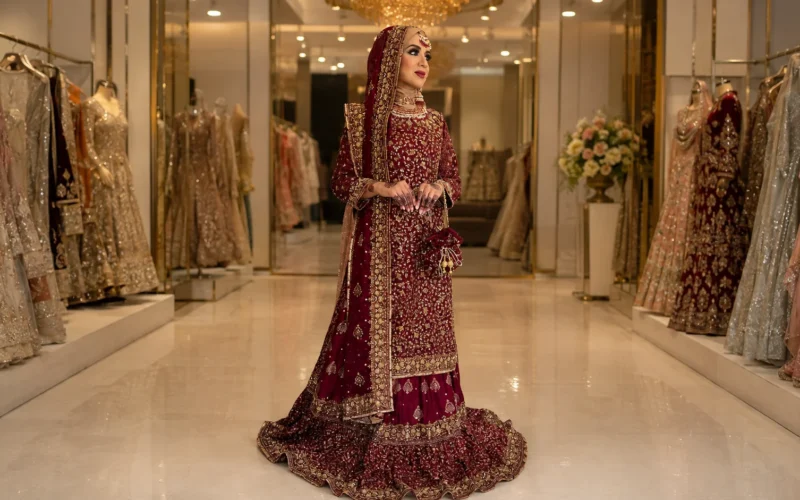
Best Asian Bridal Shops in Manchester: What to Look For
The best Asian bridal shops in Manchester are concentrated along Stockport Road and in the Levenshulme, Longsight and Rusholme areas. We offer...
