
Bridal dress embroidery techniques define the character of South Asian wedding outfits, from zardozi gold-wire work and dabka coils to threadwork, sequin artistry, and mirror embellishment. Jabeenz in Manchester employs master artisans who have practised these techniques for over 50 years, ensuring every stitch meets the highest standard of bridal craftsmanship.
Pakistani weddings are a great celebration of love and tradition and one of the most special parts of these weddings is the Nikkah ceremonies and Pakistani bridal dresses. This is the start of a couple’s new life together and during this special moment, the bride looks beautiful in her Pakistani bridal dress because the combination of the Nikkah colours and dresses creates a magical atmosphere.
What do brides wear for Nikkah?
Islamic wedding bridal attire usually consists of a full-body dress with a head covering hijab.
How many ceremonies are in a Pakistani wedding?
A typical Pakistani wedding, or Shaadi (شادی) consists of two main events , the Nikah and Walima. Bride and groom officially documented as spouses in the nikkah ceremony.
The importance of the Nikah Ceremony
People celebrate Pakistani weddings with happiness, prayers, and the heart of the wedding, making the Nikah ceremony one of the most beautiful moments. The Nikkah is a promise made between two people, surrounded by their closest family, friends and religious leaders. During this, the couple speaks in front of an imam, committing to love and support each other for the rest of their lives. The bride is the limelight during this and her bridal dress is the most important part on her special day.
Let’s take a closer look at the Pakistani Nikkah dresses:
They represent tradition and art. Each dress represents the bride’s personality. As the bride walks into the Nikah ceremony, her dress becomes the centre of attention.
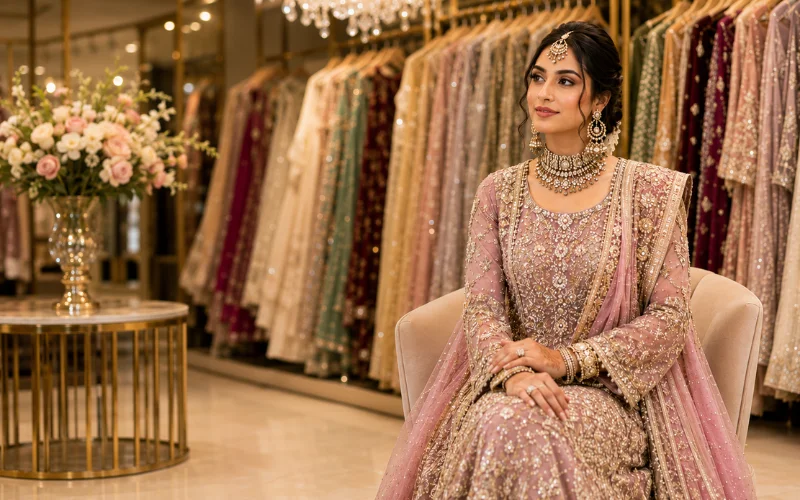
A bride wears a lehenga, which is paired with a choli and a dupatta, to complete her look.
While red has always been the evergreen choice of brides, so many brides today are now go for pastel colours. A skilled artisan decorated the lehenga with detailed embroidery in gold or silver thread.
The Bridal Jewellery: Completing the Look
No bridal dress is complete without jewellery. Pakistani brides are known to wear jewelry sets that blend gold, diamonds, and stones. A jhoomar, maang tikka, necklaces, and earrings are just a few things that complement the bride’s look because the combination of this jewellery with the nikah dress creates the perfect look.
The Magic of the Nikah and Bridal Dress
The magic of a most special parts of these weddings is the Nikkah ceremonies and pakistani bridal dresses is truly something special. The nikah ceremony is a meaningful moment, where two people promise to spend their lives together, surrounded by love, family and tradition.
Conclusion
The nikkah ceremony is a beautiful event in a wedding ceremony. So, due to its beauty and importance, it is the centre of attention for everyone. Every bride wants to look gorgeous for her nikkah ceremony because she wants to be committed to her groom forever. This is the magical moment of bride’s life and her dress makes it more magical. The bright colours highlight the love and importance of this event whereas light colours like pastel colours enhance the magical effect of the dress. Embroidery and jewellery also play an important role to enhancing the bride’s personality, which makes it more memorable.
Visit Jabeenz in Manchester , Our boutique at 934 Stockport Road, Levenshulme, Manchester M19 3AB is open daily from 11am to 7pm. Book a free bridal consultation or browse our collections online. Call us on 07361 805655 or WhatsApp us for personalised styling advice.
Nikah Dress Modesty Requirements: What Every Bride Should Know
The nikah is a sacred religious ceremony, and the bride’s outfit should reflect that significance through appropriate modesty. While there is no single rigid dress code mandated across all Muslim communities, certain principles are widely observed. Coverage of the arms (at least to the elbows), a higher neckline, and a dupatta or covering for the head are standard expectations. The outfit should not be sheer or figure-hugging, and the overall look should convey dignity and grace rather than glamour or sensuality.
Modesty does not mean sacrificing beauty or personal style. Some of the most stunning bridal outfits we have created at Jabeenz have been for nikah ceremonies, where the design challenge of combining coverage with elegance pushes creativity in wonderful directions. High necklines with intricate embroidery become focal points. Full sleeves with delicate cuff detailing add sophistication. A beautifully draped dupatta becomes the most photographed element of the entire look. When modesty is treated as a design parameter rather than a limitation, the results are genuinely extraordinary.
What Colours Are Popular for Nikah Ceremonies?
The nikah colour palette has shifted significantly over the past decade. While any colour is technically acceptable for a nikah, white, ivory, and soft pastels have become the dominant choices for many British Pakistani brides. White carries associations of purity and new beginnings, and its growing popularity for nikah ceremonies reflects both Islamic tradition and a broader cultural shift. Ivory and cream offer warmth that flatters a wider range of skin tones, while soft pastels like blush, lavender, and mint provide a gentle colour without the intensity of traditional bridal shades.
Some brides still prefer traditional colours for the nikah, particularly if the nikah and baraat are combined into a single event. In these cases, deep reds, maroons, and greens remain appropriate and popular. For brides who want a subtle middle ground, consider a white or ivory base outfit with coloured embroidery or a contrasting dupatta. This approach honours the growing preference for lighter nikah aesthetics while incorporating traditional colour through accent details rather than the overall palette.
How Your Nikah Venue Should Influence Your Dress Choice
Nikah ceremonies take place in a variety of settings, from mosques and Islamic centres to hotel function rooms and even homes. Each venue creates different requirements for your outfit. A mosque nikah calls for the most conservative styling, full coverage, a secure head covering that will not slip during prostration, and comfortable fabric that allows you to sit on the floor if needed. Choose fabrics that do not wrinkle easily and avoid stiff, heavily embellished skirts that restrict your ability to sit cross-legged.
A nikah in a hotel or banqueting hall offers more flexibility with silhouette and formality. You can wear a longer train, more elaborate embellishments, and a wider range of fabrics because you will be seated on chairs rather than the floor. Home nikah ceremonies fall somewhere between the two, typically requiring modest coverage but allowing a relaxed approach to silhouette and styling. Consider the lighting in your venue as well. Mosques are often softly lit, which means subtle embroidery may not show up well, while hotel venues with spot lighting can make heavy embellishment look overwhelming.
Simple vs Elaborate Nikah Styling: Which Approach Is Right for You?
This decision depends on whether your nikah is a separate event or combined with another ceremony. If the nikah is a standalone event (increasingly common for UK Pakistani weddings), many brides embrace a “less is more” philosophy. A beautifully cut outfit in a quality fabric, with refined but restrained embellishment, can be more impactful than a heavily worked piece. The simplicity allows the emotion of the ceremony to take centre stage, and the photographs capture a genuine, uncluttered beauty.
If the nikah is combined with the baraat, the outfit needs to work for both the solemn ceremony and the festive reception that follows. In this case, a more elaborate outfit is appropriate, but consider elements that can be adapted between the two parts of the day. A dupatta that covers the head during the nikah but drapes over the shoulder during the reception. Detachable sleeves that provide coverage during the ceremony but can be removed for the celebration. These practical design solutions allow one outfit to serve two very different moods. At Jabeenz, we frequently design “dual-purpose” nikah and baraat outfits with these built-in transitions, ensuring the bride looks and feels appropriate at every moment.
Frequently Asked Questions
What are all the events in a Pakistani wedding?
A traditional Pakistani wedding typically includes the Mayon (turmeric ceremony), Mehndi (henna night), Nikkah (religious ceremony), Baraat (main wedding day), and Walima (reception). Each event has its own dress code and outfit expectations. At Jabeenz, we can style you for every occasion.
What should I wear to a Pakistani wedding as a guest in the UK?
For a Pakistani wedding in the UK, guests typically wear a shalwar kameez, saree, or lehenga in vibrant colours. Avoid wearing white or black to the main events. At Jabeenz Manchester, we stock a wide range of occasion wear suitable for every function.
How many outfits does a Pakistani bride need for her wedding?
A Pakistani bride typically needs 3 to 5 outfits covering the Mehndi, Nikkah, Baraat, and Walima events. Some brides also have a separate Mayon outfit. At Jabeenz, we offer package deals for brides who need multiple outfits crafted with coordinating designs.
Related Reading
Ready to Find Your Dream Outfit?
Book a free consultation at our Manchester boutique or browse our latest collections online.
You Might Also Like
Colour Palette Guide by Weddings Events: Mehndi, Barat, Walima Guest Dresses in the UK
Navigate wedding colour palettes for mehndi, barat, walima, and guest outfits with expert guidance from Jabeenz Manchester, your trusted bridal specialist since...
Affordable Pakistani Bridal Dresses for Destination Weddings
Find affordable Pakistani bridal dresses for destination weddings with travel-friendly fabrics, lightweight construction, and smart design choices. Jabeenz Manchester offers bespoke bridal...
Trendy Walima Dress Styles for Pakistani Brides
Explore vibrant mehndi dress styles in traditional yellows, greens, and modern palettes. Jabeenz Manchester manufactures festive mehndi outfits with five decades of...
