Complete Guide to Pakistani Nikkah Dresses
The nikkah is the most sacred moment in a Pakistani wedding. It is the Islamic marriage contract — the moment when a couple is joined in the sight of Allah, their families, and their community. Unlike the grandeur of the baraat or the festive energy of the mehndi, the nikkah ceremony carries a spiritual weight that sets it apart from every other event in the wedding calendar. The bride's outfit must honour that significance, balancing beauty with modesty and elegance with solemnity.
In Pakistani culture, the nikkah can take many forms. Some families hold a small, intimate gathering at a mosque or at home, while others host a grand ceremony with hundreds of guests. Regardless of the scale, the spiritual core remains the same: the recitation of Quranic verses, the exchange of vows, the signing of the marriage contract, and the offering of prayers. The bride's dress should reflect this reverence — refined, graceful, and respectful of Islamic traditions of modesty.
Choosing a nikkah dress is a deeply personal decision. It is not simply about finding something beautiful to wear — it is about finding an outfit that makes the bride feel connected to the spiritual meaning of the moment. The right nikkah dress allows a bride to sit comfortably during prayers, accept blessings with grace, and feel confident that her appearance honours both her faith and her personal style. At Jabeenz, we have been helping brides find that balance since 1975, crafting nikkah dresses that respect tradition while embracing contemporary elegance.
White and Ivory Nikkah Outfits
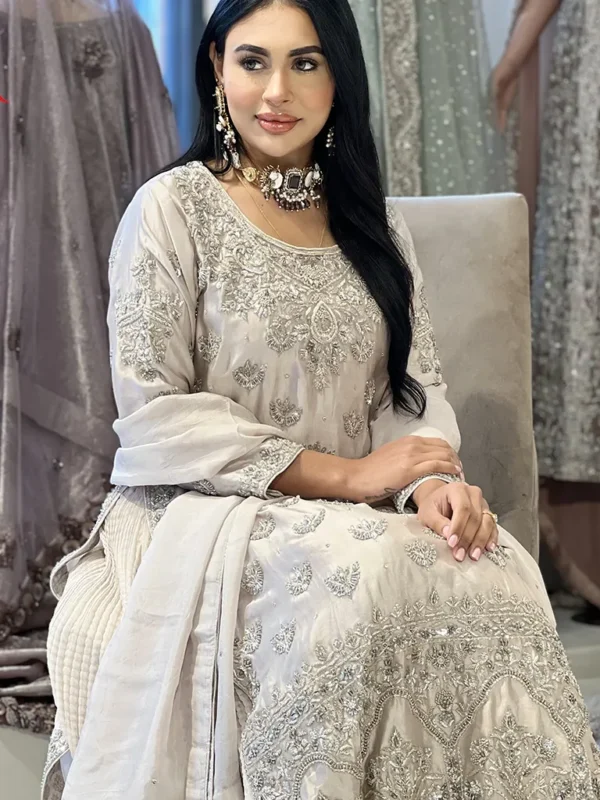
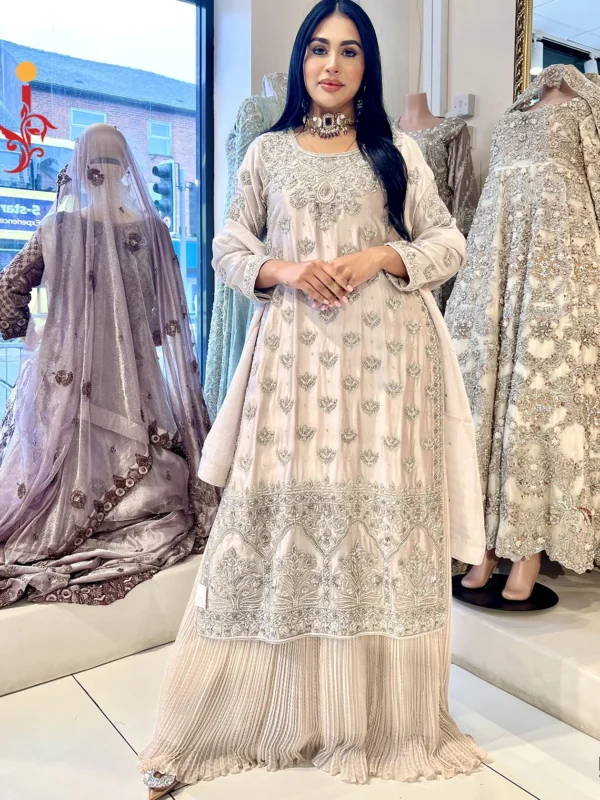
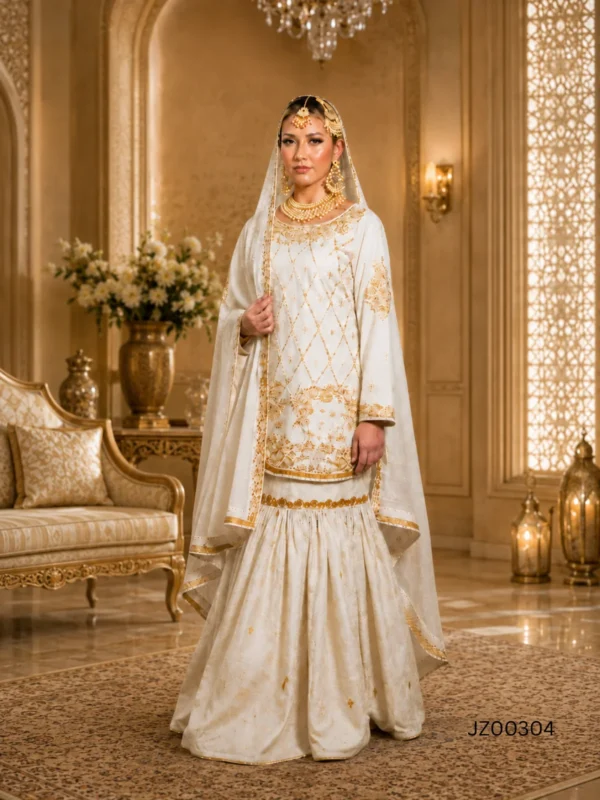
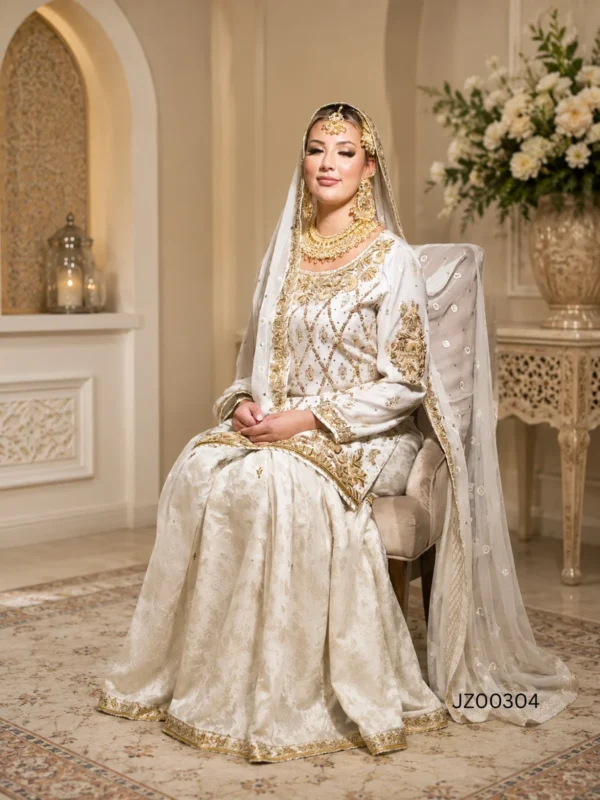
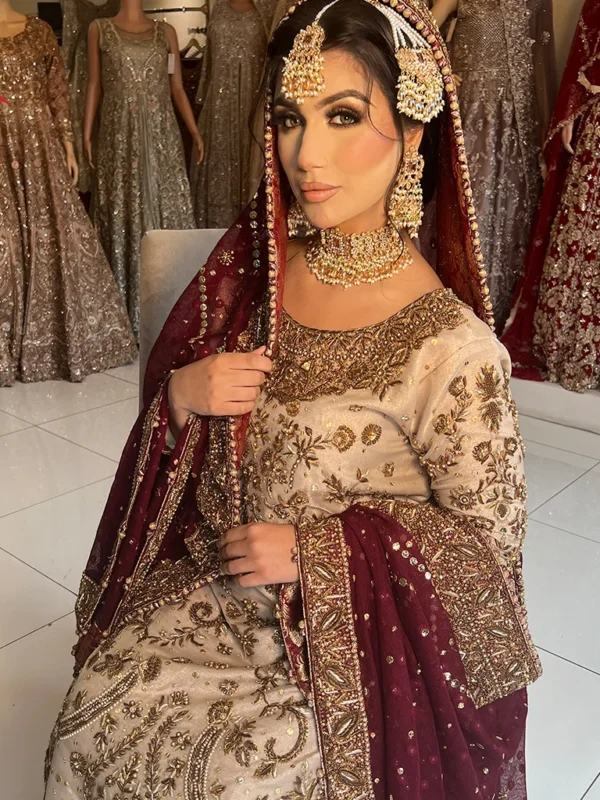
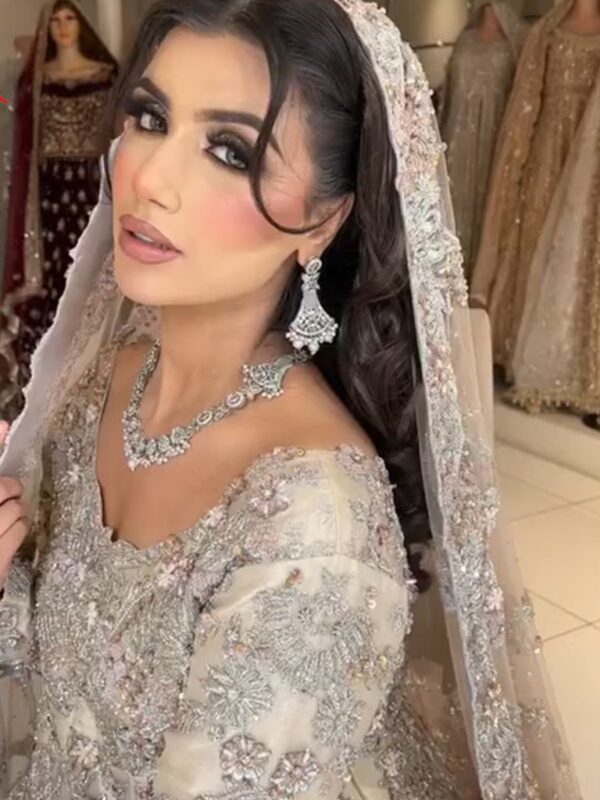
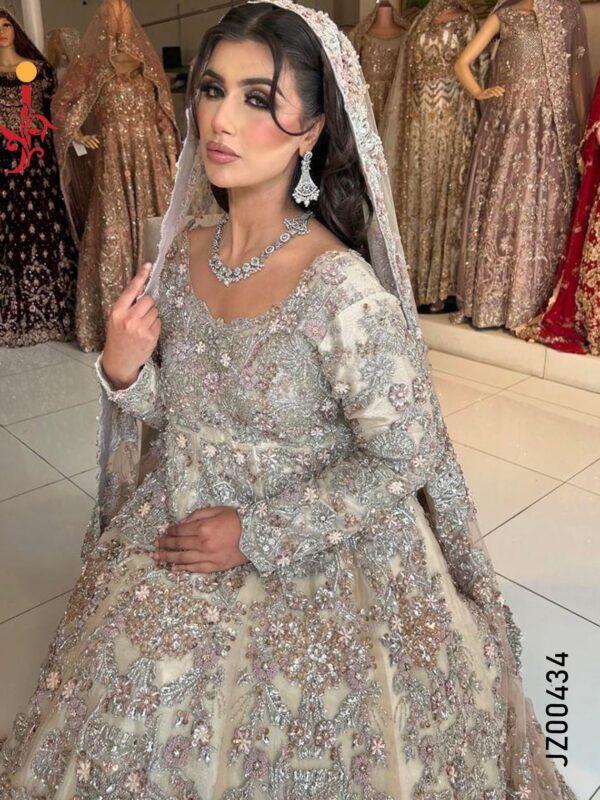
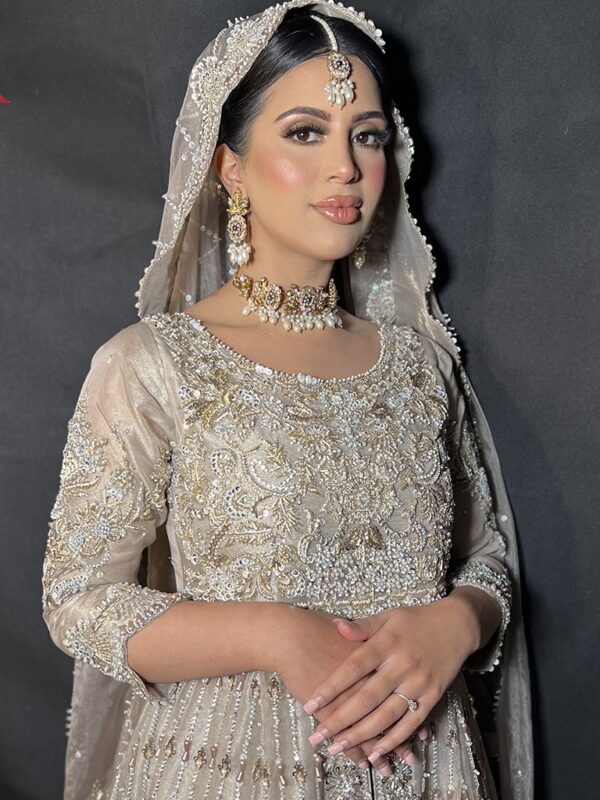
White and ivory nikkah dresses have become one of the most significant trends in Pakistani bridal fashion over the past decade. Traditionally, white was rarely worn at South Asian weddings — it was associated with mourning and simplicity rather than celebration. However, the nikkah ceremony has carved out a unique space where white feels entirely appropriate, even poetic. The purity and simplicity of white align perfectly with the spiritual nature of the nikkah, symbolising a fresh beginning and the sanctity of the marriage contract.
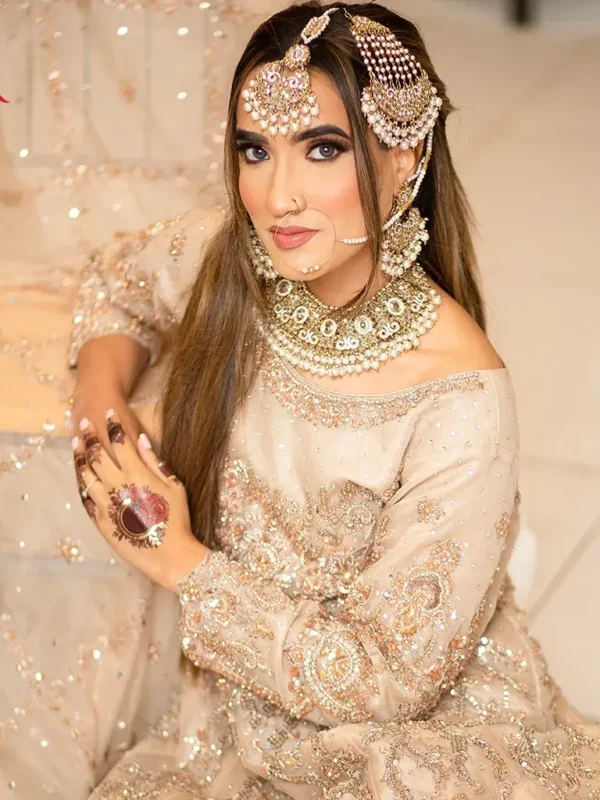
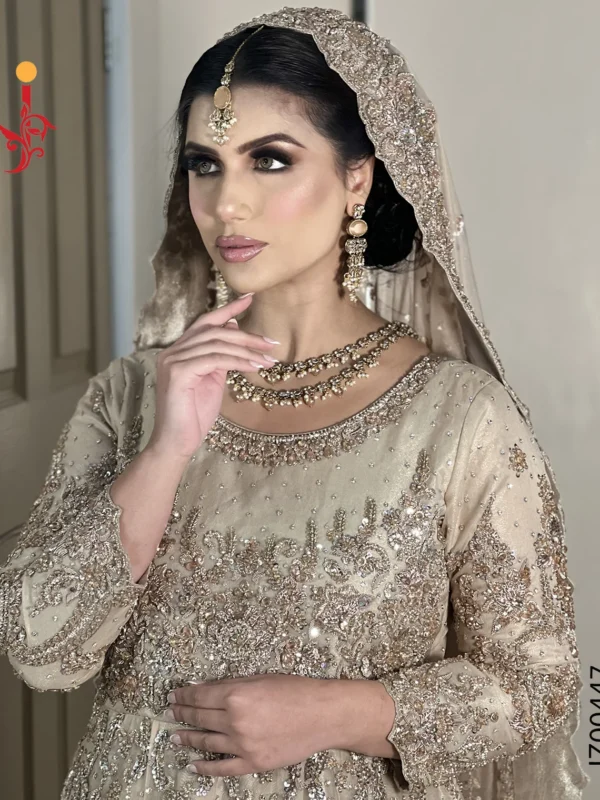
The growing popularity of white nikkah outfits has been influenced by a blend of Western bridal aesthetics and a desire among modern Pakistani brides to distinguish their nikkah look from their baraat outfit. Where the baraat traditionally calls for rich reds, heavy embroidery, and opulent fabrics, the nikkah in white offers a striking contrast — clean, serene, and understated in its elegance. This does not mean white nikkah dresses are plain. On the contrary, the most stunning white nikkah outfits feature intricate tone-on-tone embroidery, delicate pearl work, fine sequin detailing, and luxurious fabrics like silk organza, raw silk, and chiffon that catch the light beautifully.
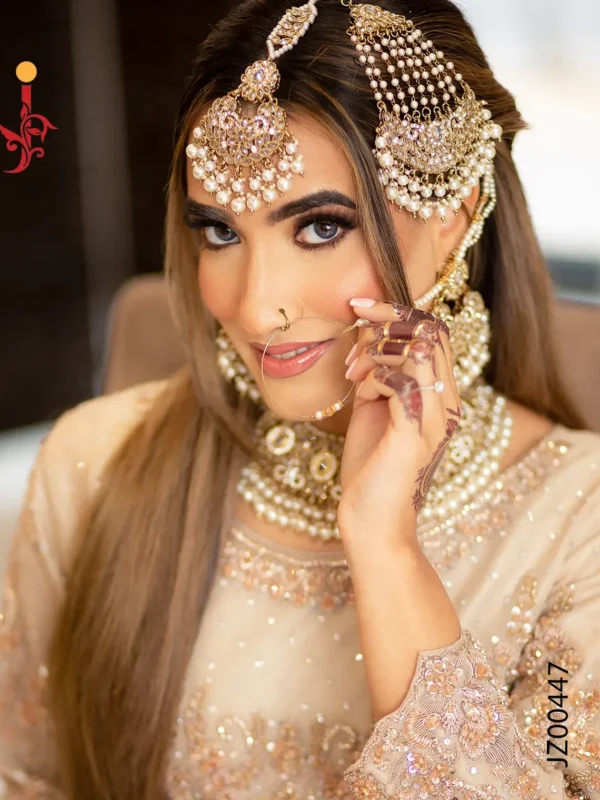
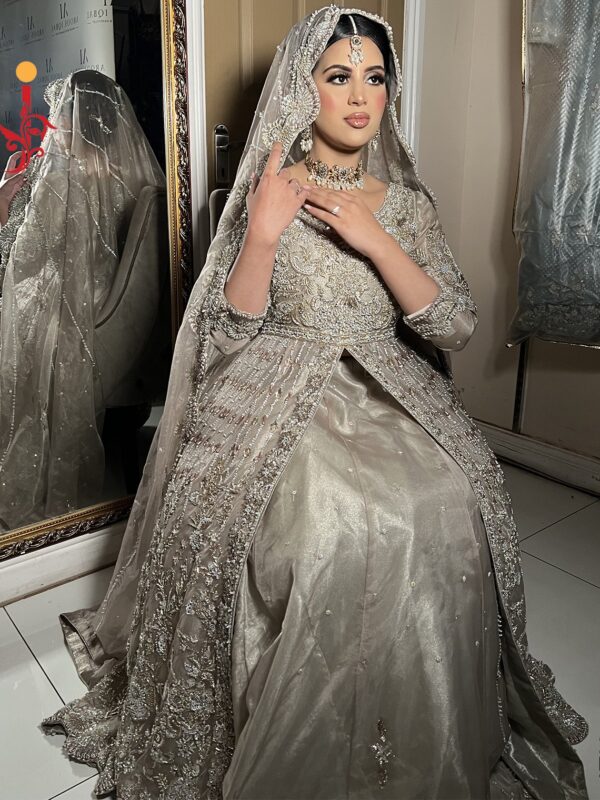
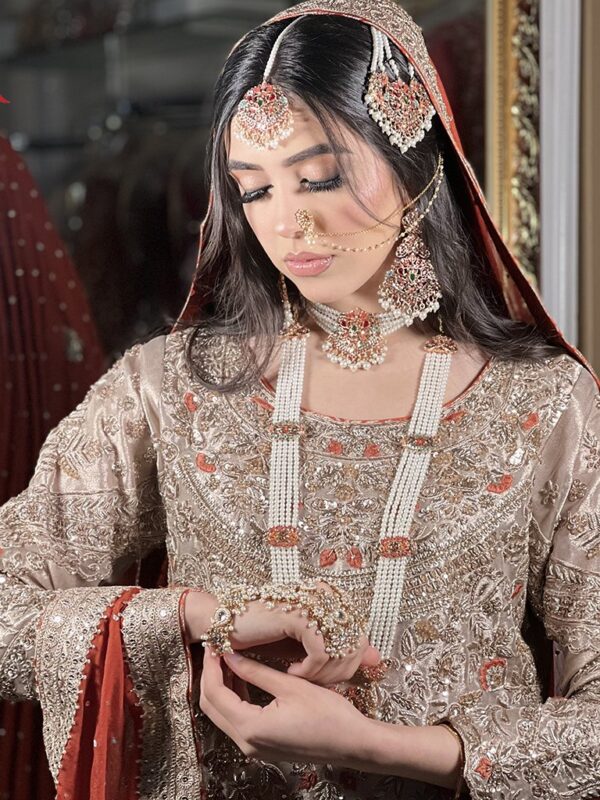
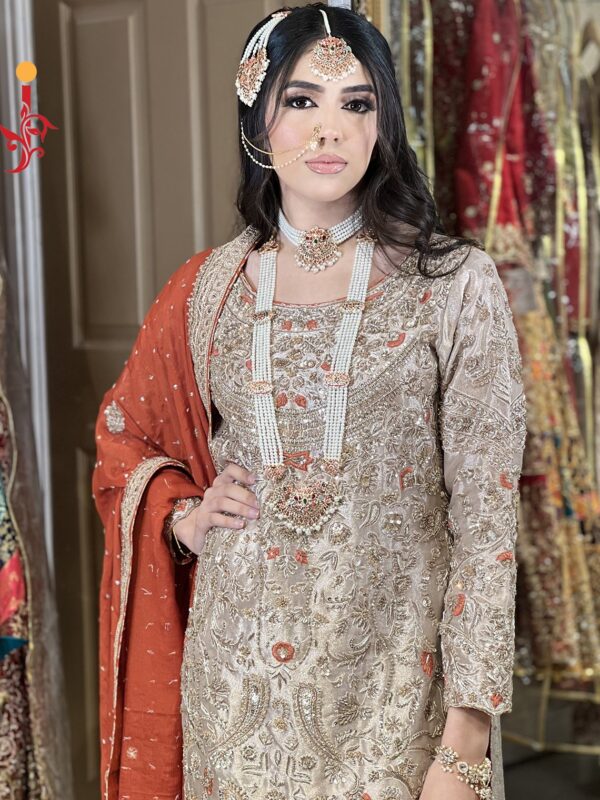
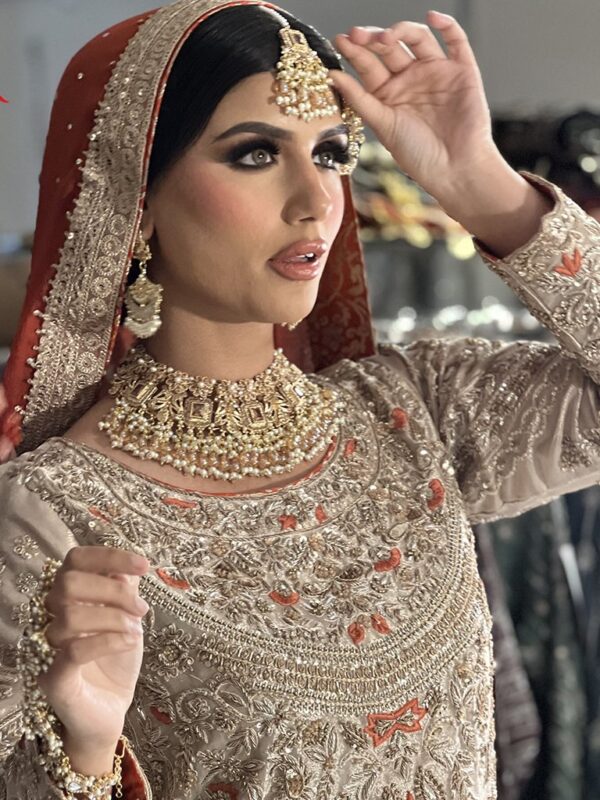
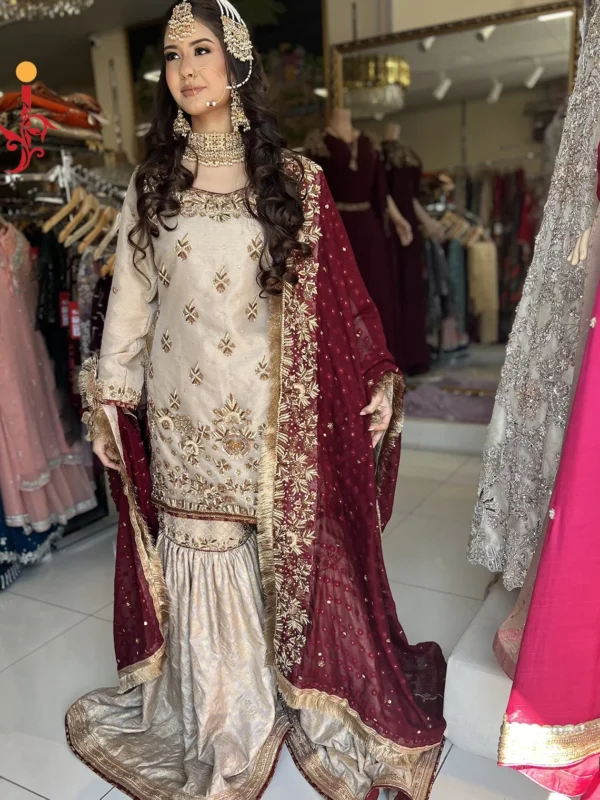
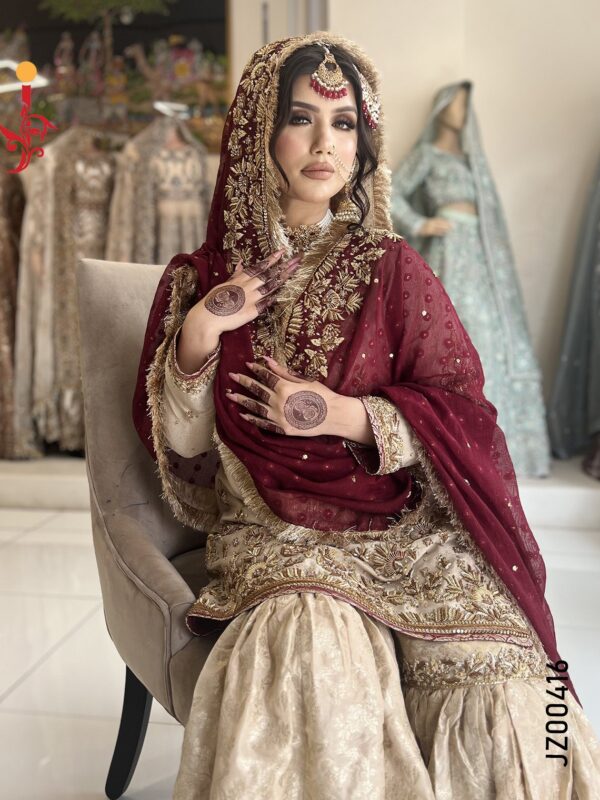
Ivory and off-white shades offer a warmer alternative for brides who love the concept of a white nikkah dress but find pure white too stark against their skin tone. Champagne-toned whites, creamy ivories, and soft pearl shades all deliver the same clean aesthetic while adding warmth and depth. These shades pair exceptionally well with gold embroidery, creating a combination that feels both traditional and contemporary.
Coloured Nikkah Dresses
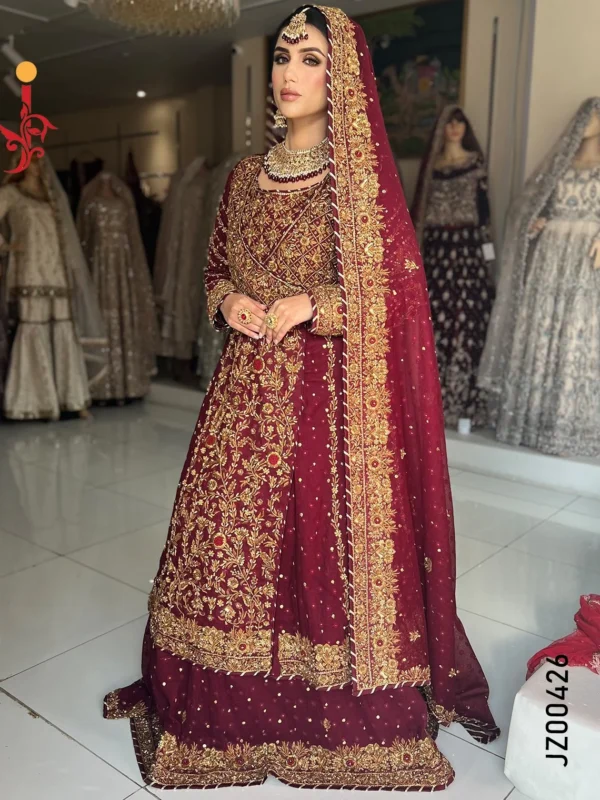
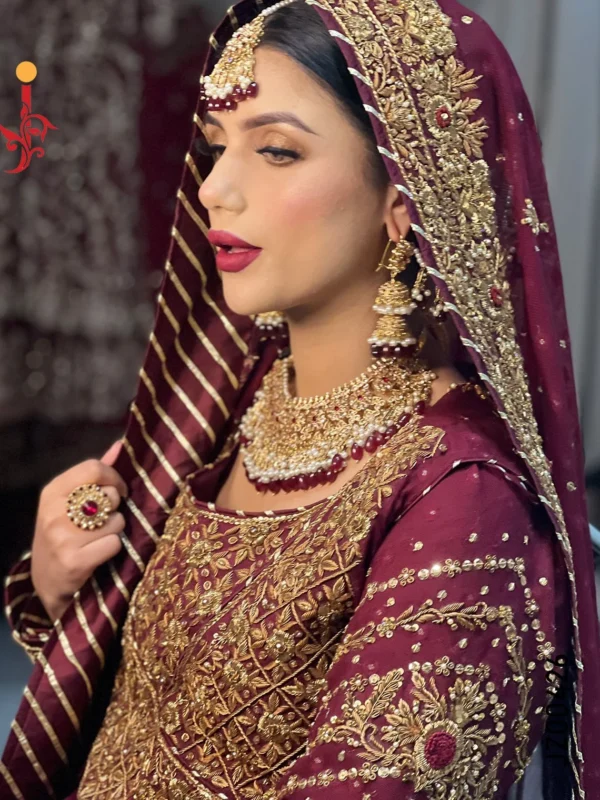
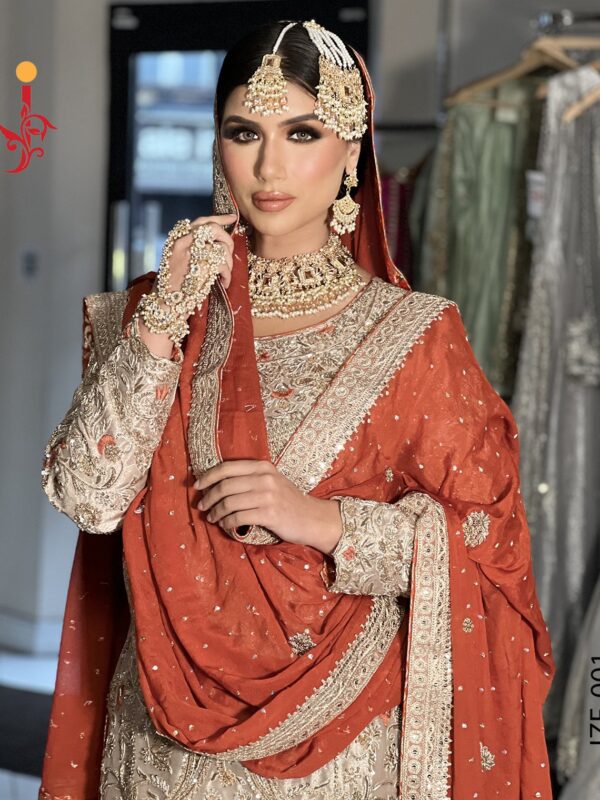
While white has surged in popularity, coloured nikkah dresses remain a beloved choice for many Pakistani brides. Red — the traditional bridal colour across South Asia — is still worn at nikkah ceremonies, particularly when the nikkah is combined with the baraat or when families hold a single grand ceremony rather than multiple events. A deep red nikkah dress with restrained embroidery bridges the gap between tradition and the solemnity of the religious ceremony.
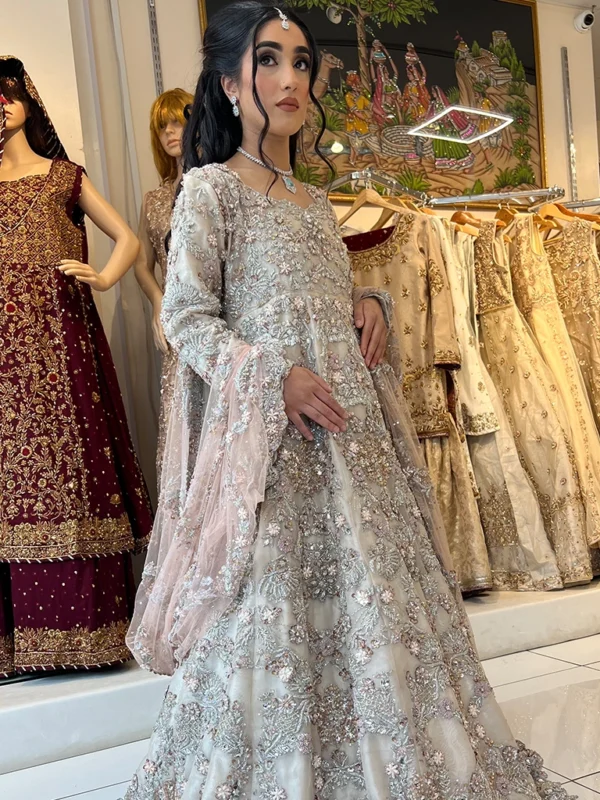
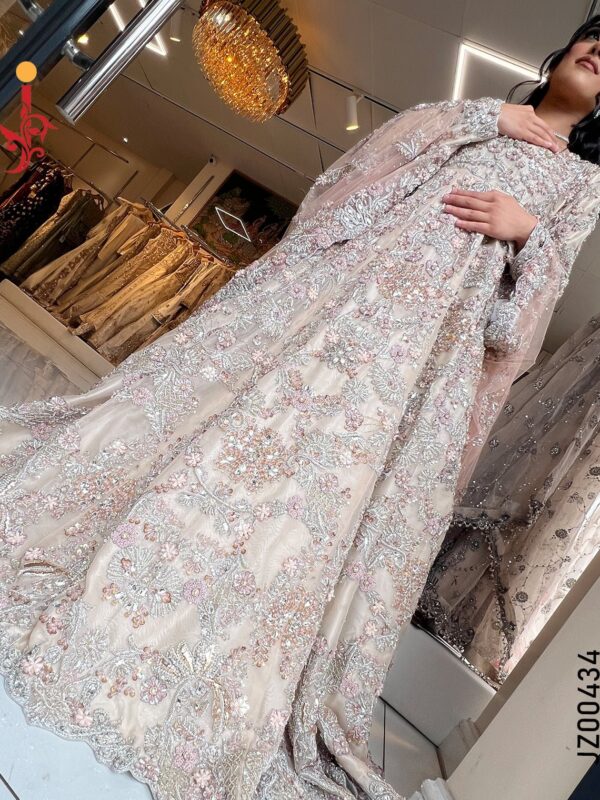
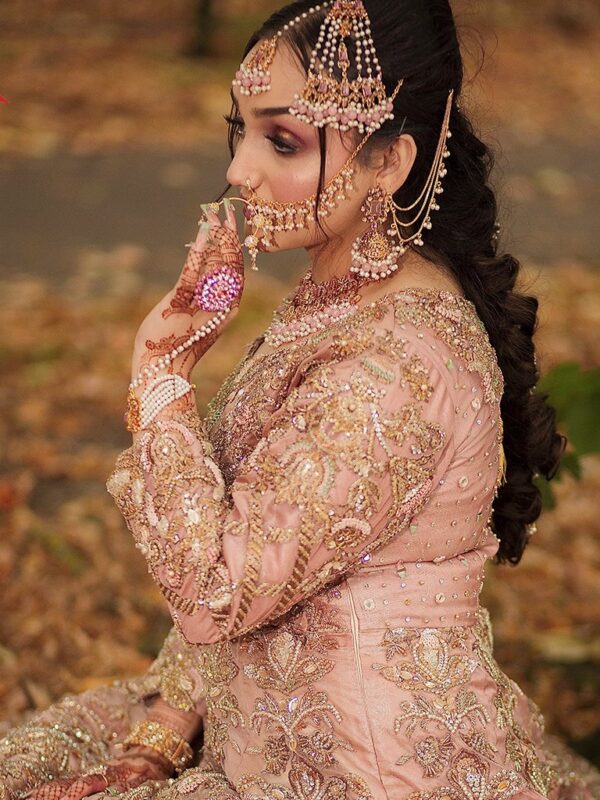
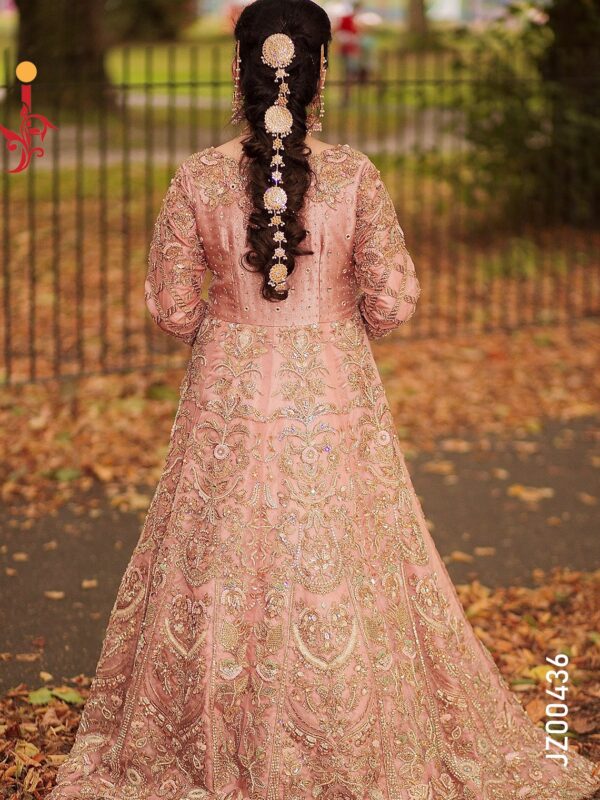
Pastel shades have emerged as a modern favourite for nikkah ceremonies. Blush pink, sage green, powder blue, champagne gold, and soft lilac all carry the gentle, refined quality that suits the nikkah atmosphere. These colours feel festive without being overpowering, and they photograph beautifully in both natural light and the warm glow of indoor ceremony spaces. Dusty rose and muted gold have become particularly popular among brides who want colour without the intensity of traditional reds and magentas.
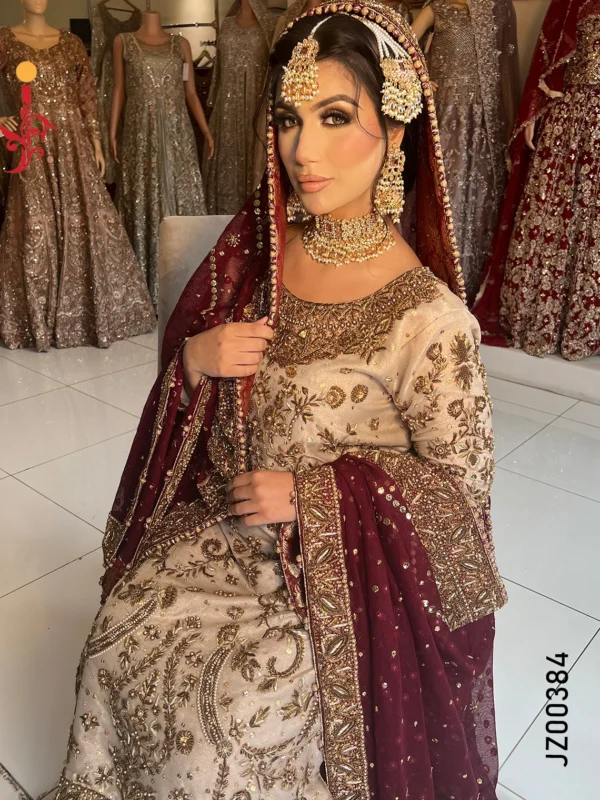
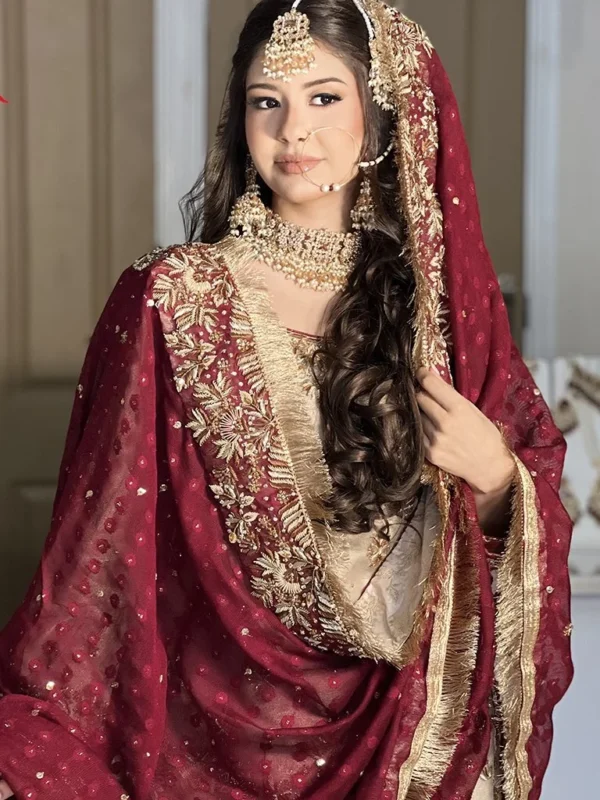
Deeper jewel tones — emerald green, royal blue, and deep burgundy — work well for evening nikkah ceremonies or for brides who prefer a more dramatic look. The key is to pair these richer colours with refined, elegant embroidery rather than heavy, all-over work. The nikkah is a moment of spiritual significance, and the outfit should convey grace rather than spectacle. Our bridal collection includes nikkah-ready pieces in a range of colours that respect this balance.
Nikkah Dress Modesty and Etiquette
Modesty is central to the nikkah ceremony. As an Islamic religious event, the nikkah involves the recitation of Quranic verses and the offering of prayers, and the bride's outfit should respect these sacred elements. This does not mean sacrificing style — modesty and beauty are not opposites. Rather, it means making thoughtful design choices that allow the bride to participate fully in every part of the ceremony with confidence and comfort.
Sleeve length is one of the most important considerations. Full-length sleeves are traditional for nikkah dresses, and they remain the most popular choice. However, three-quarter sleeves are also widely accepted, and some brides choose fitted sleeves with sheer overlays that provide coverage while adding visual interest. The neckline should be high enough to allow comfortable head covering with a dupatta during prayers — boat necklines, high round necklines, and mandarin collars all work beautifully for nikkah dresses.
The dupatta plays a dual role at the nikkah. It is both a styling element and a functional garment, used to cover the head during prayers and Quranic recitation. A nikkah dupatta should be generous enough to drape comfortably over the head without slipping, and it should be weighted appropriately — too light and it will not stay in place, too heavy and it becomes uncomfortable during a long ceremony. Many Jabeenz brides opt for a separate nikkah dupatta in addition to the one styled with their outfit, ensuring they have the perfect covering for the prayer portions of the ceremony.
Cultural expectations vary between families and communities. Some families expect full coverage with minimal embellishment, while others are comfortable with more decorative nikkah outfits. The most important thing is that the bride feels aligned with her own values and comfortable in her outfit throughout the entire ceremony. At Jabeenz, we work closely with each bride to understand her family's expectations and her personal preferences, creating a nikkah dress that satisfies both.
Hijabi Nikkah Dress Styling
Designing a nikkah dress for a hijab-wearing bride requires specific expertise and attention to detail. The outfit must work harmoniously with the hijab, creating a cohesive, polished look that feels intentional rather than adapted. At Jabeenz, we have decades of experience crafting hijab-friendly bridal wear, and we understand the design principles that make these outfits truly shine.
High necklines are essential for hijab-friendly nikkah dresses. The neckline should sit comfortably against the hijab without creating bulk or awkward gaps. Band collars, mandarin collars, and jewel necklines all work well. Embroidery around the neckline should be designed to complement the hijab border rather than compete with it — a clean neckline with the embroidery focus on the bodice or hemline often creates the most elegant effect.
Long sleeves are standard for hijabi nikkah dresses, and the sleeve design offers an opportunity for creative expression. Fitted sleeves with delicate cuff embroidery, bishop sleeves that add volume and drama, or structured bell sleeves that create a distinctive silhouette — each option changes the character of the outfit while maintaining full coverage. The key is ensuring the sleeve sits neatly at the wrist without riding up during movement or prayer.
Coordinating the hijab with the outfit and dupatta is an art in itself. Some brides choose a hijab in the same fabric as their dress for a seamless look. Others prefer a complementary shade — a champagne hijab with an ivory dress, for example, or a soft gold hijab with a white ensemble. The dupatta can then be styled over the hijab for the prayer portions of the ceremony, creating a layered look that is both beautiful and practical. We advise every hijabi bride to schedule a styling trial where we can experiment with different hijab-dupatta combinations to find the perfect arrangement.
Nikkah Dress Silhouettes
The silhouette of a nikkah dress should balance formality with comfort. Unlike the baraat, where a bride typically stands, walks, and is photographed extensively, the nikkah often involves sitting for extended periods during the ceremony, prayers, and the signing of the marriage contract. The dress must look beautiful from every angle — including seated — and allow the bride to move gracefully between sitting and standing.
The lehenga remains one of the most popular nikkah silhouettes. A nikkah lehenga typically features a more streamlined cut than a baraat lehenga, with less volume in the skirt and more refined embroidery. This creates an elegant, sophisticated look that suits the solemnity of the ceremony. Paired with a fitted choli and a generously sized dupatta, a nikkah lehenga offers the perfect blend of tradition and grace.
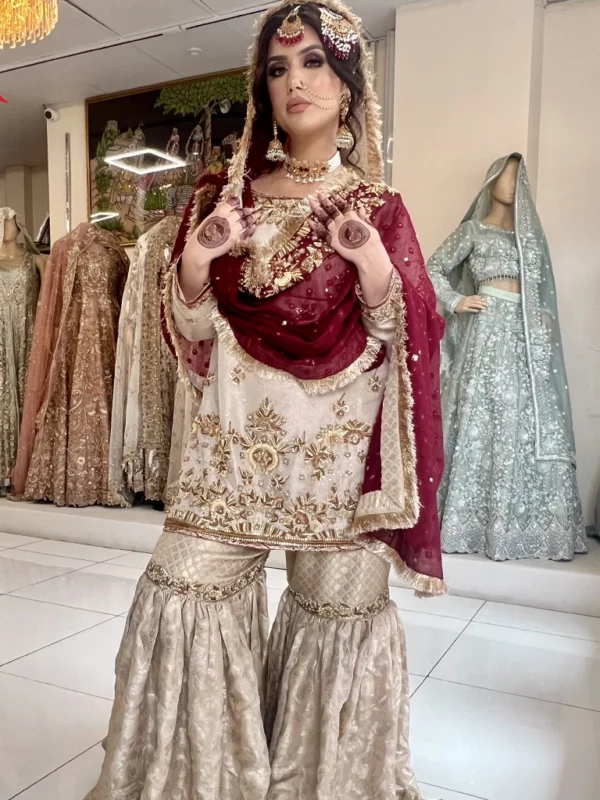
The gharara is a beautiful choice for brides who want a traditional silhouette with distinctive character. The gathered, wide-legged trousers of the gharara create a dramatic effect when standing and a comfortable, flattering shape when seated. Ghararas have strong historical roots in Mughal court fashion, making them a culturally resonant choice for a nikkah ceremony.
The sharara, with its flared, flowing trousers, offers a slightly more contemporary feel than the gharara while retaining a traditional essence. Shararas in lighter fabrics with delicate embroidery are particularly well suited to nikkah ceremonies, as they combine modesty with movement and elegance.
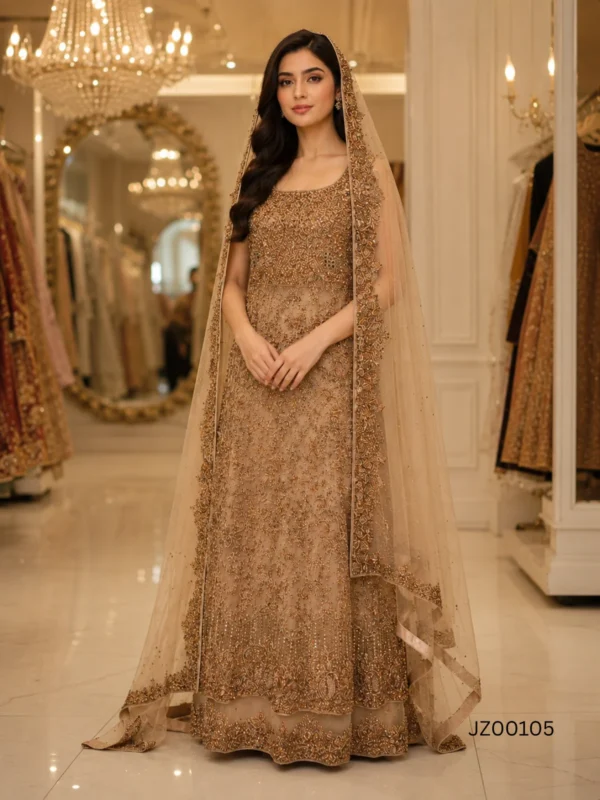
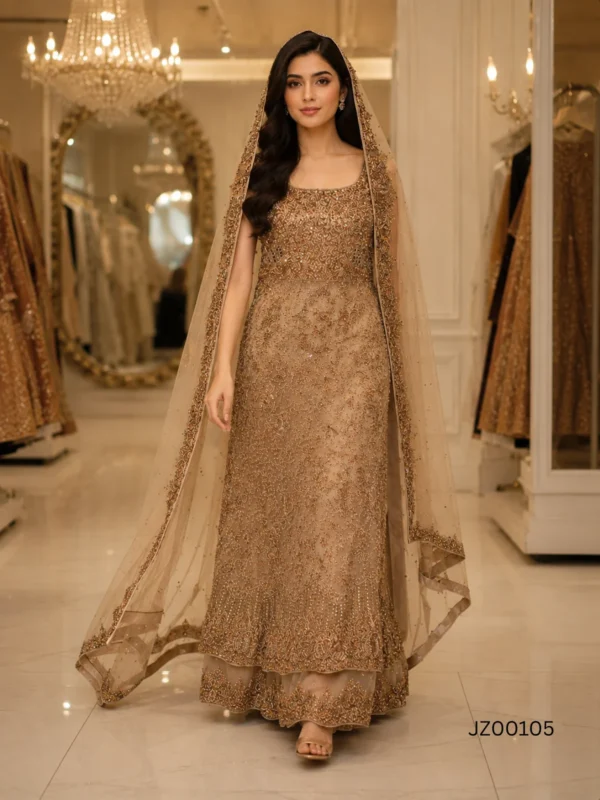
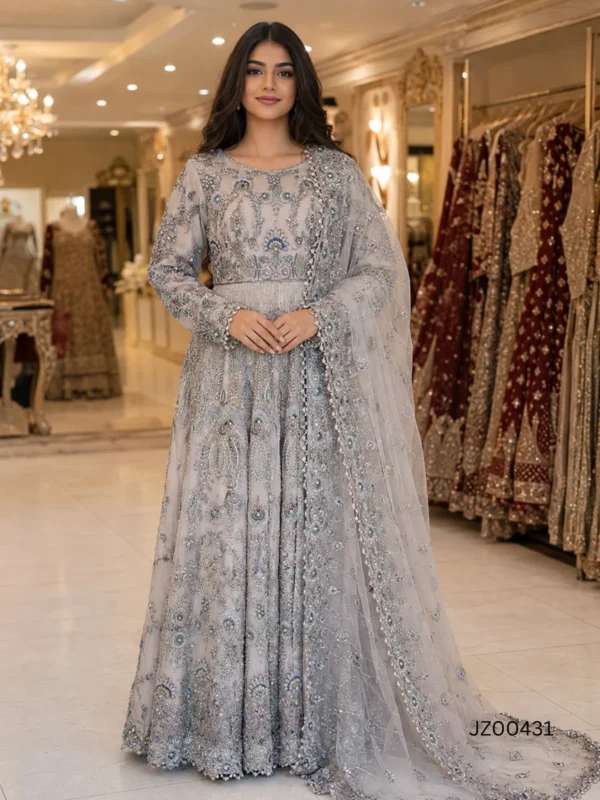
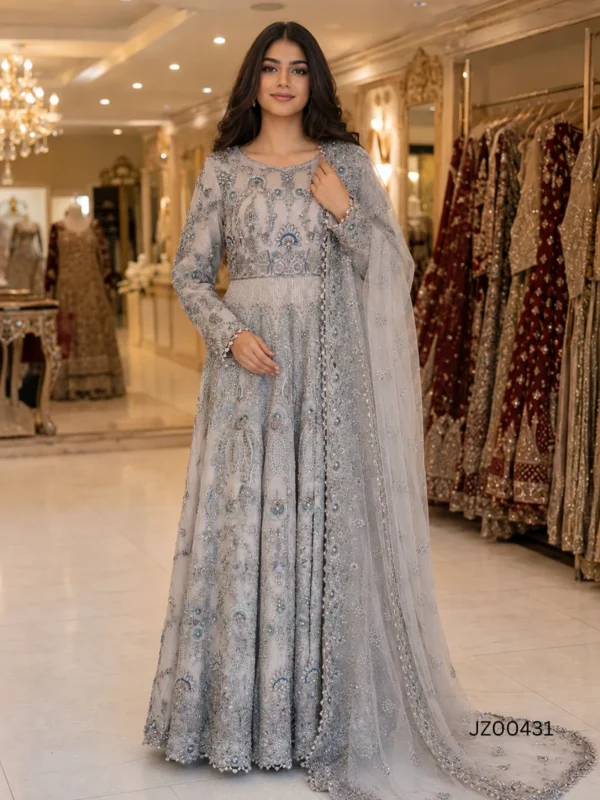
The pishwas — a long, flowing gown with an empire waist — creates a regal, statuesque silhouette that suits formal nikkah celebrations. Its continuous flow from bodice to hemline is inherently modest and creates a clean canvas for embroidery work. The pishwas is especially popular among brides who prefer a less structured, more ethereal look.
The maxi dress silhouette has gained traction among brides who want a contemporary nikkah outfit with clean lines and minimal fuss. A structured maxi in silk or organza, with focused embroidery on the bodice and a clean, flowing skirt, offers a modern interpretation of nikkah dressing that works beautifully for intimate ceremonies.
Bespoke Nikkah Dresses at Jabeenz
Every nikkah ceremony is unique, and every bride deserves a dress that reflects her individual vision for this sacred moment. At Jabeenz, our bespoke process is designed to give you complete control over every element of your nikkah outfit, from fabric and colour to embroidery and silhouette.
The process begins with a one-to-one consultation at our Manchester showroom. You will sit with our design team, explore our fabric library, and discuss your vision for the ceremony. We will ask about the venue, the time of day, the scale of the celebration, and your personal style preferences. We will also discuss modesty requirements, dupatta styling, and any specific cultural or family expectations you want to honour.
Fabric selection is critical for a nikkah dress. We stock an extensive range of silks, organzas, chiffons, and specialty fabrics sourced specifically for bridal wear. You can feel every fabric in person, hold it against your skin, and see how it catches the light in our showroom. This tactile experience is something that online retailers cannot replicate, and it makes an enormous difference when choosing a fabric you will wear on one of the most important days of your life.
Our embroidery work is executed in-house by skilled artisans who understand the difference between baraat embroidery and nikkah embroidery. Nikkah embroidery should be refined and considered — hand-finished zardozi, delicate pearl work, subtle sequin detailing, and fine thread work that adds texture without overwhelming the fabric. The embroidery should respect the solemnity of the occasion while celebrating the beauty of the moment. Every stitch is placed with intention, creating a piece that you will treasure for a lifetime.
We also offer full customisation of modesty elements. Whether you need a higher neckline, longer sleeves, a larger dupatta, or a separate prayer covering, every detail can be tailored to your exact requirements. Book a consultation to begin the process.
Nikkah Dresses Manchester
Manchester has a vibrant and established South Asian community, and Jabeenz has been at the heart of it since 1975. Our showroom is a destination for brides from across the North West and beyond — customers travel from Leeds, Bradford, Birmingham, London, and throughout the UK to work with our design team on their bridal outfits.
Visiting our Manchester showroom for your nikkah dress offers advantages that remote shopping simply cannot match. You can see and feel fabrics in person, try on sample silhouettes to find your preferred shape, and work face-to-face with designers who have decades of experience in bridal fashion. Our showroom provides a private, relaxed environment where you can take your time and explore every option without pressure.
For brides who live outside Manchester, we offer remote consultations via video call. We can send fabric swatches, discuss designs in detail, and take measurements remotely. Once your nikkah dress is complete, we offer secure delivery anywhere in the United Kingdom. Many of our brides combine a single showroom visit for initial consultation and measurement with remote communication for the design development process.
Whether you are planning an intimate nikkah at a local mosque or a grand ceremony at a Manchester venue, our team can create the perfect nikkah outfit for your day. We understand the expectations of local communities, the requirements of different mosque settings, and the styling needs of modern brides. Contact us to start your nikkah dress journey, or explore our walima collection if you are planning outfits for multiple ceremonies. For brides also shopping for wedding guest outfits for family members, we can coordinate colours and styles across your entire bridal party.