
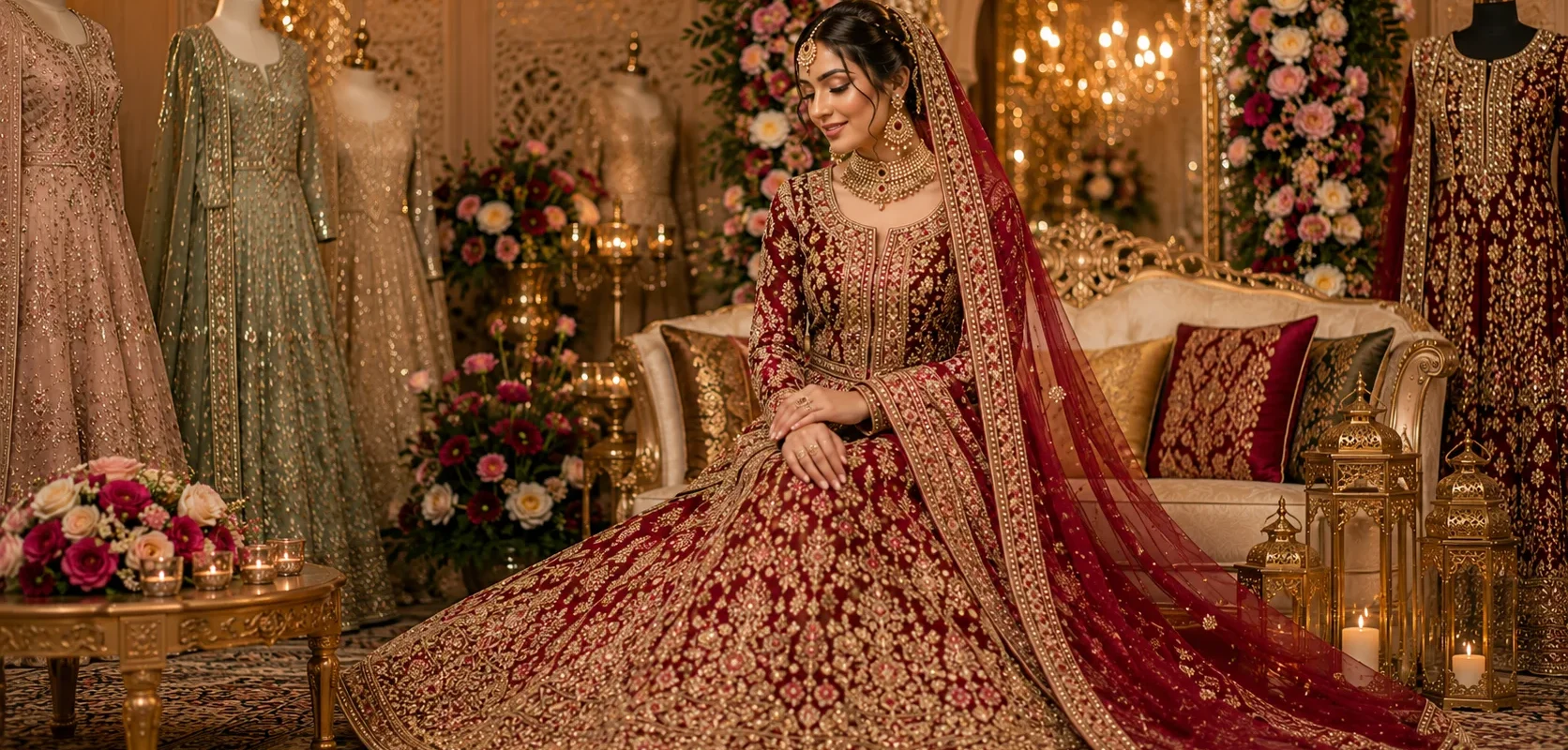
According to the British Bridal Suppliers Association. Pakistani bridal Pakistani bridal wear is a rich. Diverse. Deeply meaningful tradition that combines centuries of textile roots with modern fashion sensibility. For brides in the UK. Navigating the world of Pakistani bridal fashion can be both exhilarating. Complex. With dozens of styles, fabrics, stitching methods and event-specific conventions to consider. At Jabeenz in Manchester. We have been at the heart of this tradition since 1975. Handcrafting bespoke bridal outfits that honour local roots while taking on modern design. This comprehensive guide covers everything you need to know about Pakistani bridal wear: the styles. The events, the fabrics, the traditions. The choices that will help you create your perfect wedding wardrobe.
The Key Bridal shapes in Pakistani Fashion
Pakistani bridal fashion covers a remarkable variety of shapes. Each with its own history. Look. Ceremonial significance. Understanding these styles is the first step in choosing your bridal wardrobe.
The Lehenga is perhaps the most iconic Pakistani bridal shape. Consisting of a fitted blouse (choli). A full. Flared skirt. A dupatta. The bridal lehenga creates a bold. Voluminous look that is often associated with the baraat event. At Jabeenz, our Bridal lehenga range features everything from classic heavily stitched pieces to modern. Lighter designs for modern brides. The beauty of the lehenga lies in its range: it can be crafted in classic reds. Golds for a classic baraat look. in pastels and ivories for a modern nikkah or walima.
The Sharara is noted for by wide-legged trousers that flare boldly from the knee. Paired with a shorter kameez top. A dupatta. Originally from Lucknow. The sharara has become a staple of Pakistani bridal fashion. Mainly for mehndi. Walima events. The flowing shape is widely flattering and allows for comfortable movement. This makes it a practical choice for events that involve dancing and socialising. Browse our Sharara range for bespoke options in this lasting style.
The Gharara is similar to the sharara. With a key difference: the flare begins at the knee with a distinct ruched or gathered seam. This creates a more structured, bell-shaped leg. The gharara is one of the most classic Pakistani bridal shapes. Is often chosen for baraat events by brides who want an alternative to the lehenga. Our Gharara range showcases both classic and modern interpretations of this roots style.
The Bridal gown shows the modern end of Pakistani bridal fashion. Fishtail, A-line. Ball gown shapes. Decorated with classic Pakistani stitching. Offer a fusion of Western structure. South Asian craftsmanship. Bridal gowns are increasingly popular for nikkah and walima events among UK-based brides. Visit our Bridal gown range to see how we blend these traditions.
event-by-event Bridal Wear Guide
A Pakistani wedding often spans multiple events. Each with its own dress code. Colour palette. Level of formality. Understanding what to wear at each event helps you plan a cohesive bridal wardrobe.
The Mehndi is the most vibrant and celebratory pre-wedding event. Often, the bride wears green and yellow. But modern brides increasingly choose a wider palette including mustard. Emerald. Turquoise and hot pink. The mehndi outfit is often less heavily stitched than the baraat dress. With gota patti, mirror work. Colourful threadwork being popular decoration choices. Our Mehndi dress range features bespoke options in a range of festive styles.
The Nikkah is the formal Islamic marriage event. Many brides choose white, ivory or pastel shades for this event. This reflects the solemnity and spiritual significance of the event. Simpler stitching styles, like pearl work, sequin detailing. Soft threadwork on organza or silk, suit the nikkah beautifully. A formal trouser suit. A simple gown or a light lehenga are all appropriate shapes. Explore our Nikkah dress range for designs that capture the grace of this event.
The Baraat is the main wedding event and the most formal event. This is where the bride often wears her most elaborate outfit. Often in red, maroon, burgundy or deep pink. With extensive gold or silver stitching. Heavy zardozi, dabka, crystal. Stonework are standard for baraat outfits. The dupatta is usually heavily decorated as well. Lehengas, ghararas and heavily worked gowns are the most popular shapes. Our Baraat dress range showcases the full grandeur of classic bridal craftsmanship.
The Walima is the post-wedding reception, hosted by the groom’s family. The walima outfit is often graceful. Lighter than the baraat dress. With many brides choosing pastel colours, metallics or jewel tones. Modern shapes like fishtail gowns. Shararas and tailored trouser suits are popular walima choices. The stitching is often refined and detailed rather than heavy and all-over. See our Walima dress range for stylish designs for this event.
classic stitching methods in Pakistani Bridal Wear
The stitching on a Pakistani bridal outfit is where craft. Tradition come together most powerfully. Understanding the different methods helps you appreciate the craftsmanship involved. Make informed choices about your own bridal wear.
Zardozi is the most prestigious form of Pakistani bridal stitching. This ancient method uses metallic threads. Often gold or silver. To create raised. Textured motifs on the fabric surface. Zardozi work is labour-intensive. With a single bridal outfit requiring weeks of skilled handwork. At Jabeenz, our artisans at our Manchester studio maintain this classic method. This creates fine floral. Paisley and geometric designs that define Pakistani bridal grandeur.
Dabka stitching uses coiled metallic wire to create spiralling, textured motifs. Often combined with zardozi, dabka adds dimension and depth to bridal stitching. Kora and Tilla work use different weights of metallic thread to create varied textures. With the same design. From soft fine lines to bold, raised elements.
Crystal. Pearl and stonework have become increasingly prominent in modern Pakistani bridal fashion. Swarovski crystals, freshwater pearls, seed beads. Rhinestones are incorporated into classic stitching patterns to add sparkle and light-catching brilliance. At Jabeenz. We often combine classic threadwork. Crystal detailing to create designs that honour roots methods while appealing to modern tastes.
Choosing the Right Fabric for Your Bridal Outfit
Fabric selection is one of the most important decisions in the bridal design process. The right fabric affects how your outfit looks, feels, moves. Photographs across your wedding day.
Organza has become the most popular bridal fabric in modern Pakistani fashion. Its crisp structure holds stitching beautifully. Meanwhile its lightweight nature keeps the outfit comfortable for long events. Organza has a subtle sheen that catches light elegantly without being overly shiny. This makes it ideal for photography.
Raw silk offers a richer, more textured look. Its natural lustre. Substantial weight make it a popular choice for heavily stitched baraat outfits. Where the fabric needs to support dense zardozi and stonework without sagging or distorting. Tissue silk, a lighter variant, works beautifully for nikkah and walima outfits.
Velvet is the fabric of choice for winter weddings. Its depth of colour. Rich texture create a regal, bold look that needs minimal decoration. A velvet lehenga or gharara. Gold zardozi borders is one of the most lasting looks in Pakistani bridal fashion. Chiffon and Georgette, meanwhile, offer flowing, lightweight options for summer events and less formal events.
Colour Traditions and Modern Trends
Red has been the classic colour of Pakistani bridal wear for generations. This stands for event, passion and good fortune. Deep reds. Maroons, burgundies. Crimsons remain the most popular choices for baraat events. Mainly among brides who want to honour family tradition.
but, Pakistani bridal fashion has expanded boldly in recent years. Pastel shades. This includes blush pink, powder blue, sage green, lilac. Champagne, have become increasingly popular, mainly for nikkah and walima events. Many modern brides choose red for their baraat. A contrasting pastel or metallic tone for their walima. This creates visual variety across their wedding events.
Dual-tone. Ombre colour combinations are also trending. With bridal outfits with gradient colour transitions or contrasting stitching colours on a single base fabric. At Jabeenz. We work with brides to develop colour palettes that coordinate across all their wedding events. This creates a cohesive visual story across the event.
The Bespoke Bridal Process at Jabeenz
Creating a bespoke bridal outfit is a collaborative journey between the bride. Our design team. At Jabeenz. The process begins with a consultation at our Manchester boutique. via video call for brides outside the area. There we discuss your wedding plans, style preferences, colour choices and budget.
Our design team then creates sketches. Mood boards that translate your vision into a concrete design. We select fabrics together. Review stitching samples and finalise every detail before production begins. During construction. We schedule fitting sessions to ensure the outfit is progressing as planned. Fits beautifully.
Every piece is designed in Manchester and handcrafted by our skilled artisans in Pakistan who bring decades of feel to their work. From pattern cutting. Fabric construction to hand stitching. Finishing, every stage is completed from start to finish. This vertically integrated process. From design to delivery, is what allows us to maintain the quality. Consistency that has defined Jabeenz since 1975. Browse our complete Bridal dress range for inspiration across all styles and events.
Frequently Asked Questions
How many outfits does a Pakistani bride often need?
A typical Pakistani bride needs between three. Five outfits: a mehndi dress. A nikkah outfit, a baraat dress, a walima ensemble. And sometimes a dholki or mayun outfit for additional pre-wedding events. At Jabeenz. We offer bridal wardrobe packages that coordinate all your outfits for a cohesive look. With your wedding events. Often with cost savings compared to commissioning each piece individually.
How far in advance should I start shopping for my bridal outfit?
We recommend beginning the process at least four to six months before your wedding date. This allows ample time for consultations. Fabric sourcing. Design finalisation. Construction. Fittings and any adjustments. For elaborate baraat outfits with extensive stitching. Starting six months ahead is ideal. Even if your wedding is sooner. Contact us to discuss what is achievable within your timeline.
Can I design my own bridal outfit from scratch?
truly. Many of our Jabeenz brides come to us with specific ideas. Inspiration images or even sketches of their dream outfit. Our design team works with you to refine. Develop your vision into a technically feasible, beautifully proportioned design. We offer guidance on what works best with different body types. Fabrics and stitching methods. Meanwhile ensuring that the final piece reflects your personal vision.
Do you make bridal outfits for non-Pakistani brides?
Yes. We create bridal and formalwear for women of all backgrounds. Many of our clients are Indian. Bangladeshi, Arab. British brides who are drawn to the craftsmanship and beauty of Pakistani bridal fashion. We also make outfits for non-Asian brides marrying into South Asian families. Helping them navigate styles, colours. Traditions with sensitivity and expertise.
Your bridal journey starts with a conversation. Book a free consultation at Jabeenz in Manchester. Let our team help you explore the full spectrum of Pakistani bridal fashion. Whether you dream of a classic red baraat lehenga. A modern pastel nikkah gown or a show-stopping fishtail walima dress. We have the expertise, craftsmanship. Passion to bring your vision to life. Designed in Manchester since 1975, every Jabeenz creation tells a story: yours.
Next step: Book a free consultation with Jabeenz to discuss your requirements, or explore the Dream Dress Studio to start from an inspiration image.
Shop This Look

Ready to Find Your Dream Outfit?
Book a free consultation at our Manchester boutique or browse our latest collections online.
You Might Also Like
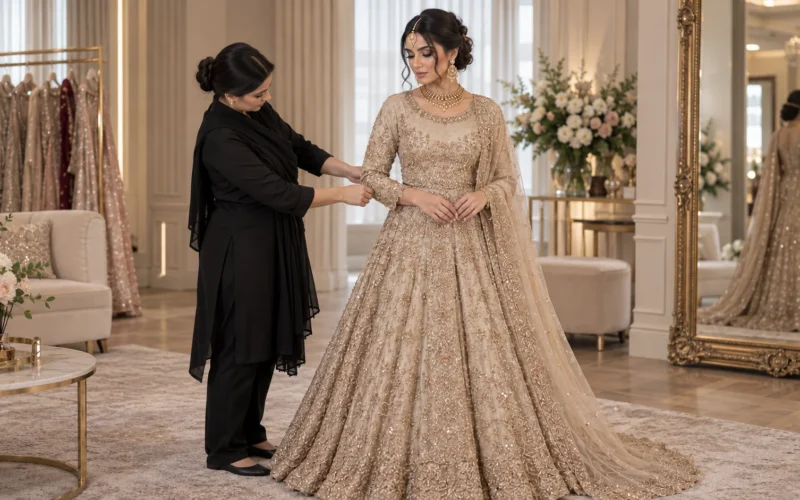
Bridal Dresses Pakistani Brides Can Change Without Re-Doing Hair and Jewellery
Plan bridal outfit restyling with practical advice on photos, coordinate, fit and movement. Use these UK wedding checks before approving the final...
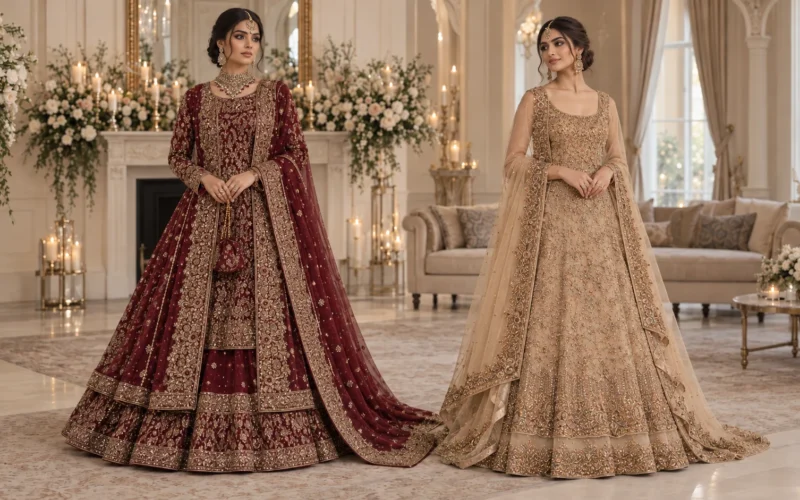
Pakistani Bridal Dresses: 12 Details That Change the Final Look
Plan Pakistani bridal details with practical advice on seating, train, fit and movement. Use these UK wedding checks before approving the final...
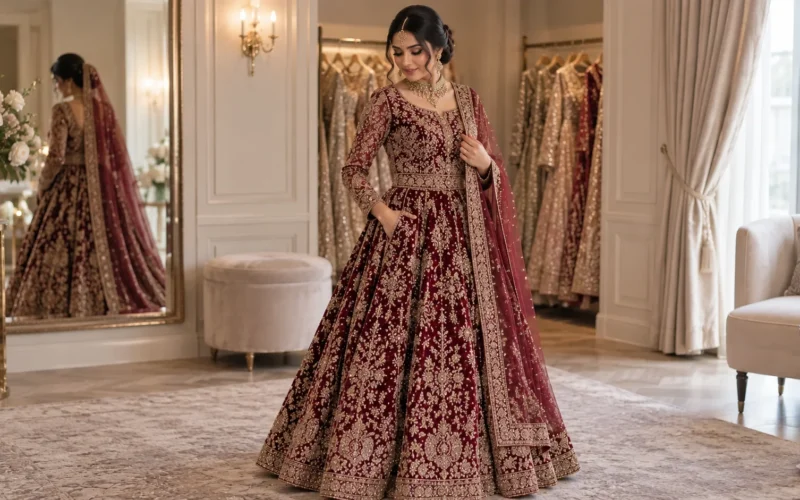
Pakistani Bridal Wear: Should You Add Pockets to a Bridal Outfit?
Plan bridal dress pockets with practical advice on seating, pockets, fit and movement. Use these UK wedding checks before approving the final...
