
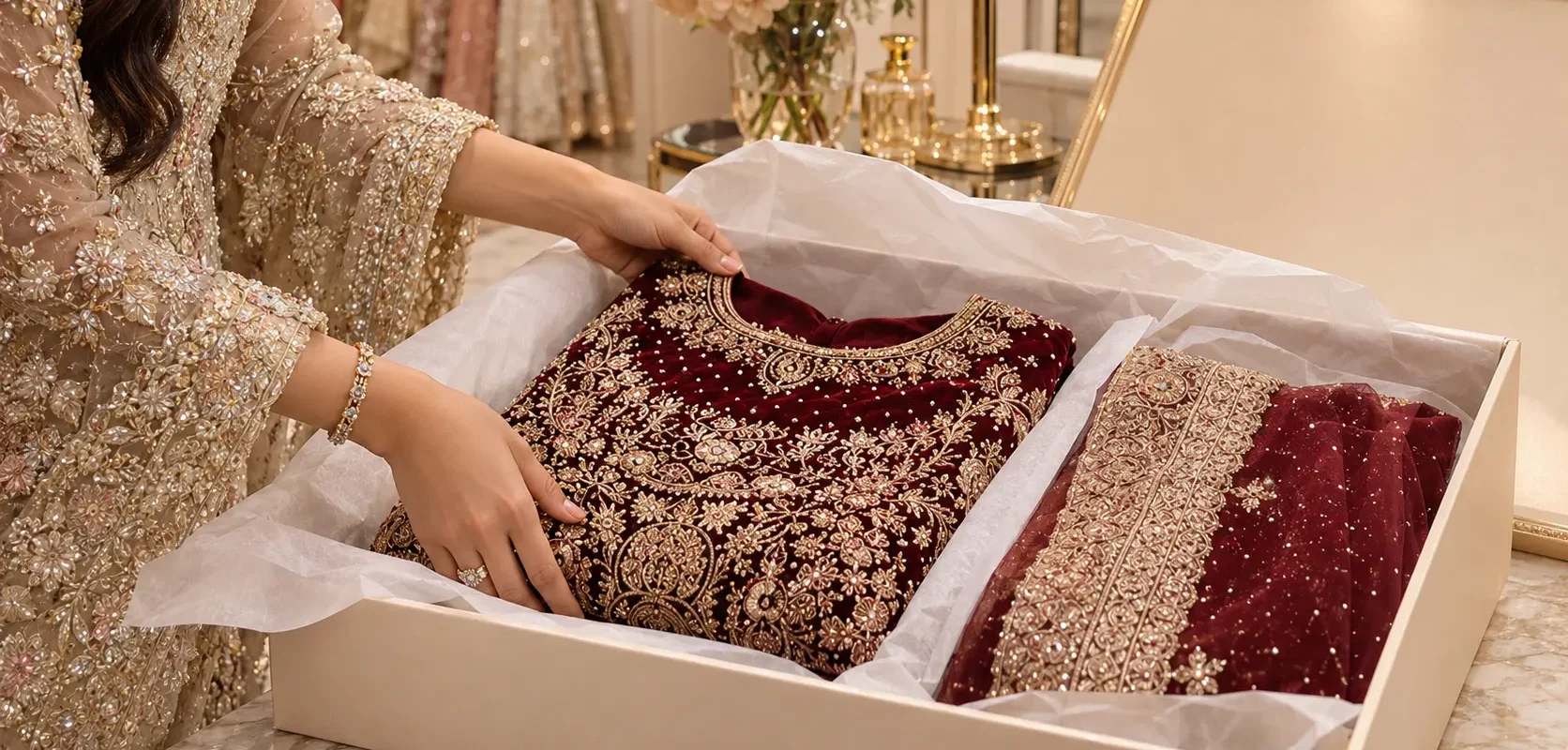
Your Pakistani bridal dress is one of the most special items you’ll ever own. With hand embroidery, premium fabrics, and countless memories attached, proper care ensures it stays beautiful for years. Whether you display it, store it, or pass it down, you’ll want it in perfect condition.
This guide covers how to clean, store, and preserve your bridal outfit after the big day. In our 50 years of making bridal wear, we’ve advised thousands of brides on keeping their outfits safe. Here’s what works.
What Should You Do Immediately After the Wedding?
The first 48 hours matter most. What you do now determines the long-term condition of your outfit:
- Remove it carefully: Don’t rush. Have someone help you to avoid snagging embroidery or beadwork.
- Hang it properly: Use a padded hanger in a well-ventilated room. Never scrunch it into a bag.
- Check for stains: Look for food, makeup, or drink stains. The sooner you address them, the better.
- Let it air: Before storing, let the dress air out for 24 hours to release moisture and scent.
Additionally, take photos of any stains you find. This helps a specialist cleaner know exactly what they’re dealing with. Specifically, note whether the stain is oil-based (foundation, food) or water-based (drinks, rain), as each requires a different treatment approach.
How Should You Clean a Hand-Embroidered Dress?
This is the most important question. And the answer is: very carefully.
| Cleaning Method | When to Use | Risk Level |
|---|---|---|
| Professional dry cleaning (specialist) | Stains, overall refresh | Low (if specialist used) |
| Spot cleaning | Small, localised stains | Low |
| Standard dry cleaning | Only if no specialist available | Medium (may damage embroidery) |
| Machine washing | Never | High (will damage embroidery) |
Critical rule: Never machine wash or tumble dry a hand-embroidered bridal outfit. The agitation damages zardozi, dabka, and beadwork. Furthermore, even gentle machine cycles can loosen stones and break delicate thread work that took hundreds of hours to create.
Spot Cleaning Tips
- Use a damp white cloth (coloured cloths can transfer dye)
- Blot, never rub
- Test on a hidden area first
- For makeup stains, try a small amount of gentle fabric cleaner on the cloth
- For food stains, cold water usually works best
Moreover, act quickly. Fresh stains are much easier to remove than set ones. If you notice a stain during the wedding itself, blot it gently with a white napkin and cold water. Don’t wait until you get home.
How Should You Store Your Bridal Dress?
Short-Term Storage (Weeks to Months)
- Hang on a padded hanger in a garment bag
- Keep in a cool, dry wardrobe away from direct sunlight
- Don’t store next to items with strong smells (perfume, mothballs)
Long-Term Storage (Years)
For long-term preservation, the details matter. Here’s the proper approach:
- Fold the dress with acid-free tissue paper between layers
- Place in an acid-free storage box (not a plastic bag, which traps moisture)
- Store flat, not hanging (prolonged hanging can stretch heavy fabrics)
- Add silica gel packets to absorb moisture
- Check the dress every 6 to 12 months for discolouration or pest damage
- Re-fold along different lines each time you check to prevent permanent creases
Consequently, you’ll need to invest in proper storage materials. Acid-free tissue paper and boxes are available from preservation supply shops online. The cost is minimal compared to the value of your outfit.
What About the Dupatta?
The dupatta needs the same care as the main outfit. In fact, it’s often more delicate because it uses lighter fabric:
- Fold with tissue paper between layers
- Store separately from heavy pieces to avoid crushing embroidery
- If it has heavy borders, roll rather than fold to prevent crease lines
What Are the Biggest Mistakes Brides Make with Storage?
In our 50 years of bridal experience, we’ve seen the same storage mistakes repeated. Knowing what to avoid is just as important as knowing what to do.
The most common mistake is storing the outfit in a plastic garment bag. Plastic traps moisture and prevents air circulation. Over time, this creates the perfect environment for mould growth and yellowing. Additionally, plastic bags can release chemicals that react with metallic embroidery threads.
Another frequent error is hanging heavy bridal outfits for extended periods. A heavily embroidered lehenga can weigh several kilograms. Over months or years of hanging, the fabric stretches and the embroidery pulls away from the base material. Furthermore, the weight concentrates on the shoulder points of the hanger, causing permanent distortion.
Moreover, storing your outfit near a radiator or in direct sunlight causes fading. Even indirect light through a window can bleach fabric colours over time. The safest location is a cool, dark cupboard or under-bed storage area with good air circulation. If you’ve already made one of these mistakes, it’s not too late to correct it. Re-fold with acid-free tissue and transfer to a proper storage box. Your future self will thank you. Visit our bridal collection to see the quality of craftsmanship worth preserving.
Can You Alter a Bridal Dress for Future Use?
Many brides repurpose their bridal outfit. This is a wonderful way to extend its life:
- Restyle the lehenga into a party wear piece by simplifying the blouse
- Use the dupatta as a decorative piece or frame it
- Alter the outfit for a daughter, sister, or future family member
- Keep it as-is for anniversaries or cultural events
However, keep in mind that major alterations can be risky on heavily embroidered garments. For alterations advice, visit our contact page or book a consultation.
Frequently Asked Questions
Can I get my bridal dress cleaned years after the wedding?
Yes, but sooner is always better for stain removal. A specialist dry cleaner with experience in Asian bridal wear is essential. Standard dry cleaners may not handle heavy embroidery correctly. Therefore, always ask about their experience with hand-embroidered garments before handing yours over.
Should I insure my bridal dress?
If your dress cost over £500, consider adding it to your home contents insurance. Keep your receipt and photographs as proof of value. Additionally, some insurers offer specific wedding dress coverage that includes accidental damage, not just theft.
How do I remove yellowing from storage?
Yellowing usually happens from exposure to non-acid-free materials or light. A specialist cleaner may be able to reduce it, but prevention (acid-free storage, dark conditions) is better than cure. Specifically, avoid storing your outfit in cardboard boxes from the high street, as these contain acids that cause yellowing over time.
Next step: Book a free consultation with Jabeenz to discuss your requirements, or explore the Dream Dress Studio to start from an inspiration image.
Shop This Look
Ready to Find Your Dream Outfit?
Book a free consultation at our Manchester boutique or browse our latest collections online.
You Might Also Like
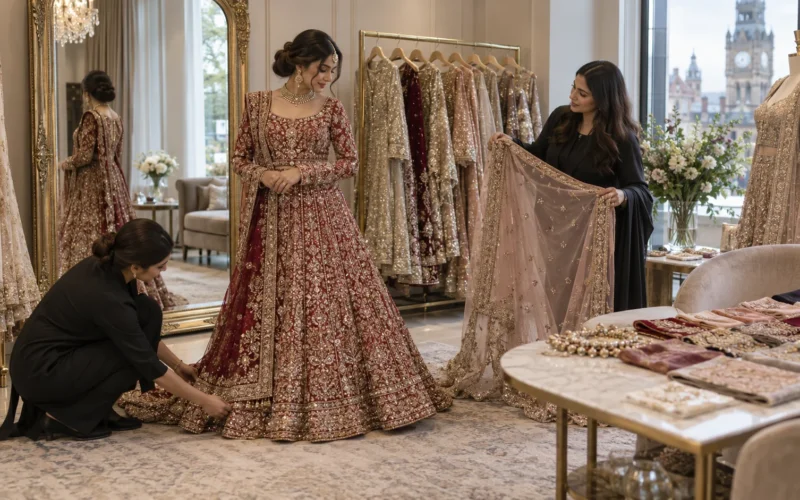
Manchester Bridal Shops Pakistani Brides Can Compare by Service, Not Just Price
Plan Manchester bridal services with practical advice on budget, embroidery, fit and movement. Use these UK wedding checks before approving the final...
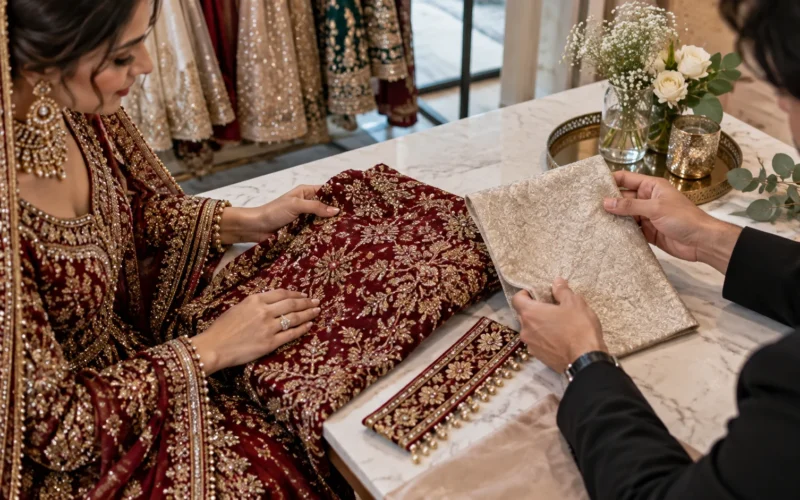
Pakistani Bridal Dresses Manchester: Using a Dress Swatch to Coordinate Groomwear and Décor
Plan bridal colour swatch with practical advice on photos, coordinate, fit and movement. Use these UK wedding checks before approving the final...
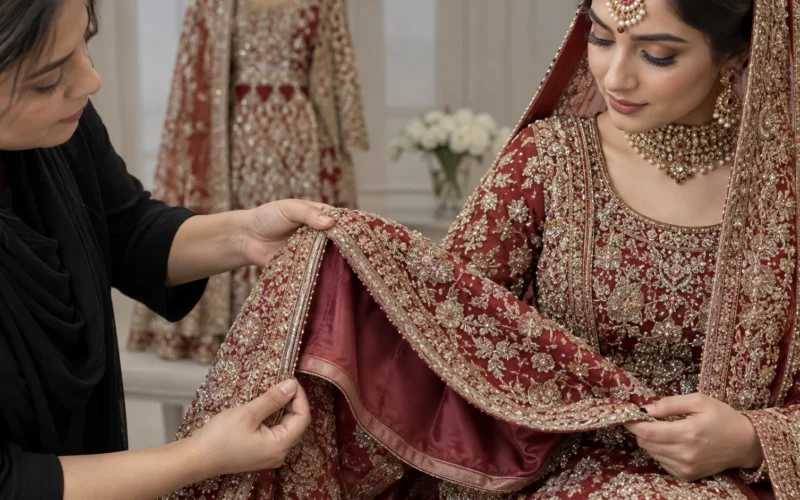
Asian Bridal Dresses: How to Judge Quality Before You Buy
Plan bridal dress quality checks with practical advice on lining, symmetry, fit and movement. Use these UK wedding checks before approving the...
