
Pakistani Wedding Dress for Baraat: Planning the Hem for Carpet, Stage Steps and Car Travel
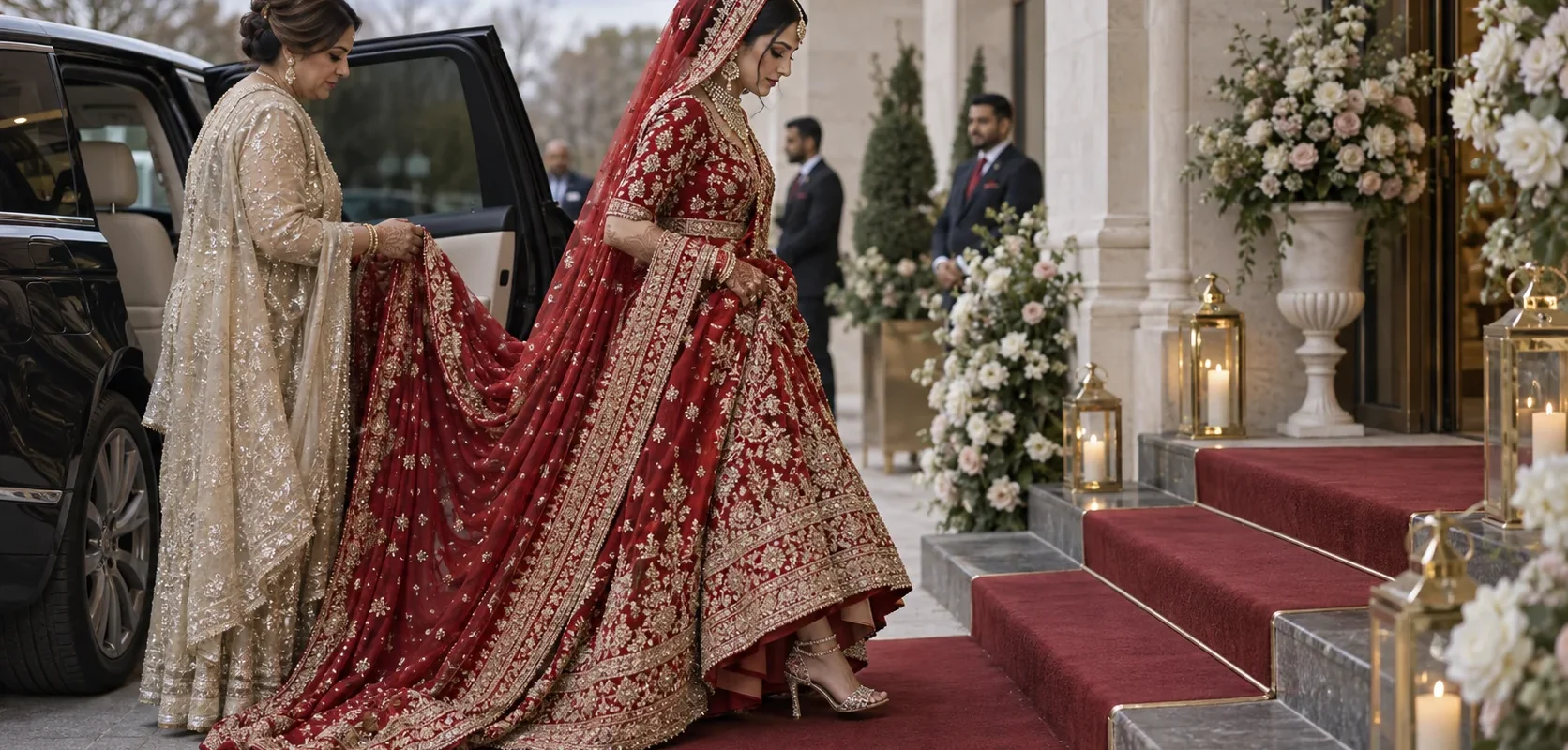
The best approach to bridal hem venue is to treat it as a practical design decision: test the relevant detail with the complete outfit, wedding shoes and planned accessories before final approval. For a British Pakistani or South Asian wedding, the right answer also depends on venue, family preferences and how long the outfit will be worn.
Quick answer: The best approach to bridal hem venue is to treat it as a practical design decision: test the relevant detail with the complete outfit, wedding shoes and planned accessories before final approval.
Start With the Real Wedding-Day Problem
The key question is how a Baraat dress hem should work across thick venue carpet, stage steps and getting in or out of a wedding car. It is also useful to consider skirt circumference, front hem clearance and where a longer back can create drama without becoming difficult to manage.
A useful way to narrow the choice is to write down the parts of the day that cannot change: venue layout, ceremony format, shoe height, jewellery already chosen and any coverage preference. Those fixed points give the designer clearer boundaries than a folder of unrelated inspiration images.
Test Steps, Stages and Uneven Floors
Stairs, stage risers and changes in floor level are where hem problems become obvious. A bride should know whether she can lift the front safely with one hand, whether the train can be gathered without pulling the waist, and whether the heel catches in the underlayer. These checks are especially important for heavily worked farshi or long-train styles. Think in terms of trade-offs. More volume can create presence but needs more space; a heavier border can frame the outfit but may affect drape; extra coverage can be built cleanly if it is designed from the start rather than added as an afterthought.
For this topic, the point is not to maximise stairs; it is to decide how much of it the wearer can manage comfortably and confidently.
Shoe Height Is Part of the Dress Measurement
Wedding shoes determine hem clearance and posture. Even a small heel change can make a long skirt drag or sit too high, particularly with structured underlayers. If the bride plans to change into flats later, the dress should be tested with both pairs and the compromise agreed deliberately. Do one final check with the shoes, underlayers and accessories planned for the event. Hem position, neckline balance and dupatta behaviour can all change once those pieces are added.
Use that test to compare two versions of the same idea rather than comparing unrelated dresses. Small controlled changes make the effect easier to judge.
Balance Surface Detail With Structure
Embroidery changes more than decoration. Dense work adds weight and stiffness; border placement draws the eye; concentrated motifs can support a focal point without covering every centimetre. Good planning considers the garment as a whole so the neckline, sleeves, skirt and dupatta do not all compete for attention. Use the venue as a design constraint. Measure or photograph any narrow aisle, low sofa, stage step or outdoor path that could affect movement, then bring that information to the fitting.
If the decision changes the pattern, length or load on the garment, settle it earlier than purely decorative finishing.
Turn the Design Idea Into a Fitting Test
Use a three-stage approval sequence for stairs. First decide the structural specification, then test it with the expected garment weight, and only then approve decorative finishing. At the second stage, add the planned shoes, shoes and underlayers. Photograph the result from front, side and back, then repeat the movement that matters most for this topic. This sequence helps separate a genuine construction issue from something that can be solved by styling.
Apply the Advice to the Wedding Event
A Baraat is often one of the most formal wedding events, but the practical demands can vary from a compact hall to a large banqueting venue. A stronger bridal silhouette or denser embellishment can work well, yet the dress still needs to handle stage steps, greetings, seated photographs and transport.
UK Venue and Weather Practicalities
For a UK wedding, the venue can create conditions very different from the weather outside. Hotels and halls may be strongly heated or air-conditioned, while photographs can involve lawns, gravel, rain or cold air. Plan the whole route—from car to ceremony to stage—not just the moment the outfit is first put on.
A Simple Decision Table
| Decision area | Best approach | Final check |
|---|---|---|
| Stairs | Test it as part of the full outfit | Check movement, comfort and photographs before final approval |
| Shoes | Test it as part of the full outfit | Check movement, comfort and photographs before final approval |
| Embroidery | Test it as part of the full outfit | Check movement, comfort and photographs before final approval |
Questions to Ask at the Boutique
- What will change if I increase or reduce the stairs?
- Can we test the final shoes before this decision is locked?
- Which part of this choice is difficult to alter later?
- Does the planned shoe height, jewellery or dupatta change the fit?
- What should I photograph or record at this fitting?
These questions are deliberately practical. They make it easier to compare a sample, ready-to-wear piece or bespoke proposal on the same basis and to identify which details must be agreed before production progresses.
Final Fitting Rehearsal
Use the final fitting as a rehearsal for stairs, not a ceremonial last look. Put on the planned underlayers and shoes, then attach the dupatta in the intended position. Walk at normal speed, turn in both directions, sit for several minutes and stand again without anyone holding the garment. Repeat the movement with a handbag, bouquet or phone if one will realistically be carried. Then test shoes and embroidery under the same conditions. If a helper is needed, decide exactly what help is realistic on the day. A bridesmaid can straighten a train before photographs; she cannot reasonably hold a skirt through every greeting. End the fitting by checking the front, side and back in ordinary phone photographs. Note any adjustment in writing. The aim is not to remove every fold—the dress is fabric and will move—but to confirm that the chosen design behaves predictably.
Common Mistakes to Avoid
- Approving the look only while standing still.
- Finalising hem or drape before the planned shoes and underlayers are known.
- Treating fabric, embroidery, jewellery and dupatta as separate decisions.
- Copying a reference image without checking whether the venue and event have the same practical needs.
Where Jabeenz Fits
Jabeenz currently presents itself as a Manchester-based designer/manufacturer of women’s Pakistani bridal and occasionwear, with ready-to-wear collections and bespoke options. Its Dream Dress Studio accepts inspiration-led enquiries, while the consultation page offers a free discussion around event, fabrics, colours and outfit ideas. For this topic, the useful role of a consultation is to test the practical detail—fit, movement, weight, colour or drape—rather than simply choosing the most decorative sample.
Next step: If you want to turn the idea into a made-to-measure specification, book a free Jabeenz consultation and take your venue details, planned shoes and the few inspiration images that matter most.
Final Takeaway
The strongest bridal hem venue decision is the one that still works after the wearer sits, walks, turns, travels and spends several hours in the outfit. Use the wedding schedule as the final quality test.
Frequently Asked Questions
Do I need my wedding shoes at the fitting?
Ideally, yes. If the exact pair is not ready, bring shoes with the same heel height so the hem is set against the height you will actually wear.
Can this design detail be customised?
Often, yes, in a bespoke or made-to-measure process, but the options depend on garment construction and how far production has progressed. Confirm the exact change with the boutique.
What should I bring to a fitting?
Bring the planned shoe height, suitable underlayers, important jewellery dimensions or pieces where practical, and any dupatta or coverage requirement that changes the outfit’s balance.
How can I avoid making a late design change?
Finalise structural choices first: silhouette, length, neckline, sleeves, closure, lining and major embroidery placement. Keep a written or photographed record of the approved specification.
Shop This Look
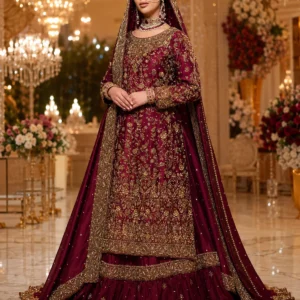
Ready to Find Your Dream Outfit?
Book a free consultation at our Manchester boutique or browse our latest collections online.
You Might Also Like
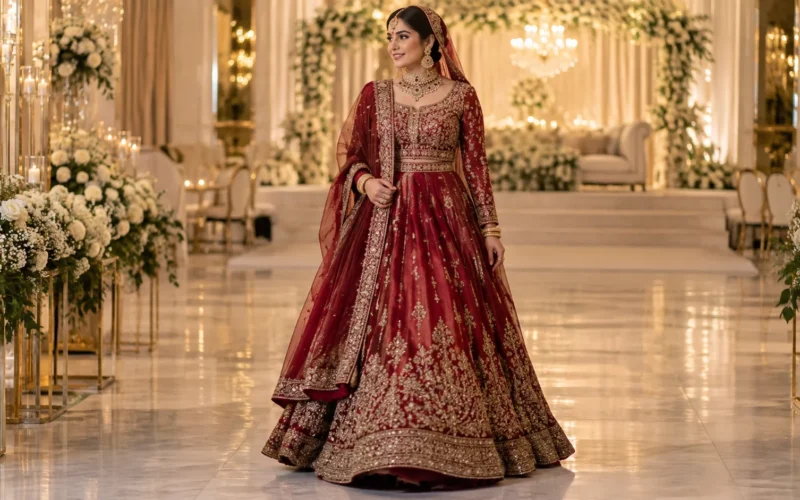
Baraat Dresses UK: How to Create a Strong Bridal Look Without Excess Weight
Plan lightweight baraat dress with practical advice on bespoke, comfort, fit and movement. Use these UK wedding checks before approving the final...
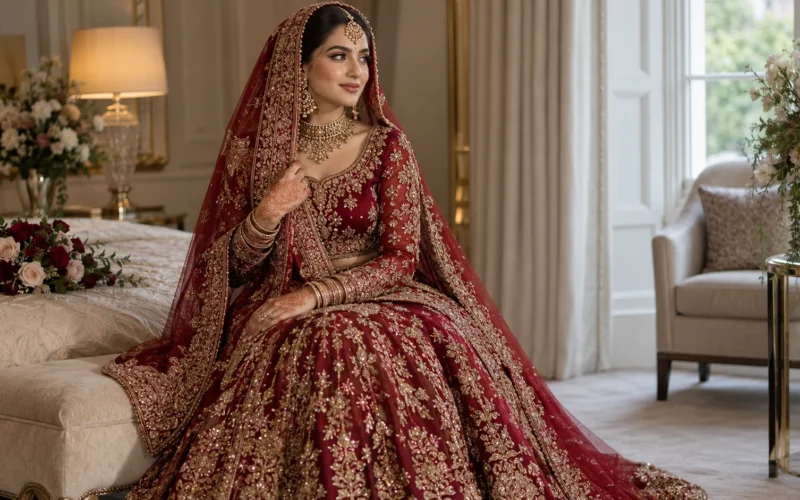
Bridal Dresses Pakistani Brides Can Balance With a Heavy Head Dupatta
Plan nikkah head dupatta general with practical advice on head dupatta, shoulder, fit and movement. Use these UK wedding checks before approving...
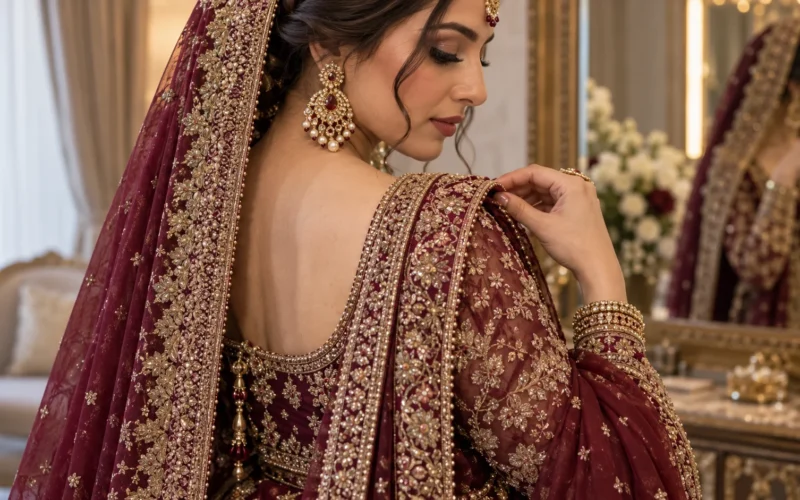
Pakistani Bridal Lehenga UK: How to Pin a Heavy Dupatta Without Pulling the Blouse
Plan heavy bridal dupatta with practical advice on shoulder, comfort, fit and movement. Use these UK wedding checks before approving the final...
