
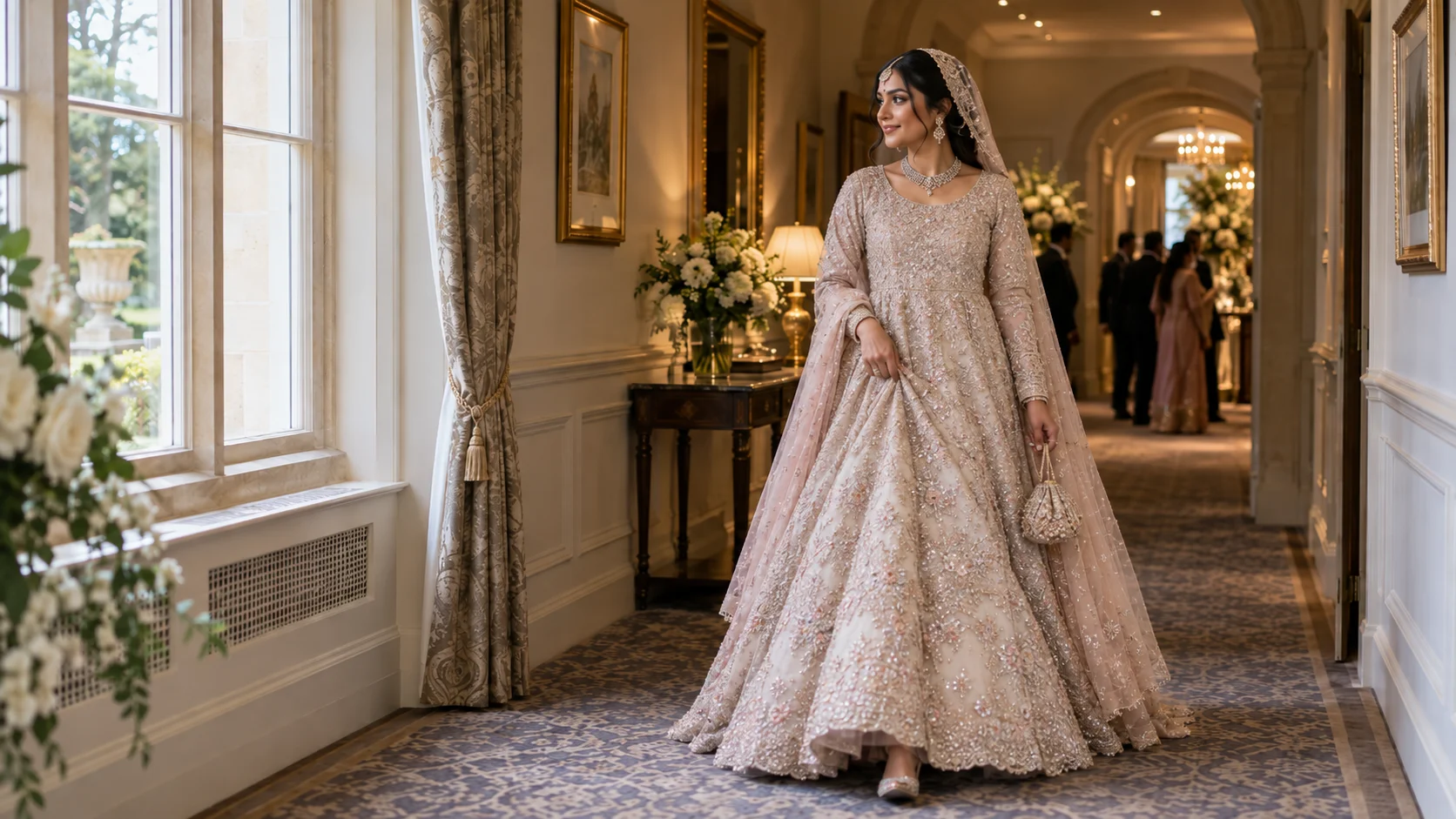
Test the outfit in daylight, indoor light and a short phone video. Embroidery, colour, shine and hem movement can look different from a static fitting-room mirror. Think of the dress as clothing that has to move through a real UK wedding day, not as a still image.
Quick answer: Test the outfit in daylight, indoor light and a short phone video. Embroidery, colour, shine and hem movement can look different from a static fitting-room mirror.
What to Decide Before Choosing the Detail
This topic focuses on brides who may wear one Pakistani wedding dress for many hours. The guidance should explain how skirt weight, sleeve movement, neckline comfort, dupatta security, footwear and bathroom practicality can affect the experience from ceremony through photographs and dinner.
A useful way to narrow the choice is to write down the parts of the day that cannot change: venue layout, ceremony format, shoe height, jewellery already chosen and any coverage preference. Those fixed points give the designer clearer boundaries than a folder of unrelated inspiration images.
The Camera Sees Different Details
Cameras simplify texture. Dense tone-on-tone work can disappear in a wide photograph, while crystals, metallic thread and sharp border contrasts may become more prominent under flash. Brides should look at a design from normal conversation distance as well as in close-up, because the dress has to work in both views. Think in terms of trade-offs. More volume can create presence but needs more space; a heavier border can frame the outfit but may affect drape; extra coverage can be built cleanly if it is designed from the start rather than added as an afterthought.
Use that test to compare two versions of the same idea rather than comparing unrelated dresses. Small controlled changes make the effect easier to judge.
Design for the Full Wedding Schedule
A long wedding day exposes small fit problems that a five-minute try-on can hide. Waistbands feel firmer after a meal, sleeves can restrict repeated greetings, and heavily embellished hems become more tiring after hours of walking. Comfort checks should be treated as part of bridal design, not as a compromise made after the dress is finished. Do one final check with the shoes, underlayers and accessories planned for the event. Hem position, neckline balance and dupatta behaviour can all change once those pieces are added.
If the decision changes the pattern, length or load on the garment, settle it earlier than purely decorative finishing.
Sheer and Lined Sleeves Behave Differently
Sleeve lining changes opacity, warmth and the visual strength of embroidery. A sheer sleeve can make motifs appear delicate and floating, while a lined sleeve gives stronger colour and coverage. Neither is inherently better; the right choice depends on modesty preference, season, jewellery and the density of the work. Use the venue as a design constraint. Measure or photograph any narrow aisle, low sofa, stage step or outdoor path that could affect movement, then bring that information to the fitting.
Record the approved choice with a photograph or written note so the final specification is clear at later fittings.
Test the Outfit Beyond Standing Still
A useful comfort test is active: sit, stand, raise both arms, climb a step, turn, walk on carpet and get into a chair or car-height seat. These movements reveal pulling at the armhole, tight waistbands, unstable dupattas and hems that are easy to catch. Treat this as a fitting test rather than a styling theory. Re-create the movement or situation during an appointment, take a short phone video from the front and side, and note what shifts, catches or needs help.
Where family opinions differ, return to the practical brief: event, movement, coverage, venue and the wearer’s own preference.
Plan the Dupatta Before the Final Fitting
A dupatta is not only a finishing accessory; its fabric, border and method of attachment affect weight distribution. A broad embellished border can look impressive in photographs but may pull at the crown or shoulder. Testing the intended drape with pins, hairstyle or hijab in place is far more useful than judging it folded on a rail. The safest decision is usually made by testing the complete combination. Fabric, lining, embellishment and jewellery affect one another, so a detail that works on an unembellished sample can behave differently once the final weight is added.
For this topic, the point is not to maximise dupatta; it is to decide how much of it the wearer can manage comfortably and confidently.
From Design Discussion to Final Approval
Treat photos as a specification that can be tested. Define what success looks like—clearance, support, colour balance, comfort or movement—then check that standard in the final outfit. If long day changes the result, note it as part of the specification rather than a separate accessory choice. This approach is more useful than chasing a perfect reference photograph because it is based on the wearer’s actual event.
Match the Design to the Actual Event
Pakistani weddings in Britain vary by family, region, venue and personal taste, so fashion advice is better treated as a set of options rather than a fixed cultural rule. The most useful design decision is the one that fits the actual event schedule, surroundings and wearer.
UK Venue and Weather Practicalities
For a UK wedding, the venue can create conditions very different from the weather outside. Hotels and halls may be strongly heated or air-conditioned, while photographs can involve lawns, gravel, rain or cold air. Plan the whole route—from car to ceremony to stage—not just the moment the outfit is first put on.
Practical Checks Before Approval
| Test | What it reveals | How to do it |
|---|---|---|
| Window daylight | True-ish colour relationships and sheerness | Stand near a large window |
| Indoor warm light | How gold, red and ivory shift in a hall | Use similar venue lighting where possible |
| Phone flash | Reflective crystals, metallic work and pale fabrics | Take front and side photographs |
| Short walking video | Movement, sparkle and hem behaviour | Record 10–15 seconds walking and turning |
Questions to Ask at the Boutique
- Is this option practical for my venue route and length of event?
- What will change if I increase or reduce the photos?
- Can we test the final long day before this decision is locked?
- Which part of this choice is difficult to alter later?
- Does the planned shoe height, jewellery or dupatta change the fit?
These questions are deliberately practical. They make it easier to compare a sample, ready-to-wear piece or bespoke proposal on the same basis and to identify which details must be agreed before production progresses.
Final Fitting Rehearsal
Before the outfit leaves the fitting room for the final time, create a short wear plan around photos. Decide which shoes are worn, which underlayers are required, how the dupatta is secured and who can help with any train or complex drape. Test long day after sitting and walking because fabric settles with movement. Check sleeve from the back as well as the front. If spare pins or a small repair item are appropriate, decide where they will be kept rather than adding them to the dress at the last minute. Photograph the approved drape so it can be recreated on the wedding day. A good wear plan is intentionally simple: it reduces the number of decisions being made while the bride or guest is getting ready and protects the work already completed at fittings.
Common Mistakes to Avoid
- Letting a trend override the wearer’s normal comfort and coverage preferences.
- Making late structural changes after embroidery or finishing has begun.
- Testing a bridal sample without sitting, turning or walking.
- Forgetting the route between car, ceremony, stage, dining area and photography location.
Where Jabeenz Fits
Jabeenz currently presents itself as a Manchester-based designer/manufacturer of women’s Pakistani bridal and occasionwear, with ready-to-wear collections and bespoke options. Its Dream Dress Studio accepts inspiration-led enquiries, while the consultation page offers a free discussion around event, fabrics, colours and outfit ideas. For this topic, the useful role of a consultation is to test the practical detail—fit, movement, weight, colour or drape—rather than simply choosing the most decorative sample.
Next step: If the standard collection does not solve the practical need described here, speak with Jabeenz about a bespoke version rather than adding major changes after purchase.
Final Takeaway
Fashion inspiration can start the conversation, but fit, movement, venue and personal preference should finish it. That is what turns a good-looking idea into wearable wedding clothing.
Frequently Asked Questions
When should I decide bridal dupatta placement?
Before the final fitting. Border weight and pinning points can affect the shoulders, neckline, hairstyle and comfort.
Can this design detail be customised?
Often, yes, in a bespoke or made-to-measure process, but the options depend on garment construction and how far production has progressed. Confirm the exact change with the boutique.
What should I bring to a fitting?
Bring the planned shoe height, suitable underlayers, important jewellery dimensions or pieces where practical, and any dupatta or coverage requirement that changes the outfit’s balance.
How can I avoid making a late design change?
Finalise structural choices first: silhouette, length, neckline, sleeves, closure, lining and major embroidery placement. Keep a written or photographed record of the approved specification.
Shop This Look
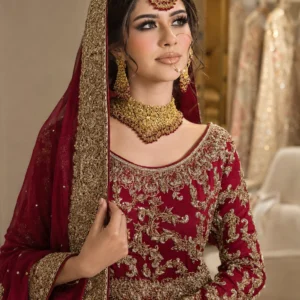
Ready to Find Your Dream Outfit?
Book a free consultation at our Manchester boutique or browse our latest collections online.
You Might Also Like
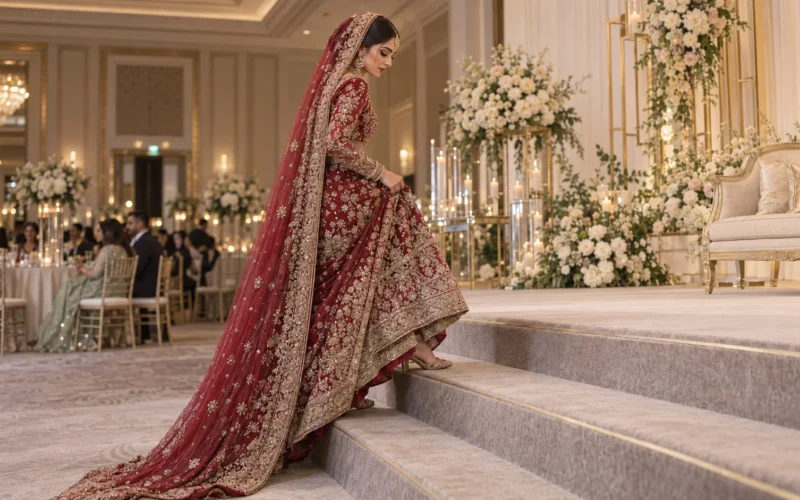
Bridal Wear for Pakistani Weddings in the UK: Plan Around Floors, Stairs and Stages
Learn how bridal venue hem choices affect train, stairs and comfort, with practical UK wedding advice and fitting checks for a more...
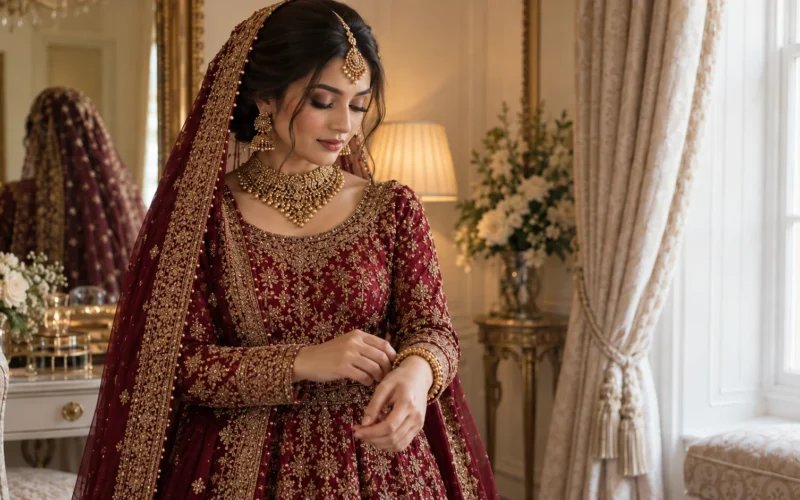
Asian Pakistani Wedding Dresses: How to Build the Look Around Heirloom Jewellery
Plan bridal heirloom jewellery with practical advice on photos, necklace, fit and movement. Use these UK wedding checks before approving the final...
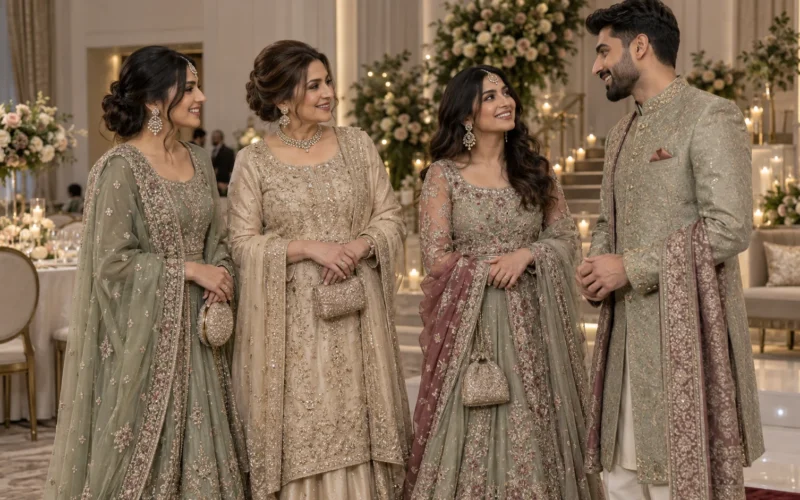
Wedding Clothes Pakistani Families Can Coordinate Without Matching Exactly
Plan family wedding coordination with practical advice on coordinate, guest, fit and movement. Use these UK wedding checks before approving the final...
