
Pakistani Bridal Dresses UK: Choosing the Right Train Length for Your Venue
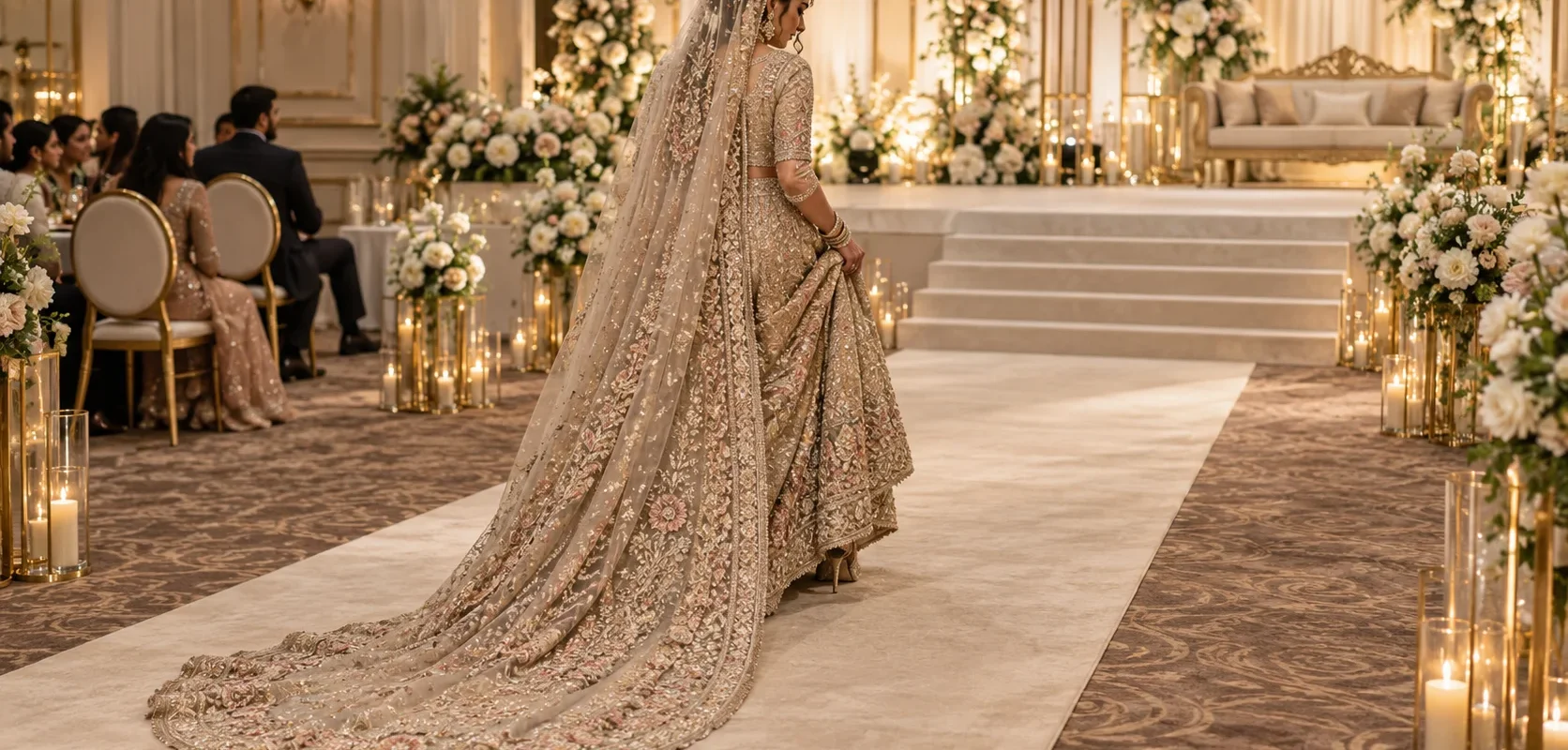
Choose train length from the venue route, not from photographs alone. Carpet, stairs, narrow aisles, outdoor ground and car travel determine how much trailing fabric is practical. The useful test is simple: the outfit should work through the full event, not only during the first mirror check.
Quick answer: Choose train length from the venue route, not from photographs alone. Carpet, stairs, narrow aisles, outdoor ground and car travel determine how much trailing fabric is practical.
Turn the Inspiration Photo Into a Practical Brief
A useful comparison is short, medium and statement train lengths for Pakistani bridal dresses in UK hotels, halls, manor houses and smaller Nikkah venues. The guidance should explain how aisle width, stage steps, carpet, outdoor photographs and transport should influence how much fabric extends behind the bride.
A useful way to narrow the choice is to write down the parts of the day that cannot change: venue layout, ceremony format, shoe height, jewellery already chosen and any coverage preference. Those fixed points give the designer clearer boundaries than a folder of unrelated inspiration images.
Test the Train Before Final Finishing
A train creates drama by extending the skirt or gown behind the wearer, but its practical effect depends on the floor and route. Carpet adds drag, narrow aisles reduce turning space, and steps can bunch fabric at the heel. The right length is the one the bride can control without needing constant help. Photography is useful here, but comfort is the stronger quality check. A dress that looks balanced only while the wearer stands perfectly still can become frustrating during greetings, meals or travel.
If the decision changes the pattern, length or load on the garment, settle it earlier than purely decorative finishing.
Check the Look in Real Wedding Light
Cameras simplify texture. Dense tone-on-tone work can disappear in a wide photograph, while crystals, metallic thread and sharp border contrasts may become more prominent under flash. Brides should look at a design from normal conversation distance as well as in close-up, because the dress has to work in both views. Ask the boutique to explain what is structural and what is decorative. Structural choices are harder to change late, while some decorative details can be adjusted more easily before final finishing.
Record the approved choice with a photograph or written note so the final specification is clear at later fittings.
Use Customisation to Solve a Real Need
Made-to-measure and fully bespoke are related but not identical ideas. Made-to-measure normally starts with an existing style or pattern adjusted to measurements, while a fuller bespoke process may involve more design decisions from the outset. Customers should ask exactly which elements can be changed rather than relying on the label alone. Think in terms of trade-offs. More volume can create presence but needs more space; a heavier border can frame the outfit but may affect drape; extra coverage can be built cleanly if it is designed from the start rather than added as an afterthought.
Where family opinions differ, return to the practical brief: event, movement, coverage, venue and the wearer’s own preference.
Plan for Stairs Before Final Length
Stairs, stage risers and changes in floor level are where hem problems become obvious. A bride should know whether she can lift the front safely with one hand, whether the train can be gathered without pulling the waist, and whether the heel catches in the underlayer. These checks are especially important for heavily worked farshi or long-train styles. Do one final check with the shoes, underlayers and accessories planned for the event. Hem position, neckline balance and dupatta behaviour can all change once those pieces are added.
For this topic, the point is not to maximise stairs; it is to decide how much of it the wearer can manage comfortably and confidently.
Bring the Wedding Shoes to the Hem Fitting
Wedding shoes determine hem clearance and posture. Even a small heel change can make a long skirt drag or sit too high, particularly with structured underlayers. If the bride plans to change into flats later, the dress should be tested with both pairs and the compromise agreed deliberately. Use the venue as a design constraint. Measure or photograph any narrow aisle, low sofa, stage step or outdoor path that could affect movement, then bring that information to the fitting.
Use that test to compare two versions of the same idea rather than comparing unrelated dresses. Small controlled changes make the effect easier to judge.
Use the Fitting to Confirm the Decision
Before approval, ask for the outfit to be viewed in layers: base construction, lining or understructure, outer fabric, major embroidery, then accessories. That makes it easier to see which layer is causing a problem with train. If photos is part of the look, test it at the same time. A practical fitting should end with a clear yes/no decision, not only a general feeling that the outfit looks good.
Keep the Ceremony and Schedule in View
Pakistani weddings in Britain vary by family, region, venue and personal taste, so fashion advice is better treated as a set of options rather than a fixed cultural rule. The most useful design decision is the one that fits the actual event schedule, surroundings and wearer.
Compare the Options Side by Side
| Option | Best suited to | Main check |
|---|---|---|
| Short or brush train | Smaller venues, busy routes, easier movement | Clearance at heels and stage steps |
| Medium train | Hotels and halls with reasonable floor space | Carpet drag and turning room |
| Statement train | Large stages, wide aisles, planned photography | Help required, transport and outdoor ground |
Questions to Ask at the Boutique
- Which part of this choice is difficult to alter later?
- Does the planned shoe height, jewellery or dupatta change the fit?
- What should I photograph or record at this fitting?
- Is this option practical for my venue route and length of event?
- What will change if I increase or reduce the train?
These questions are deliberately practical. They make it easier to compare a sample, ready-to-wear piece or bespoke proposal on the same basis and to identify which details must be agreed before production progresses.
Final Fitting Rehearsal
Do not treat final approval as a question of whether the dress is beautiful. Ask whether the train works for the actual schedule. Rehearse arrival, seated ceremony, photographs, meal and a short period of faster walking. If the event includes dancing, test a few turns; if it includes a stage, test a similar step height where safe. Watch what happens to photos after movement rather than resetting the outfit each time. Check bespoke with the accessories in place. Small issues should be classified: fitting issue, styling issue or wedding-day management issue. A fitting issue may need alteration; a styling issue may need a different pin or drape; a management issue may simply need a bridesmaid to arrange a train before formal photographs. This classification prevents unnecessary changes to a garment that already fits well while making sure real construction problems are not dismissed as styling.
Common Mistakes to Avoid
- Letting a trend override the wearer’s normal comfort and coverage preferences.
- Making late structural changes after embroidery or finishing has begun.
- Testing a bridal sample without sitting, turning or walking.
- Forgetting the route between car, ceremony, stage, dining area and photography location.
Where Jabeenz Fits
Jabeenz currently presents itself as a Manchester-based designer/manufacturer of women’s Pakistani bridal and occasionwear, with ready-to-wear collections and bespoke options. Its Dream Dress Studio accepts inspiration-led enquiries, while the consultation page offers a free discussion around event, fabrics, colours and outfit ideas. For this topic, the useful role of a consultation is to test the practical detail—fit, movement, weight, colour or drape—rather than simply choosing the most decorative sample.
Next step: Browse the relevant Jabeenz collection for visual references, then use a free consultation if you need the colour, fit or construction adjusted around your event.
Final Takeaway
Good bridalwear planning is specific: one wearer, one venue, one schedule and one set of preferences. Test the complete look and record the decisions before final finishing.
Frequently Asked Questions
How long should a Pakistani bridal train be?
There is no universal length. Choose it from the venue route, stage steps, carpet, outdoor ground, transport and how much help the wearer wants while moving.
Do I need my wedding shoes at the fitting?
Ideally, yes. If the exact pair is not ready, bring shoes with the same heel height so the hem is set against the height you will actually wear.
Can this design detail be customised?
Often, yes, in a bespoke or made-to-measure process, but the options depend on garment construction and how far production has progressed. Confirm the exact change with the boutique.
What should I bring to a fitting?
Bring the planned shoe height, suitable underlayers, important jewellery dimensions or pieces where practical, and any dupatta or coverage requirement that changes the outfit’s balance.
How can I avoid making a late design change?
Finalise structural choices first: silhouette, length, neckline, sleeves, closure, lining and major embroidery placement. Keep a written or photographed record of the approved specification.
Shop This Look
Ready to Find Your Dream Outfit?
Book a free consultation at our Manchester boutique or browse our latest collections online.
You Might Also Like
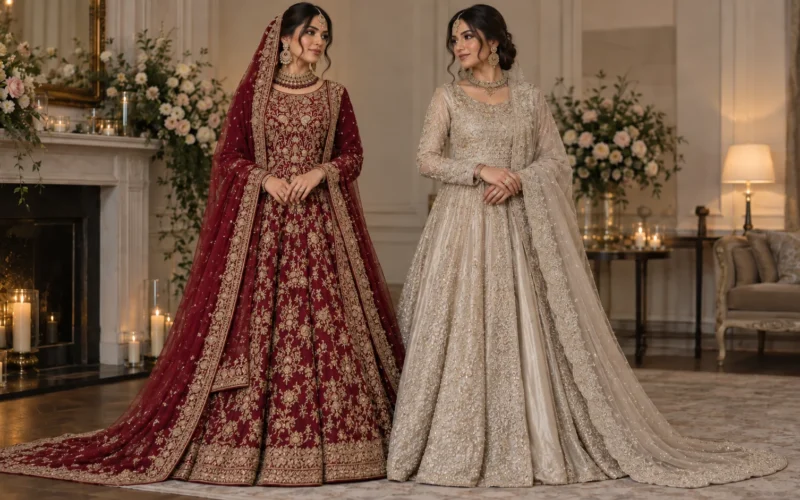
Asian Bridal Dresses: Contrast Dupatta or Matching Dupatta?
Plan contrast bridal dupatta with practical advice on coordinate, production, fit and movement. Use these UK wedding checks before approving the final...
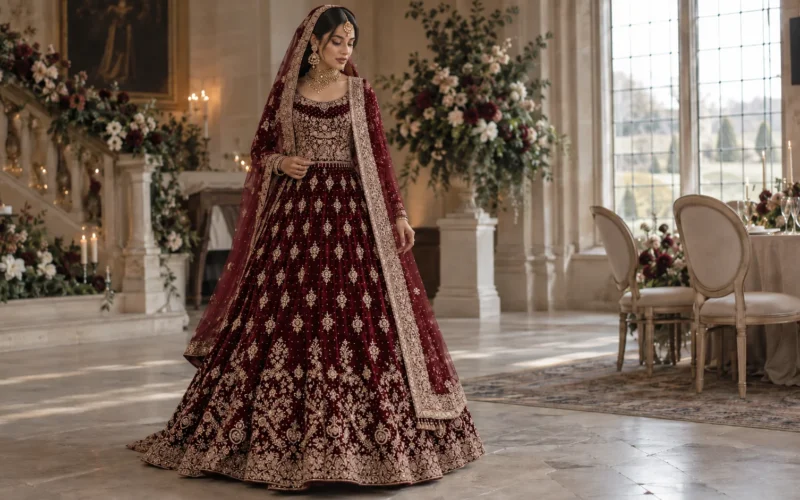
Wedding Dresses Pakistani Brides Are Choosing for Modern UK Venues
Plan UK bridal venue styling with practical advice on photos, white, fit and movement. Use these UK wedding checks before approving the...
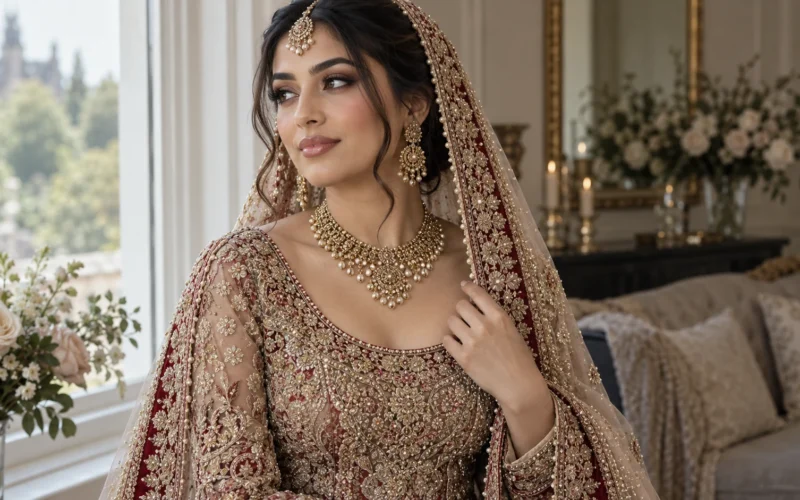
Asian Bridal Dresses: How to Balance a Statement Necklace With the Neckline
Plan bridal neckline jewellery with practical advice on necklace, dance, fit and movement. Use these UK wedding checks before approving the final...
